Tree Week: Venessa Monokian: As the Glow Grows
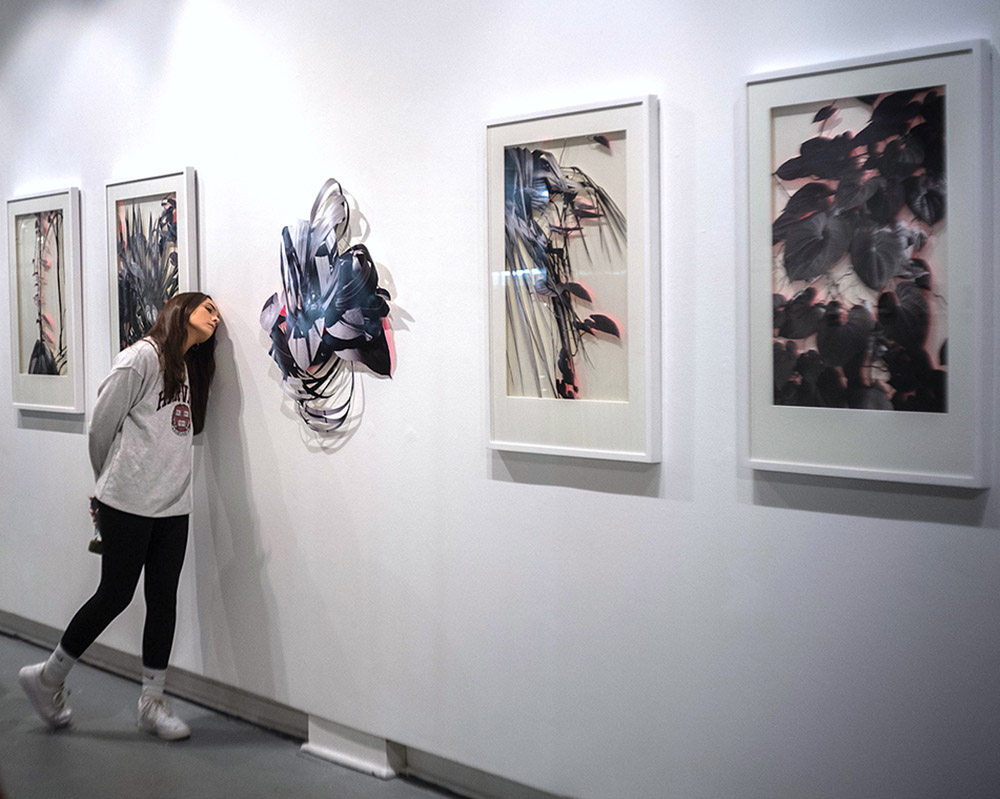
©Venessa Monokian, Installation Box
Venessa Monokian initially used photography as a tool for coping with the limitations of her learning disability. She used it as an alternative way of understanding the world, and began experimenting with different ways of presenting images. Monokian photographed the tropical foliage of her home in Florida, and continued that practice after moving to Houston. She has expanded her process beyond the traditional flat image, and began cutting and shaping her pictures into sculptural forms. Shadows add depth to the work and the viewer is now aware of the photo as physical object. Monokian’s work questions the definition of a photograph, and peaks the curiosity of the viewer so that they move closer to explore the many facets of her images.
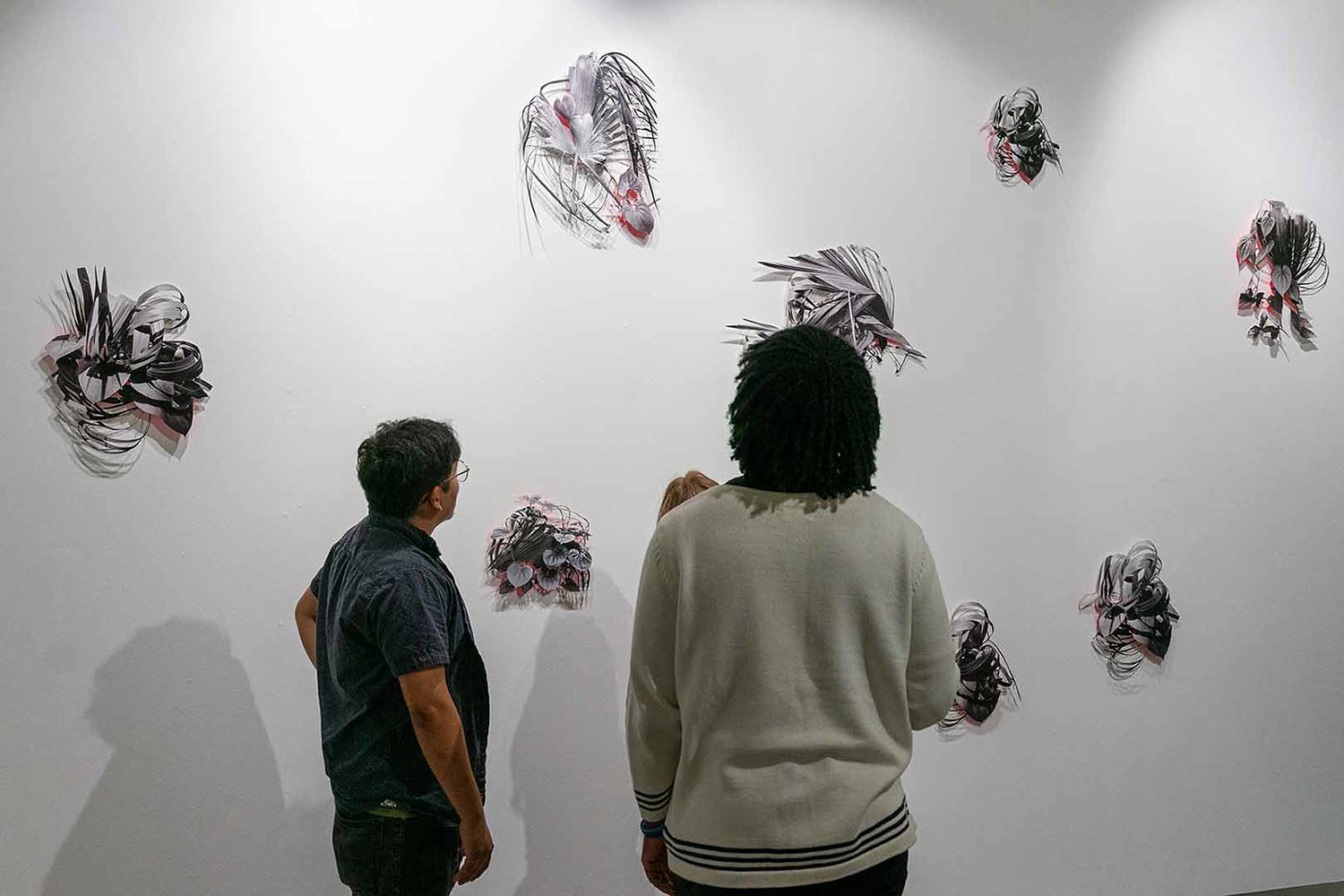
©Venessa Monokian, Installation Box
Venessa Monokian is an artist whose work investigates ideas about her environment, extending beyond the tangible to explore the psychological and emotional elements of space. The viewer’s physical interaction with her pieces is integral to the final experience, fostering a dynamic partnership between the artist, the work, and the audience.
Recent projects in 2026 include an artist book exhibition at Cornell University, a two-person exhibition with the Throughline, and most recently a solo exhibition at the Houston Center for Photography. In 2025, her work was part of CraftTexas at the Houston Center for Contemporary Craft, and she participated in an Instagram takeover for the Magenta Foundation (Canada).
In 2024, she received the Jones Artist Award from the Houston Endowment for the Arts. Based in Houston, Monokian is affiliated with Box13 ArtSpace and the Throughline Collective. She holds an MFA from Florida International University and is originally from Miami. Her work has been exhibited internationally at venues including Met/Gal (Austin), the Contemporary Arts Center (New Orleans), Mac Fine Art (Fort Lauderdale), the Academy of Fine Arts in Poland, and Panal 361 in Argentina.
Instagram: @vmonokian
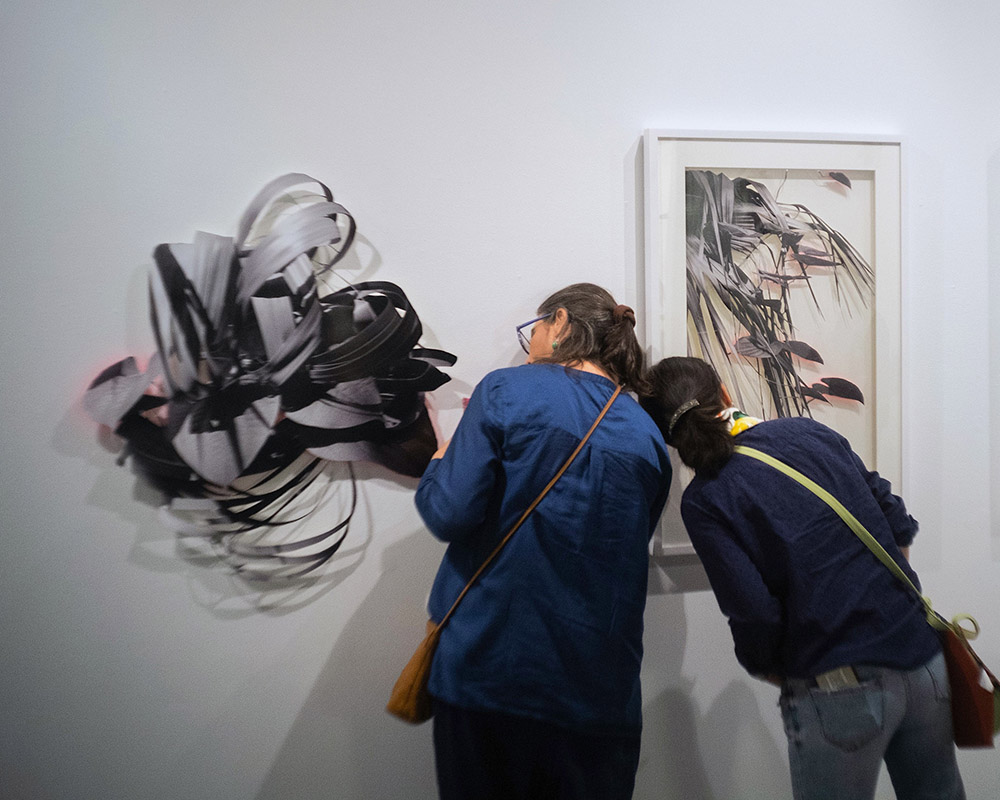
©Venessa Monokian, Installation Box
Q: What led you to begin work as a photographer? Do you also work in other mediums? Do you create sculpture with things other than your photographs?
I actually have a learning disability, and growing up I didn’t always fully understand how to grasp or communicate how I visually see the world around me. Photography became an alternative way for me to better understand both the physical and optical aspects of looking, as well as the emotional and conceptual ways we formulate our understanding of the world around us.
Being able to easily access and digest medical or pedagogical journals and other written information was a struggle for me, so I began using photography as an adaptive learning tool for myself.
Over time, that process has expanded beyond traditional photography. I am interested in experimenting with different materials and ways of presenting photographic information, including cutting, sculptural installation, color, and more recently, interactive video. For me, the medium is a tool for exploring ideas rather than something I feel limited to.
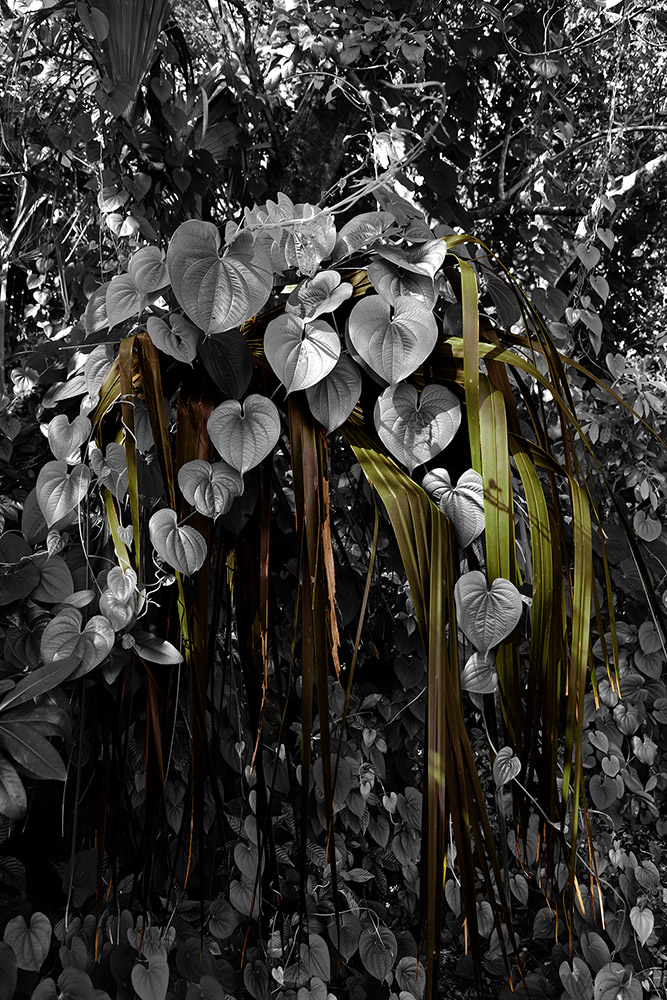
©Venessa Monokian, Drip
Q: Your images seem to be taken mostly of tropical plants. Is there something that you find fascinating about their foliage?
I was raised in South Florida, so the tropics are naturally a major influence on my work. But the particular plant I am photographing also affects the place I call home now in Houston. It became interesting to me to use this particular plant called air potato vine (Dioscorea bulbifera) as a way of connecting my two home spaces.
The plant is an invasive species that was brought to South Florida and has taken over and completely altered parts of that environment. In some places, it has changed the landscape so much that it no longer looks like the place I remember from my childhood.
At the same time, this plant is being sold in Houston as a decorative plant and is beginning to affect the ecosystem of my new home. So I am taking the knowledge and experiences I have from Miami and using them as a way to share and explore these ideas with people in Houston and beyond.
The plant becomes a way for me to talk about more than ecology. It becomes a connection between two places I call home and a way of thinking about how our relationships with nature change as we move through different environments.
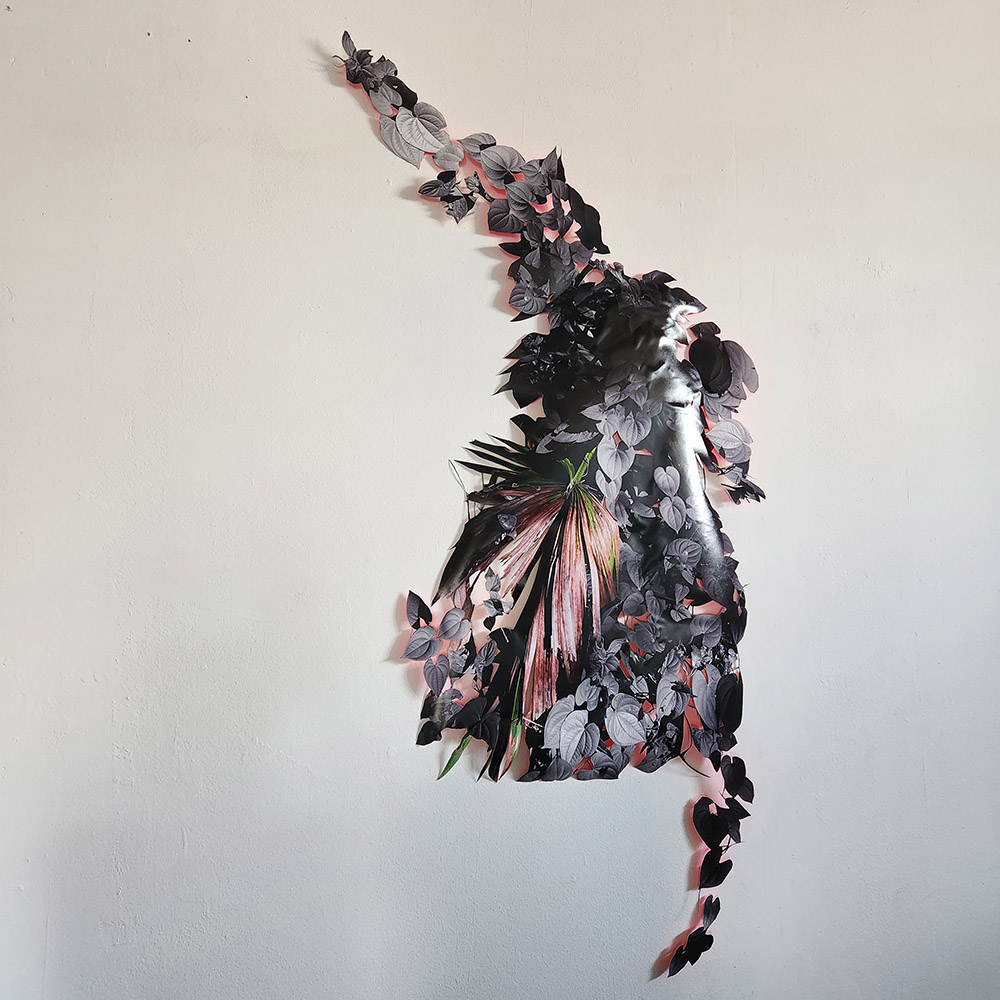
©Venessa Monokian, Engulfed
Q:What led you to begin cutting your photographs?
I actually started cutting photographs before this current body of work, when I knew I was going to need to leave South Florida. Miami is my home forever and will always be in my heart, but it is very expensive and difficult for an artist and educator to sustain a life there.
I was trying to think of a body of work that I could develop as I moved from place to place. The idea was to photograph my surroundings and isolate the plants I found, using this approach to learn more about the native flora and fauna of wherever I was living.
It wasn’t until later that the air potato vine in particular came into the work. That developed once I found my new home in Houston and realized that this same plant was present here, creating an unexpected connection between the two places.
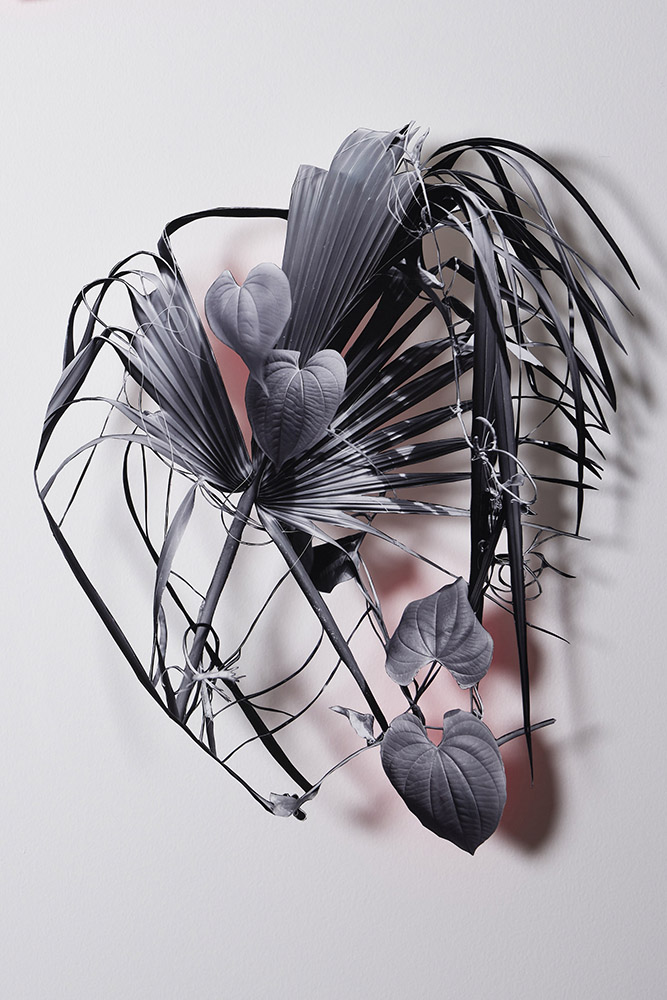
©Venessa Monokian, In Knots 11
Q: Once they are cut, you shape them into sculptural pieces. What led you to do that, and how does displaying them in 3D change the viewer’s experience?
I was on a residency in Argentina and, at the time, was creating work that predated this current body of work. I was cutting the photographs intricately and layering them to create 3D environments, more similar to a tunnel book.
However, I didn’t have enough work by the end of my residency to fill the gallery space. So I separated the layered works into individual panels, and that is when I started noticing the shadows and really loved the interplay between the positive and negative spaces.
Once I got back home and pinned the work up to study it, the humidity started to affect the photographs, making them bend and shape in interesting ways. I found this much more interesting to see, so I began to intentionally cut and shape the works.
The shift into three-dimensional work also changed the relationship between the photograph and the viewer. Instead of simply looking at an image, the viewer becomes aware of the physical object, its depth, its shadows, and the space around it.
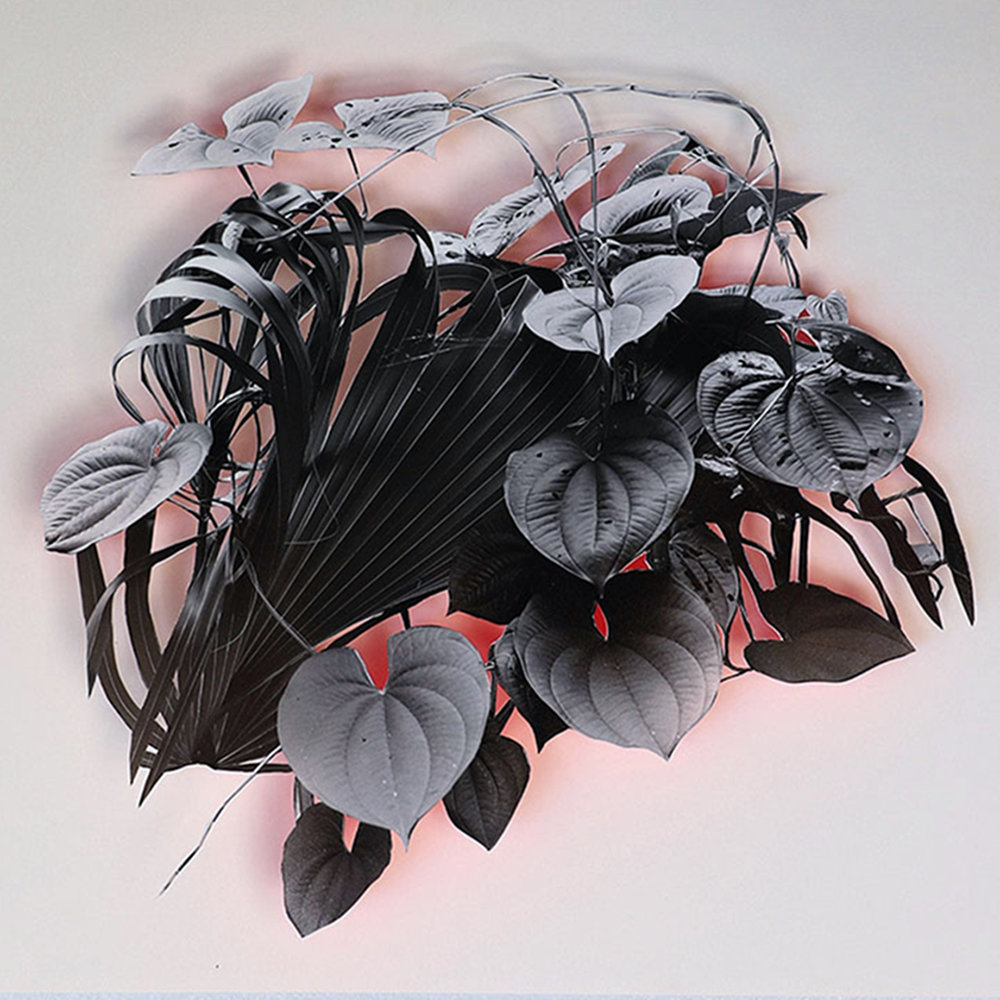
©Venessa Monokian, Small-in-Knots 03
Q: The sculptural pieces seem to have a reddish glow coming from behind. Can you explain how you achieved this, and how it adds to the experience?
I was thinking about how I could highlight the areas of the images where the air potato was located, and the idea of painting the back of the cut photographs in those isolated areas emerged.
The hope is that I can use these different techniques and approaches to entice the viewer and make them more curious to ask questions. Is this a photograph? Where is the light coming from? Is this a real plant? Where is it from?
Those questions and that curiosity lead someone to look for answers, much like my own curiosity about better understanding my learning disability, my environment, and the world around me led me to explore and make this work.
I like the idea that the work doesn’t necessarily give you all the answers. Instead, it creates enough curiosity to make you want to look closer and investigate.
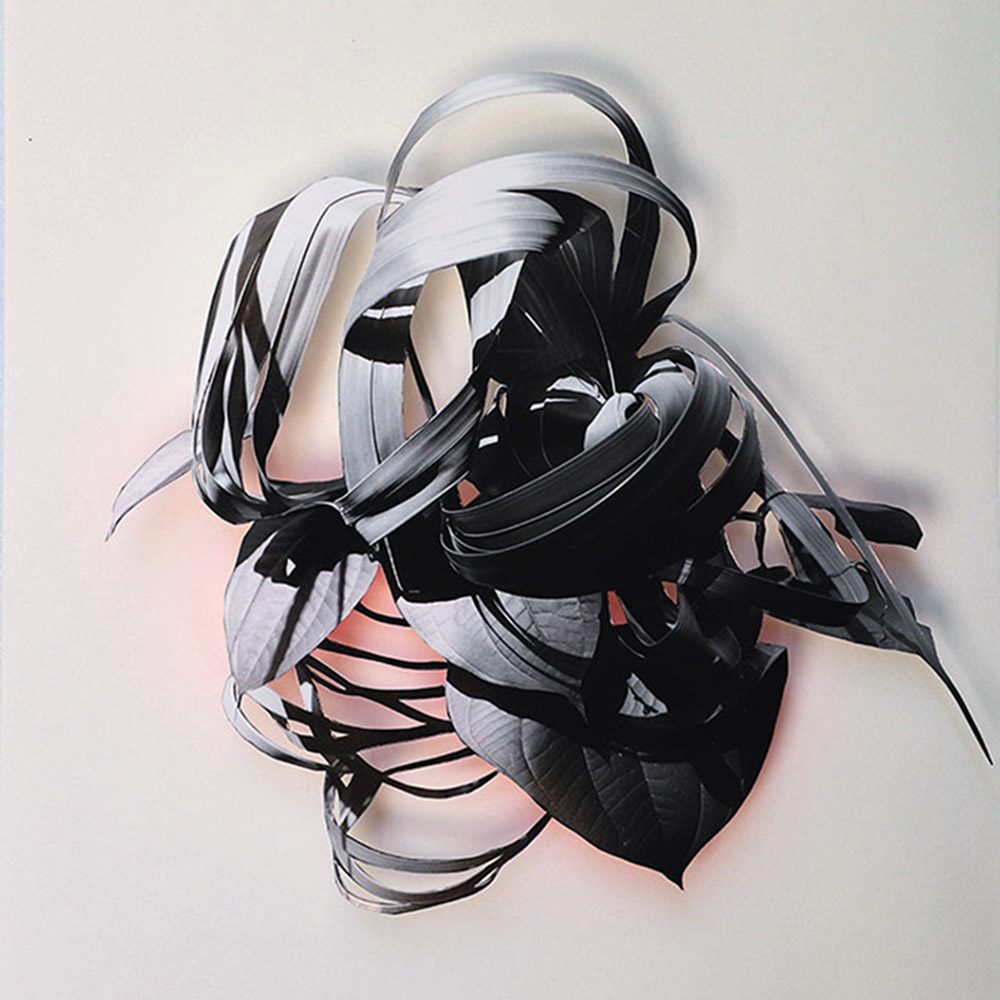
©Venessa Monokian, Small-in-Knots 04
Q: You do not add any protective coating to the paper sculptures, which allows the material to remain responsive and vulnerable rather than completely controlled or protected. Can you explain your reason for this?
I am really leaning into the fragility of the paper. When temperature or humidity varies, the work begins to curl and undulate on its own, and I find this organic response to the space really interesting. Once deinstalled, it generally returns to its normal shape.
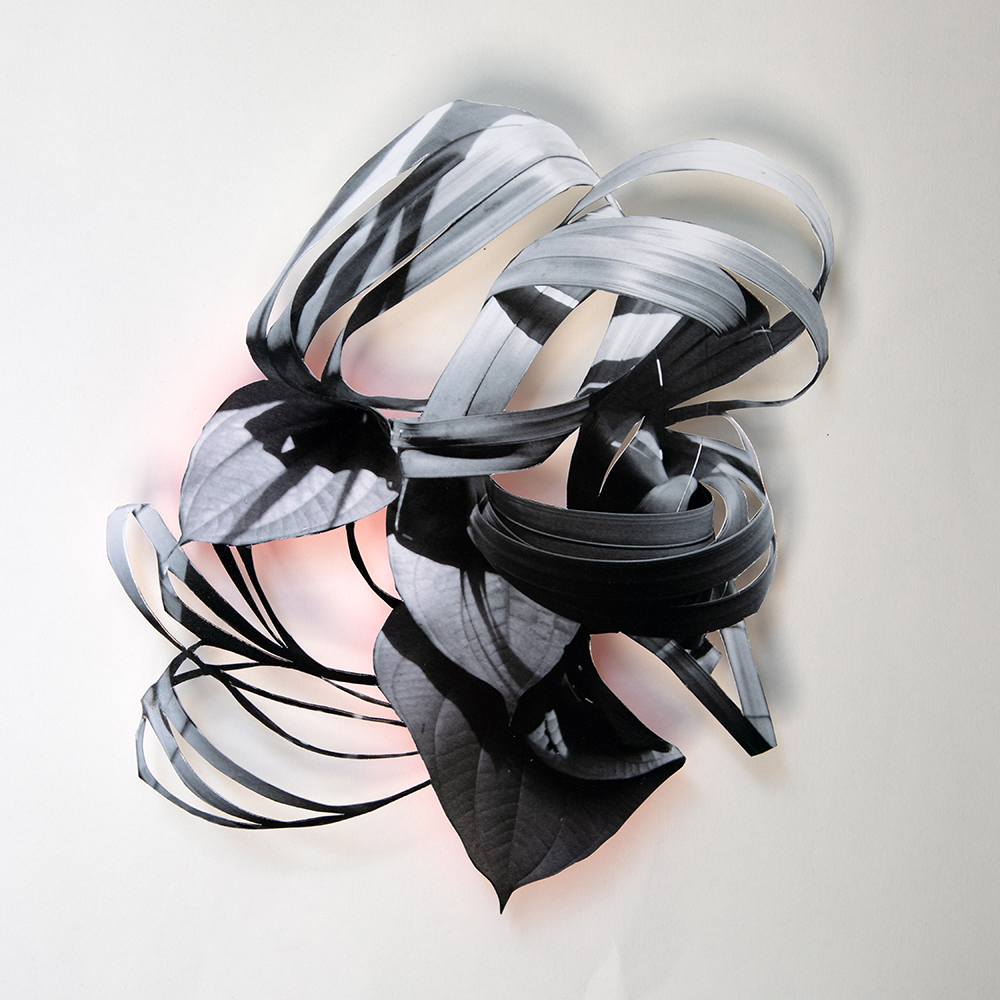
©Venessa Monokian, Small-in-Knots 07
Q: Is there anything else you would like to tell us about your work?
My hope is that the work empowers me to explore these topics and, in turn, encourages others to have conversations about them. I think it is important to have dialogue with one another, to ask questions, and to remain open to learning.
For me, the work isn’t about having all the answers. It is about being curious, asking questions, and creating opportunities for other people to do the same.
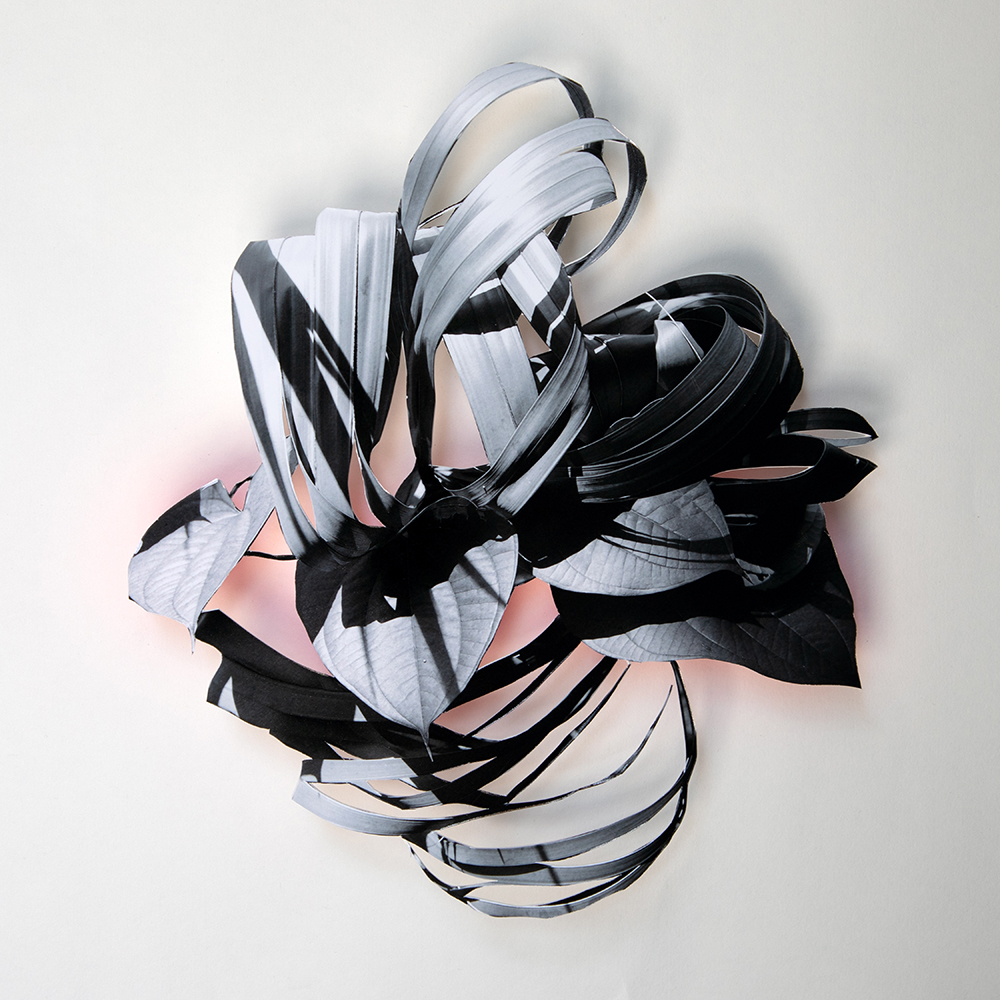
©Venessa Monokian, Small-in-Knots 08
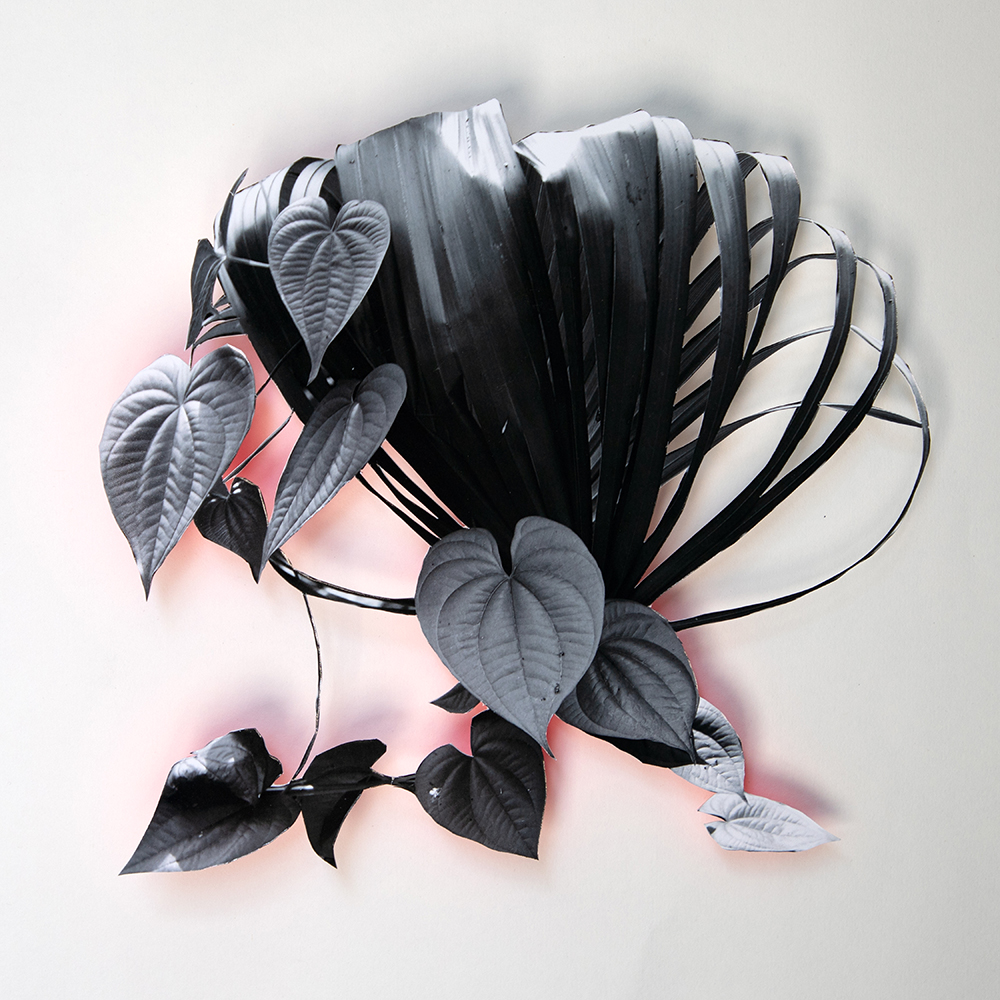
©Venessa Monokian, Small-in-Knots 09
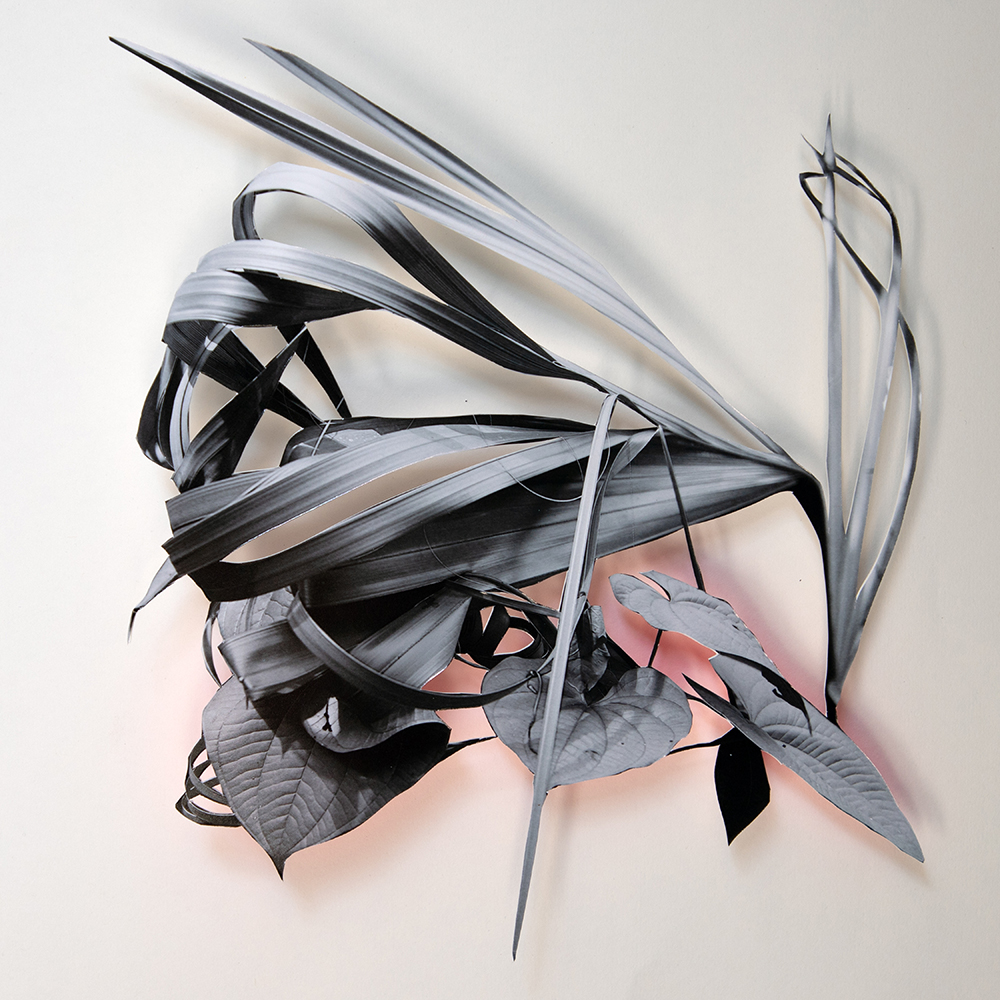
©Venessa Monokian, Small-in-Knots 10
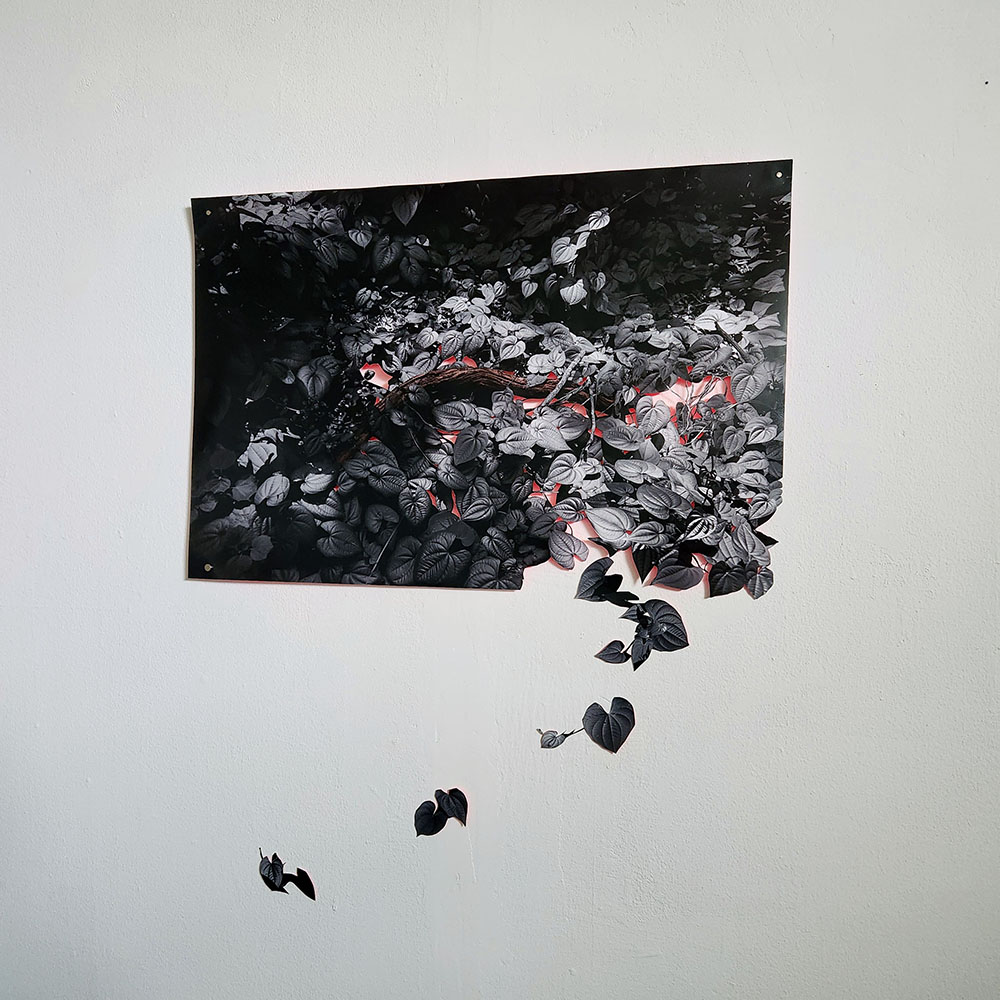
©Venessa Monokian, Stick
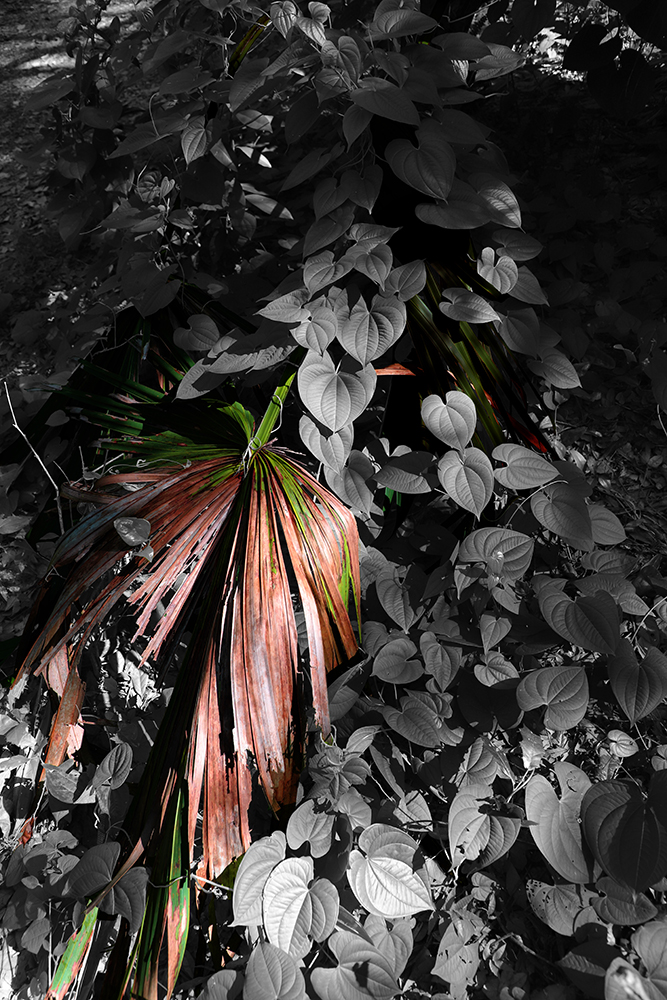
©Venessa Monokian, Untitled
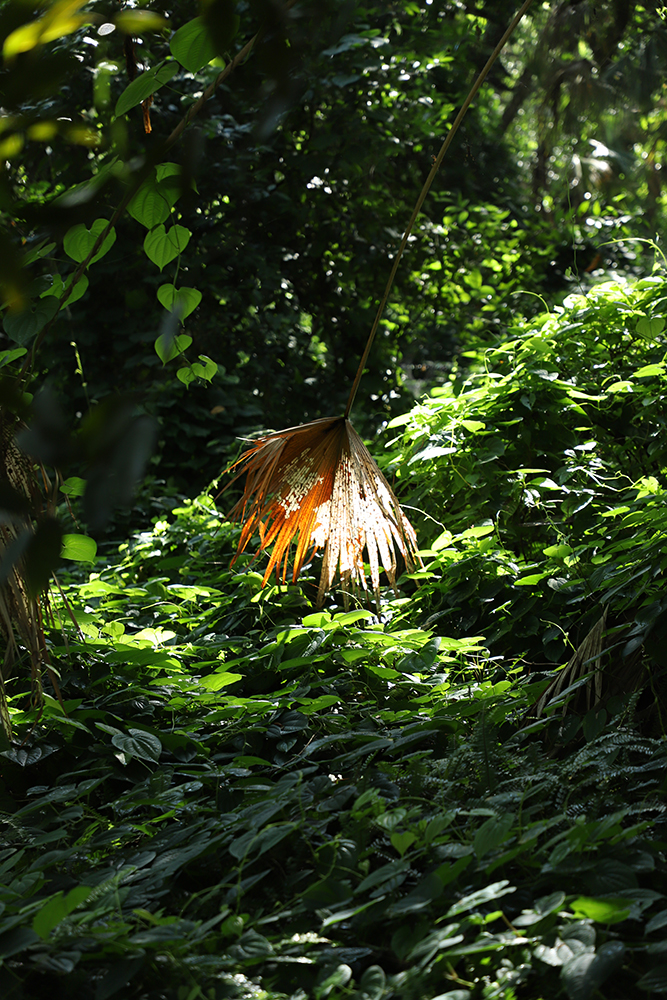
©Venessa Monokian, Palmglow
Posts on Lenscratch may not be reproduced without the permission of the Lenscratch staff and the photographer.
Recommended
-
Tree Week: Venessa Monokian: As the Glow GrowsOctober 22nd, 2026
-

Alexa Frangos: (Re)arrangingOctober 14th, 2026
-
Soomin Ham: In GraySeptember 23rd, 2026
-

Sandra Cattaneo Adorno: Light, Memory and the Everyday SublimeJune 25th, 2026
-
HANDMADE ARTIST BOOKS WEEK: Ryoko AdachiMay 28th, 2026