Alena Solomonova: Self Incomplete
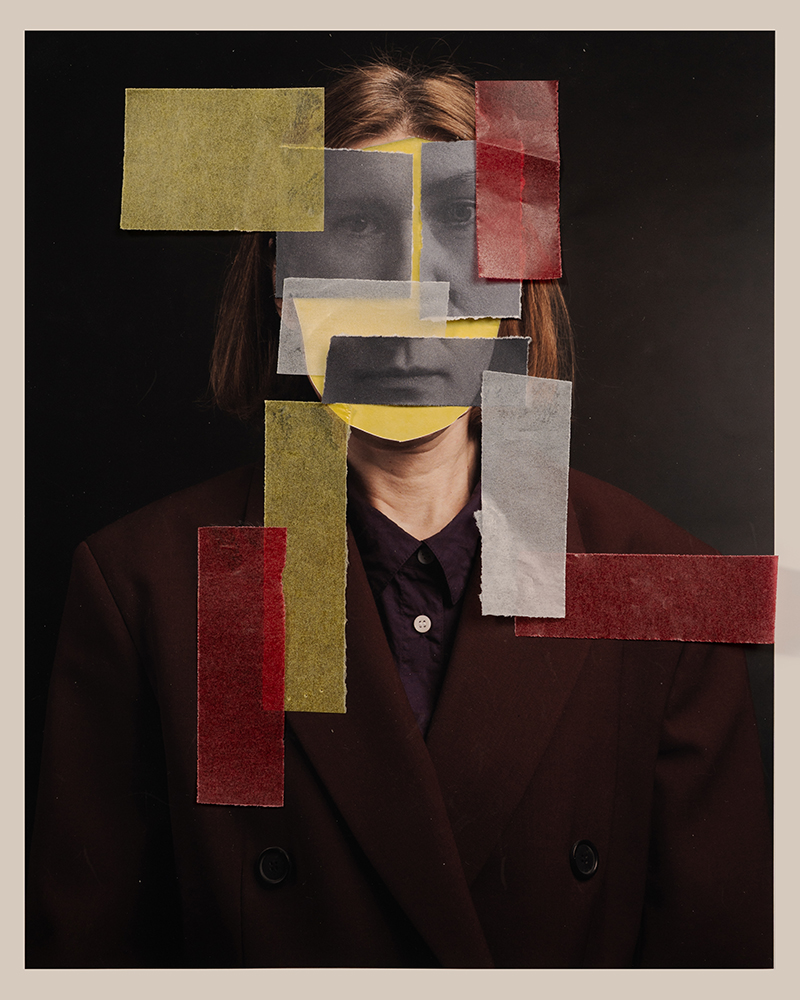
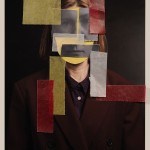
©Alena Solomonova, Discrete State 2, Self-portrait. The layers expose identity as a composite of memory, experience, social expectations and self-reflection. The constructed mask reads simultaneously as protection and a search for form.
I was scrolling through instagram and stopped immediately when I saw this image by Alena Solomonova, which then sent me to her website and the wonderful experience of discovering a distinctive visual voice. The work is layered and compelling and it was exciting to comb through her many approaches to photographing self. These photographs inhabit the terrain between construction and deconstruction. Faces are fragmented, obscured, and reassembled, reminding us that identity is shaped by accumulated experiences. Rather than presenting a unified self, the works acknowledge multiplicity, revealing identity as a shifting combination of fragments, absences, and unresolved tensions.
Self-portraiture has long been associated with the promise that an image might offer insight into the person before the camera. Yet this body of work begins with the opposite premise: that the self can never be fully known, fixed, or represented. Through acts of collage, rupture, layering, and concealment, the Solomonova dismantles the traditional portrait, transforming it into a site of inquiry.
Each image functions as an experiment in self-examination. As the artist turns inward, the portrait becomes both a mirror and a question, exposing familiar aspects of the self while uncovering others that feel unexpectedly foreign. The result is a compelling visual investigation into identity’s fractured nature, inviting viewers to consider not only how we see ourselves, but how much of ourselves inevitably remains beyond view.
A conversation with the artist follows.
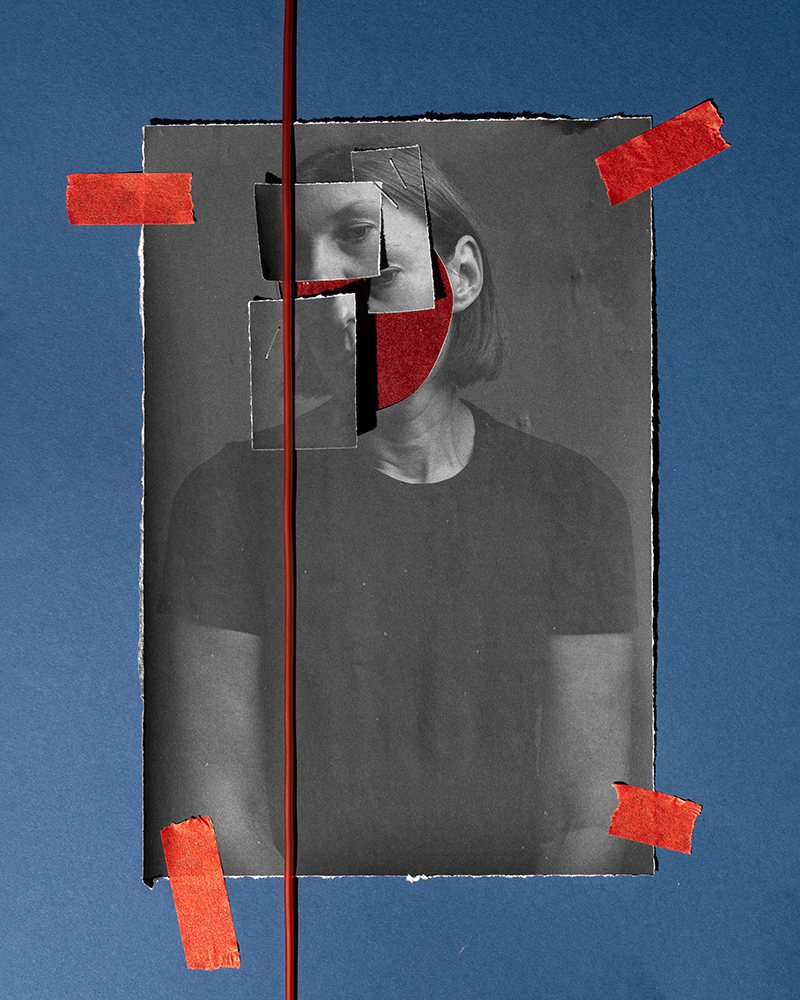
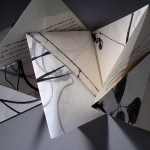
©Alena Solomonova, Discrete State. The self-portrait is cut apart and reassembled from separate fragments, as a visual attempt to capture the moment when identity splits into layers. The red line and tape mark fragile points where the image can fall apart.
In my ongoing exploration of identity through self-portraits, I employ various forms of physical intervention – collages, ruptures, overlapping objects – attempting simultaneously to reconstruct the self and dissolve it into its components. Each work is an experiment on the self, and as such, it cannot be final. Identity manifests through fragments, through absences, through the residue left behind by deconstruction. My practice is grounded in the conviction that a portrait is never, and can never be, a true representation of the self.
Identity is not a stable structure. Layers of experience, education, parental attitudes, and social expectations accumulate, intersect, and remain perpetually open to revision. My practice becomes a form of research into a self that is, in some fundamental sense, always out of reach. Each time I look inward, I encounter one of the visible layers and it is always me, yet always an unfamiliar version of me. What unsettles me further is that attempting to confront the parts of myself I resist leads only to the recognition that they are nonetheless constitutive of who I am. The exclusion of those parts would represent the self incomplete, like the construction missing the essential part. – Alena Solomonova
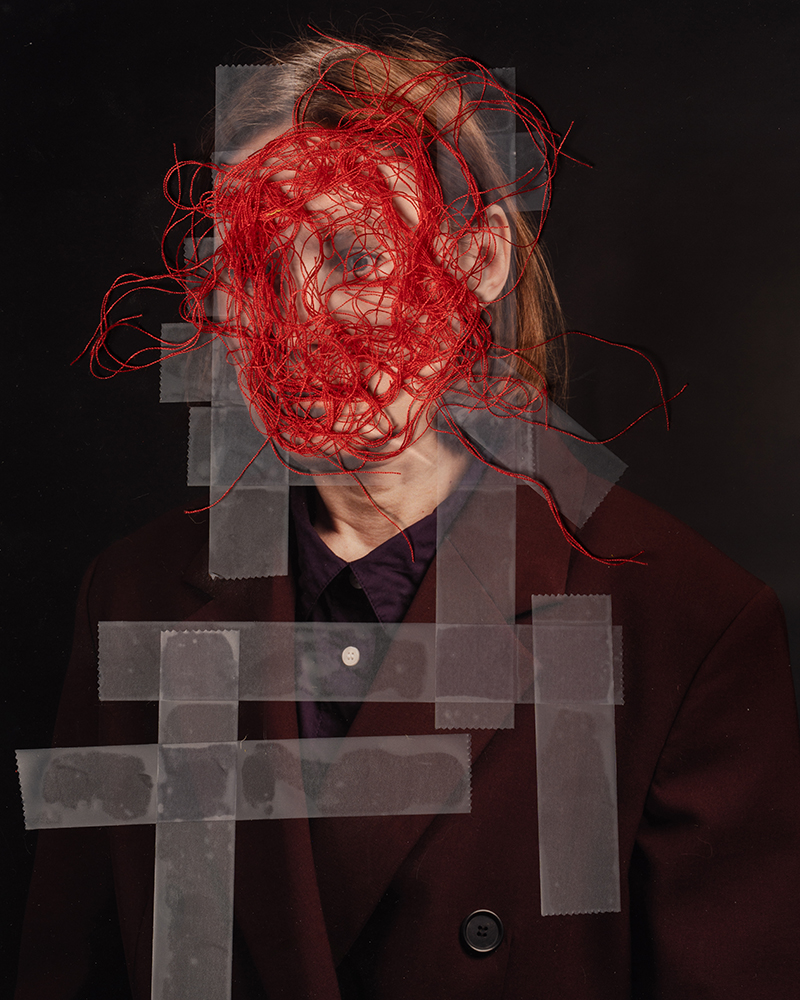
©Alena Solomonova, Discrete State 3, Red threads obscure the facial features, turning them into a tangled structure. The threads symbolize emotional complexity, inner noise, and the need to hold oneself together despite inevitable disarray.
Alena Solomonova is a Slovenia-based visual artist working across photography, self-portraiture, and mixed media. Currently pursuing her studies at the Higher School of Photography in Slovenia, her practice examines identity as a fluid and unstable construct shaped by memory, time, and lived experience.
Working primarily with self-portraiture, Solomonova physically intervenes in printed photographs through collage, tearing, threads, glass, and organic materials, transforming the portrait into an object that carries traces of vulnerability, fragmentation, and reconstruction. Her work navigates the tension between visibility and concealment, often addressing themes of aging, femininity, and the instability of the self.
Her work has been recognized internationally through awards and exhibitions including the Paris Photo Prize, ND Awards 2025, Experimental Hub Barcelona, and the LensCulture Art Photography Awards 2026.
Instagram: @solomalena
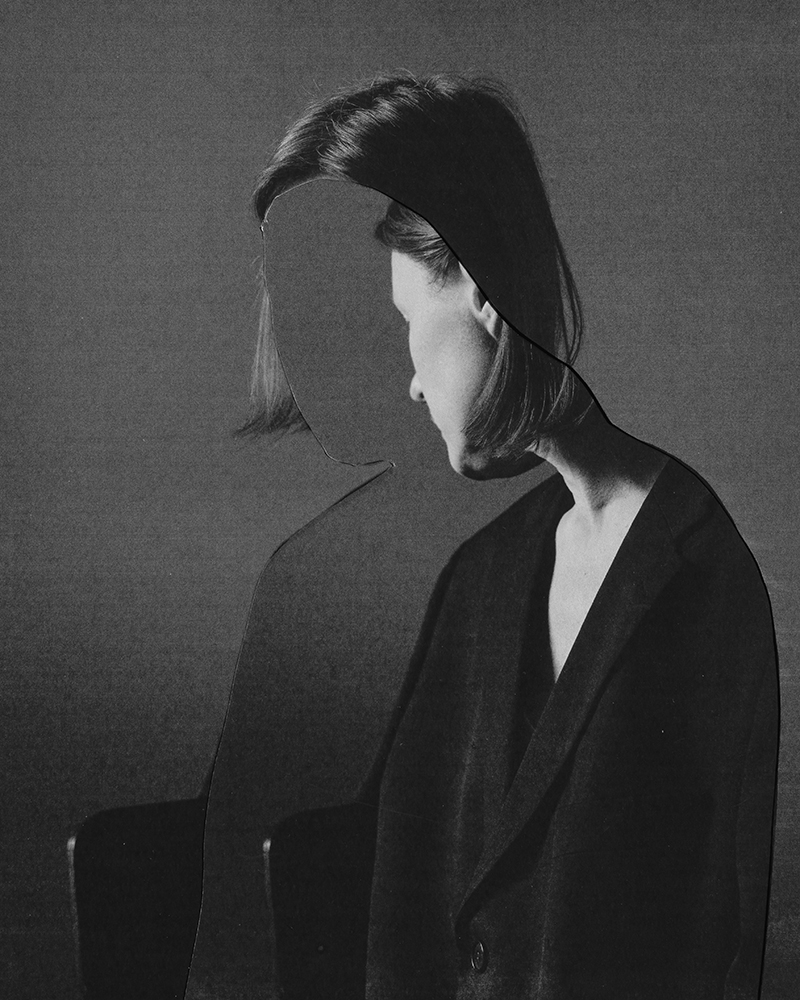
©Alena Solomonova, Beside Myself, A gaze turned both inward and back toward the self. The work reflects an attempt at introspection, where the observing “I” remains slightly detached from the self it examines.
Tell us about your growing up and what brought you to photography?
I was an ordinary child born in the Soviet Union, without any particular connection to art or
creativity. My growing up happened during a difficult period of great change, when the
Soviet Union collapsed, many people lost their jobs, and families, including mine, struggled
financially. At that time, creativity was not seen as something that could help you survive.
Most young people chose practical professions that could provide stability – lawyers,
economists, people in finance.
So I studied economics and then worked for many years as a financial specialist in different
companies. I did not think about creativity at all. In fact, I always believed that art and I
were incompatible.
But over time I began to feel that what I was doing did not bring me joy. I wanted to find
something that would give me meaning, not just income. I studied psychology, thinking that
perhaps this was the direction I wanted to follow. Around the same time, I met my partner,
and we moved to Slovenia. I planned to continue my studies there, but then the pandemic
began, and everything was postponed.
While everyone was locked inside their apartments, I decided to take an online course in
mobile photography, more as a form of entertainment than as a serious decision. And quite
unexpectedly, I discovered an entire world. I found something in which I felt very natural, as
if it had always been a part of me. Since then, I have taken many different courses and
studied in several photography schools. Most recently, I completed my studies at the
Higher School of Photography.
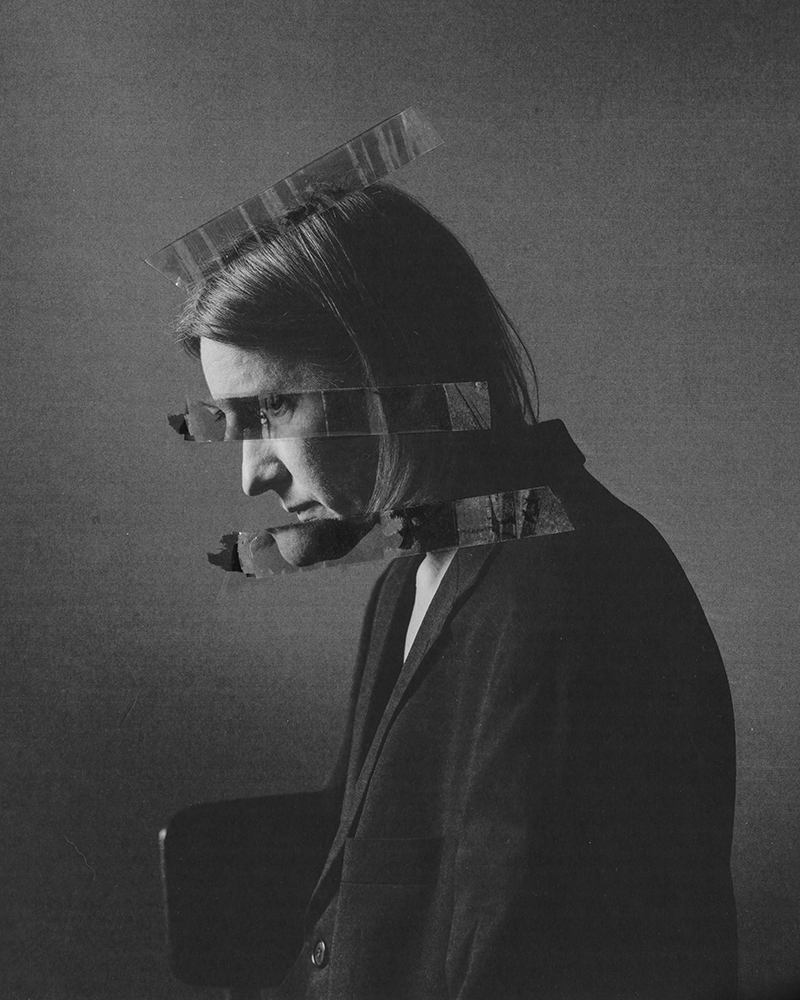
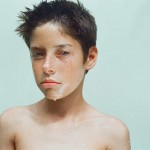
©Alena Solomonova, Beside Myself, The face appears fragmented and slightly displaced, as if parts of the self have shifted out of alignment. The portrait reflects a moment of being divided between presence and distance.
How did you come to self-portraiture?
At first, I photographed nature. Then I photographed anything that attracted me, and at
some point I became especially interested in portraiture. I photographed different people,
but over time I realized that I could not always apply my own creative impulses and ideas
to others. Their relationship to my experiments might be very different from mine.
Gradually, I came to the understanding that it was easier for me to work with my own face
and my own identity. With myself, I can do anything. I see myself as a kind of blank page, a
material I can work with freely. I am not afraid to experiment with myself, to change the
image, to destroy it, to try different approaches. And, of course, I am always available for
the work.
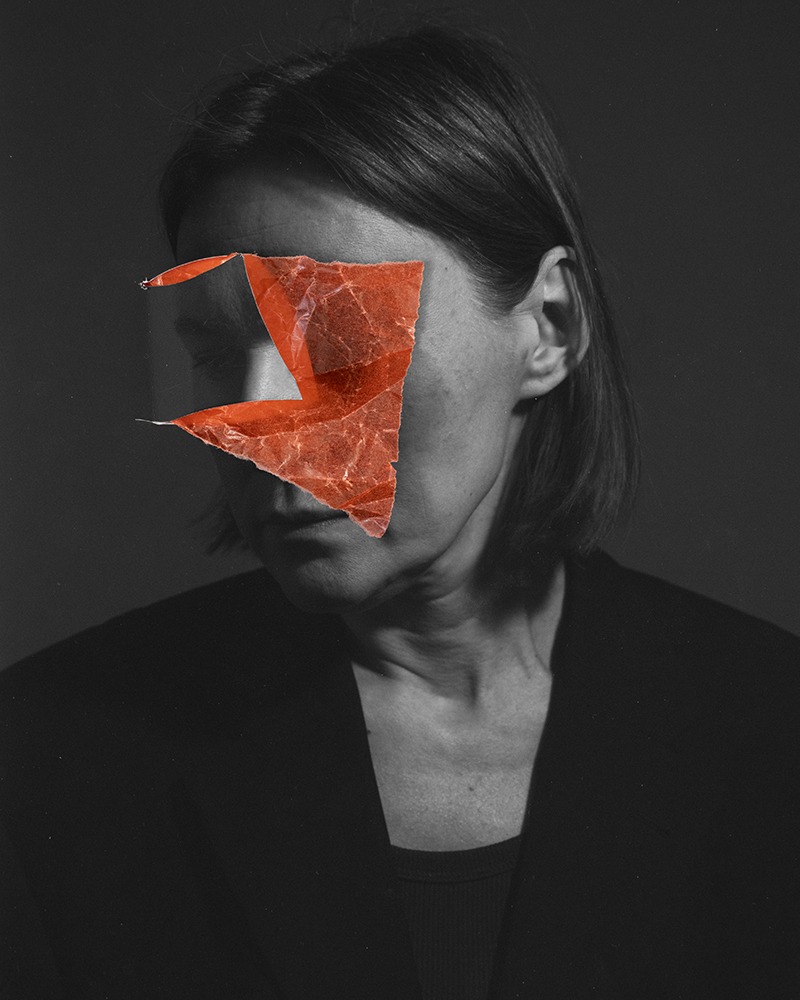
©Alena Solomonova, Beside Myself, Beside myself 3 What was kept inside for too long begins to force its way out.
You write that a portrait can never be a true representation of the self. What, then, can a portrait reveal?
In my view, a portrait can always reveal a part of the self, but never the whole self. For me,
the self is an unstable structure. It is constantly changing – under the influence of time,
events, stress, the external environment, relationships with other people, and the way
others see us.
At any given moment, we show the world only a certain accessible part of ourselves.
Sometimes it is what we want to show. Sometimes it is what we are ready to show.
Sometimes it may be a vulnerability that becomes visible only in a particular situation or
with a particular person.
So a portrait can reveal not a complete personality, but a temporary construction – one of
its layers, one of its states. A full representation of the self seems impossible to me,
because identity consists of many layers that come together differently each time. When
we look at another person, we see a new structure each time, even if the difference is
subtle – the version of that person that is available to us in that particular moment.
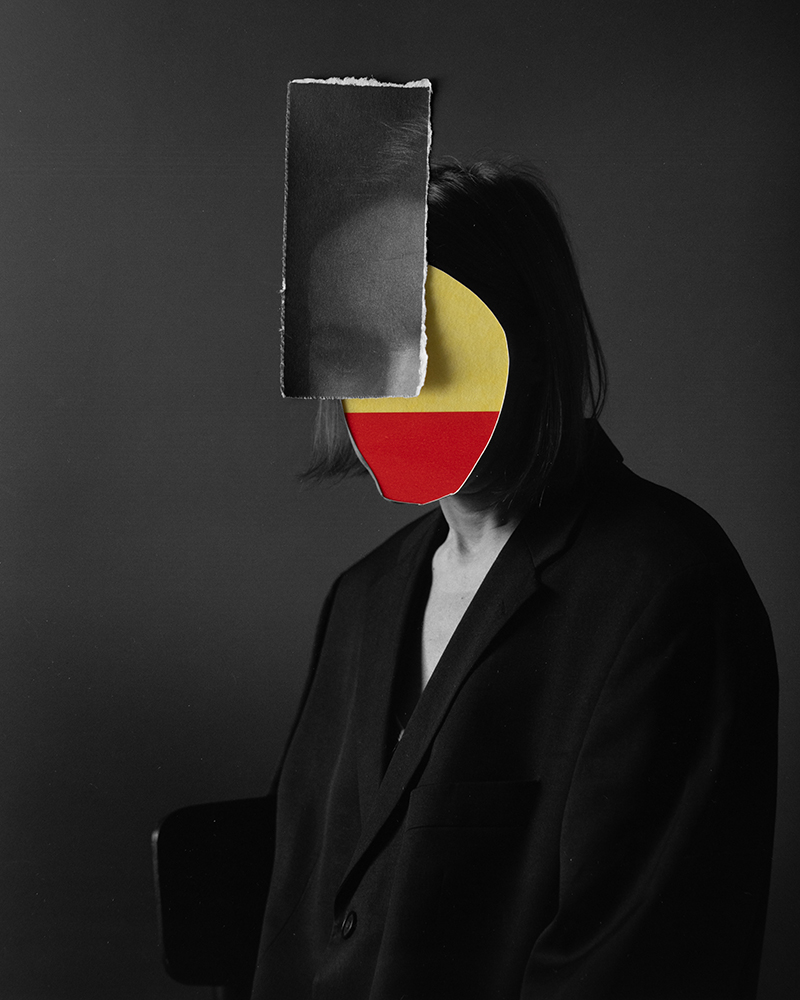
©Alena Solomonova, Leftovers, Leftovers of the image remain where the face once was. Layers of paper, color, and fragments replace the features, suggesting an identity assembled from what is left behind.
How do you decide when a self-portrait is complete if identity itself is always in flux?
That is a very good question, because I do not really define this moment rationally. It
happens more intuitively. At some point, I feel that the work has reached a state that is
sufficient for me at that moment, and then I stop.
So the completion of a self-portrait is not connected to the idea that the image has become
final or complete. It is more like a temporary point, an unconscious choice. At that moment,
I am satisfied with what has appeared, and the work is finished for me. But this does not
mean that the image, or the subject itself, cannot continue to change.
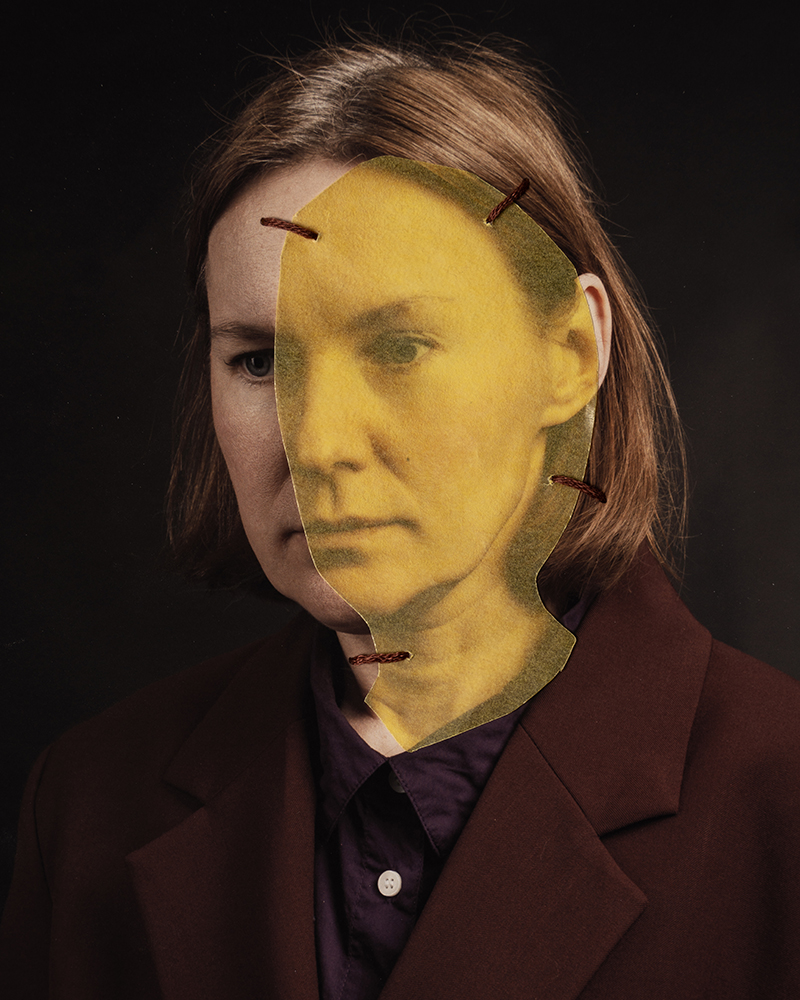
©Alena Solomonova, Stability, Identity splits in two, while the gesture of holding it together becomes only an illusion of stability.
What does the physical destruction or alteration of the photograph allow you to
express that a traditional portrait cannot?
I cannot say that a traditional portrait is unable to express certain things. I think that in
skilled hands, it can also express a great deal, perhaps even the same things I try to show
through my work. But my own practice also has a psychological character.
When I work with my hands and physically intervene in the image, I interact not only with
the photograph as a reflection, but also with my internal states. It becomes a way of
working intuitively with what is in front of me and, at the same time, with what is happening
inside me.
This intervention allows me to express pain, tension, my relationship with the world, and
my relationship with myself. Through working by hand, these things appear in my practice
not necessarily more easily, but more deeply and more interestingly. The physical alteration
of the photograph turns the portrait from an image into a process – a space where internal
states can be lived through and made visible.
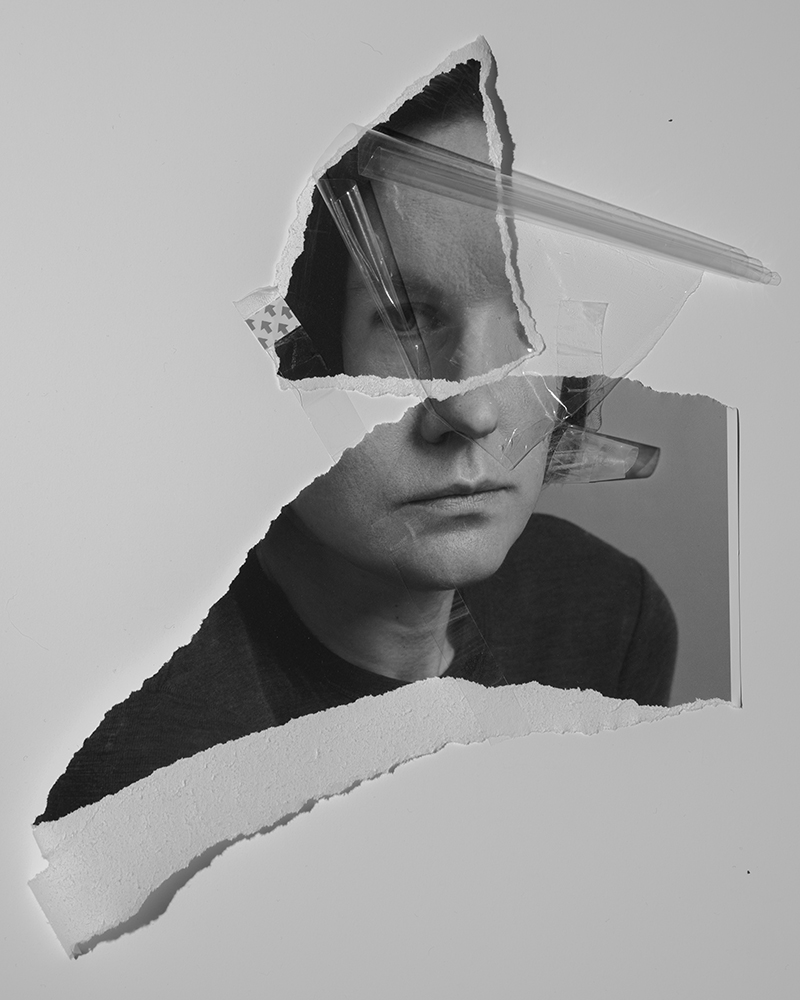
©Alena Solomonova, Split, An active disintegration of identity and an attempt to preserve at least something from what is falling apart.
How has your understanding of yourself changed through the process of making
this work?
I think, as with many artists, the longer I work, the more courage and openness appear. In
the beginning, it was quite difficult for me to intervene in the portrait. Sometimes it even felt
as if I was doing something wrong, almost destructive. But over time, it became a natural
practice for me, and instead of destruction, it gave me a sense of freedom: I realized that I
could do anything with the image.
At different stages, this appeared in different ways, and it was always connected to my
relationship with myself. What I tried to show through self-portraiture helped me deal with
internal experiences, difficulties, and certain things within myself that I needed to accept.
The simplest example is my relationship with my appearance. Since I began working with
self-portraits, I have become much calmer about the way I look. Almost all the insecurities
and dissatisfaction I used to have have gradually disappeared.
But the most important thing for me is that this is a psychological process. Things that are
difficult to express in words, or through ordinary actions, I can express through working
with my hands. For me, this practice becomes a way of processing internal states and
helps me cope with psychologically difficult moments.
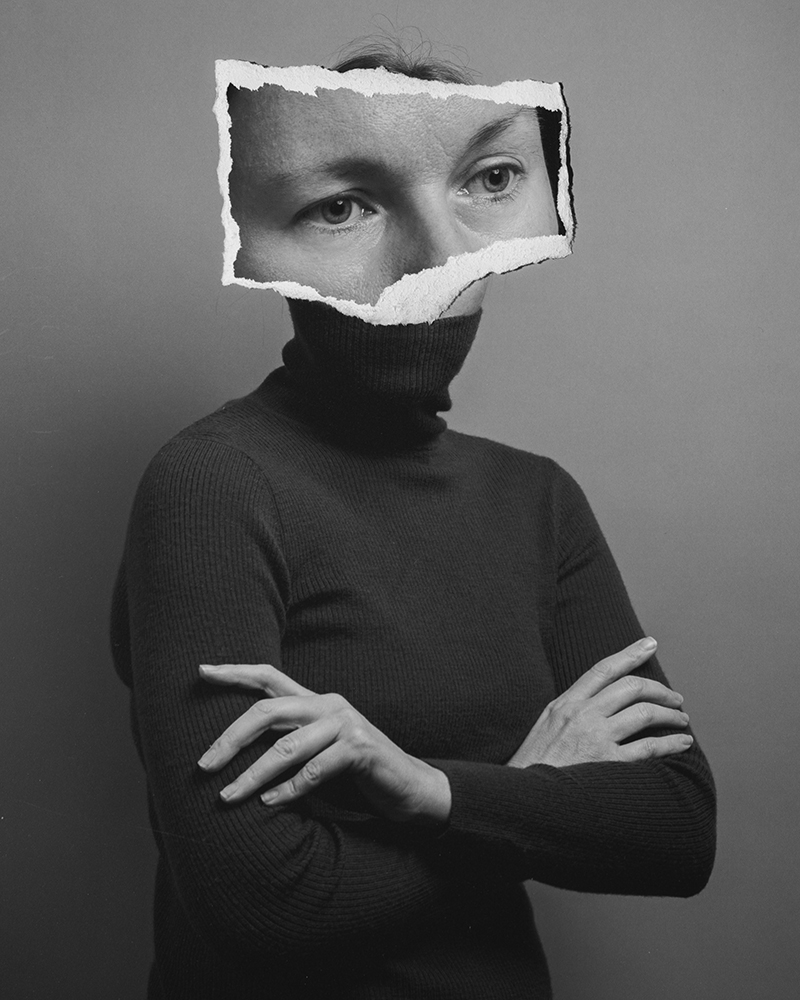
©Alena Solomonova, Thoughts, Thoughts overflow the mind, leaving almost no space for the self.
What role does concealment play in your portraits?
For me, perhaps the more important role is not concealment, but revelation. Concealment
may be the starting point – the feeling that there is something hidden inside, something we
are trying to find but cannot always reach or fully express.
I feel that this hidden part still exists somewhere within, even if some things never fully
reveal themselves. My practice is built around the constant reworking of the self and of the
image. Through intervention in the photograph, I try to open what is inside: to pull it out,
take it apart, reconstruct it, and put it together again.
So concealment in my portraits is not simply a way of hiding something. It is more like a
state from which the movement toward revelation begins. Even if what is hidden becomes
visible only partially, the attempt to come closer to it is important to me.
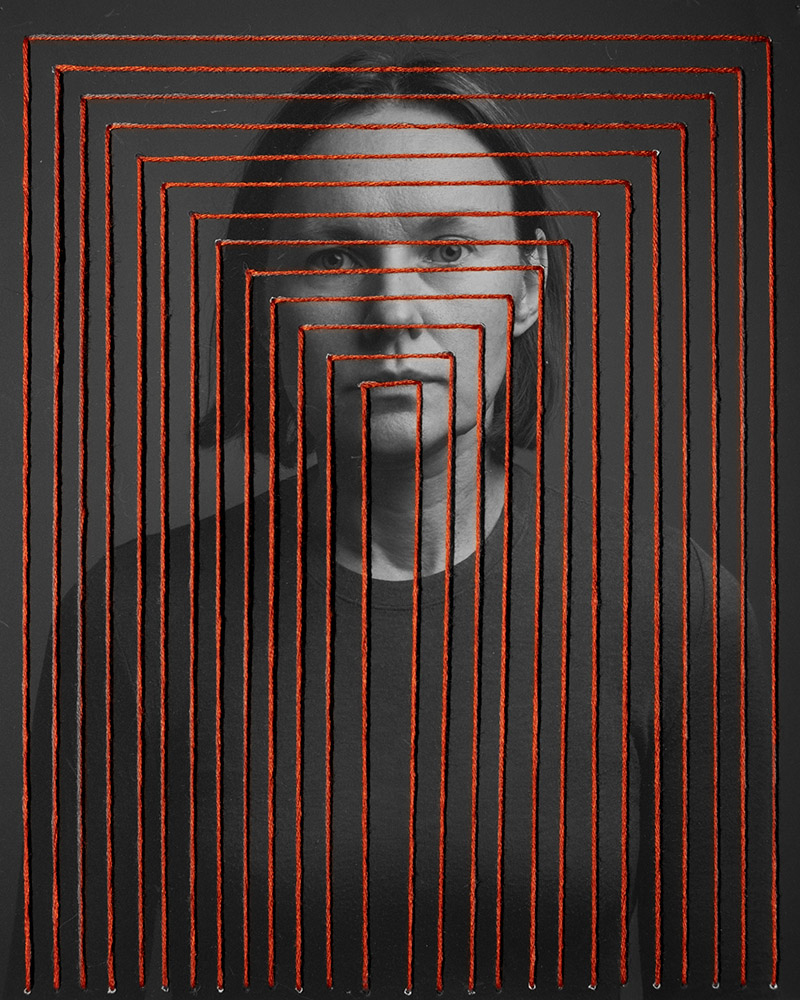
©Alena Solomonova, Paths, Obsessive repetition of thoughts and actions becomes a closed system.
If there is no final or complete portrait of the self, what keeps you returning to self-portraiture as a means of inquiry?
For me, this is connected to the question of identity, which is now in a rather complex state.
First, I am an immigrant, and several cultures are mixed within me because I live outside
the country where I was born. Second, the events of 2022, the beginning of the war, deeply changed my relationship to my own identity – to who I am, where I come from, and what
that means to me.
What is happening, and what my former homeland, Russia, is doing, became very painful
for me. It led to deep reflection on what part of me is occupied by this country, which is now
very difficult for me to perceive as my own or as part of myself. At the same time, it remains
part of my past, my memory, and my formation. This part is difficult to accept, but it is also
impossible to simply separate it from myself.
So this process of reworking does not end. It happens continuously. That is why I return to
self-portraiture again and again, as a way to assemble and reassemble myself, to try to find
something, to accept something, or to recognize the impossibility of acceptance. For me, it
is an ongoing process of reflection, searching, and processing pain.
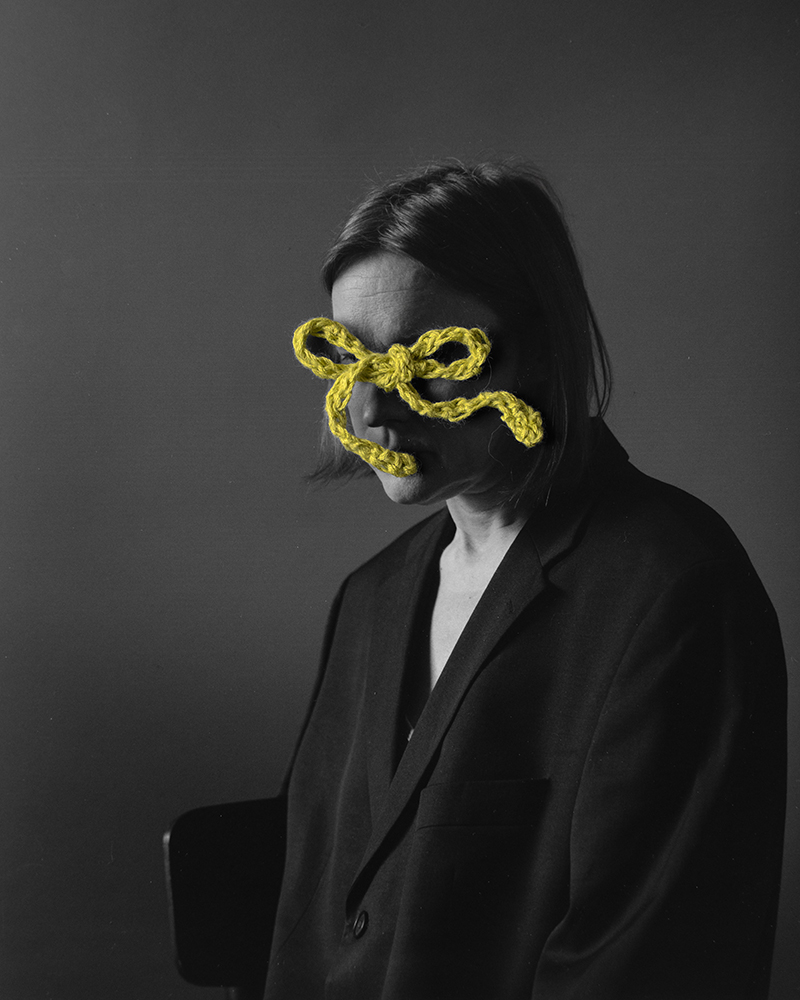
©Alena Solomonova, Noname. The self withdraws behind a protective gesture: I am not available for your gaze.
Who or what inspires you?
I have many sources of inspiration. Probably the greatest source for me is other
photographers and artists – colleagues I know personally, as well as authors whose work I
follow through social media, platforms, and publications. Seeing how others work, how they
develop, and how differently they approach image-making and the question of identity
supports and inspires me a great deal.
If I speak about figures who have influenced on me most, then among the classics Cindy
Sherman is important to me. She also works with self-portraiture and uses it to explore
identity, the image of women, roles, and modes of representation. For me, she is in some
sense a role model – an example of how an image and identity can be taken apart.
Among contemporary photographers, it is difficult for me to name only a few people. My
vision of myself, my own work, and the work of others is constantly changing, so the artists
I look at or feel inspired by also change. There are many of them.
I am also very inspired by the fact that I am constantly learning and surrounded by like-
minded people. This creative community around me is one of the strongest forces that
helps me move forward.
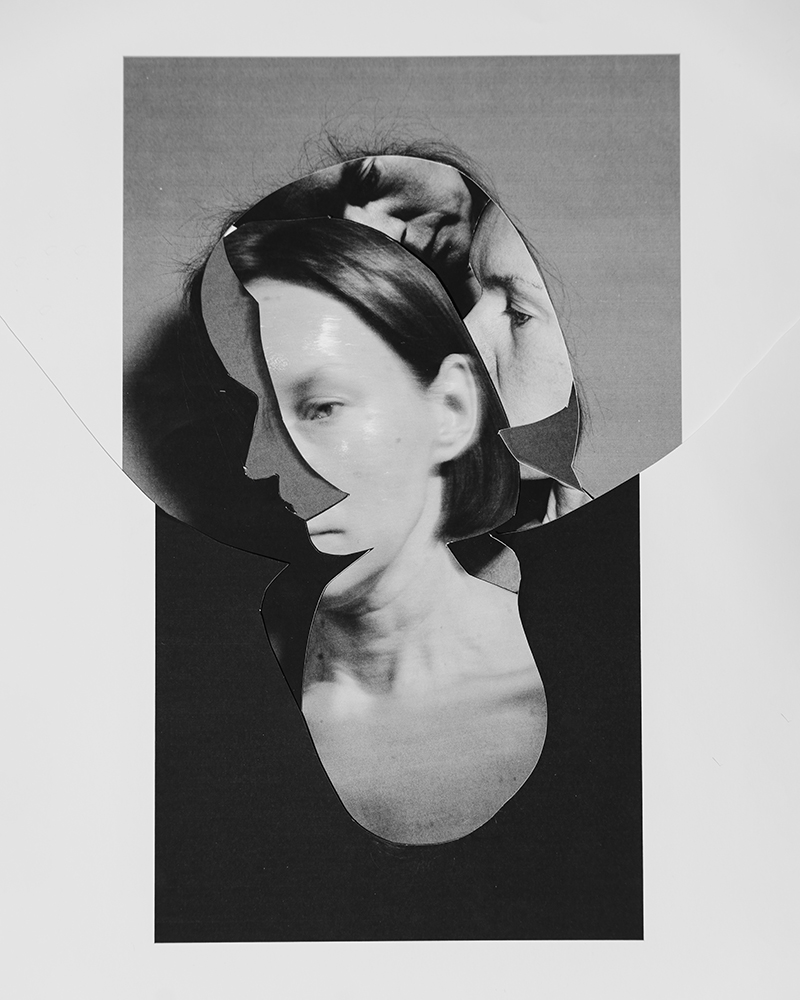
©Alena Solomonova, What a mess. Identity begins to fragment as body and mind fall out of sync, no longer forming a coherent whole, From the project about perimenopause period
What are you currently excited about — work you’ve seen, movies, books?
In cinema, I feel close to the films of Yorgos Lanthimos. I am drawn to his aesthetics, to the
way he works with form, color, and visual language. But I am also interested in his
relationship to life situations — slightly absurd, strange, shifted. This is something that
surprises and inspires me. In general, I like art that is able to surprise me.
As for books, I read constantly. At the moment, I am reading The Three-Body Problem. It is
a very interesting book that makes me think about people, about humanity, about relationships between people, how these relationships develop, and where they can lead. It
also reflects on how destructive people can be toward themselves. Unfortunately, this is
something we can also observe quite clearly in reality today.
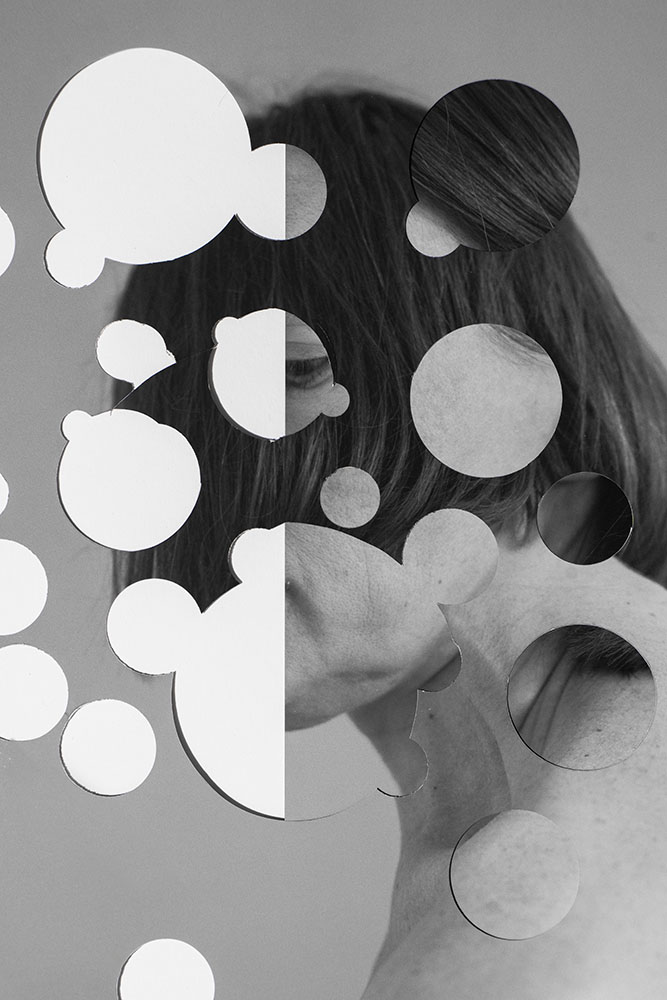
©Alena Solomonova, Parts and holes. Too many changes at once: the mind overloaded, the body estranged, the self barely able to contain it all. From the project about perimenopause period.
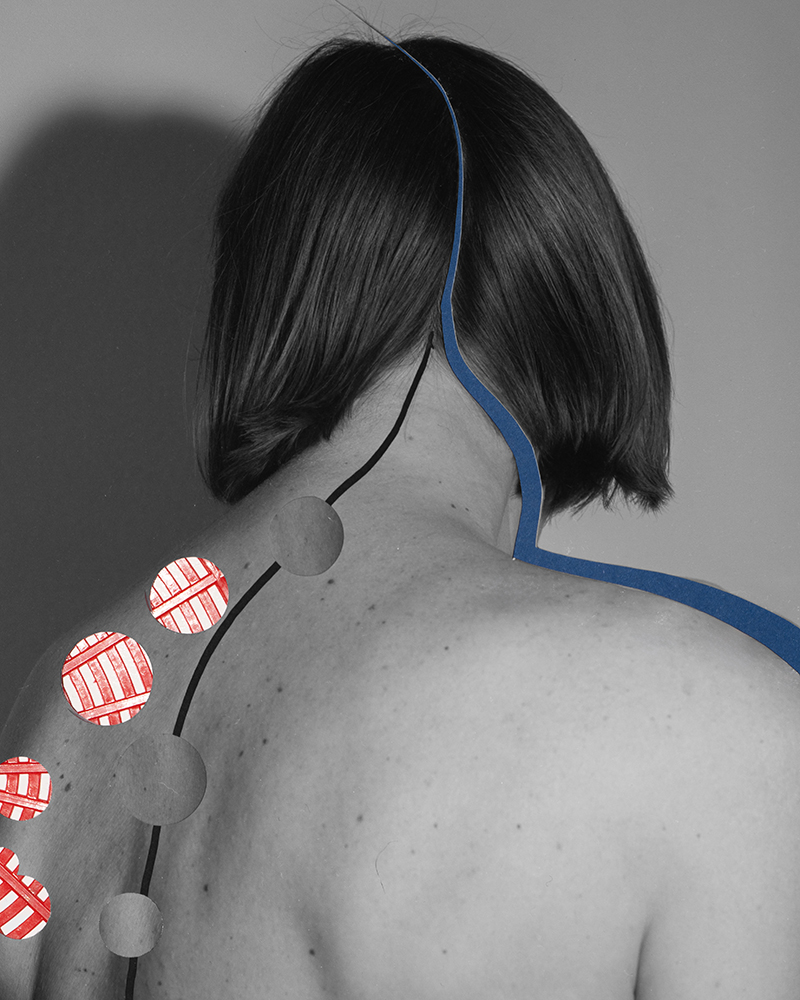
©Alena Solomonova, Parts and holes 2, The body turns into unfamiliar territory, a landscape marked by changes I can no longer recognize as mine, From the project about perimenopause period
Posts on Lenscratch may not be reproduced without the permission of the Lenscratch staff and the photographer.
Recommended
-

Alena Solomonova: Self IncompleteJune 26th, 2026
-
The Infinite Light of Duane MichalsJune 16th, 2026
-

HANDMADE ARTIST BOOKS WEEK: VERONIKA SCHÅPERSMay 29th, 2026
-
HANDMADE ARTIST BOOKS WEEK: Ryoko AdachiMay 28th, 2026
-
Eugenia Brodsky: ChrysanthemumMay 19th, 2026