Lenny Gerard: Day vs. Night Juxtaposition
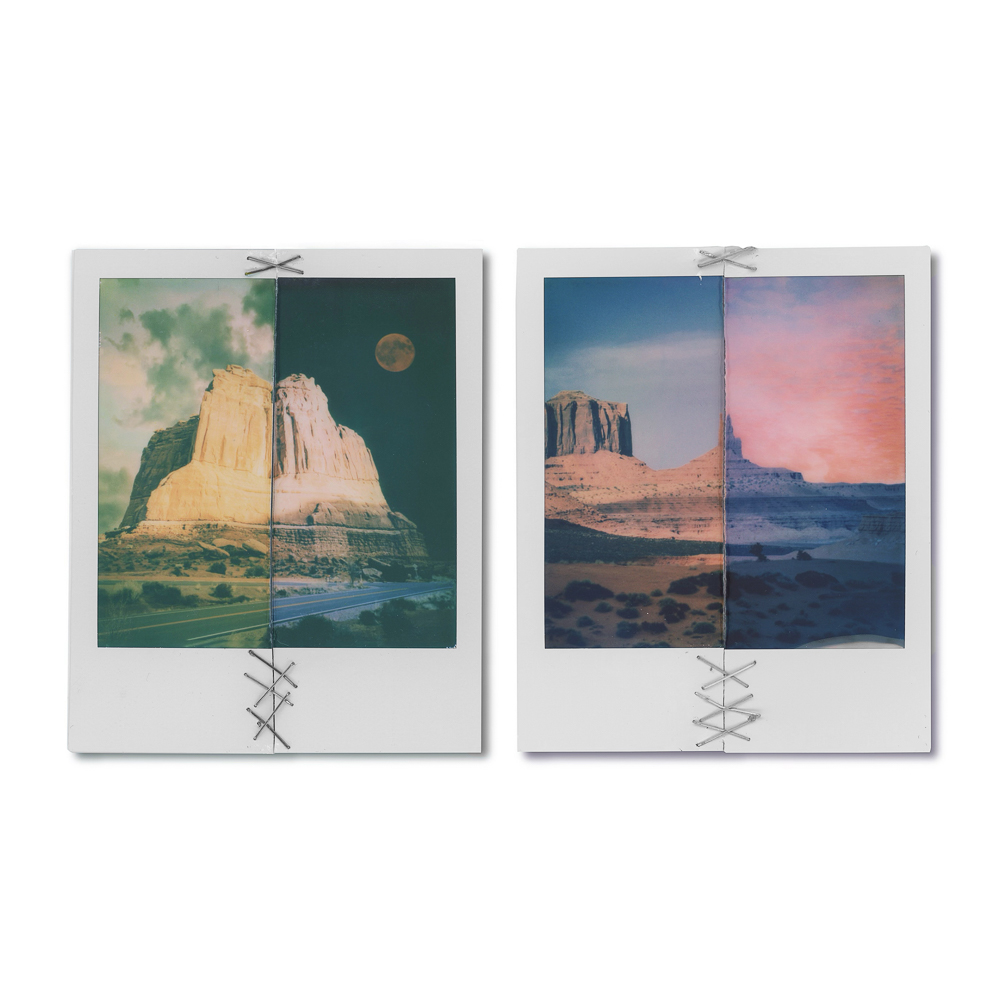
©Lenny Gerard, Cliff Hanger: Desert landscapes split between sunlit warmth and cool moonlight. The same place holds two extremes at once. It reflects how nature can feel both stable and unpredictable.
An interview with the artist follows.
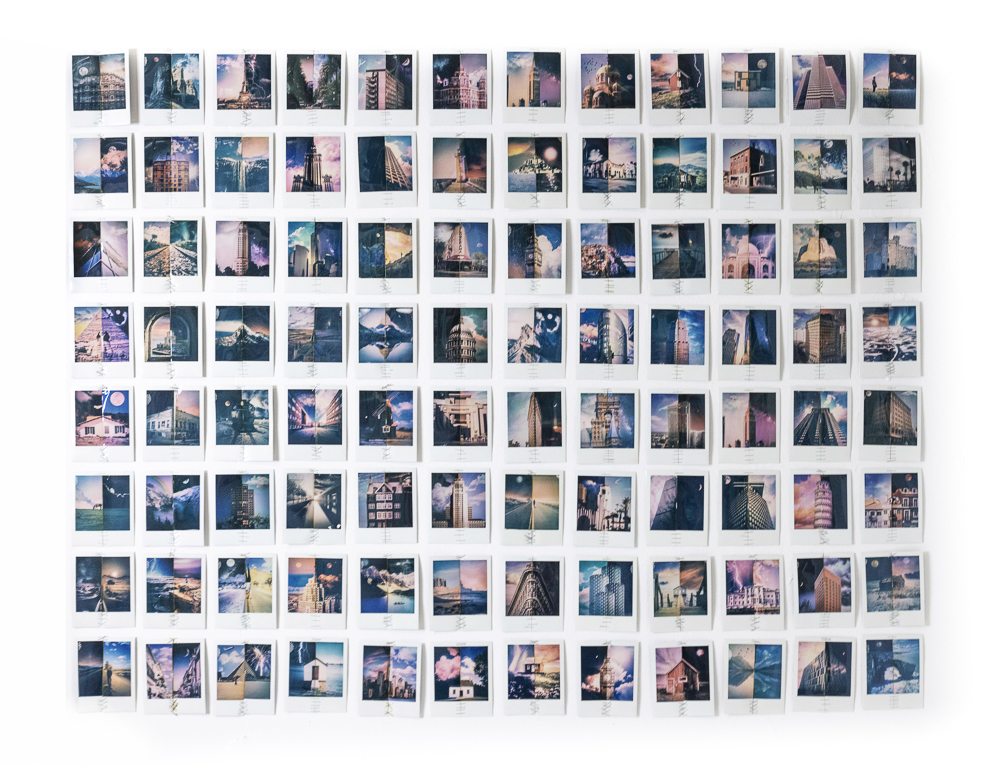
©Lenny Gerard, Juxtaposition Grid: A grid of city buildings split into day and night scenes. Bright, warm tones show the energy of the day, while darker tones feel quieter and more reflective. Part of a larger set of over 120 works, including one of the Walt Disney Concert Hall archived at LACMA.
Lenny Gerard is a Los Angeles–based multidisciplinary artist working in photography, painting, assemblage, mixed media, textiles, and installation. Their work explores social issues, identity, and political power through layered visual narratives that blend satire, cultural critique, and personal experience. They received a BFA in Photography and a BA in Liberal Arts with honors from Parsons School of Design in New York City.
Their work is included in the permanent collection of the Los Angeles County Museum of Art (LACMA) and has been exhibited in more than 29 group exhibitions, including at the Museum of Contemporary Art San Diego (MCASD) and the Santa Monica Art Museum.
Gerard has collaborated on projects with Netflix, H&M, Burt’s Bees, and the Academy of Motion Pictures as a creative producer. They received an Award of Appreciation from the City of Los Angeles for their work as an art educator at the Braille Institute, where they teach art to blind and visually impaired students, and lead creative workshops across Los Angeles for disabled and disadvantaged communities.
After surviving a life-altering accident that left them paralyzed for months, Gerard fully committed to their studio practice, transitioning from a corporate creative career into full-time work as a fine artist and educator after relearning to walk.
Instagram @lenny__gerard
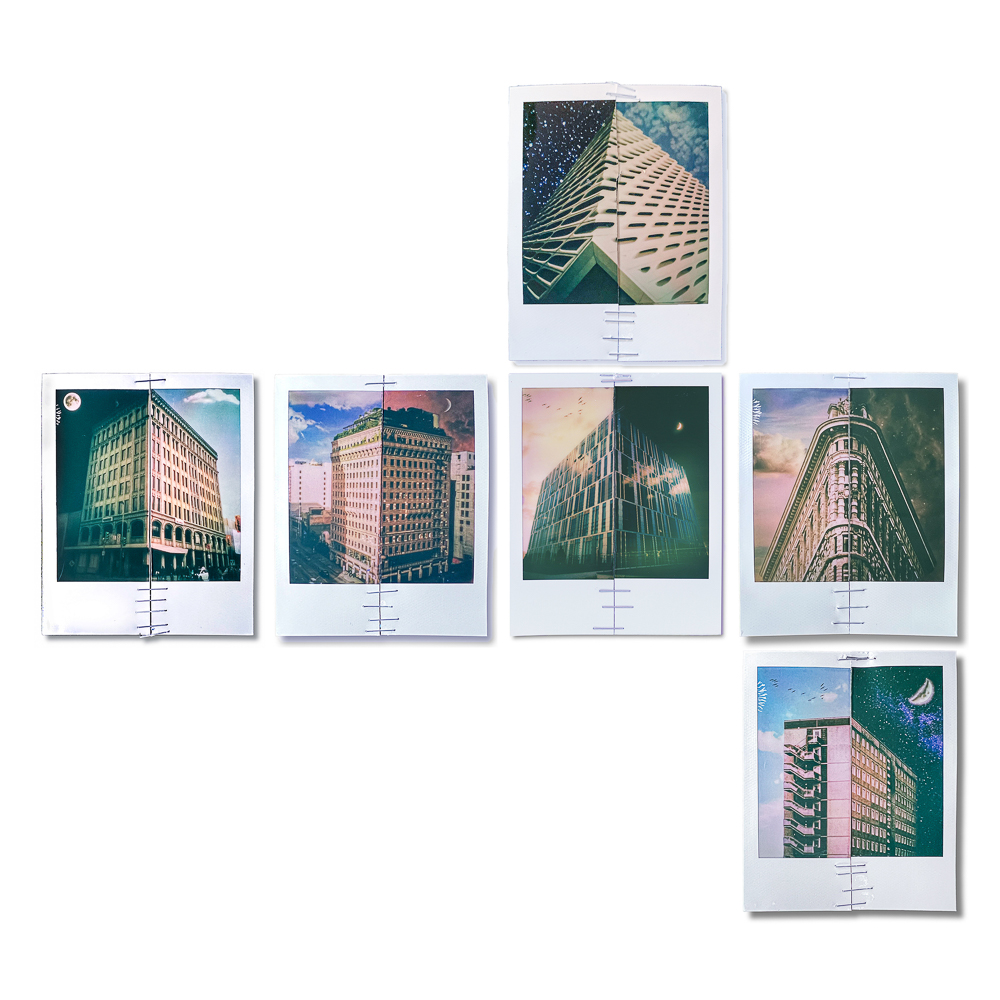
©Lenny Gerard, Capitalism
Day vs. Night Juxtaposition
This series was created over two years (2022–2024) and comprises over 120 Polaroids. Select pieces have been scanned and enlarged into striking 30×30-inch archival prints for display. One standout piece, juxtaposing the Walt Disney Concert Hall, has been permanently archived at the Los Angeles County Museum of Art (LACMA).
Day vs. Night Juxtapositions invites viewers to find light within life’s darkest moments, encouraging a shift toward balance and hope amidst chaos.
Where there is light, there is also darkness. The series captures stark polarities—lightning in the sky, arid desert landscapes—illustrating the extreme contrasts in weather caused by climate change. It serves as a quiet yet powerful commentary on the global ecological crises shaping our world today.
The warm, vibrant tones of the daytime images symbolize the bustling energy of capitalism, while the cool, tranquil hues of the nighttime images represent the unseen beauty, creativity, and introspection often overshadowed by our work-centric culture. Together, these juxtapositions offer a nuanced critique of modern society, which prioritizes productivity over artistic expression, consumerism over imagination, and technological advancement over genuine discovery. The series also reflects on the ecological crisis, emphasizing the urgency of reevaluating our values and the lasting impact of our choices on the planet.
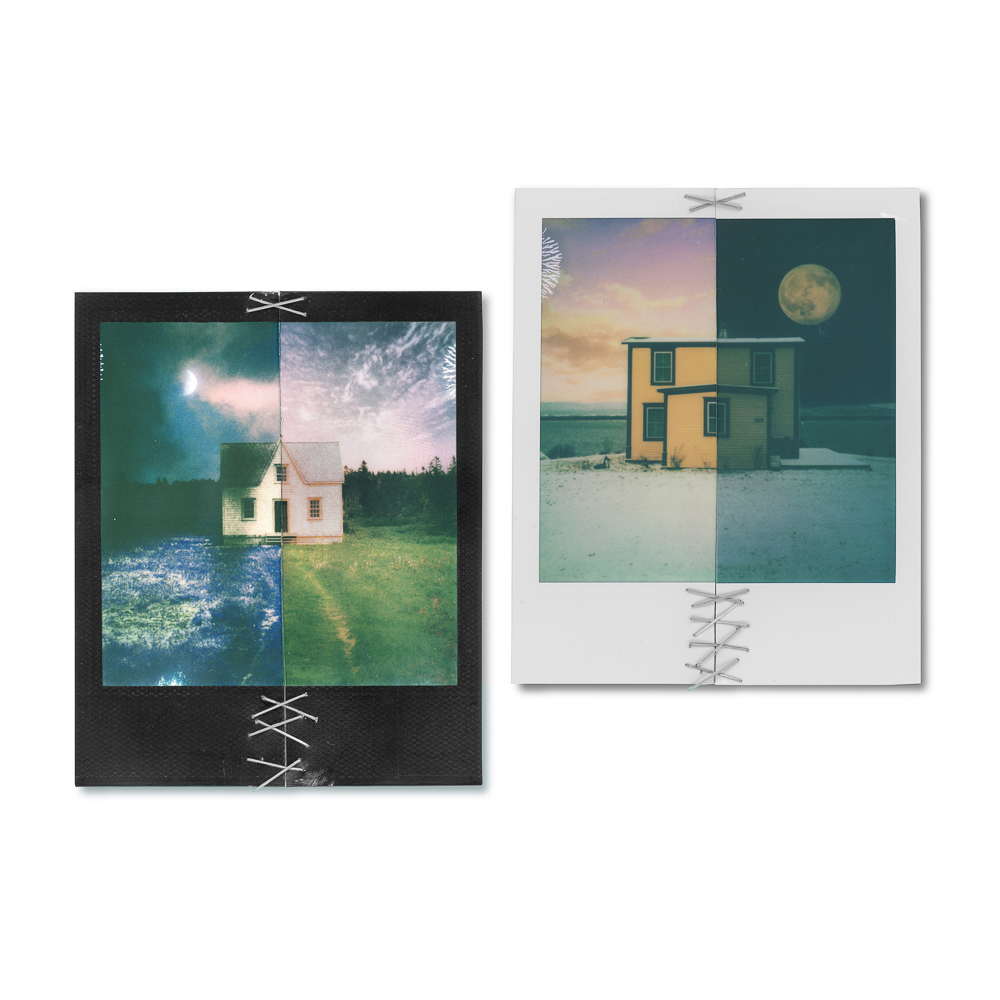
©Lenny Gerard, Home Sweet Home: Two Polaroids of a single house split between day and night. Warm pastel daylight on one side, cool moonlit tones on the other. It holds both calm and tension at once. It’s about balance and how quickly things can shift emotionally and environmentally.
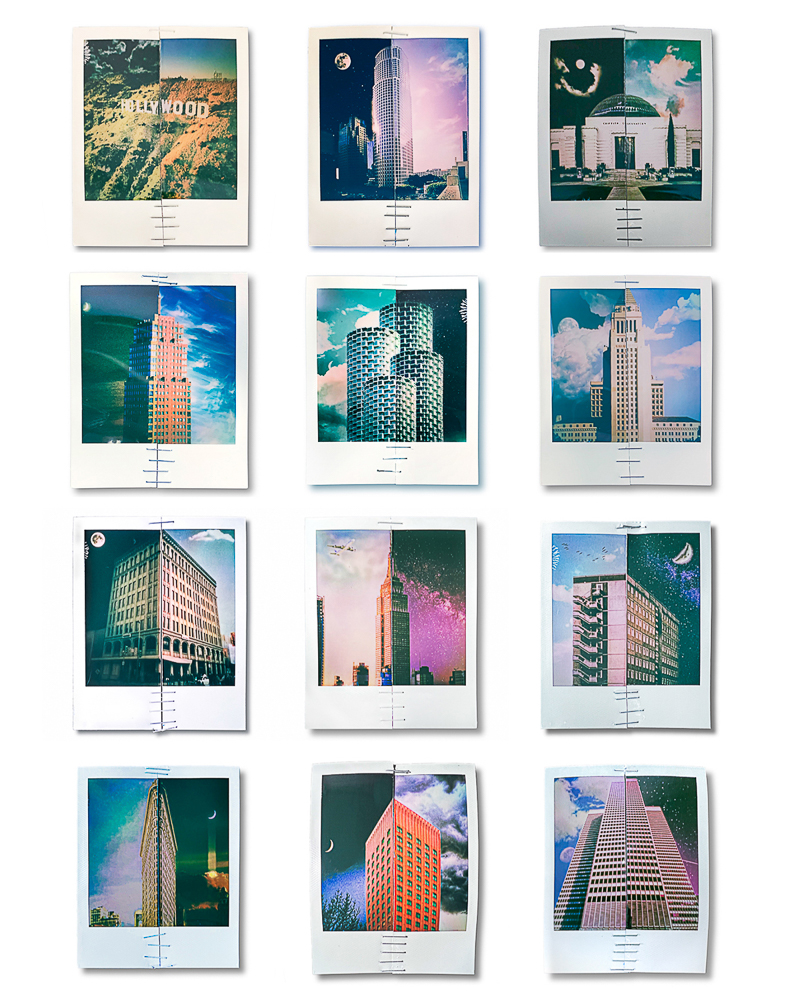
©Lenny Gerard, Final Grid: A wall of Polaroids mixing day and night into each image. Warm pinks and golds meet deep blues and greens. Repeated landscapes and buildings create a rhythm across the grid. It feels like a visual archive of contrast.
Why was the Polaroid format important for this project? What does the materiality and immediacy of the medium bring to the themes you are exploring?
The physicality of Polaroids is really important to me. I teach blind and visually impaired students at the Braille Institute, so I think a lot about photography as an object and not just a flat image. I’ve always manipulated Polaroids and photos through weaving, collage, stapling, and enlarging them to shift what a Polaroid/photo can be. I also love that Polaroids are imperfect. Every image comes out differently and I embrace that. There’s no perfection in art. The instant nature of Polaroid makes the images feel emotional and intimate, but they’re also fragile and temporary because they fade over time. That connection to memory and impermanence is a huge part of my work.
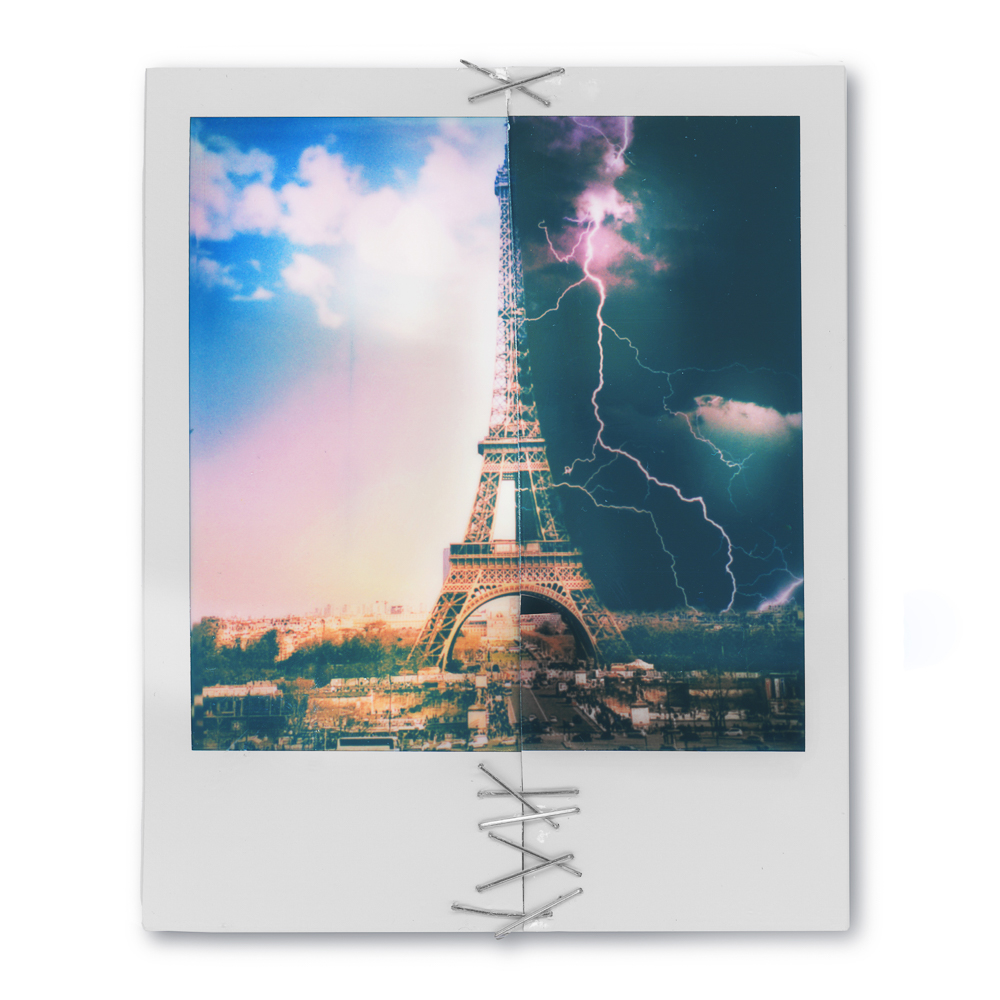
©Lenny Gerard, Liberty: The Eiffel Tower split between a soft daytime sky and a stormy night with lightning. The structure stays steady while everything around it shifts. Calm and chaos existing side by side.
How did the concept evolve over the two years of making the work, and what did you discover through sustained observation of these oppositions?
The idea of pairing day and night images existed from the beginning, but the technique evolved a lot over time. Early on, the pairings weren’t very symmetrical, but eventually I became more intentional with composition and alignment. I also realized the strongest images were often recognizable landmarks because viewers could connect their own memories to them. Los Angeles started revealing patterns to me through architecture, light, and atmosphere. The same place could feel completely different depending on the time of day.
During those two years I was also going through a lot personally, and this project became therapeutic for me. It gave me structure, stability, and maybe an obsession that kept me grounded.
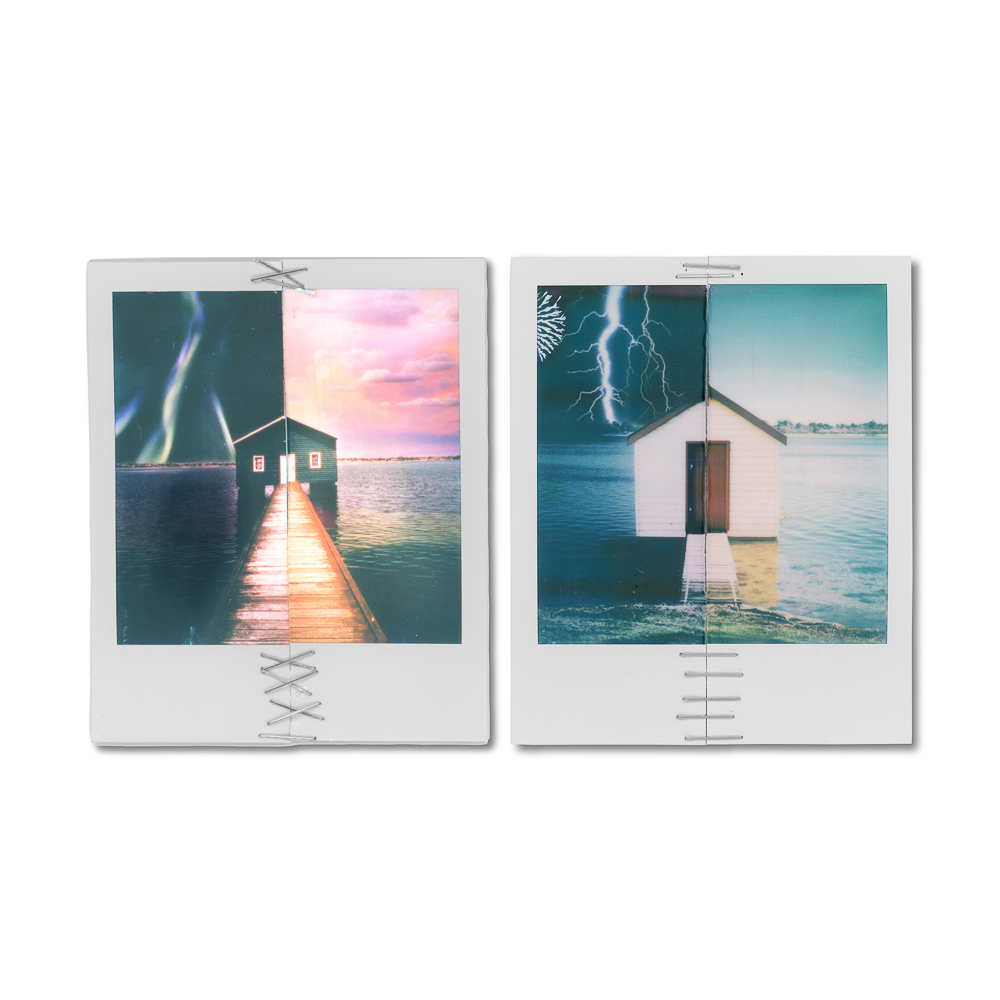
©Lenny Gerard, Lightning: Waterfront buildings split between calm daylight and a stormy night with lightning. The same place feels peaceful and intense at once. It’s about unpredictability and contrast.
The enlarged 30×30-inch archival prints transform intimate Polaroids into monumental objects. How does scale alter the viewer’s relationship to the images and to memory itself?
When I enlarged the Polaroids, all the imperfections became amplified in a beautiful way. The staples I use to physically connect the diptychs suddenly became life-size visual elements, which added another dimension to the work. People usually experience Polaroids in the palm of their hand, so seeing them at 30×30 inches changes the relationship completely. The images become more immersive, painterly, and confrontational. The textures and flaws almost start to feel like landscapes. Putting them in a frame also makes them that much more special.
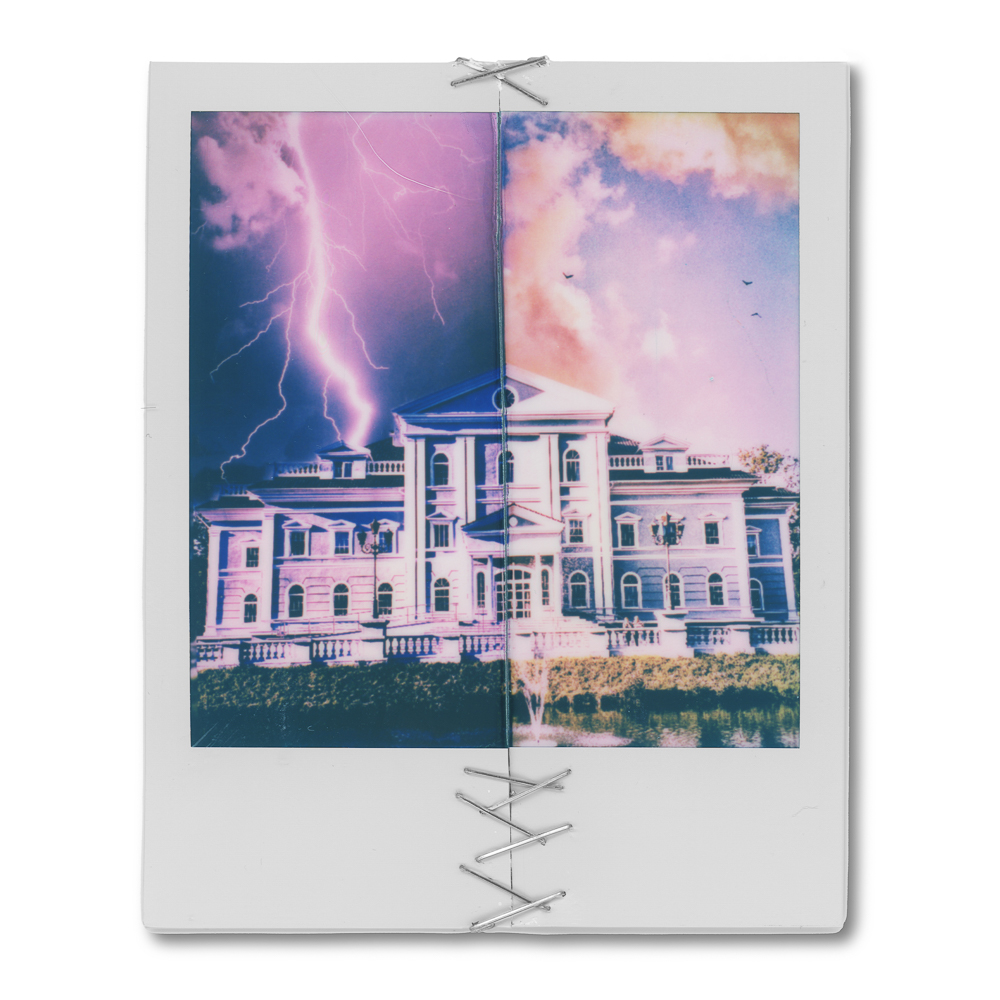
©Lenny Gerard, Power House: A large mansion split between soft daylight and a stormy night with lightning. The building stays the same, but the mood completely shifts. It reflects stability pushed up against disruption.
What drew you to Los Angeles as a subject or backdrop for these juxtapositions, particularly with landmarks like the Walt Disney Concert Hall?
I’ve always been fascinated by Los Angeles architecture and how quickly the city is changing, especially leading up to the Olympics. LA feels very cinematic to me, whether I’m driving on the freeway passing through downtown or hiking and seeing the whole city from above. I wanted to photograph landmarks because viewers could emotionally connect to places they recognized. Buildings like the Walt Disney Concert Hall already feel surreal and alive because of the architecture and how light interacts with them throughout the day.
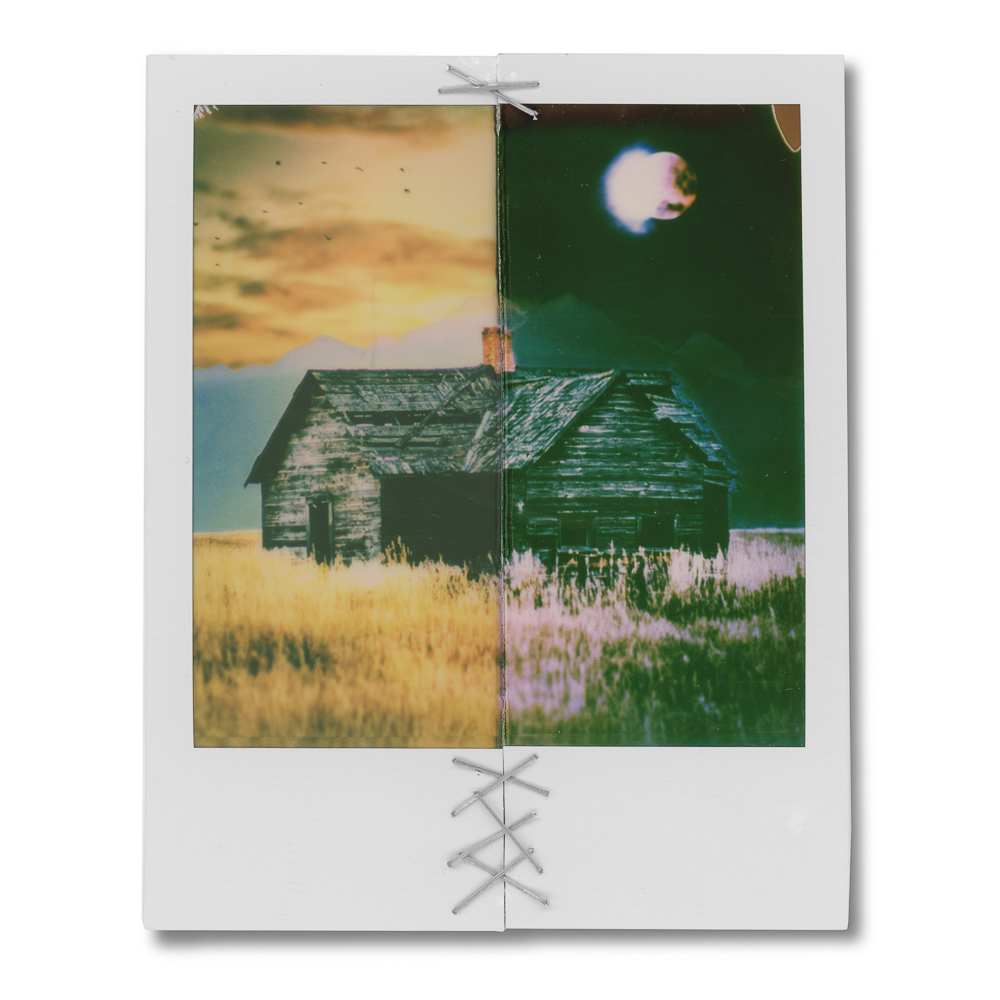
©Lenny Gerard, Prairie: An old wooden house in a field, divided between golden daylight and a darker moonlit sky. The house feels both lived in and abandoned at the same time. It quietly points to fragility and change.
The project spans more than 120 Polaroids over two years. How did repetition and accumulation shape your understanding of the series over time?
Making over 120 Polaroids changed the way I observed space and time. I started noticing repeated angles, shapes, and lighting patterns throughout the city, which made me more intentional with framing and shooting. I was also posting the work online while making it, and seeing people connect with it pushed me to keep expanding the series. At a certain point I realized the images weren’t individual works anymore. They were all speaking to each other, and that’s when I knew it needed to become a full series and eventually a book.
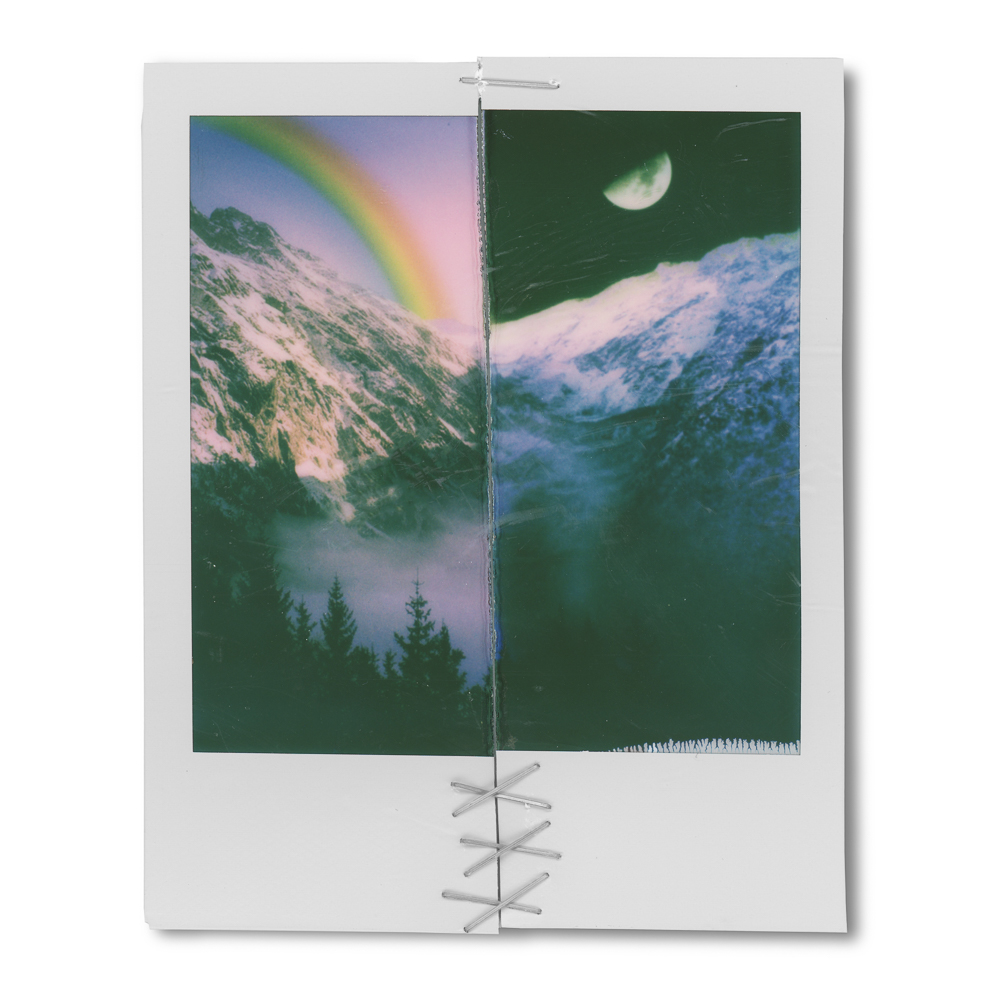
©Lenny Gerard, Rainbow Moon: A mountain scene split between a rainbow-filled sky and a darker moonlit one. Same landscape, completely different mood. It hints at imbalance while still holding onto a sense of calm.
What role does intuition play in your image-making process? Did you approach the series with a conceptual framework from the beginning, or did meaning emerge through editing and sequencing?
Intuition plays a huge role in my process. If I’m shooting film, especially Polaroid, I plan each image really carefully because film is expensive. If I’m shooting digital, I shoot constantly and figure out the best moments later. The deeper meaning of the series became clearer over time. Looking back at the work, I realized it was speaking about climate change, capitalism, and emotional duality. During the day there’s movement, labor, traffic, and chaos, while at night there’s a quieter creative energy that mostly goes unseen.
Sequencing the images together is what really made the work come alive for me emotionally.
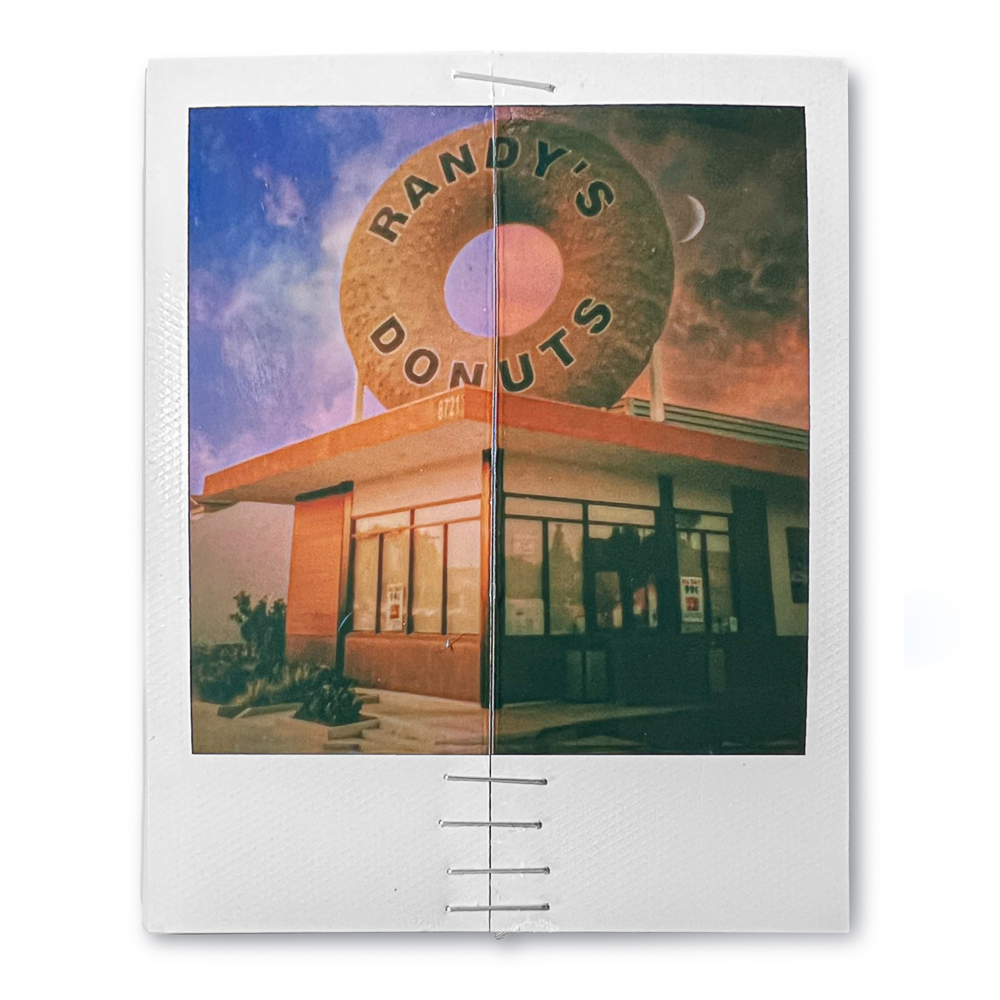
©Lenny Gerard, Randy’s Donuts: A classic donut shop split into day and night. Bright daylight shows the buzz of everyday life, while the darker side feels slower and more introspective. A subtle nod to hustle culture and what happens when things quiet down.
What are you working on now?
Right now I’m working on a series of sculptural cigar boxes focused on different American issues and anxieties like COVID-19, private prisons, emergency rooms, body dysmorphia tied to semaglutide and GLP-1 injections, ICE raids, and the fentanyl crisis. I’m also building a large installation inside St. Vincent Medical Center, preparing for a solo exhibition in October, and curating an exhibition for my blind and visually impaired students at E2 Art Gallery through a grant I received from the Doan Foundation. The exhibition will include Braille labels and audio descriptions for accessibility.
At the same time, I’m continuing a portrait series exploring gender and racial ambiguity through abstraction, and I recently released the second volume of my Day and Night book after the first edition sold out. I also recently completed a residency with The Bureau of Queer Art, showed work at the Contemporary Art Museum (San Diego), and will be participating in the LACMA Art Parade 2026 this June.
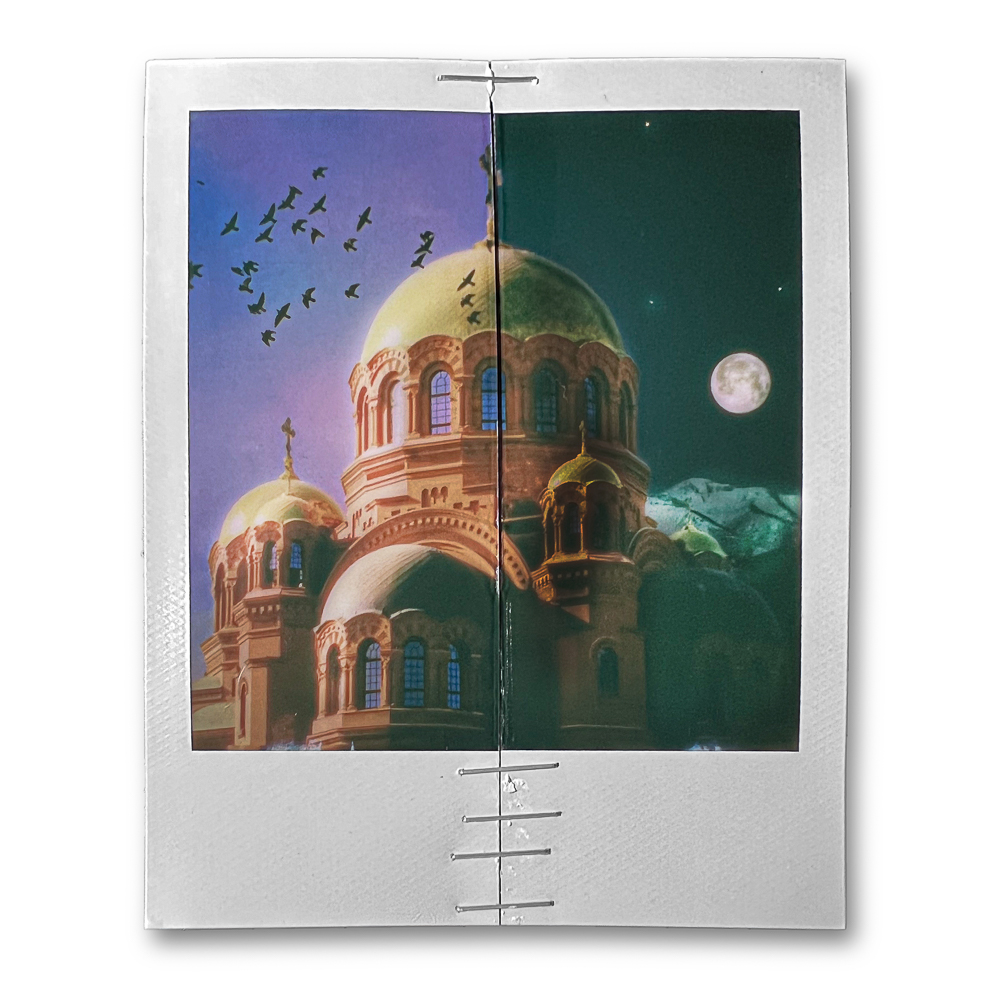
©Lenny Gerard, Reverence: A domed building split between day and night. Birds move through a bright sky on one side, while a full moon hangs over a darker landscape on the other. It holds movement and stillness in the same frame.
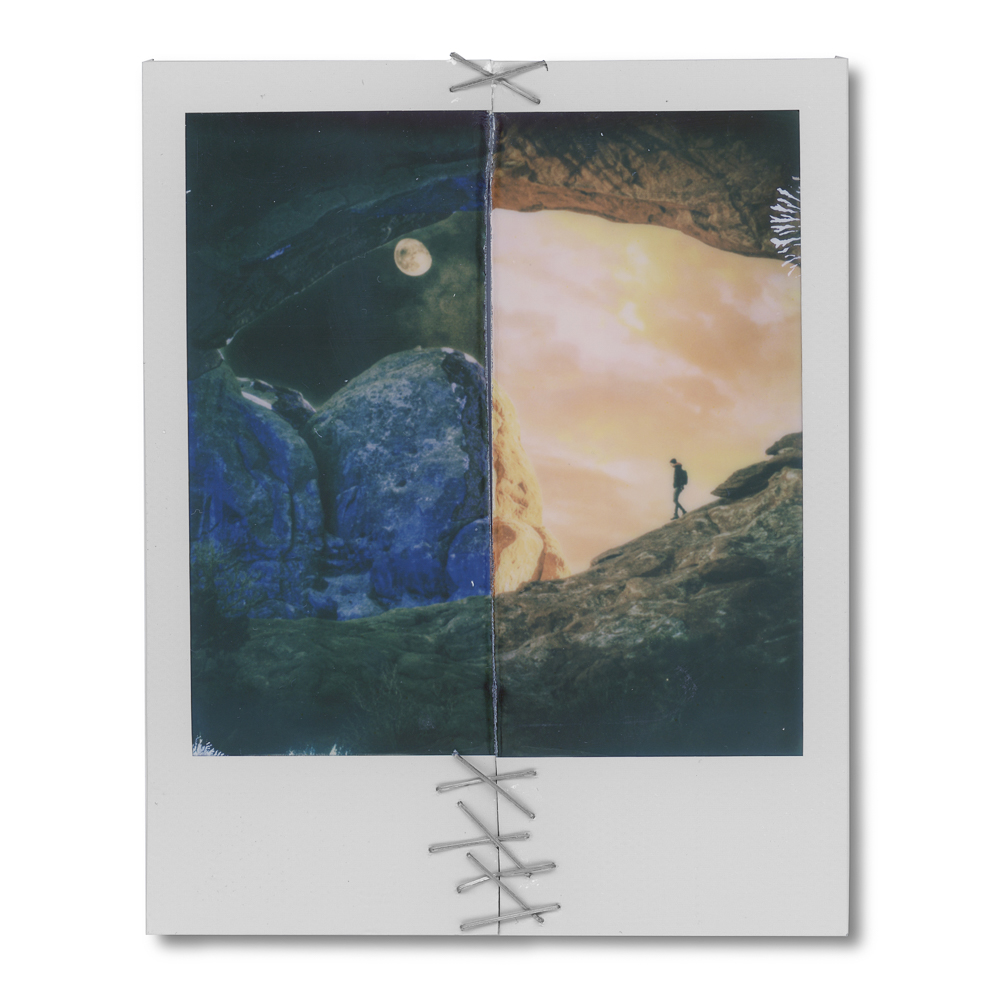
©Lenny Gerard, Solitude: A lone figure walking through a rocky landscape split between day and night. The person feels small against everything around them. It’s about navigating uncertainty and finding your place within it.
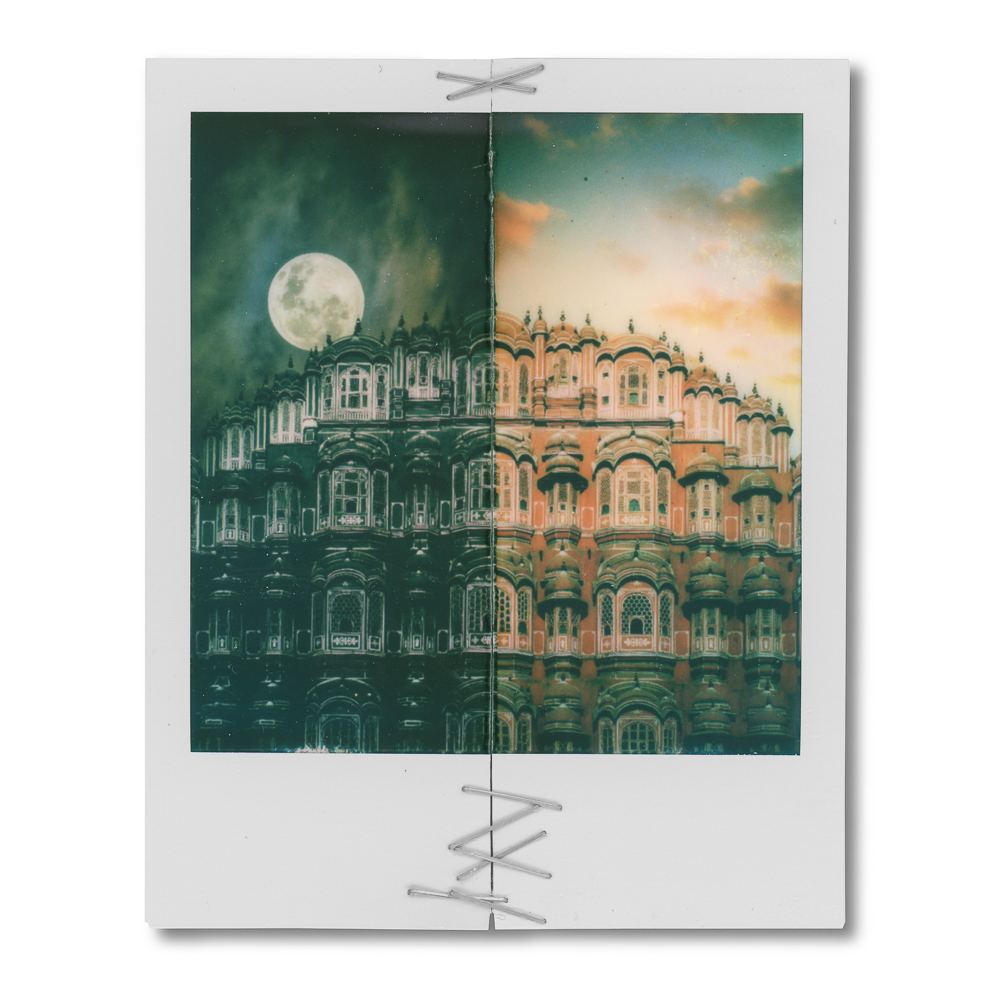
©Lenny Gerard, Sublime: An ornate building split between warm daylight and a darker moonlit version of itself. The details shift in tone across the divide. It’s about the contrast between what’s seen and what’s felt.
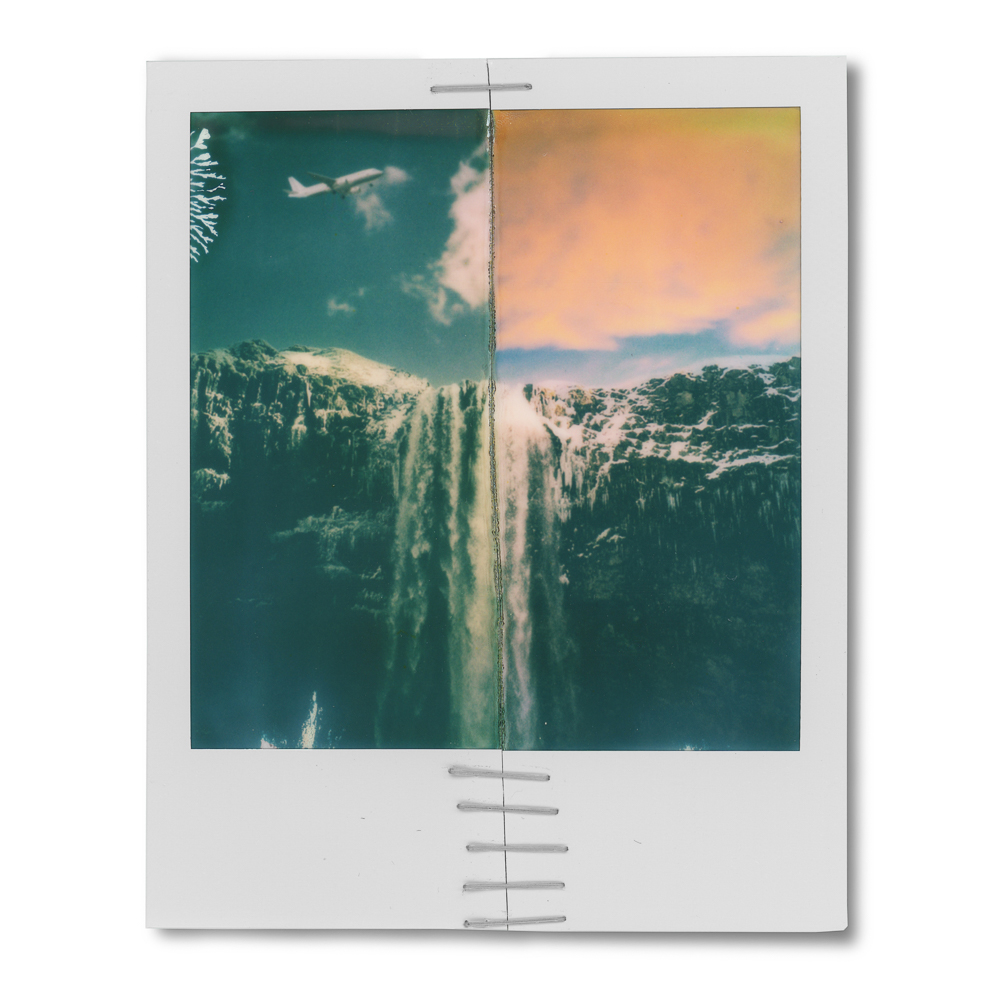
©Lenny Gerard, The Falls: A grand building split between calm daylight and a stormy, lightning-filled night. It reflects how quickly stability can turn into chaos.
Posts on Lenscratch may not be reproduced without the permission of the Lenscratch staff and the photographer.
Recommended
-
Photography Educator: Jillian M. BrowningJuly 24th, 2026
-
Craig Easton: An Extremely Un-Get-atable PlaceJuly 6th, 2026
-
The 2026 Paula Riff Award Winner: Angélica ArbulúJuly 3rd, 2026
-
The 2025 Paula Riff Award Winner: Marni MyersJuly 2nd, 2026
-
The 2024 Paula Riff Award Winner: Minwoo LeeJuly 1st, 2026