The Female Gaze: Scarlett Freund—A Designer Eyes the Streets
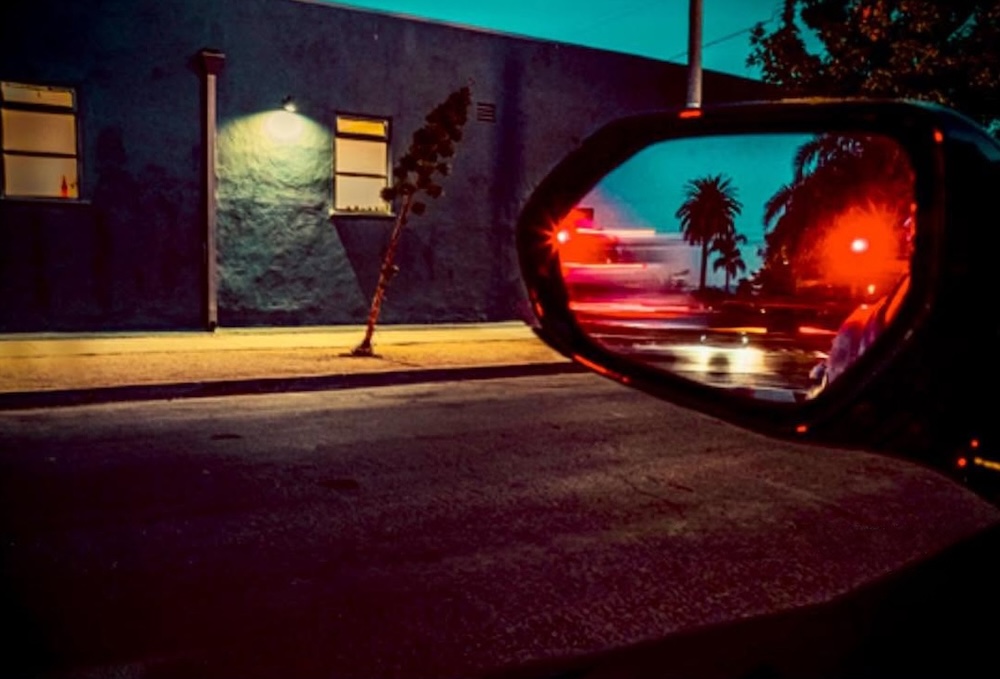
© Scarlett Freund
Scarlett Freund is a portrait and street photographer based in Los Angeles, CA. As a photographer, she is drawn to the human figure navigating the stresses and promises of modernity. Via her lens, she presents moments in which life stands still and the next instant hangs in the balance, unknown and about to unfold.
Freund has received award recognition for her work from Black and White Macadam; Black and White Spider; Exposure One; International B&W Photography; International Color Awards; Head On Photo Festival Awards; Julia Margaret Cameron Award; PISPA Paris International Street Photo; and PX3.
Her work has been nationally and internationally exhibited at venues such as American Photographic Artists National and Regional Exhibitions (USA); Paris Street Photo Festival (FR); Praxis Gallery (USA); Pure Street Photography (IN); Ren Gallery (USA); StreetSoup (IT); Women Street Photographers (USA/BR); Venice Photo Lab (IT); and Xposure International Photo Festival (UAE).
She will be exhibiting images at the upcoming Streets of the World exhibition at RomePhotoLab (IT) in October 2026.
Instagram: @scarlettfreund
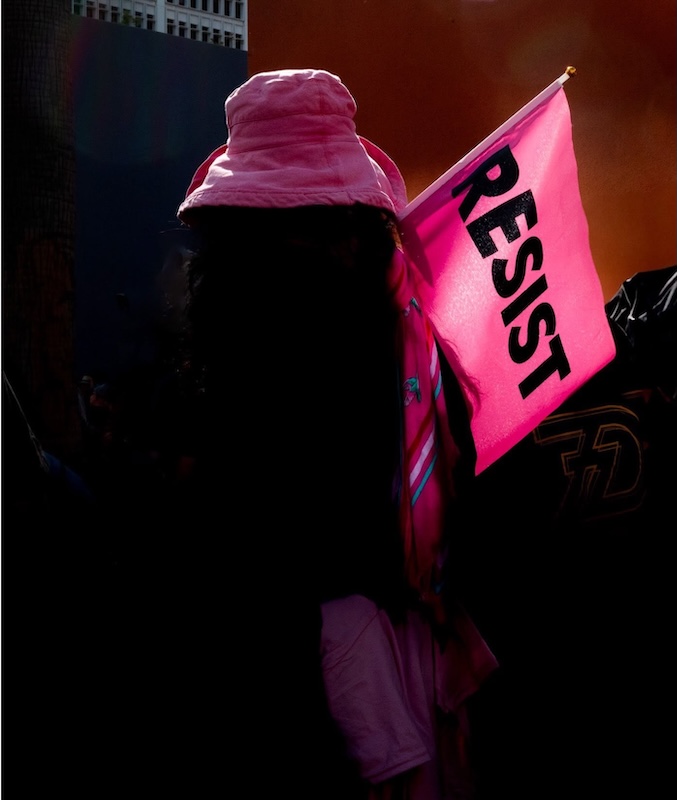
© Scarlett Freund
I’m rather in awe of Scarlett Freund. I can’t make a decent street photograph except by accident! I need a concept—a starting place for my work. And I am so self-conscious with a camera on the street that I might as well put a flashing sign over my head screaming, “Beware! I’m taking your picture!”
But Freund makes it look effortless to portray small human dramas inside the public flow of contemporary city life. There is depth and drama, rich color and inky blackness, and a sort of “kindness” (or perhaps empathy is a better word) visible in all of her work.
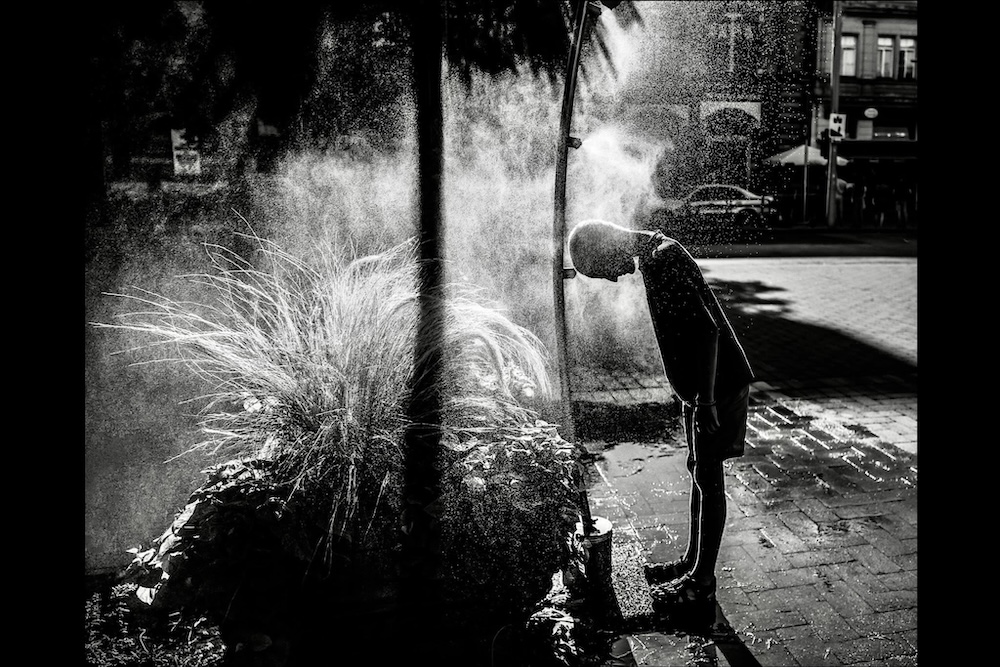
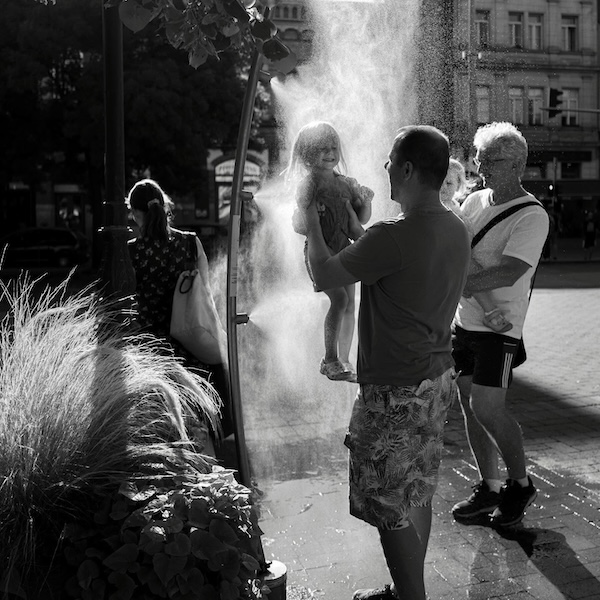
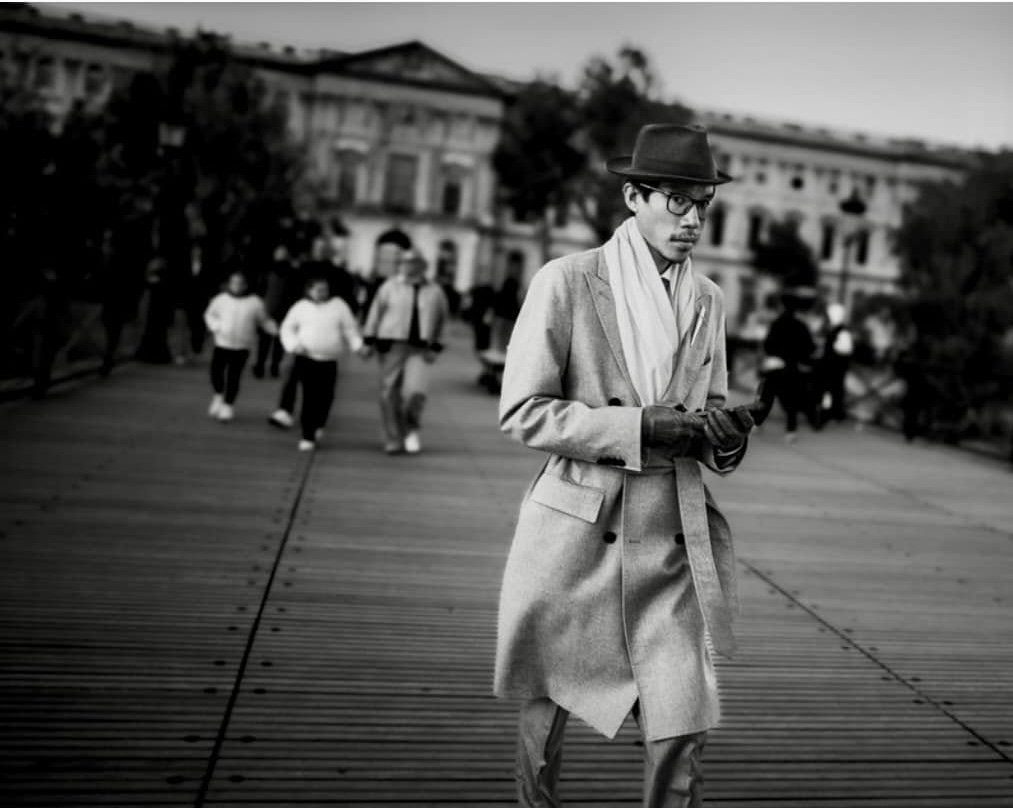
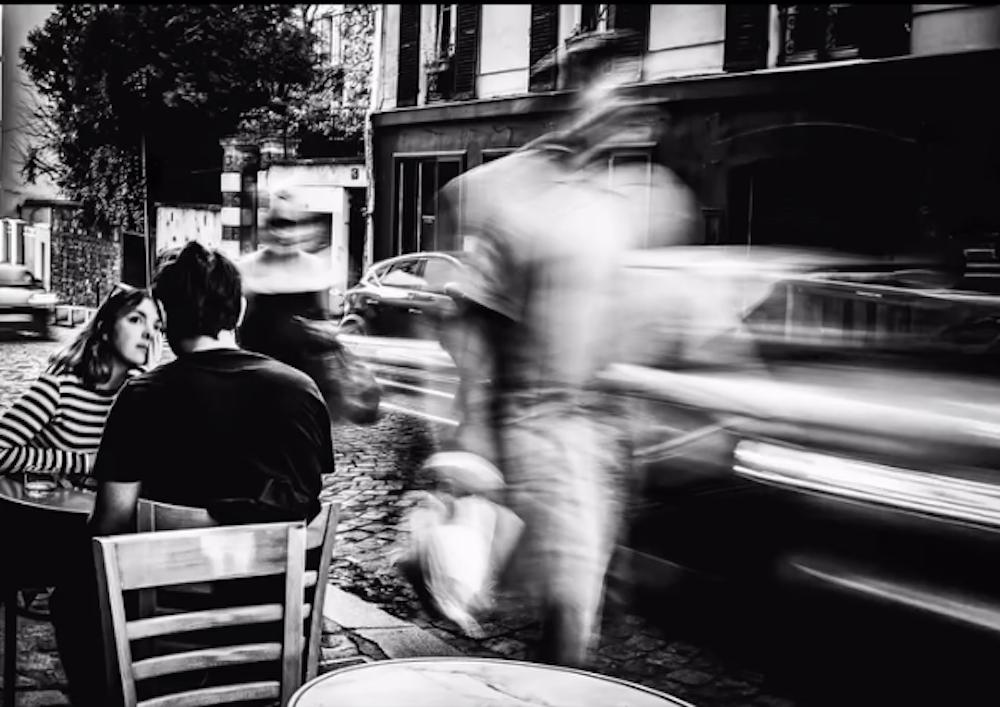
Working across street, portrait, travel, and photo-journalistic modes, she is drawn to moments when ordinary scenes briefly become charged: a child leaning into a sprinkler, a passerby suspended in backlight, a café sitter drifting inward while traffic dissolves around her. Her images often depend on contrast—motion and stillness, intimacy and anonymity, accident and composition. Rather than treating the street as spectacle, Freund uses it as a place where strangers briefly reveal vulnerability, style, longing, fatigue, pleasure, or connection before disappearing back into the city.
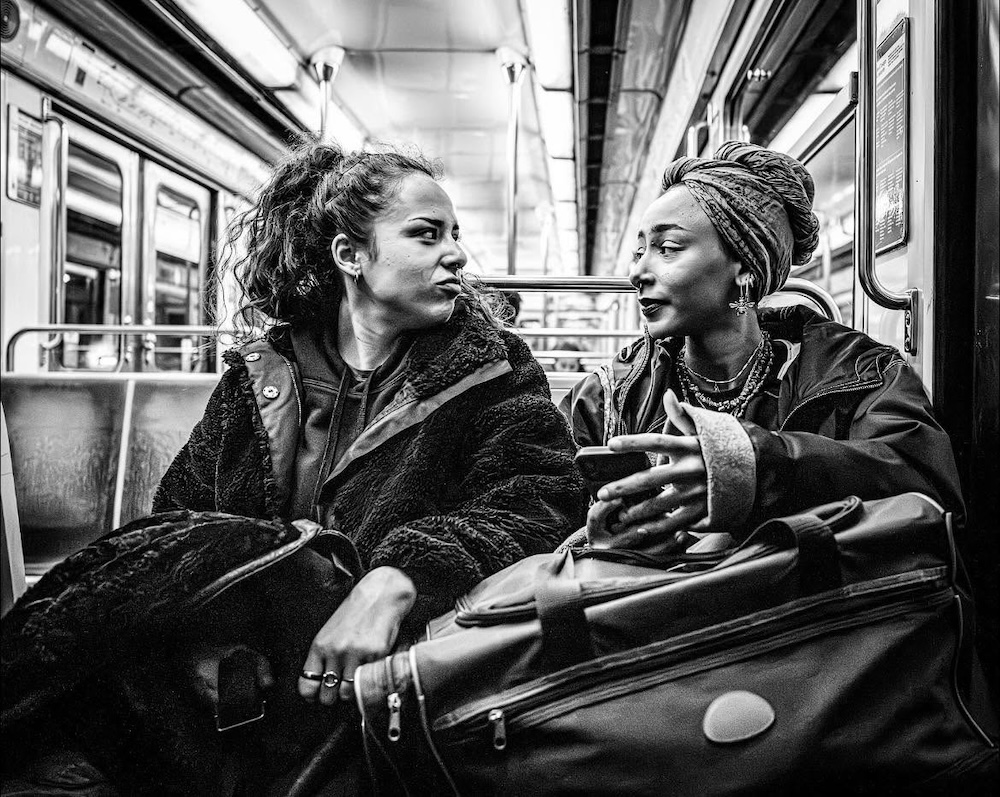
© Scarlett Freund
DNJ: Tell us about your childhood.
SF: I was born in Brooklyn, New York, the eldest of six children. My parents were Holocaust survivors, and I grew up in a very observant Orthodox Jewish community where the memory of that trauma was always present, woven into the fabric of our lives even as my parents did their best to rebuild.
We spoke only Yiddish at home—my parents’ way of preserving a culture that had been nearly annihilated—so when I entered kindergarten at age five, I didn’t speak a word of English.
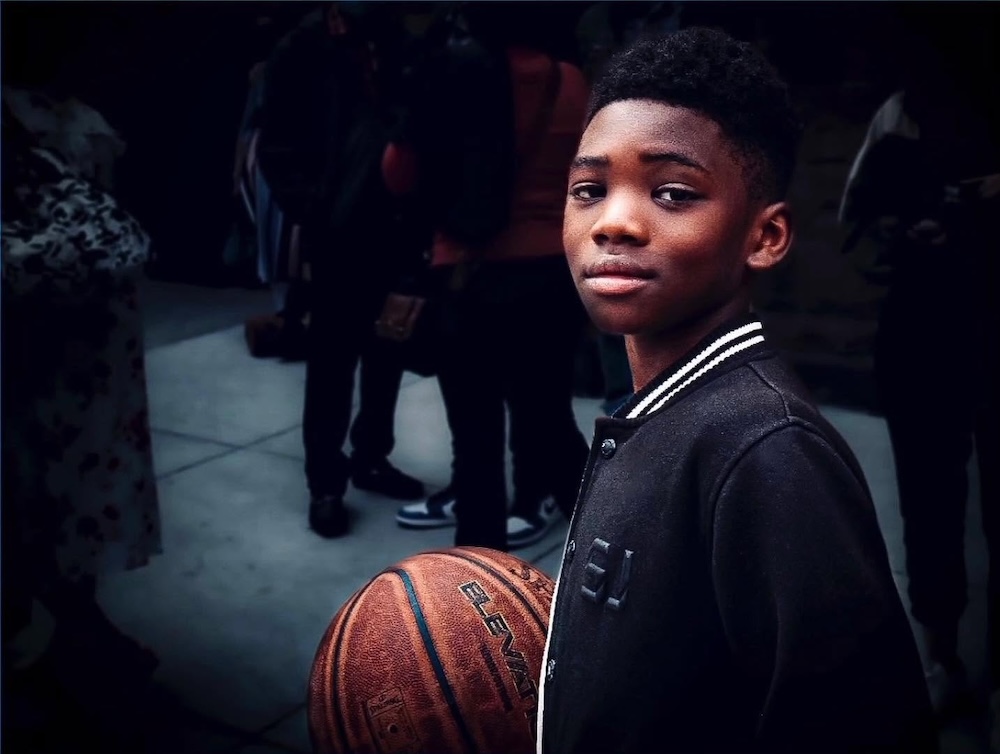
© Scarlett Freund
When I was ten (and fluent in English), we moved to São Paulo, Brazil. This, too, was part of my family’s post-Holocaust diasporic journey. My father’s brother had settled there after the war, and his success gave my father, who was struggling to support our family, hope for a better future.
I had no idea how profoundly that move would shape my identity and change the way I saw the world. We, children, picked up Portuguese almost by osmosis, and within a couple of months were chatting away with our Brazilian cousins and classmates. Although we still lived within an Orthodox Jewish community, it was smaller and more porous than the one we’d left behind in New York. For the first time, I made close friends outside my immediate religious world. Suddenly, life felt larger and full of possibilities. The world had opened up to me, and I just drank it in.
Only much later did I realize how deeply those experiences would shape the way I move through the world—and, eventually, the way I photograph it.
© Scarlett Freund
DNJ: What were you like as a child?
SF: As a child and teenager, two qualities defined me: I was a voracious reader and a rebel, albeit an undercover one. Books played an enormous role in my life. I devoured everything I could get my hands on, and my reading fed my curiosity about the world. It fueled my desire to be a part of it rather than simply watch from the sidelines. At the same time, I increasingly questioned some of the strictures I had grown up with and longed to break free of the limitations that no longer made sense to me.
The arts had absolutely no place in our home or in my education. By “the arts,” I mean the visual arts. Literature and poetry, yes. But painting, sculpture, and the world of visual expression were a foreign country. Even so, I was drawn to making things. I loved to draw, and when I was 13 or 14, I took a private painting course, paying for it myself with money I earned tutoring younger students because my parents couldn’t afford what they considered a luxury. Still, I never envisioned a life in the arts, except in my wildest dreams.
© Scarlett Freund
Everything changed during my last year of elementary school and my first year of high school, when two remarkable teachers—who, by some miracle, had been hired by my Orthodox school—opened our eyes to art, photography, and classical music. One introduced us to art history and encouraged us to visit museums. The other was an artist and photographer. In her class, I began taking pictures with disposable Kodak Instamatic cameras and wandered the streets of São Paulo, photographing whatever I found noteworthy. We didn’t have a darkroom at school, so she sometimes developed our black-and-white film herself and returned the prints to us. Other times, I took my film to the local camera store. Her genuine interest in my photographs was deeply encouraging and motivated me to keep photographing and improving. I don’t think I produced anything remarkable, though I recently found a handful of photographs from that period that I liked and shared on Instagram.
Another important element of this era was my love of the French language. I have no idea where it came from, since no one around me spoke French. Yet at 15, I enrolled in classes at the local Alliance Française, paying for them myself by teaching first grade in the Hebrew curriculum, again because I didn’t want to burden my parents financially. Looking back, that decision became part of my education in a broader sense. Decades later, my knowledge of the French language and culture would profoundly enrich my experience photographing the streets of Paris.
© Scarlett Freund
DNJ: How/why did you start in photography? What’s kept you with it?
SF: My first forays into photography began as a teenager in São Paulo, Brazil. It was an awakening. Photography made me feel alive and more attuned to the visual cues around me. Without access to a real camera, I used disposable Kodak Instamatic film cameras to capture whatever caught my eye. I had no formal visual language then—I simply wanted to document the people, places, and moments that interested me. I photographed scenes from school life, classmates, teachers, games, and performances.
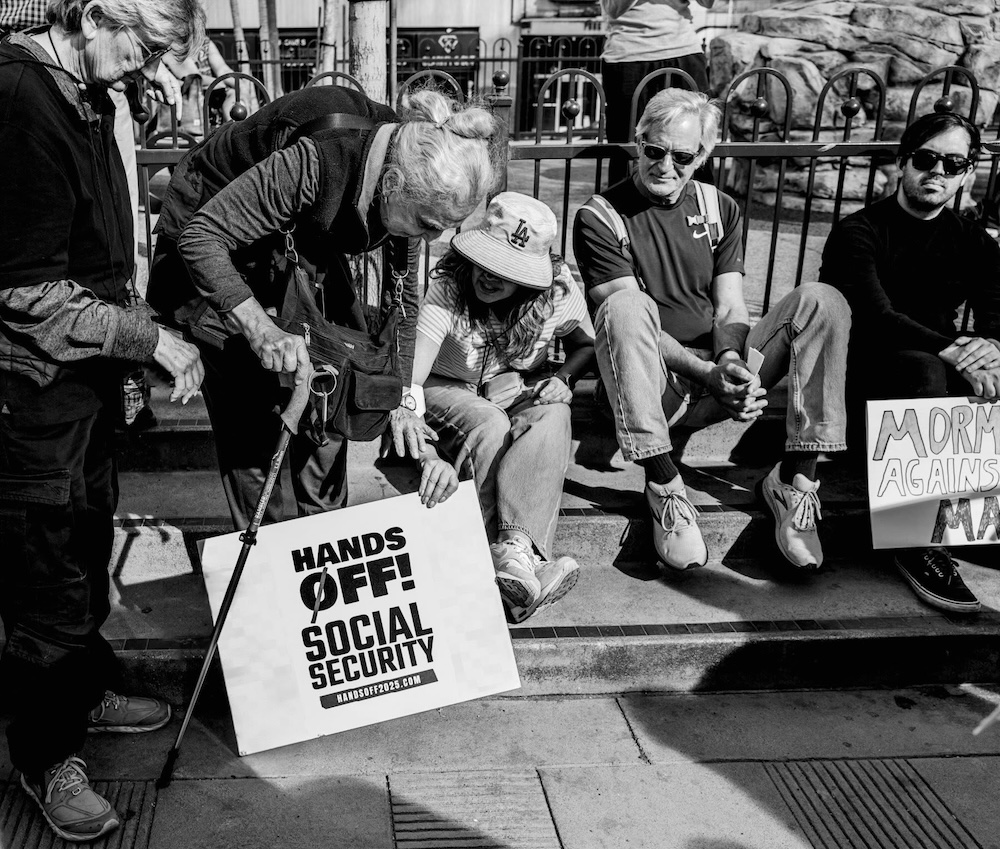
In the 1970s, São Paulo was experiencing a construction boom. Historic homes and mansions were giving way to skyscrapers, transforming the city almost overnight. At the same time, the gap between rich and poor was impossible to ignore. A favela stood cheek by jowl with one of the city’s most exclusive neighborhoods and social clubs. I remember going out of my way to photograph these two realities and show how they coexisted within the same frame. Not long afterward, the favela was dismantled. I don’t know whether anyone remembers that it was ever there, but I still have the photograph. It was the first time I consciously bore witness to social inequality and realized that documentary photography could raise awareness and inspire change. That desire to use my photography for the good has never left me.
© Scarlett Freund
© Scarlett Freund
Cut to many years later… after returning to the U. S., raising a family, going to college and graduate school, and eventually moving to Los Angeles, I found my way back to the visual arts. A two-year stint at the Getty Museum gave me a glimpse of what would become my true calling. I loved helping curators organize exhibitions, but it was the work of the graphic designers that captivated me. When my contract ended, I enrolled in a design course and soon landed a job at Harmonia Mundi, the renowned classical music label. I loved designing CD covers, booklets, and other materials, including entire books, some of which incorporated my photography, to which I had remained committed. Sadly, the rise of the internet had a severe impact on the global music industry. After over ten years with the company, it was sold, and my job there ended.
I took this as an unexpected opportunity to circle back to my first love, photography, and immersed myself in professional portraiture, taking courses at UCLA Extension and attending workshops. Then luck struck: I received a portrait commission from a national bestselling author, and one of my photographs appeared first on a magazine cover and, later, on the cover of the author’s book—my first professional assignment. I began to work on location, photographing clients in their homes, gardens, and offices, often carrying all my lighting equipment with me.
© Scarlett Freund
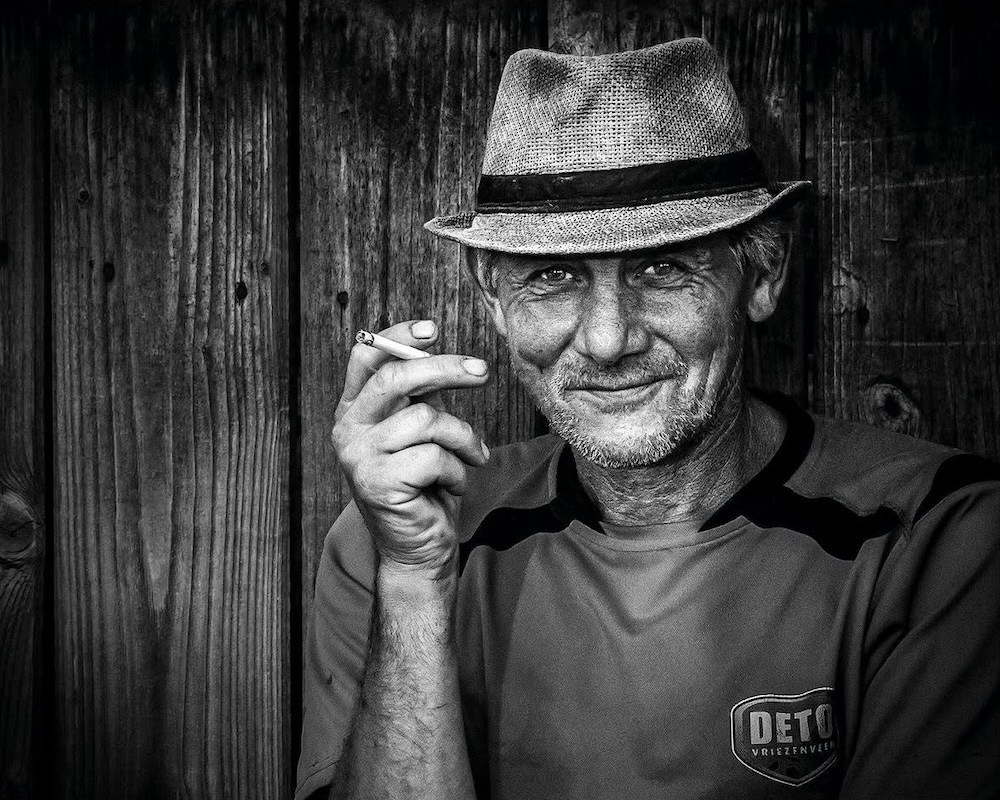
To me, faces are like topographies of the soul. I love exploring the ever-changing landscape of the human face. In my book, there are no non-beautiful people; every face has its own unique landmarks, and my role, in collaboration with the person in front of the camera, is to reveal them. Over the years, I developed a successful niche in author portraiture; it’s still my main source of income. But it wasn’t enough. In my free time, I began venturing into town (whichever one I found myself in) and embarked on a serious pursuit of street photography.
© Scarlett Freund
DNJ: How would you classify your photo practice?
SF: I’ve always resisted categorizing my photography. If I had to describe it, I’d say it’s eclectic. I go through phases. For the most part, though, I engage in street photography.
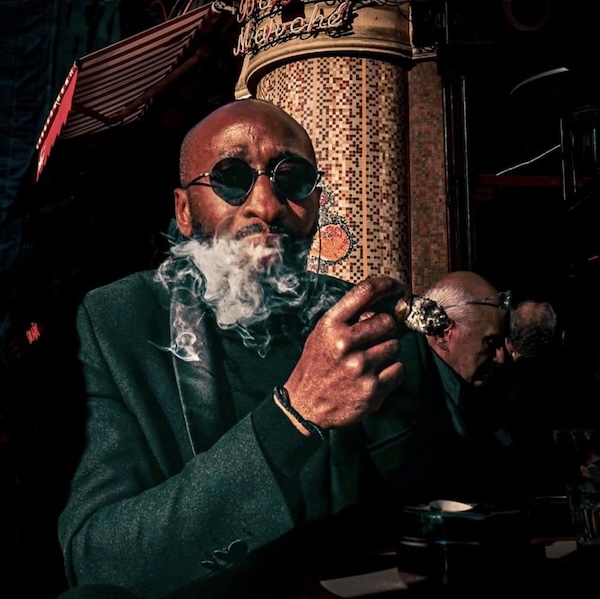
I like to roam the streets of big cities amid large, bustling crowds where I can almost disappear, observing and making photographs without drawing attention to myself. This isn’t because I’m looking for “gotcha” moments. Quite the opposite. I want to witness, rather than interfere with, the human dynamics of the street, the complex urban choreography as people weave in and out of moving streams against the backdrop of the city’s architecture.
At times, though, I find the conventions of street photography too restrictive. Then I turn to portraiture, whether through semi-candid street portraits or commissioned work.
© Scarlett Freund
© Scarlett Freund
DNJ: If you don’t start with a concept or idea, and instead wander to see what comes from it, where do you usually go? What do you look for? How long do you give yourself?
SF: I rarely begin with an idea or concept, unless I’m working within the framework of a workshop or a specific assignment. My ideas happen on the ground, in the moment. I respond to the street’s stimuli.
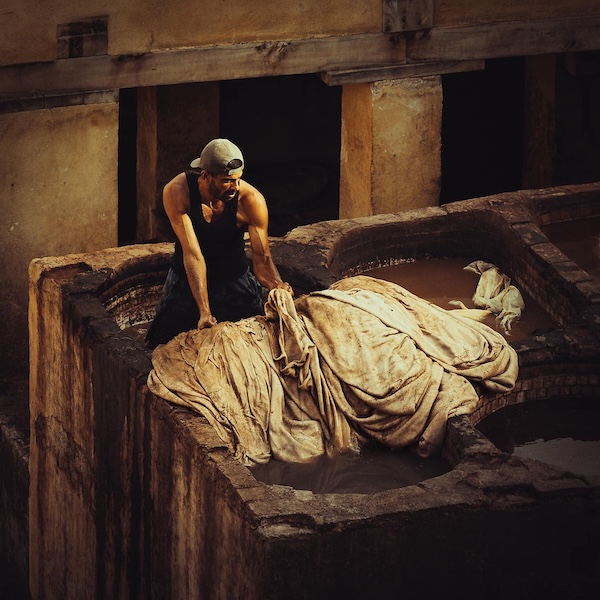
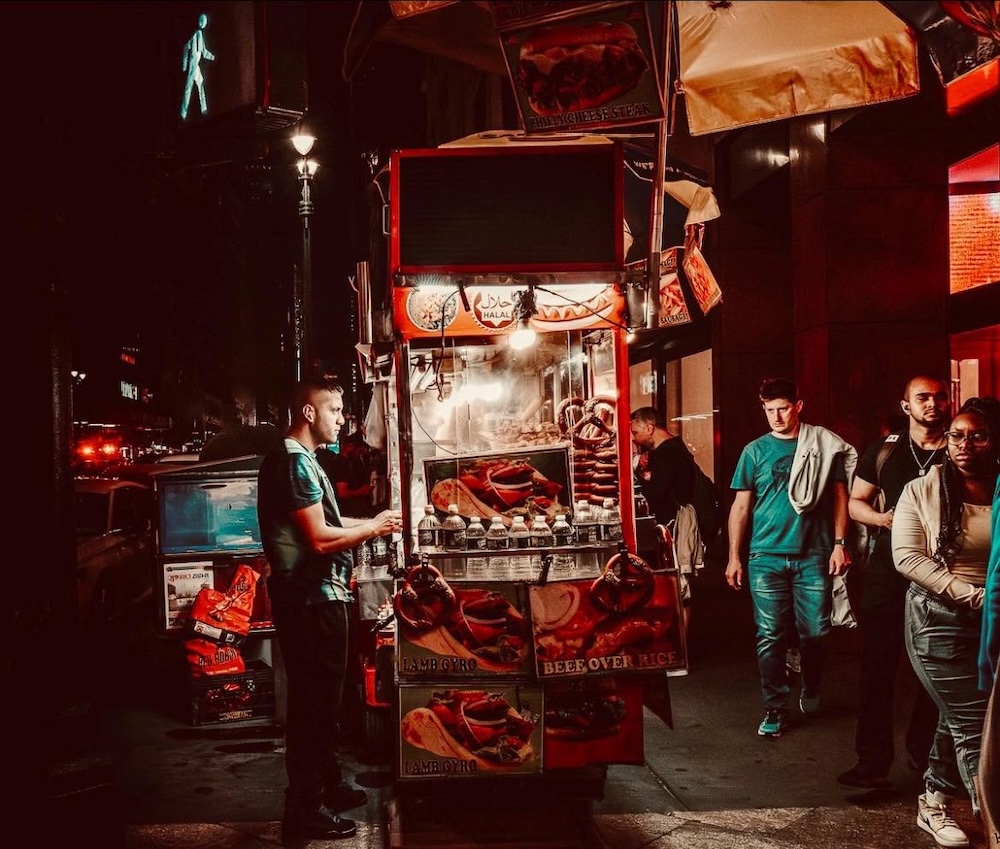
That isn’t to say I photograph randomly. I photograph freely, but with intention. I’m constantly looking for compelling compositions, the interplay of light and shadow, expressive gestures, color relationships, and geometric arrangements of people within their surroundings. I’m particularly drawn to solitary figures making their presence felt in the urban landscape.
© Scarlett Freund
© Scarlett Freund
I often see with a graphic designer’s eye. Everything has to be in place before I press the shutter. At times, I have to rein in that tendency because it can prevent me from capturing the spontaneity of the moment. Within reason, I’m not opposed to cropping an image if it strengthens the final composition.
Before almost every outing—and every new project, for that matter—I worry that I’ll come up empty-handed, that today won’t be the day I make the photographs I’m hoping for. Yet that’s rarely the case. The street constantly offers unexpected rewards. The same goes for my projects. The mind is an unending source of ideas, especially, I’ve found, if you keep working at it.
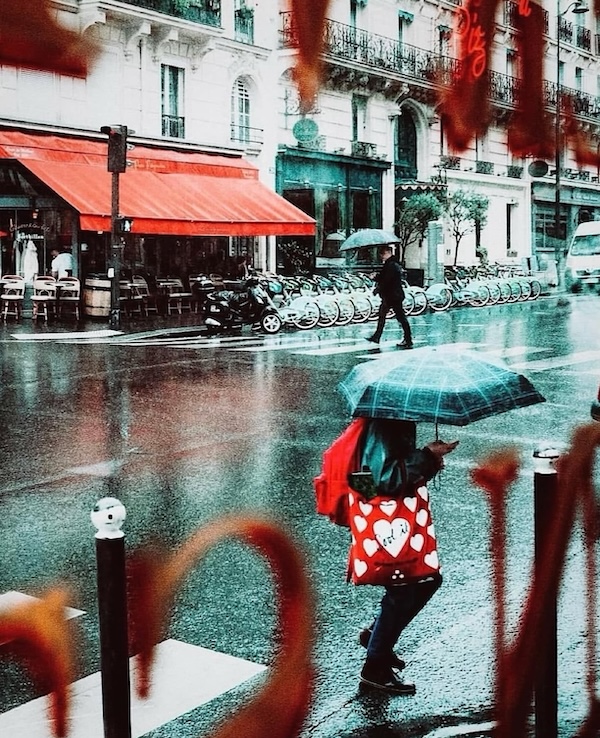
That’s one of the things I love most about street photography: its unpredictability and its genius for serving as a portal to human connection and storytelling. For me, one idea leads naturally to the next because I return to the street again and again (not necessarily the same street!) and remain open to its generous serendipity.
© Scarlett Freund
© Scarlett Freund
DNJ: You do a lot of street photography. How did you get interested in the area? Tell me about a typical shoot for you when doing this.
SF: For the longest time, I had no idea what street photography was. I knew about photojournalism and documentary photography, but street photography was a mystery. I took photos on the street, but they weren’t “street photography.” I don’t know exactly when that changed, only that a few years ago something clicked, and since then I’ve devoted most of my photographic energy to it.
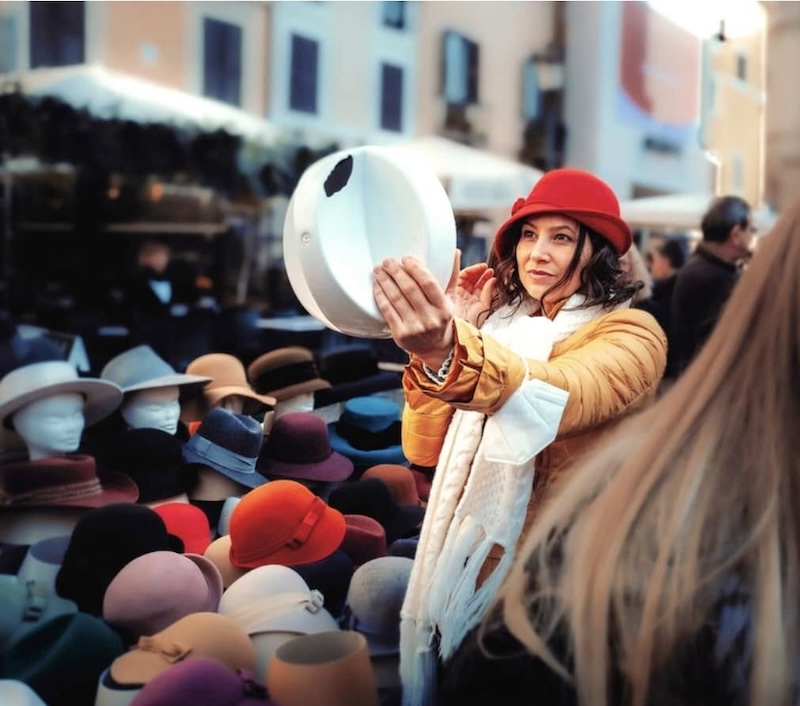
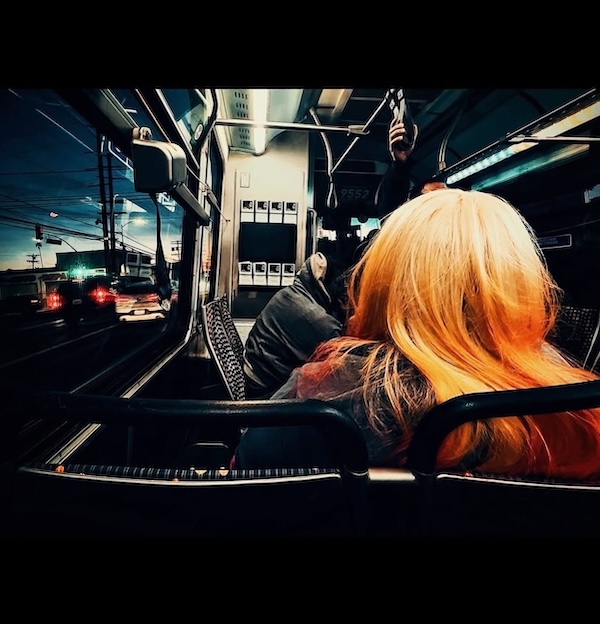
My approach varies from day to day. Sometimes I’ll find a compelling background and wait for someone interesting to walk into the frame or for something unexpected to happen. How long I wait depends on the moment, the place, my patience. Ironically, things often seem to happen just after I’ve given up waiting! Other times, I’m on the move, camera in hand, in front of my face or at hip level, and I shoot as people walk by. Occasionally, I’ll plant myself somewhere, ideally at an outdoor café in Paris, set up my camera as inconspicuously as possible, and shoot the steady stream of characters passing before me.
This is what draws me to street photography. The street as a river of life. Its changing rhythms, variations in composition, mood, lighting, and happenstance are endlessly fascinating to me. I sometimes get frustrated when I miss shots or when the exciting thing happening at the other end of the street is over by the time I get there. But here’s the thing: the street is inexhaustible. You can’t step in the same street twice. Something exciting is bound to happen again, and sooner than you think.
© Scarlett Freund
DNJ: Do you ever have a creative block? What do you do when encountering a period of it, if so?
SF: Yes, of course. There are times when I struggle to stay motivated, and nothing seems to work. That’s when I become hypercritical of my work, question its value, and wrestle with imposter syndrome, in part because I’m largely self-taught and lack formal training. It’s a vicious cycle, and the only way out is to catapult away from it.
© Scarlett Freund
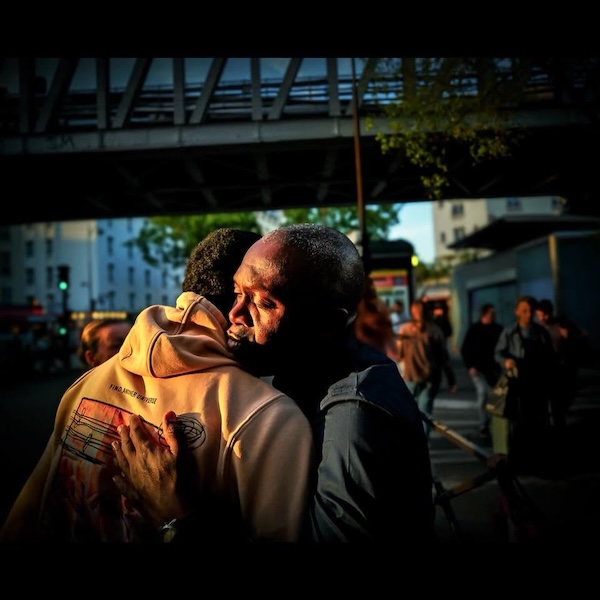
Depending on the situation, I try different strategies. Sometimes I step away from photography altogether and visit museums and galleries, read, listen to music, or take on a graphic design project. Or I’ll do the opposite: face the monster head-on and join a workshop. A good workshop is one of the best antidotes I know of. Some of my most memorable photographic experiences have come from working alongside inspiring instructors and fellow photographers. It’s still my favorite way to learn and move forward in my practice.
At other times, I’ll work in a different genre, something more abstract or fine-art oriented. Or I’ll use the time to edit my photographs. I find that pushing myself to create something, anything, even if it’s small, is the best way to break through creative paralysis.
DNJ: What do you hope the viewer takes from your work? Does it vary by series or type of work? If so, how?
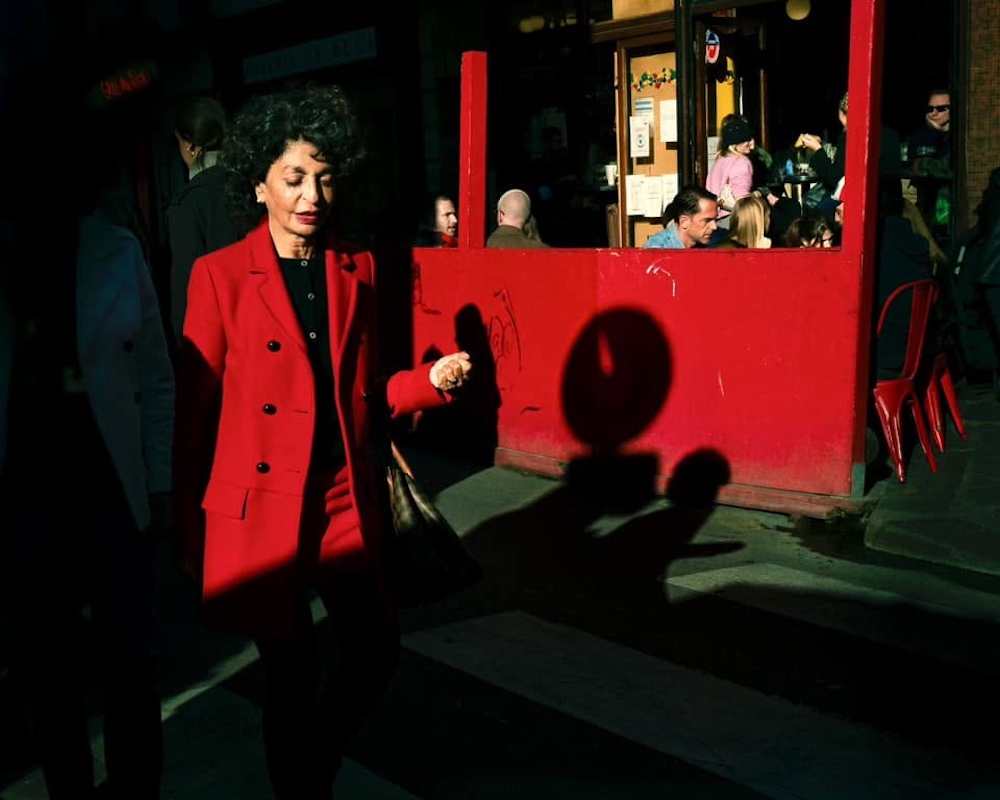
SF: As a street photographer, I’m drawn to the human figure navigating the pressures and complexities of modern life. Through my lens, I look for moments when time seems to stand still, the next instant hanging in the balance, a promise to be fulfilled. I love that, with every shot, there is the potential to make the world anew, or at least to understand it and our place in it a little better.
I hope the viewer will experience the same sense of suspense and discovery that led me to create the image in the first place.
Ultimately, I see photography as a utopian practice. I hope my images invite viewers to step into narratives beyond their own.
© Scarlett Freund
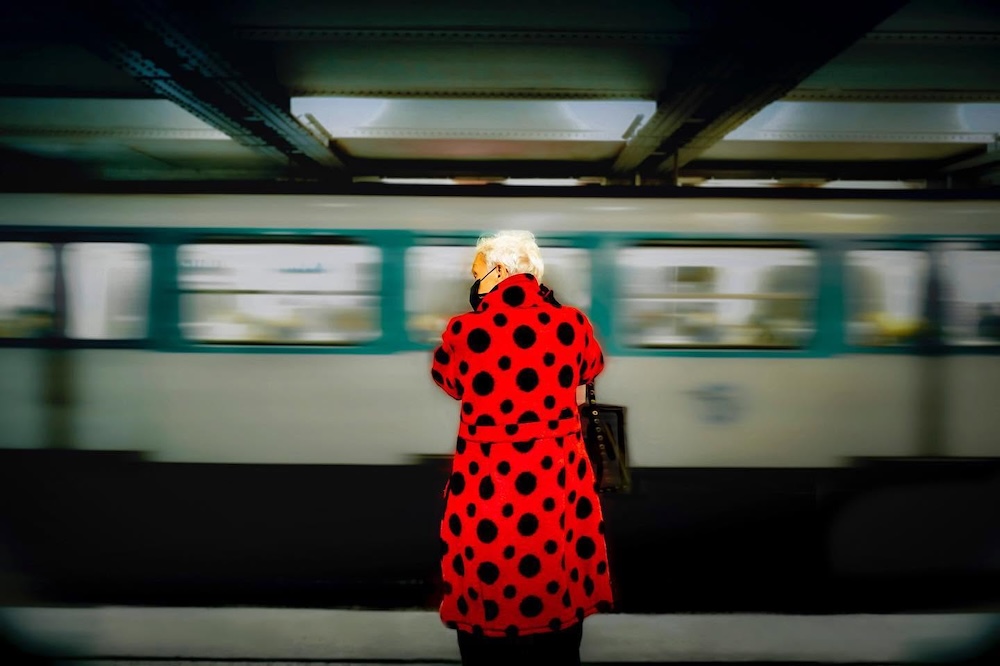
© Scarlett Freund
DNJ: What is influencing your work lately?
SF: My influences have remained remarkably consistent over the years. They include: Henri Cartier-Bresson, Walker Evans, Garry Winogrand, Diane Arbus, Harry Gruyaert, Saul Leiter, Vivian Maier, Mary Ellen Mark, André Kertész, Sebastião Salgado, James Nachtwey, Sally Mann, Gregory Crewdson, and Edward Burtynsky. I’m sure I’m leaving many others out. I’ve started collecting photobooks, and I love nothing more than sitting down with them and studying the work of these great artists.
Lately, I’m obsessed with the work of Daido Moriyama and Ernst Haas. Moriyama’s inky, high-contrast black-and-whites and Haas’ blurs of dreamy, sublime color push street photography to the outer edges of abstraction. That’s a direction I’d like to explore in my own work.
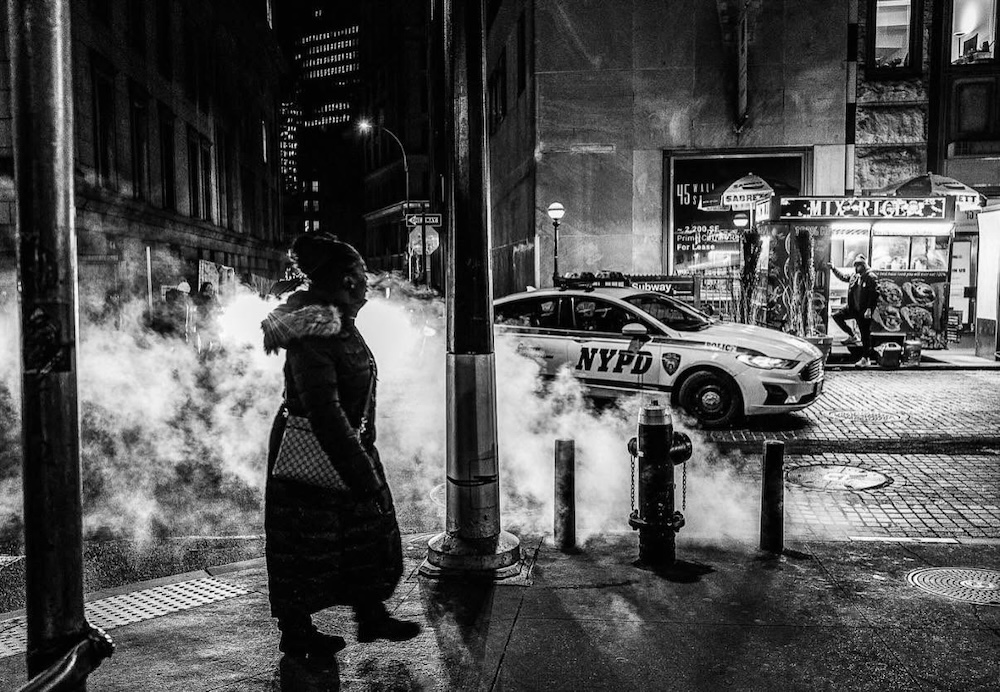
© Scarlett Freund
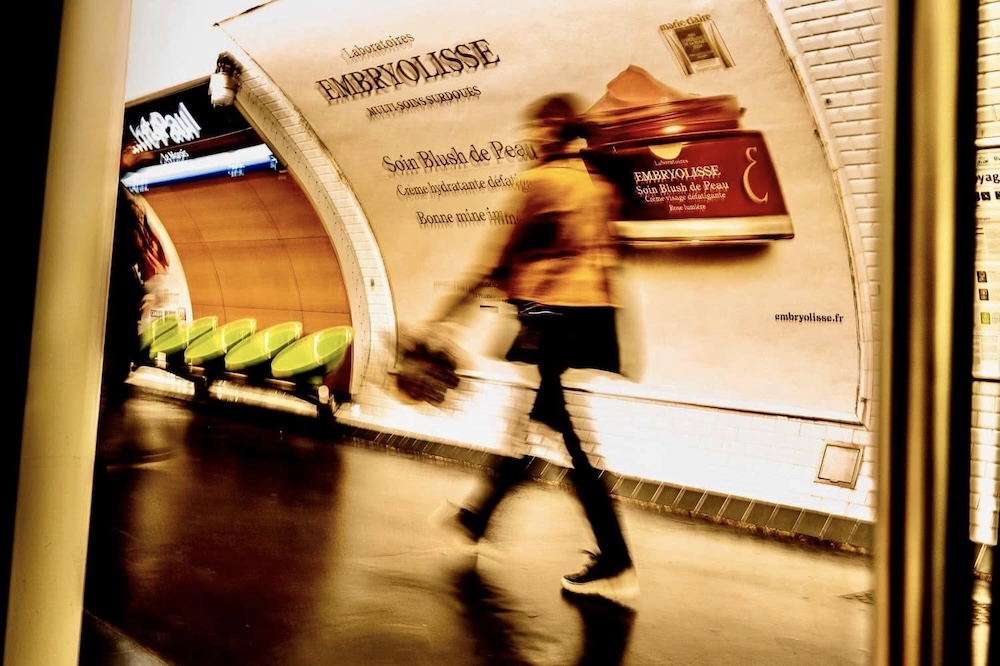
© Scarlett Freund
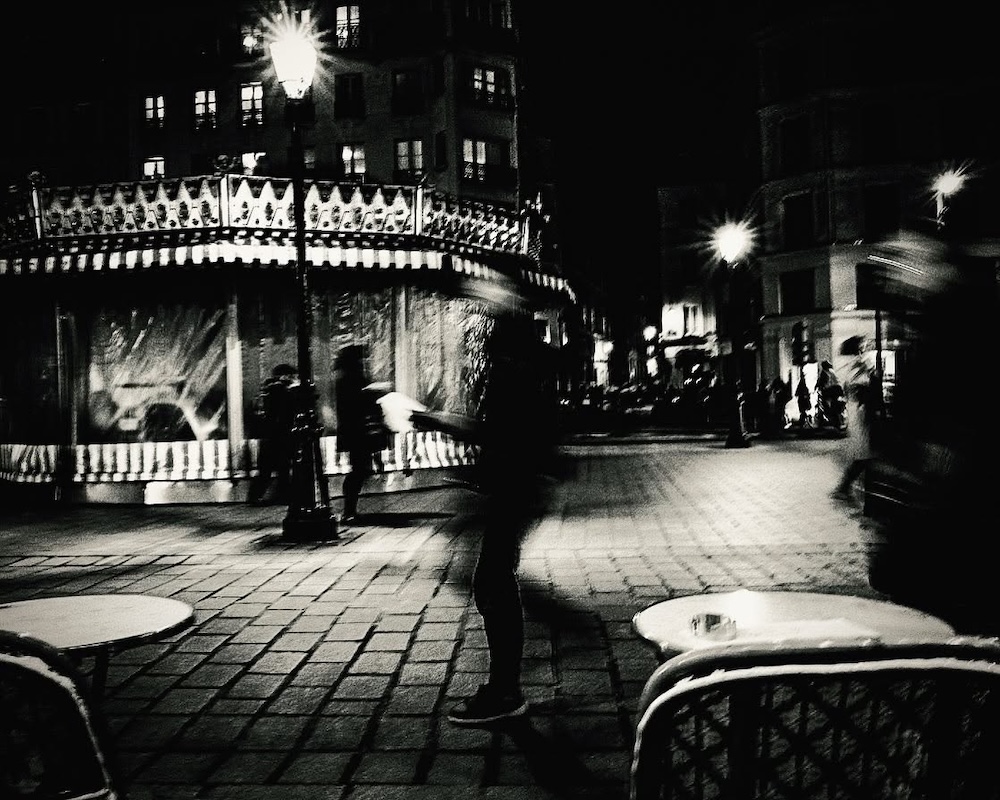
© Scarlett Freund
DNJ: Please tell us what you are working on now.
SF: I’ve been thinking a great deal about where I’d like to take my street photography next.
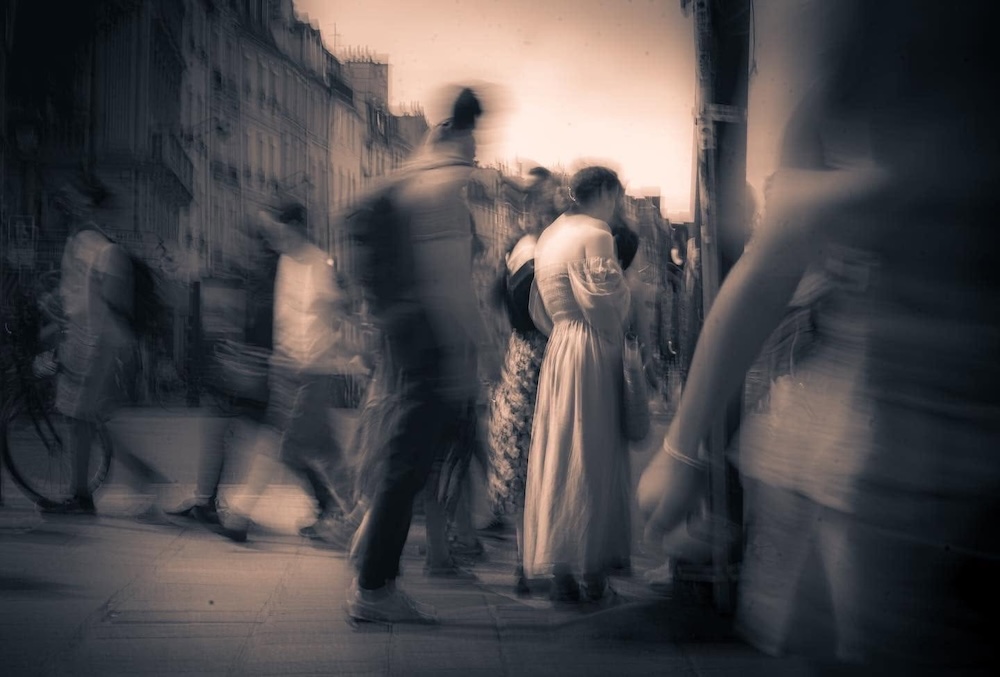
While continuing to photograph life on the street, I’m interested in moving beyond a strictly documentary approach in several ways. I’d like to explore a more abstract visual language through intentional camera movement (ICM), multiple exposures, motion blur, and more extensive experimentation with color and exposure. I have done some of this in the past but only sporadically.
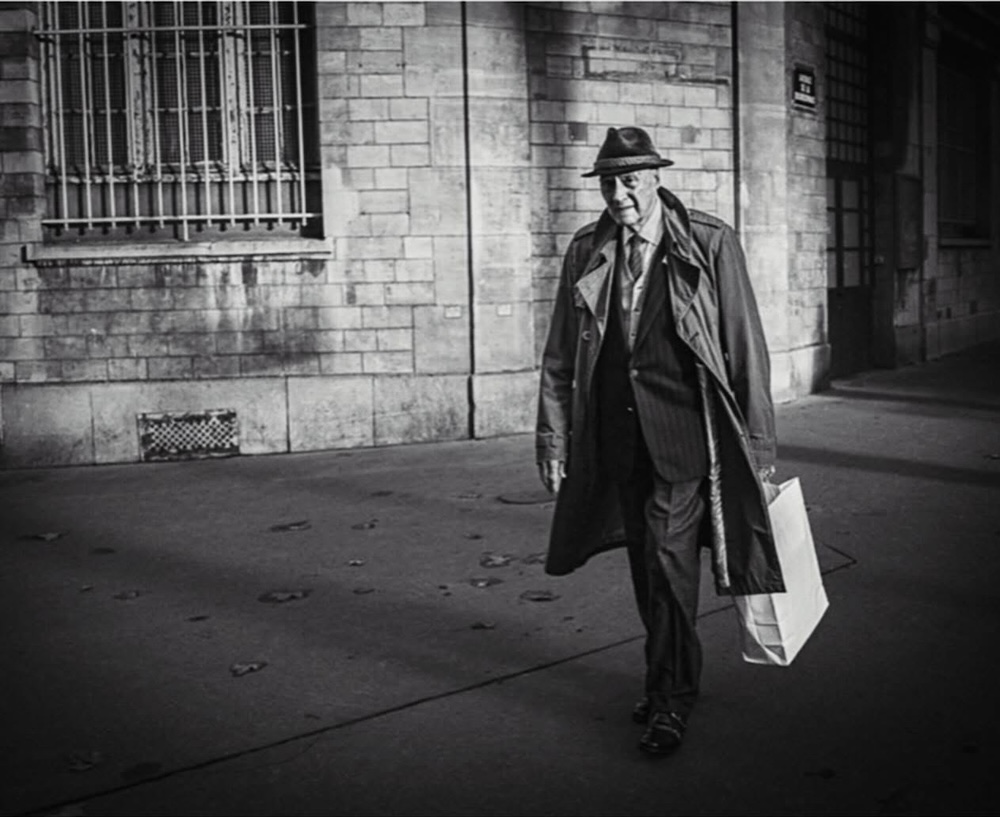
© Scarlett Freund
DNJ: What’s coming on the horizon for you?
SF: I’m interested in working more directly with the physical photograph itself—printing images and painting over them, distressing or altering their surfaces, and transforming them into tactile, textured objects rather than straightforward street photography work.
Additionally, I’d like to develop a series centered on empty streets without people on them. I’m not entirely sure where that project will lead, but I’m drawn to exploring a different kind of street photography—quieter, more minimalist, and perhaps more poetic.
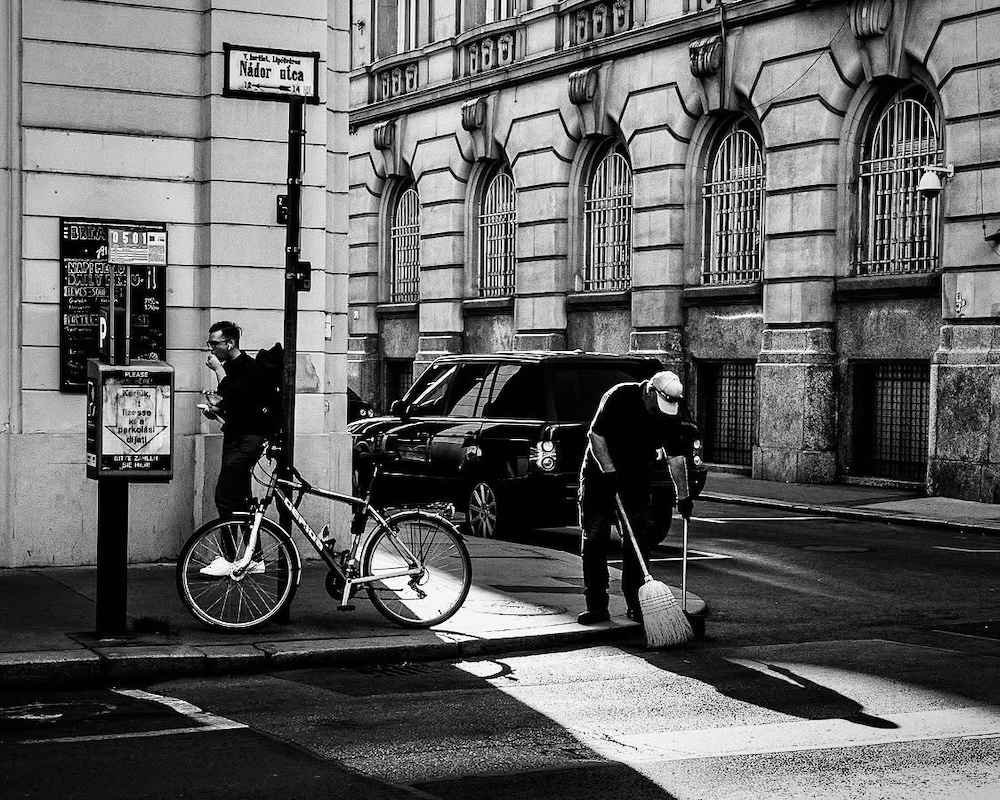
© Scarlett Freund
Scarlett, this has been a fascinating discussion. Thank you ever so much for the care and thought you have given my questions. Readers, I hope you have enjoyed this peek into Scarlett’s mind and practice. Find more of her work on her Instagram Account.
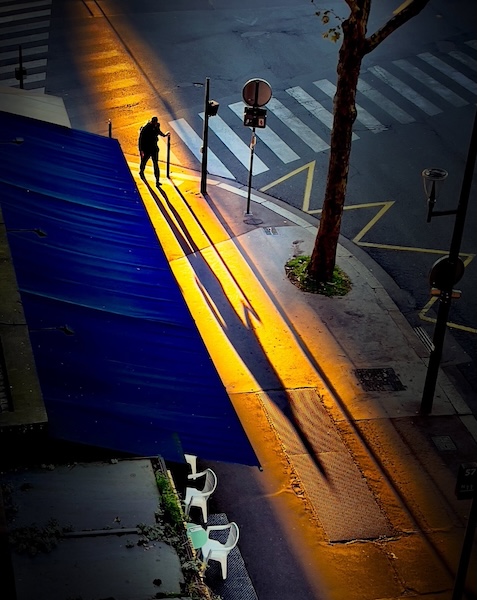
© Scarlett Freund
Posts on Lenscratch may not be reproduced without the permission of the Lenscratch staff and the photographer.
Recommended
-
The Female Gaze: Scarlett Freund—A Designer Eyes the StreetsJuly 11th, 2026
-
The 2023 Paula Riff Award Winner: Paula McCartneyJune 30th, 2026
-
Mexico Week – Tomás Casademunt: Time Frozen by LightMarch 24th, 2026
-

Anna Guseva: The Black Night Calls My NameJanuary 26th, 2026
-
Nathan Bolton in Conversation with Douglas BreaultJanuary 3rd, 2026