The 2026 Lenscratch Honorable Mention Student Prize Winner: Anton Zdanovich
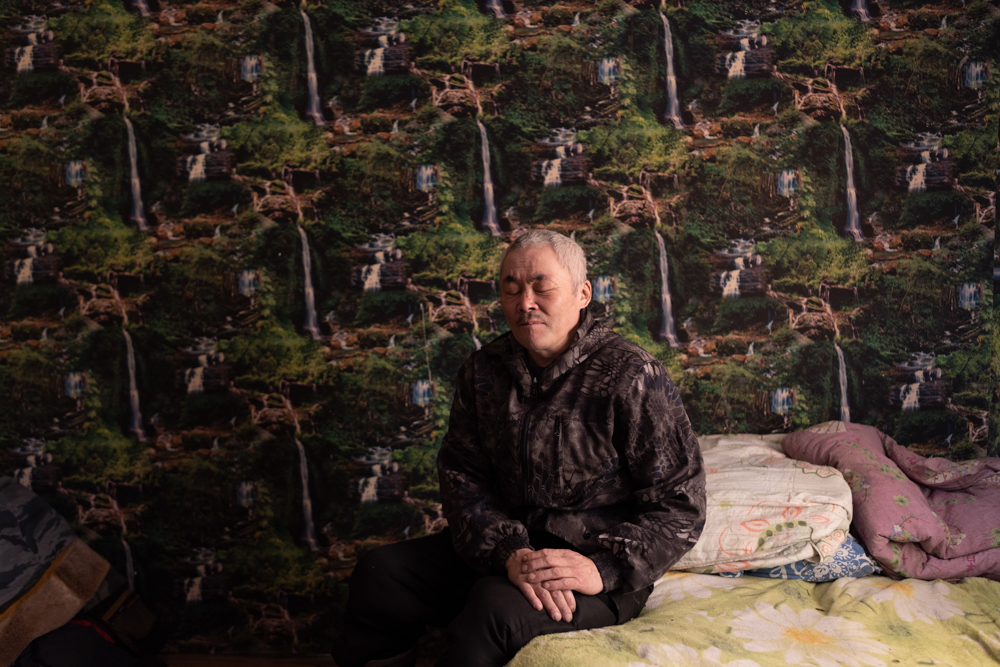
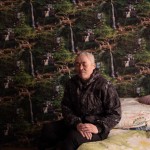
©Anton Zdanovich, Numto, Reindeer herder Gennady inside a bedroom in a house in the village of Numto. He usually lives in a remote herding camp, far from the village. His herd has been reduced to around 30 reindeer. After wolves destroyed herds in nearby camps in the Kazym area, Gennady fears for the safety of his animals. In the past, the state provided helicopters for tracking and culling predators, but this practice has now stopped, leaving reindeer largely unprotected against wolves. Numto, Russia, 2026
It is with pleasure that the jurors announce the 2026 Lenscratch Student Prize Honorable Mention Winner, Anton Zdanovich. Zdanovich was selected for his project, Numto, and is working toward a Certificate in Documentary and Art Photography (3rd year) from the Academy of Documentary and Art Photography “Fotografika”. The Honorable Mention Winner receives a $500 Cash Award, a feature on Lenscratch, a mini exhibition on the Curated Fridge, and a Lenscratch T-shirt and Tote.
Some landscapes hold more than geography: they carry memory. Around Lake Numto in Western Siberia, the past is not confined to history books but lives on in the land, in Indigenous traditions, and in the silences passed from one generation to the next. This project explores a place where myth, history, and everyday life remain inseparable, revealing the enduring effects of colonial violence, cultural erasure, and environmental change. Through quiet, deeply observed photographs, the artist bears witness to a community whose resilience is matched only by the fragility of the world it continues to protect.
A conversation with the artist follows.
Anton Zdanovich is an independent documentary and portrait photographer from Siberia, based between Russia and Belarus. His practice is rooted in long-term projects that explore provincial life, family histories, childhood, and the fragile traces of memory in everyday spaces.
Currently in his final year at the International Academy of Documentary and Art Photography “Fotografika” in Saint Petersburg, Anton works slowly, often returning to the same places over years. His ongoing project Numto examines the lives of Indigenous Khanty and Nenets communities in Western Siberia — a region marked by historical trauma, quiet disappearance of language and tradition, and the invisible weight of the past.
His photographs have been exhibited at the State Hermitage Museum in Saint Petersburg, VAiF25 Visual Arts International Festival in Thessaloniki (Winner), and Bridge Gallery in Cambridge, USA. His work has appeared in Takie Dela, Verstka, Zapovednik, F-Stop Magazine, and Progressive-Street Magazine.
Instagram @zdanovich_anton
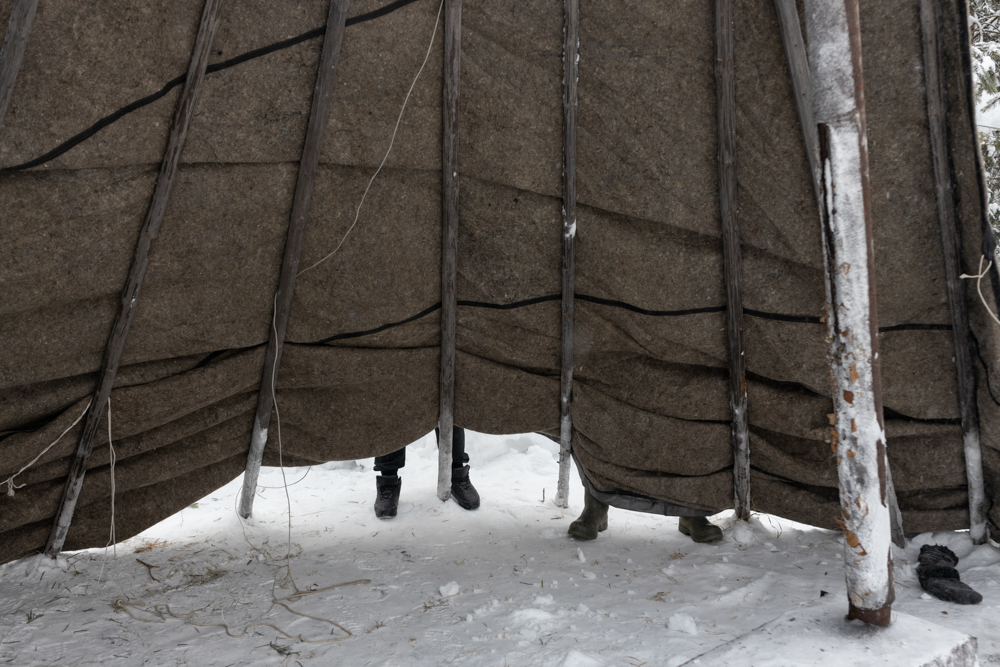
©Anton Zdanovich, Numto, Khanty and Nenets are setting up a chum (a traditional portable tent-like dwelling made of reindeer hides or heavy fabric) on the Amni River, one of the tributaries of the sacred Kazym River. In this area, there once stood a Soviet cultural base, whose presence contributed to the outbreak of a violent uprising a hundred years ago. Kazym, Russia, 2026
Numto
In Western Siberia, near the sacred Lake Numto (translated from Khanty as “Divine Lake”), live Indigenous Khanty and Nenets communities. The space in which they exist does not separate history, myth, and everyday life into distinct layers — they continue to exist simultaneously. According to local beliefs, this land belongs not only to humans but also to spirits; it remembers what sinks deep into time.
A hundred years ago, a violent confrontation took place here between Indigenous peoples and the state. In the late 1920s, the repressive system of the USSR acted openly: reindeer herders were burdened with unbearable taxes, herds — the foundation of existence — were confiscated, children were taken to boarding schools to sever their connection to language, faith, and tradition. Sacred beliefs and rituals were forbidden and pushed out of life; shamans, as the carriers of this knowledge, were persecuted, silenced, and imprisoned. The very logic of life on this land was seen as an obstacle that had to be removed. The conflict reached its peak in the area of Lake Numto and ended in violence, arrests, and the suppression of resistance. For local people, this became a deep trauma that is still passed on through stories and fear.
Today, direct violence has disappeared, but the rupture remains — only its form has changed. The presence of the state is less visible, but no less defining. Reindeer herders remain vulnerable: their herds are killed by wolves, while systems of protection are almost absent. Young people no longer speak Khanty or Nenets — the languages survive only in the memory of older generations. The arrival of the oil industry transforms the land, often without regard for its fragile ecology. And new political realities send men to war, where many of them are killed, continuing a chain of loss that stretches across generations.
This project examines a community living in a prolonged state of rupture — where historical violence has not disappeared, but has quieted, dispersed across time and the structures of everyday life. It no longer appears as catastrophe, but operates as a slow depletion: of language, environment, bodies, and the future.
In Numto, silence is not empty. It is filled with what is not spoken aloud: a disappearing language, a sense of injustice, fear, and a history of loss that has not ended, but has grown quieter, as if sinking deeper into the earth.
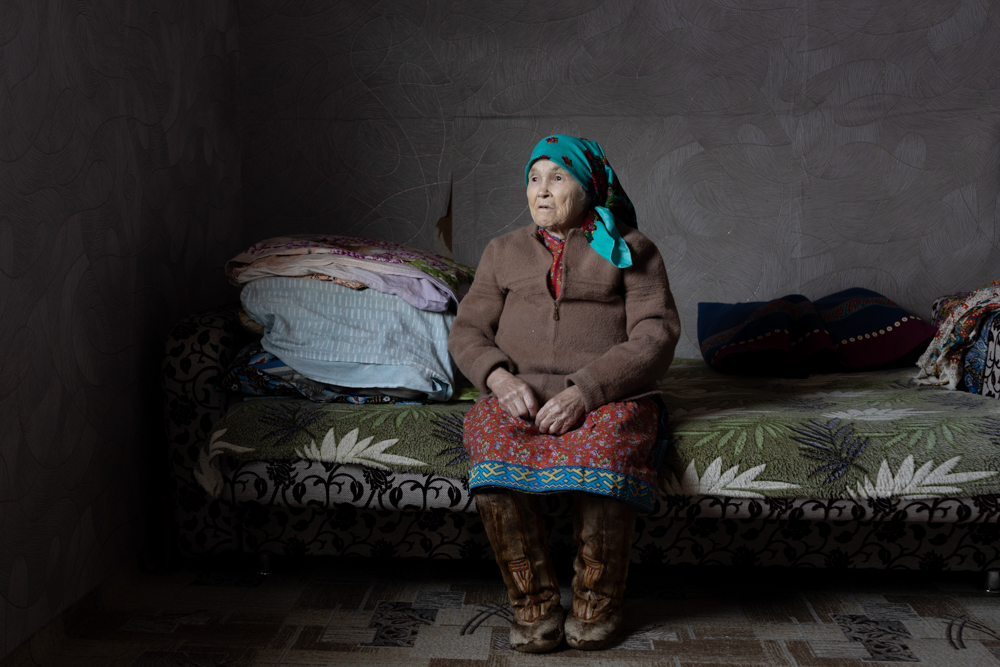
©Anton Zdanovich, Numto, Khanty woman Feodosia Ivanovna at the reindeer camp of her daughter and son-in-law, a Nenets man, 20 km from Lake Numto. Her grandson is buried on the camp grounds; he left to fight in the war in Ukraine and was killed there. Numto, Russia, 2026
Tell us about your growing up and what brought you to photography?
I was born in Western Siberia to a Ukrainian family and grew up between two very different worlds. My childhood was divided between the long, harsh winters of Siberia and the hot summers spent with my mother’s family near Odesa in southern Ukraine. Because of that, I have always felt both Ukrainian and Siberian. In Ukraine I was often seen as Russian, while in Russia I was seen as Ukrainian. Looking back, I think growing up between these identities shaped the way I observe people and places.
As a child, I loved drawing and attended art school, where I spent most of my time making pencil portraits. Later, I moved to Saint Petersburg to study engineering, and art gradually disappeared from my life.
Photography came much later. In my early thirties, I began collecting photography books and photographing everyday life with my phone. At the end of 2021, I enrolled in a photography course. After finishing it, my teacher helped me choose my first camera, and we simply agreed to meet on February 24, 2022, so I could buy it. It was a complete coincidence.
That morning, everything changed.
February 24 became the darkest day of my life. It was the day Russia launched its full-scale invasion of Ukraine, and it was also the day I bought my first camera. Since then, photography has become my way of trying to understand people, memory, and the fragile relationship between history and everyday life.
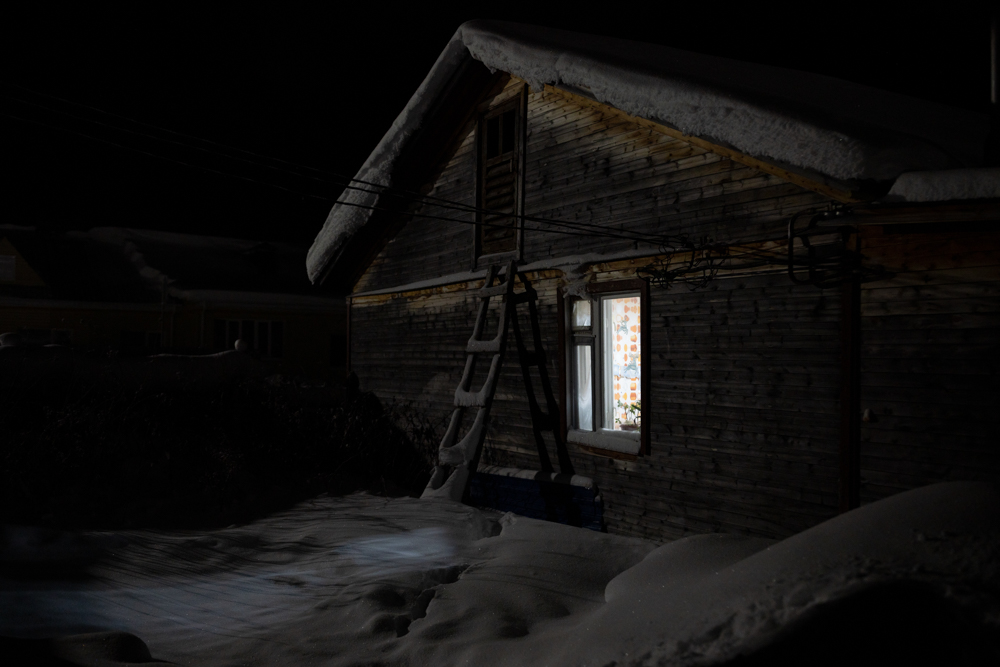
©Anton Zdanovich, Numto, A Khanty reindeer herding family’s house in the village of Kazym at night. The Tarlins live between two homes: one in the village and another closer to their reindeer herd near Kazym. They travel there by snowmobile or by reindeer sled. Kazym, Russia, 2026
Can you also tell us about your documentary program and has there been a teacher who has inspired you?
This autumn will mark three years since I began studying at Fotografika, the International Academy of Documentary and Art Photography. During this time, I have worked with around thirty different teachers, and each of them, through their courses and experience, has influenced my understanding of photography in some way.
However, the person who has influenced me the most is Ekaterina Bogachevskaya, the director of the academy. Even before she became one of my teachers, I had already heard a lot about her experience and approach to photography. I first asked her for guidance while working on one of my projects, and since then she has become the curator of many of my works.
What has always amazed me is her ability to notice details and connections that I had not even considered. At the same time, she often understands exactly what I was trying to express through a particular image or sequence. It sometimes feels as if she can read my thoughts.
She is an experienced photographer and curator who has the ability to see what others might overlook. I value every conversation and every meeting with her, because each one helps me look deeper, think more critically, and become a better photographer.
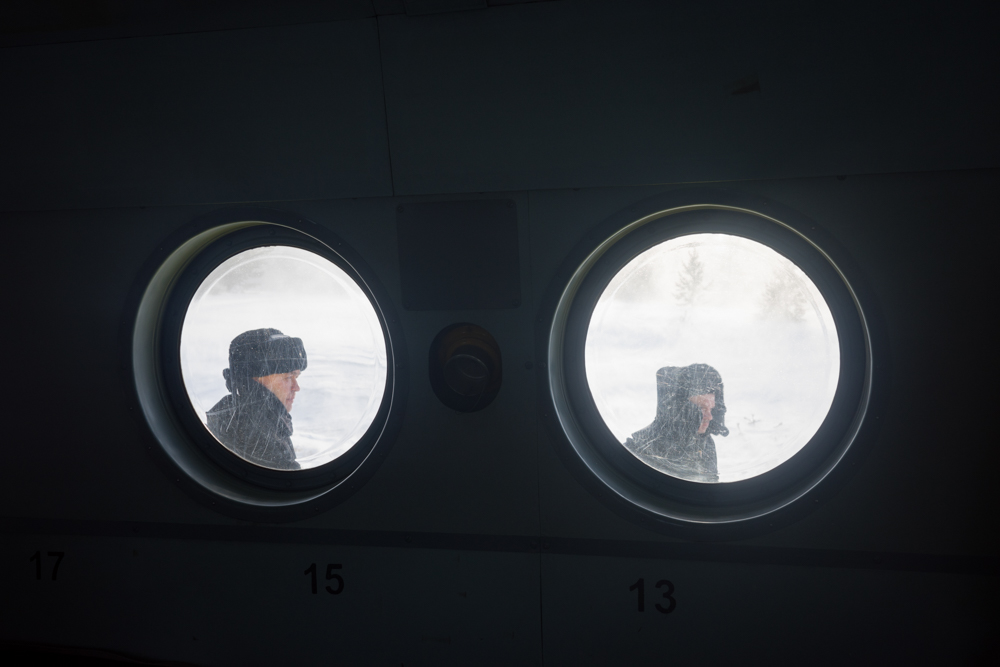
©Anton Zdanovich, Numto, Helicopter pilots during a stop in the village of Yuilsk, a settlement neighboring Numto. In winter, Numto can only be reached by helicopter due to its isolation and difficult weather conditions. On the way from the district center of Beloyarsky, the helicopter makes stops in the villages of Kazym and Yuilsk; the final destination of the route is the village of Numto. A century ago, Yuilsk was also one of the places where Indigenous resistance against state policies unfolded. Today, the route continues through a landscape where traces of past conflicts remain embedded in everyday life. Yuilsk, Russia, 2026
What first brought you to Lake Numto, and what convinced you that this was a story you needed to tell?
I often feel that places find me rather than the other way around. My projects usually begin through a chain of unexpected encounters and circumstances.
I was born in the Khanty-Mansi Autonomous Okrug, and I started photographing a story about my hometown. During my research, I visited a local ethnographic museum, where I learned about Khanty traditions, rituals, and their connection to the lands around the Kazym River. I became deeply interested in this culture and decided to travel there.
My first visit was to the village of Kazym. The more I learned, the more questions appeared. Through conversations with local people, I discovered the history of the Kazym uprising and eventually learned about the village of Numto and the sacred lake nearby.
When I first arrived in these places, I did not have a clear idea of what the final story would become. I simply spent time with people, listened to their stories, and tried to become part of the community. The project grew naturally from these relationships and from my desire to understand the place from within.
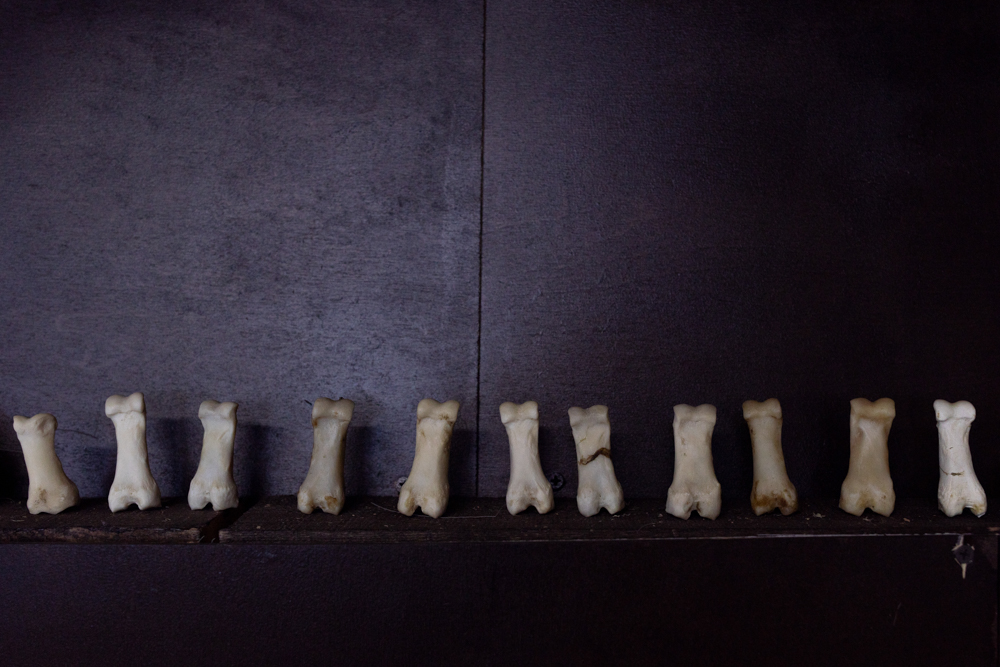
©Anton Zdanovich, Numto, An installation of animal bones in the ethnographic museum of Kazym village. Kazym, Russia, 2026
You describe a place where myth, history, and daily life coexist. How did you translate that layered reality into photographs?
I do not begin my projects with a fixed list of questions that I need to answer. For me, that would create a boundary around the story and prevent me from discovering things that I could not have anticipated.
Instead, I spend time with people and try to understand what is truly important to them. For some, it is their history and the memory of their ancestors. For others, it is the land itself, the sacred places, and the spiritual beliefs connected to them. These things are a source of pride for many people in the community.
I prefer to build relationships naturally. At first, conversations are simple — like two people who have just met and are getting to know each other. As trust develops, the conversations become deeper and more personal. I ask questions when something genuinely interests me, but I do not try to lead people toward a specific answer.
The layered reality of Numto that appears in my photographs is shaped by the people themselves. Their memories, beliefs, and everyday lives determine what I see and what I photograph.
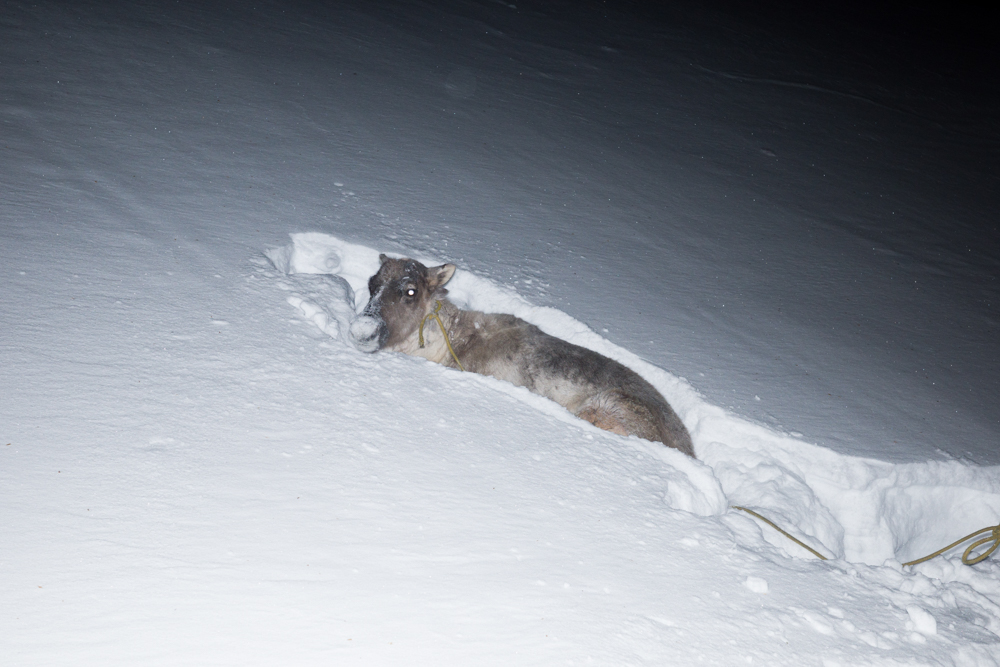
©Anton Zdanovich, Numto, A reindeer being transported by truck from Kazym. In Khanty-Mansiysk, after being unloaded, it burrowed into the snow, frightened and stressed from the journey. Khanty-Mansiysk, Russia, 2026
Silence is a recurring theme throughout the project. What does silence look like in a photograph?
For me, silence is not simply the absence of sound. It is a certain rhythm of life and a way of being present.
While spending time with Khanty and Nenets communities, I often noticed a different relationship with time. Life in these harsh northern conditions requires patience and an ability to take care of oneself. People do not always try to complete everything as quickly as possible. They can work for some time, take a pause, and then return to their tasks when the moment is right.
I try to approach photography in a similar way. I do not want to immediately arrive with a camera and turn people into subjects. First, I want to meet them, spend time together, and build a certain level of trust.
I do not have a simple answer to what silence looks like in a photograph. Perhaps it appears in the moment when a relationship between the photographer and the person being photographed becomes comfortable enough — when it is possible not only to talk together, but also to be silent together.
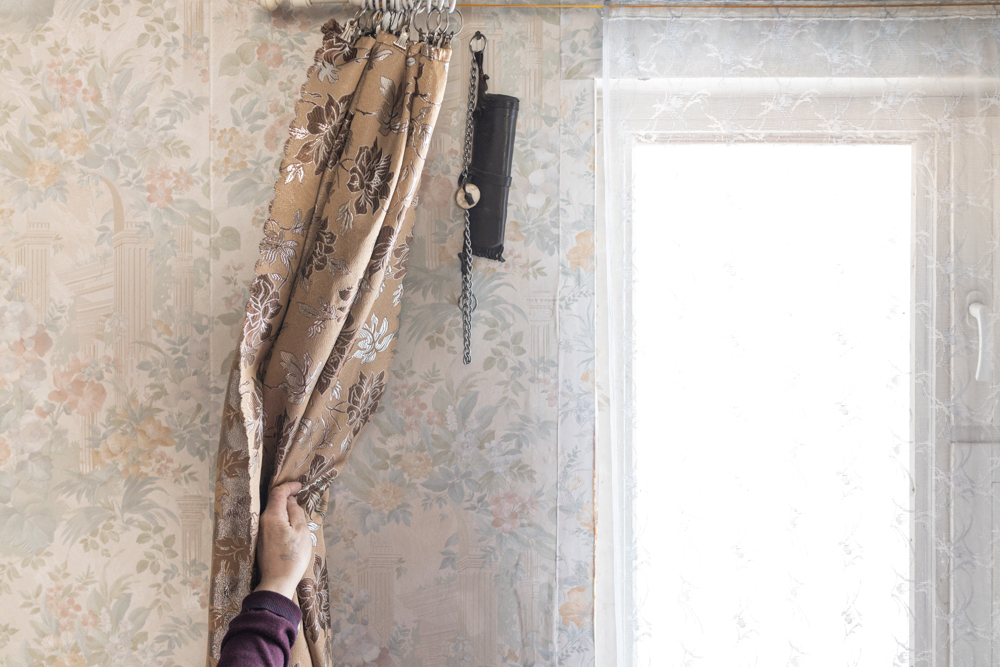
©Anton Zdanovich, Numto, Oleg, a resident of the village of Numto, shows a knife sheath hanging by the window in his house. Oleg and his wife Anna live in a small wooden house in the village. Anna makes traditional clothing, mainly burki — footwear made from reindeer leg hides. Numto, Russia, 2026
How did you earn the trust of the Khanty and Nenets communities, and how did those relationships shape the project?
I am still surprised by the level of trust people have shown me. Some of them have even become my friends.
I believe that the trust that developed between us is, first of all, a result of their openness. I did not have any special formula or try to find a particular way to gain their trust. I simply tried to be respectful, friendly, and sincere. Everything else came from them.
The stories, memories, and conversations that shaped this project became possible only because people were willing to open up and share their lives with me. If they had treated me with suspicion or kept their distance, none of this work would have been possible.
The photographs are not only the result of my observation. They are also a reflection of the relationships that grew over time.
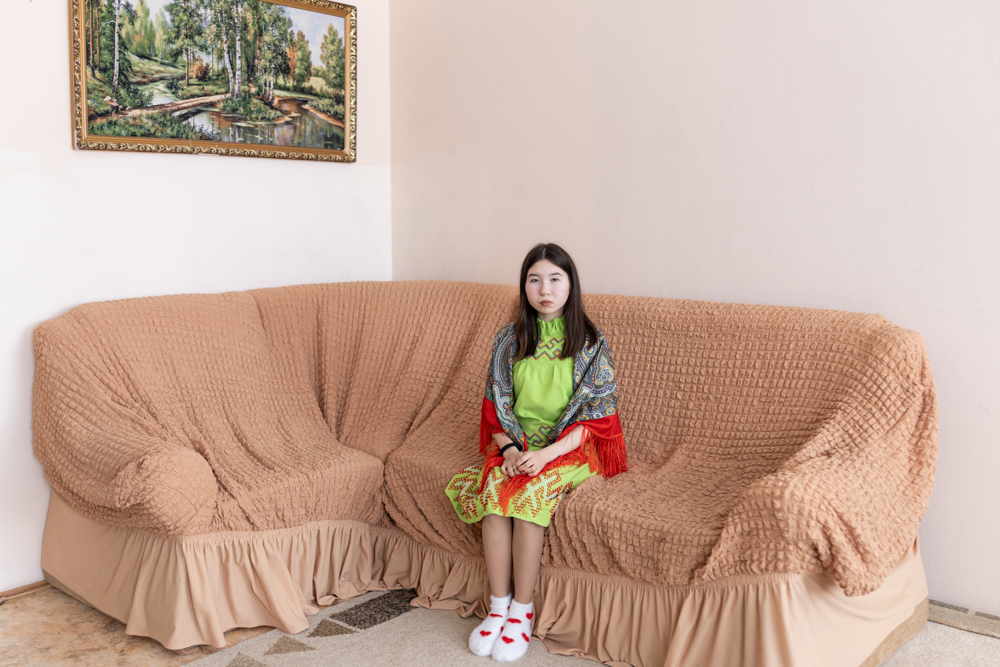
©Anton Zdanovich, Numto, Alexandra, the daughter of reindeer herders and a student at the Kazym boarding school, is in one of its rooms. Children of reindeer herders study at the Kazym boarding school, far from their parents, who work at reindeer herding camps that are difficult to reach by land. They live with their families only in summer, during school holidays. Indigenous languages are not taught at the boarding school, and many children do not speak them. Kazym, Russia, 2026
Your photographs suggest that the consequences of colonialism continue long after visible conflict has ended. How did you seek to represent this idea of “slow violence”?
I did not travel to the Kazym River basin with the intention of making a project about what is often described as “slow violence.” At first, I was simply observing how people lived and trying to understand the place.
The more time I spent there, the more I began to notice changes that were easy to overlook. I was surprised to discover that many young Khanty and Nenets people no longer speak their own languages. In many families, only the older generation still does. I found that deeply unsettling, because I could not stop thinking about what would happen when those voices are gone.
I also learned that there are far fewer reindeer herders and camps than there were only a few decades ago. In some parts of the Kazym River basin, they have disappeared completely. Today, some herders are forced to slaughter their last reindeer because they can no longer protect their herds from wolves. Years ago, helicopters were provided to help hunt wolves. That support no longer exists.
Traditional rituals are also slowly disappearing. During my first visit, I met the last remaining singer in Kazym who could perform the sacred songs of the Bear Ceremony, the most important ceremonial celebration in Khanty culture. He was eighty years old. He passed away earlier this year.
What struck me most was that none of these losses happened overnight. They unfold quietly, almost unnoticed. That, to me, is what “slow violence” looks like.
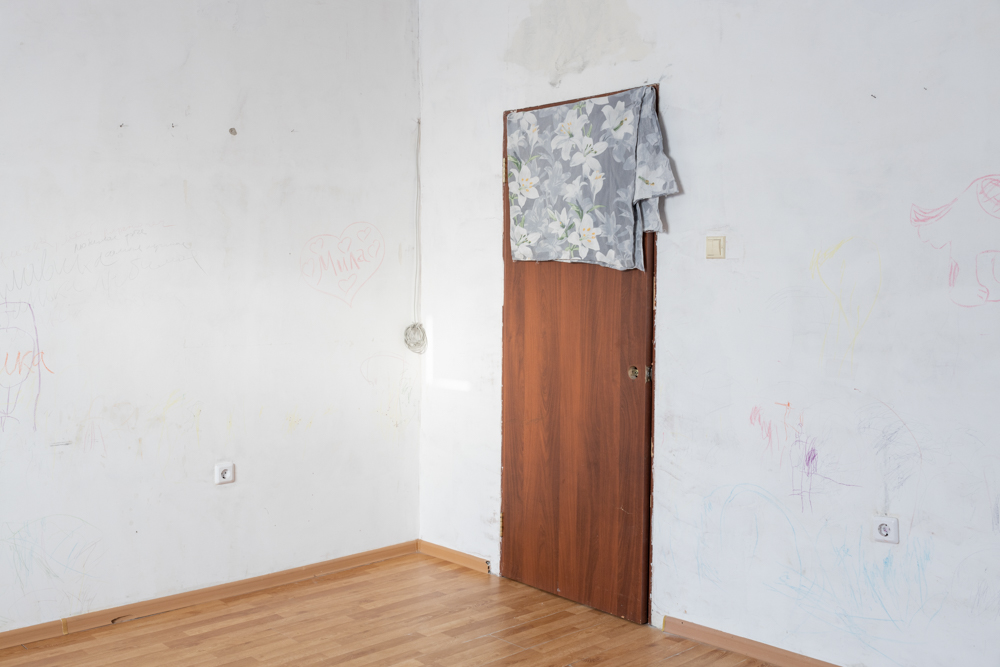
©Anton Zdanovich, Numto, Children’s drawings and inscriptions in an empty apartment in the village of Kazym. The owners have moved to the city of Beloyarsky, the largest town in the district and its administrative center, where people often relocate in search of work. As a result, many apartments and houses in the villages are left abandoned and empty. Kazym, Russia, 2026
Were there stories that community members chose not to tell? How did those absences influence the work?
I never had a fixed list of questions that I felt I had to ask. My conversations were never meant to be interviews. They were simply conversations between people getting to know one another.
The longer I spend with someone, the more trust develops, and the more we are able to talk about. Every relationship is different. Some people are ready to share very personal stories, while others prefer to keep certain things to themselves. I have always respected that.
In today’s Russia, many people are cautious when talking about the war, especially with someone they have only recently met. They are often afraid of saying the wrong thing or facing consequences for their words. I don’t think this is specific to the Khanty or Nenets communities—it is part of the broader reality many people live in today.
I never saw those silences as a limitation. On the contrary, I believe there are still many stories waiting to be told. I hope to return to the Kazym River basin this August, continue those conversations, and deepen the relationships that have already begun.
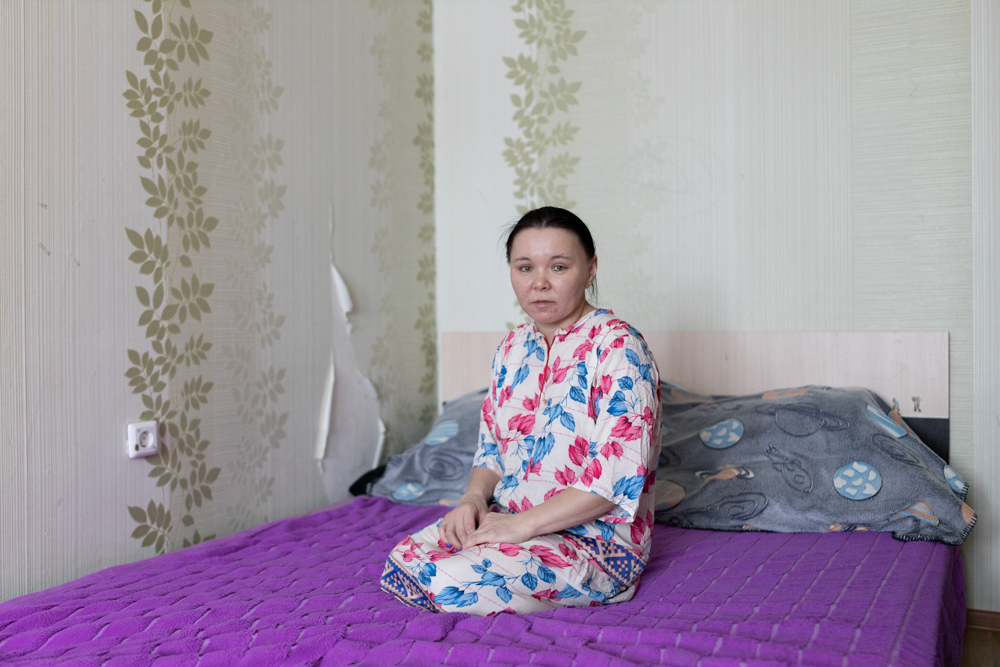
©Anton Zdanovich, Numto, Alina lives in a reindeer herding camp near the village of Numto. She and her husband are raising two children and work as reindeer herders together. She shares all the physically demanding work of reindeer herding equally with her husband. Numto, Russia, 2026
How do you navigate the ethical responsibilities of photographing Indigenous communities while avoiding romanticization or victimization?
I did not come to these places with a specific theme or a predetermined story that I wanted to tell. I was first drawn by the land itself and by the people who live there — their crafts, their everyday life, and their reindeer herding traditions. I have always been interested in the North; it is a part of my own life that I continue to return to.
I tried to approach each person as an individual, not as a symbol of a culture or a problem that needed to be explained. I understood that many of the people I met lived in circumstances different from my own, but our conversations were simply conversations between two people who had met each other.
Of course, I am human. I can miss things, overlook something, or misunderstand a situation. But I always try not to create a story that does not exist. I want to photograph people as they are — with their difficulties, traditions, everyday routines, and personalities.
For me, avoiding romanticization or victimization begins with seeing people first as people, rather than as representatives of a disappearing culture.
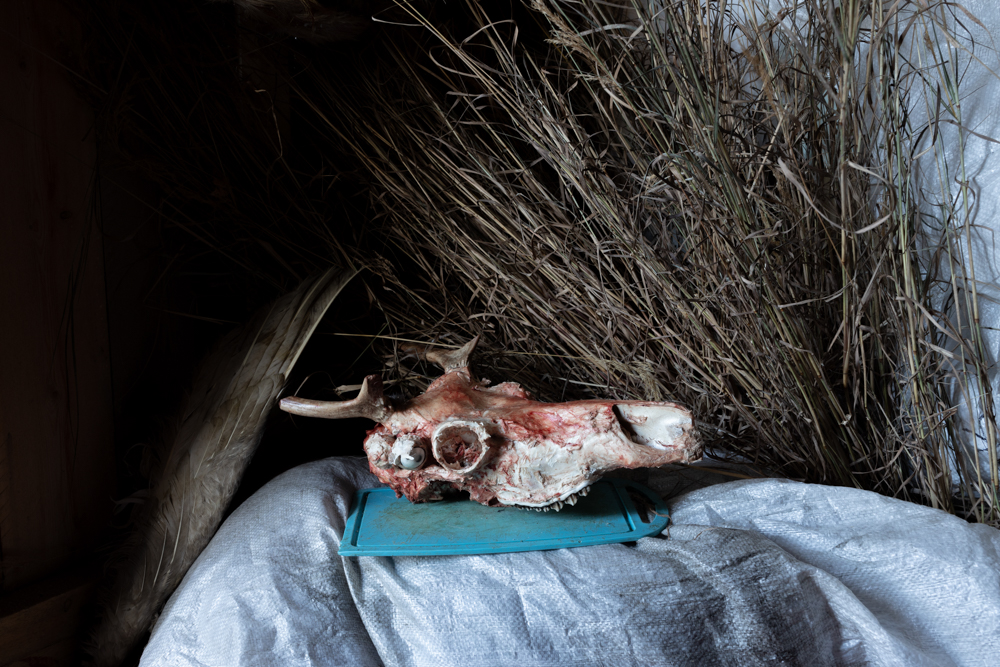
©Anton Zdanovich, Numto, A reindeer skull inside a hut in the village of Numto. For Khanty and Nenets communities, the reindeer is central to life, providing food, clothing, transportation, and income. Every part of the animal has a purpose: hides are used for winter clothing and covering traditional chums, meat and fat for food, antlers for trade and traditional medicine. Parts of the reindeer remain present in domestic spaces, reflecting an inseparable relationship between humans, land, and survival in the North. Numto, Russia, 2026
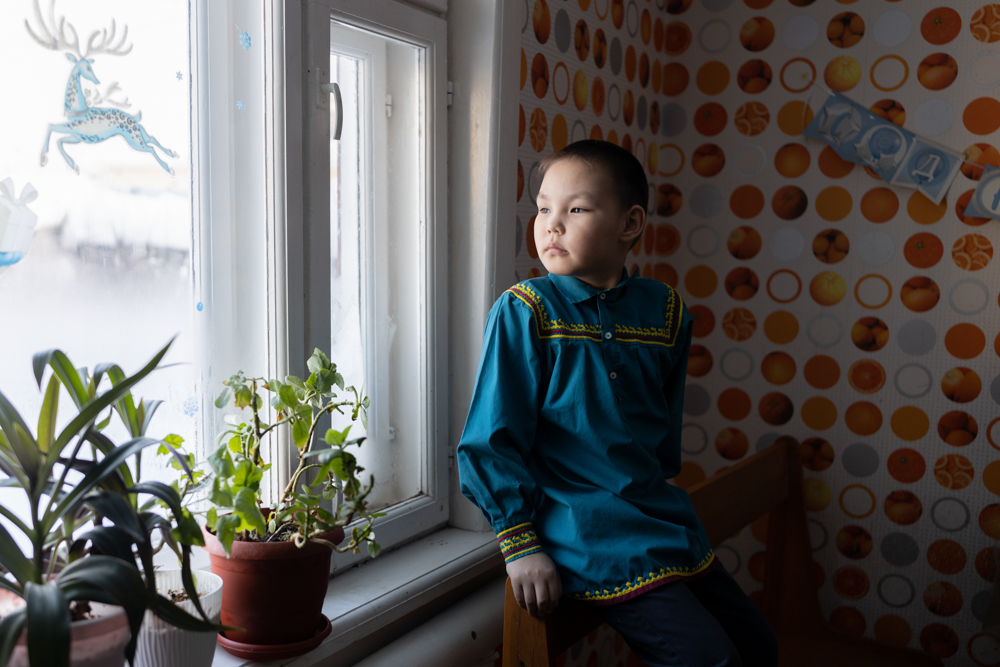
©Anton Zdanovich, Numto, Matvey, the son of a reindeer herder, looks out of the window of his home in Kazym. His father’s camp is located 20 kilometers from the village. A year ago, the herd numbered more than 100 reindeer; this winter only 25 remain. The loss is caused by wolves that hunt the reindeer. This is the last remaining herd in the area around the village.
Did working on this project change your own understanding of memory, belonging, or the relationship between people and place?
Working on this project made me think more deeply about memory and how quickly time passes. I often find myself thinking about how far I am moving away from my ancestors and from the memories connected to them.
I often think about my two grandfathers. One was Ukrainian, the other was Belarusian. I sometimes wish they had lived longer, until the time when I was already photographing and documenting stories. I regret that I missed the opportunity to spend more time with them, to photograph them, to record their thoughts, and to preserve my own impressions of who they were.
I remember so much about them, but at the same time I realize that I have already forgotten many things. The fact that memories remain while slowly disappearing makes them even more precious.
Among the people I have photographed, there are also those who are no longer alive. This made me think about photography as a way of preserving a trace of a person — something that can remain for their families and for the people who remain in those places after them.
I have always considered myself both Ukrainian and Siberian, and I am proud to speak about both parts of my identity. I see something similar in the people I meet in the Kazym River basin. They are proud to speak about their ancestors, their origins, and who they are. Even as the region changes and more mixed families appear, I often notice how important it remains for people to say: “I am Khanty” or “I am Nenets.”
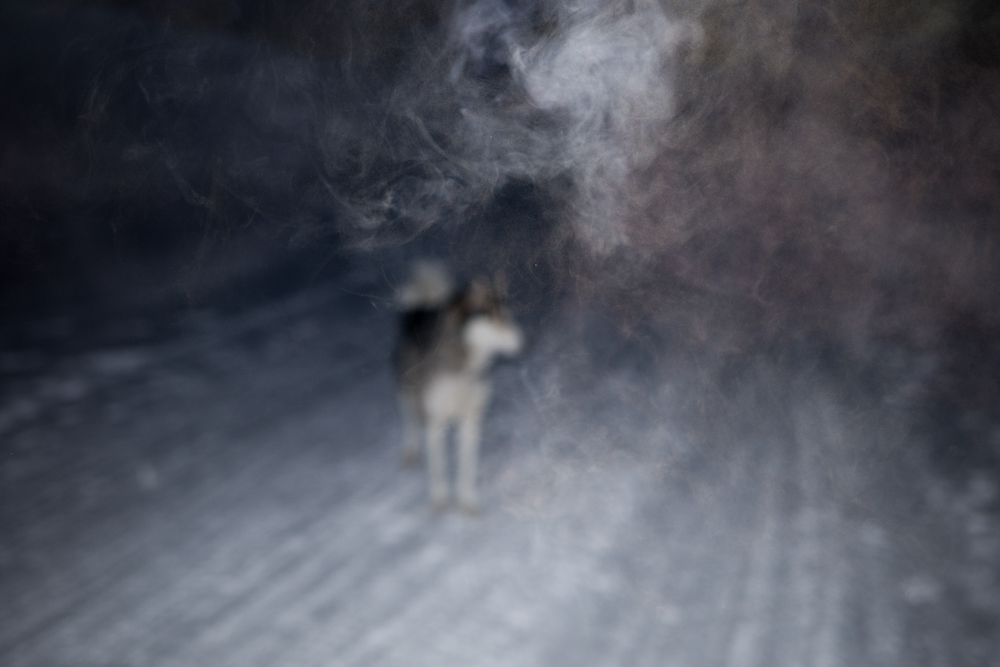
©Anton Zdanovich, Numto, A northern breed dog walks at night near the sacred Lake Numto. At that moment, the temperature had dropped to -40°C. In such extreme cold, dogs are often the only living beings seen outside in the evening. Numto, Russia, 2026
What do you hope viewers unfamiliar with the Khanty and Nenets communities take away from this work?
I hope that viewers see the Khanty and Nenets people not as a distant or unfamiliar culture, but as individuals with their own memories, experiences, beliefs, and connection to the land.
A hundred years ago, a powerful state tried to decide how people should live — what languages they should speak, what beliefs they could practice, and what way of life was considered acceptable. Many decisions were made for them, without considering the value of their own traditions and knowledge.
But human life cannot be reduced to a single model. People need the freedom to preserve their languages, their beliefs, and their relationship with the places that have shaped their communities for generations.
Today, these pressures often appear in different forms. They may not always be as visible as before, but they continue to influence the survival of languages, traditions, and ways of life.
More than anything, I hope this work encourages viewers to think about their own relationship with memory, identity, and the places they call home.
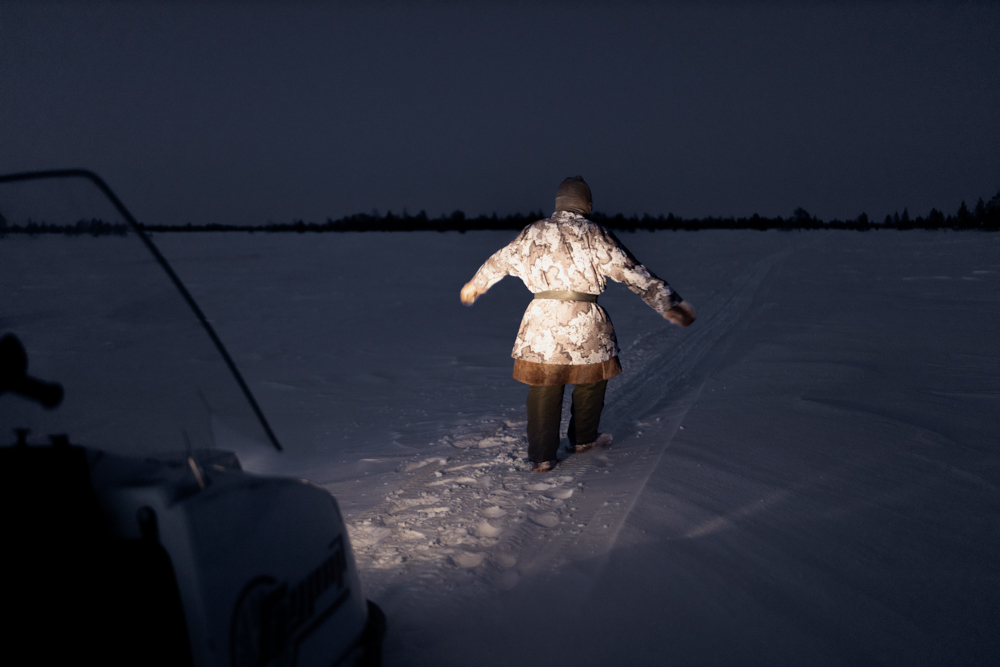
©Anton Zdanovich, Numto, Reindeer herder Ilya crosses the Kazym River on a snowmobile. He lives with his family in a reindeer herding camp near the village of Numto, together with his wife and children, his Nenets father, and his Khanty mother. His twin brother was sent to fight in the war in Ukraine and was killed there several years ago. Kazym River, Russia, 2026
Posts on Lenscratch may not be reproduced without the permission of the Lenscratch staff and the photographer.
Recommended
-

The 2026 Lenscratch Honorable Mention Student Prize Winner: Anton ZdanovichAugust 8th, 2026
-

The 2026 Lenscratch Honorable Mention Student Prize Winner: Anastasia SierraAugust 7th, 2026
-

The 2026 Student Prize Honorable Mention Winner: Luke RosingAugust 6th, 2026
-
The 2026 Lenscratch 3rd Place Student Prize Winner: Diana SosnowskaAugust 5th, 2026
-

The 2026 Lenscratch 2nd Place Student Prize Winner: Em WallAugust 4th, 2026