The 2026 Lenscratch Honorable Mention Student Prize Winner: Anastasia Sierra
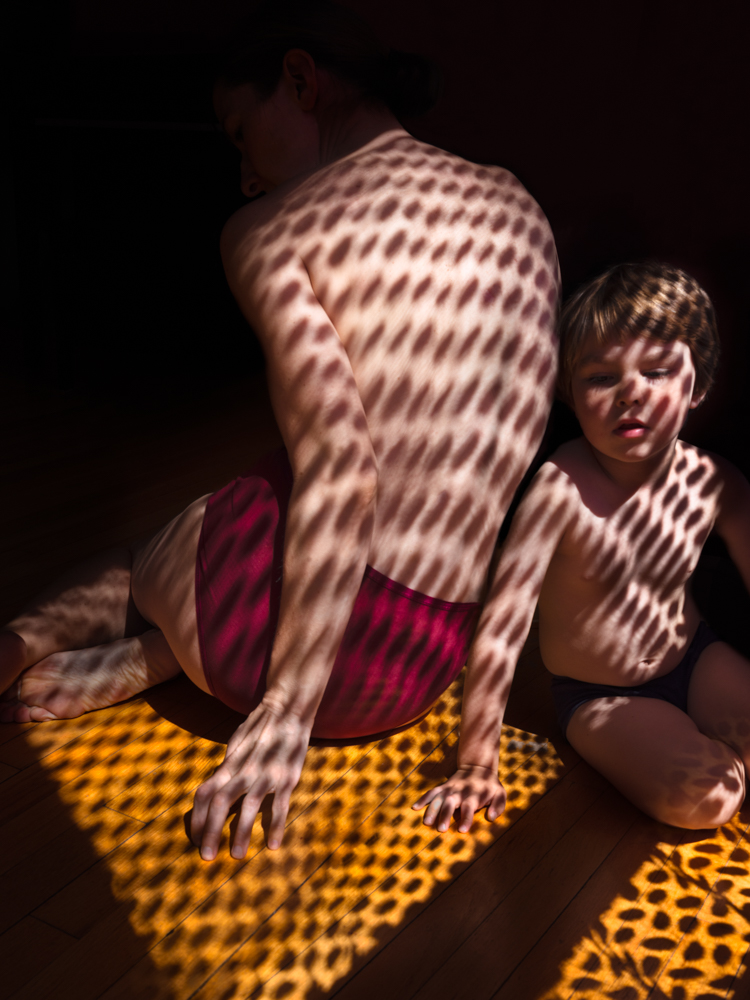
©Anastasia Sierra, Shadows
It is with pleasure that the jurors announce the 2025 Lenscratch Student Prize Honorable Mention Winner, Anastasia Sierra. Sierra was selected for her project, The Witching Hour, and recently received an MFA in Photography from the Massachusetts College of Art and Design . The Honorable Mention Winner receives a $500 Cash Award, a feature on Lenscratch, a mini exhibition on the Curated Fridge, and a Lenscratch T-shirt and Tote.
Additionally Sierra was selected for the 2025 Lenscratch Student Prize awards.
Sleep is often imagined as a place of rest, but for parents it can become a landscape of vigilance, where love and anxiety blur the boundaries between dreams and waking life. The Witching Hour inhabits that liminal space, exploring the emotional terrain of caregiving through photographs that feel at once theatrical, intimate, and deeply psychological.
Created in collaboration with the artist’s young son and aging father, the series transforms ordinary family relationships into dreamlike tableaux where fear, tenderness, and humor coexist. Moving between reality and imagination, these images reveal the emotional complexity of caring simultaneously for a child and a parent. The Witching Hour invites us into a world where nightmares become metaphors, play becomes ritual, and love is inseparable from the vulnerability of knowing that everything we cherish is fragile.
An interview with the artist follows.
Anastasia Sierra is a photographer based in Cambridge, MA. Her work explores the psychological complexities of motherhood, womanhood, and the domestic sphere, revealing profound vulnerability inherent in intergenerational bonds.
Sierra’s photographs have been exhibited in solo and group exhibitions at the Griffin Museum of Photography, Danforth Art Museum, Emerson Contemporary Gallery, Panopticon Gallery, Duncan Miller Gallery and Blue Sky Gallery. She is a winner of a 2026 LensCulture Art Photography Award, was named a 2025 Photolucida Critical Mass Top 50 finalist, and is included in the 2025 Lenscratch Student Prize: Top 25 to Watch.
Her work has appeared in DEAR DAVE, Lenscratch, and Musée Magazine. Sierra holds an MFA in Photography from the Massachusetts College of Art and Design and a BA in Linguistics.
Instagram: @anastasiasierra
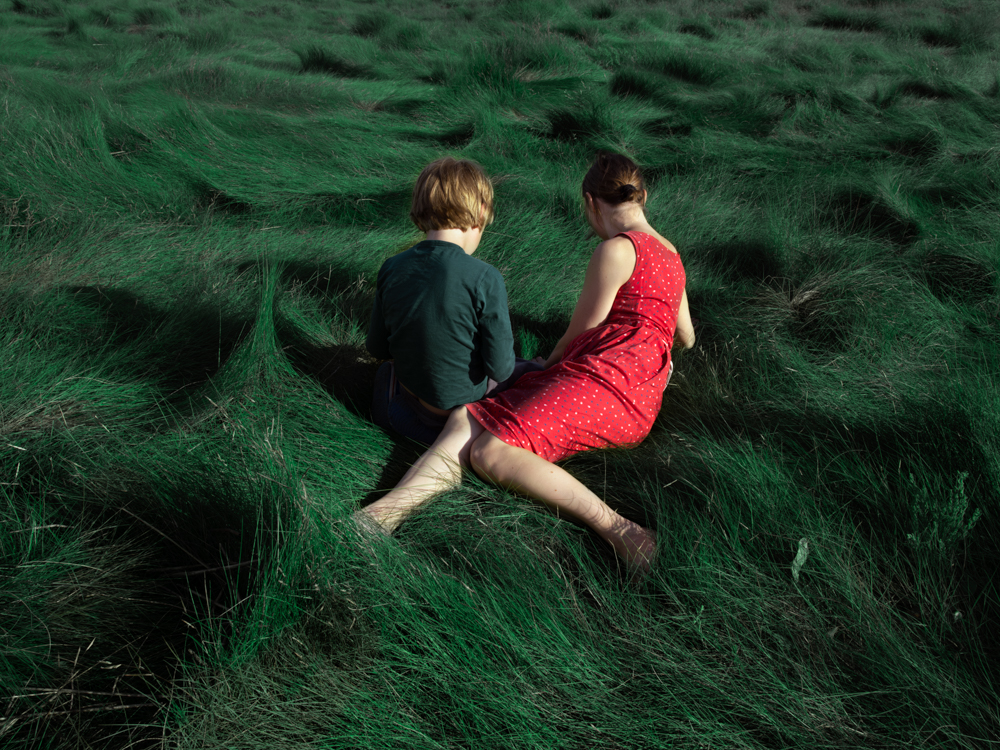
©Anastasia Sierra, Sheltered
The Witching Hour
I become a mother and stop sleeping through the night. Years go by, my child sleeps soundly in his bed but I still wake at every noise. My father comes to live with us and suddenly, I am a mother to everyone. As I drift off to sleep I can no longer tell my dreams from reality. In one nightmare my father tells me he’s only got two weeks to live. In another, I am late to pick up my son from school and never see him again. I am afraid of monsters, but I move towards them: we circle each other until I realize they are just as afraid of me as I am of them.
Made in collaboration with my young son and elderly father, these images follow the logic of dreams, where we are trapped in a strange colorful world, playing an endless game of hide-and-seek in a labyrinth of love and fear.
This work meditates on the shifting bonds between parents and children, where tenderness, intimacy, and play intertwine with guilt, frustration, and a constant sense of what could be lost.
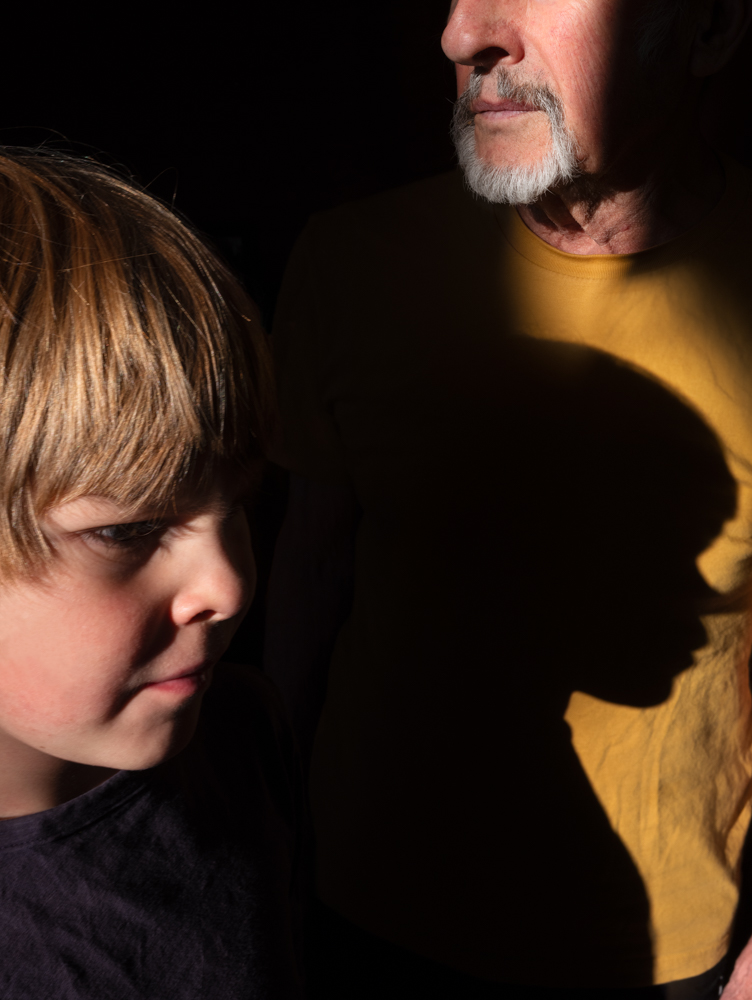
©Anastasia Sierra, Blame
Tell us about your growing up and what brought you to photography?
I grew up in Russia in the 1990s, during a time of uncertainty and economic collapse, which left me wanting a stable, predictable career. I started studying languages at a young age, went to a language-focused school, and later studied linguistics. When I moved to the US, I was fortunate to find a demanding job in my field. I was grateful for it, but I also felt stuck. I wanted to do something that would make me feel alive, even if only for a few hours a week.
I signed up for a photography class at a continuing education center and immediately became obsessed. I see more with a camera than without one. Photography helps me pay closer attention to my life, and it has brought me into contact with people and situations I otherwise would not have encountered.
For a long time, photography was also an escape from reality, a place to dream. But when I began making work about my own life years later, it became something else as well: a way to understand what was happening to me and how I felt about it, and to give those experiences the weight they deserved.
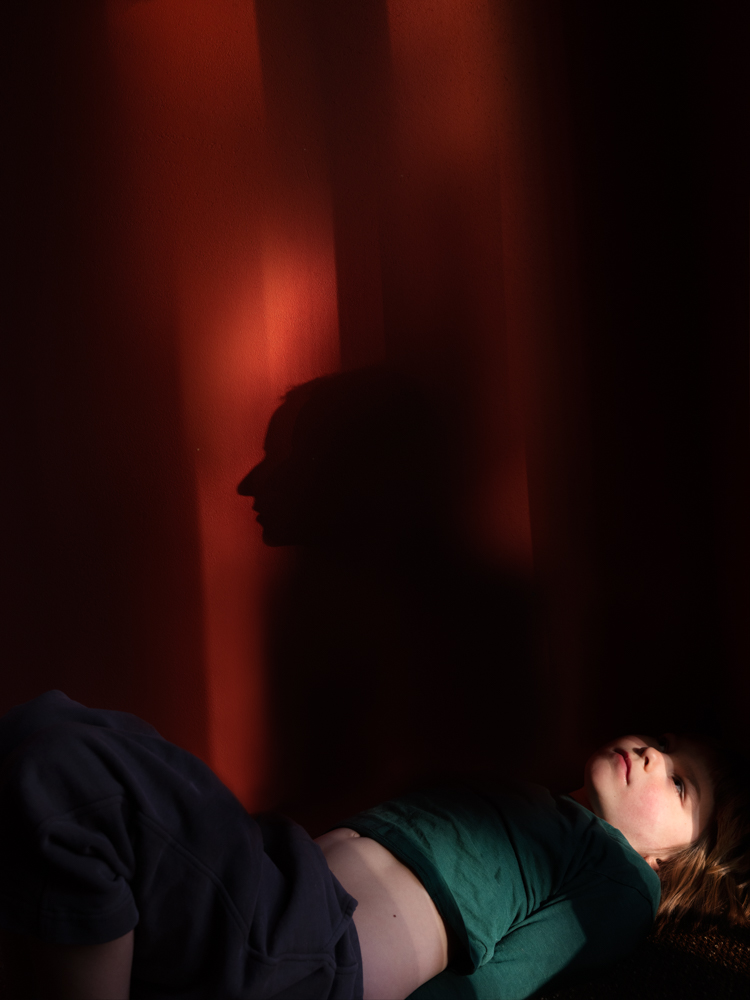
©Anastasia Sierra, Disappearing
What kind of photographs were you making before motherhood?
I was very interested in fashion, and much of my “personal” work involved collaborating with models and stylists on portfolio shoots. I hoped to break into the industry, though that never happened in any real way. Eventually, I began moving toward portraiture, which felt more personal, but something was still missing.
Looking back, I think I’ve always needed to be on the inside of an experience to make meaningful work. I knew what I wanted my images to look like, and how I wanted them to feel, but I didn’t yet know why I was making them.
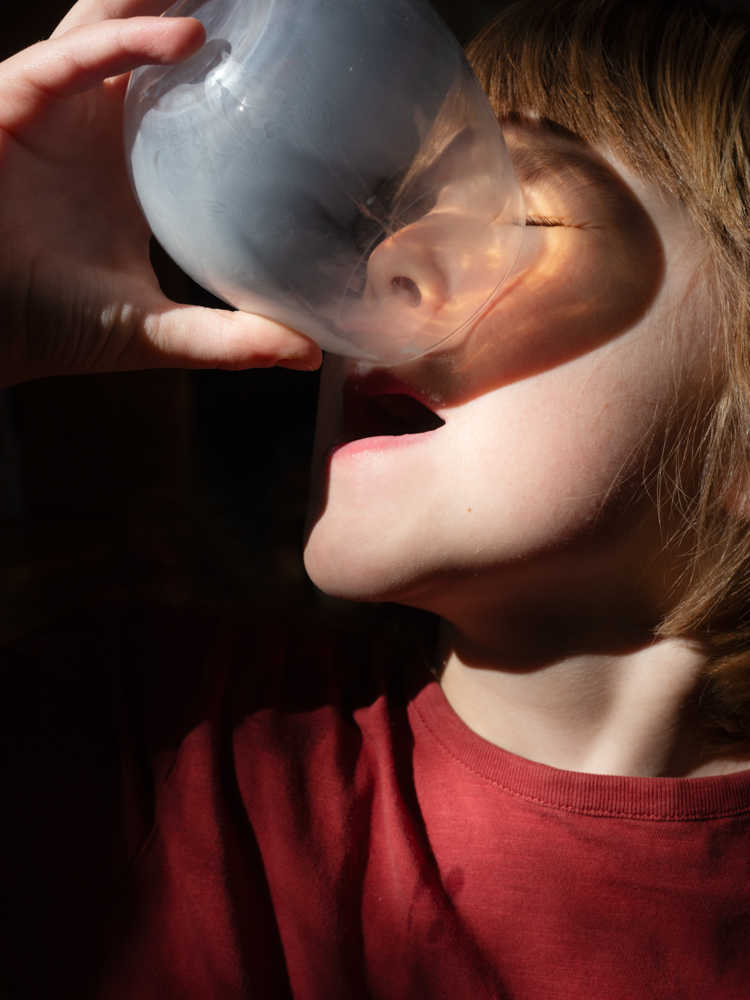
©Anastasia Sierra, Emptiness
How has receiving an MFA changed the way you work? Is there an educator you would like to celebrate?
I’m still trying to make sense of it! Doing the program was an incredible experience, but the rhythm was also quite unnatural for me. I think what I learned is slowly making its way into my work. The way I approach imagemaking has not changed dramatically, but I find myself thinking more deeply about what the images mean, how they relate to one another, and how a body of work functions beyond the individual pictures.
It was also incredibly enriching to follow my classmates’ work over two years. Seeing how differently everyone approached photography expanded my understanding of what the medium can do, and of the many ways an artist can think and work.
It would be difficult for me to celebrate just one educator. I learned from many faculty members, visiting artists, and classmates, often in very different ways. The most meaningful advice came from people who understood what I was trying to do, but could also see ways the work might expand that I wouldn’t have thought of on my own.
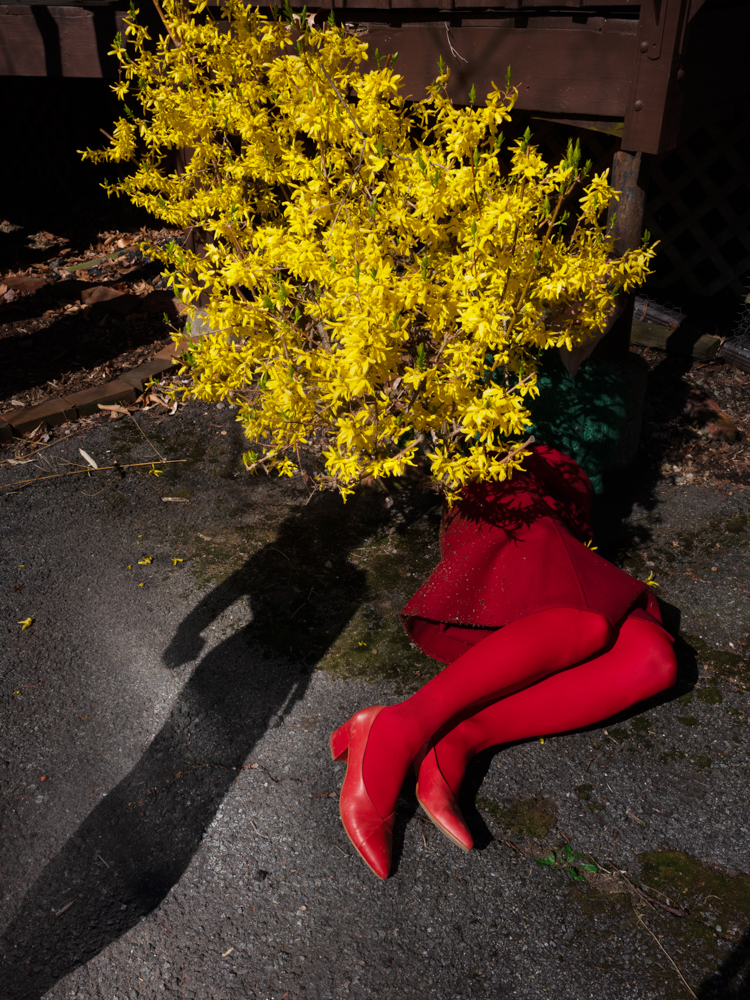
©Anastasia Sierra, Escape
The title The Witching Hour evokes the time between sleep and wakefulness. What does that phrase mean to you, and why did it become the title of the series?
The title came out of a period toward the end of my second semester of graduate school when I was sleeping badly and having vivid nightmares about losing the people closest to me. Even after waking, the feeling of loss would stay with me.
I was also thinking about the “witching hour” with babies—the time when they are overtired, unable to settle, and suddenly inconsolable. At that point in my life, with my child, my father, and my work all needing me at once, I felt like I had become the one afflicted.
The phrase seemed to hold both the intensity of that period and its strange, unreal quality.
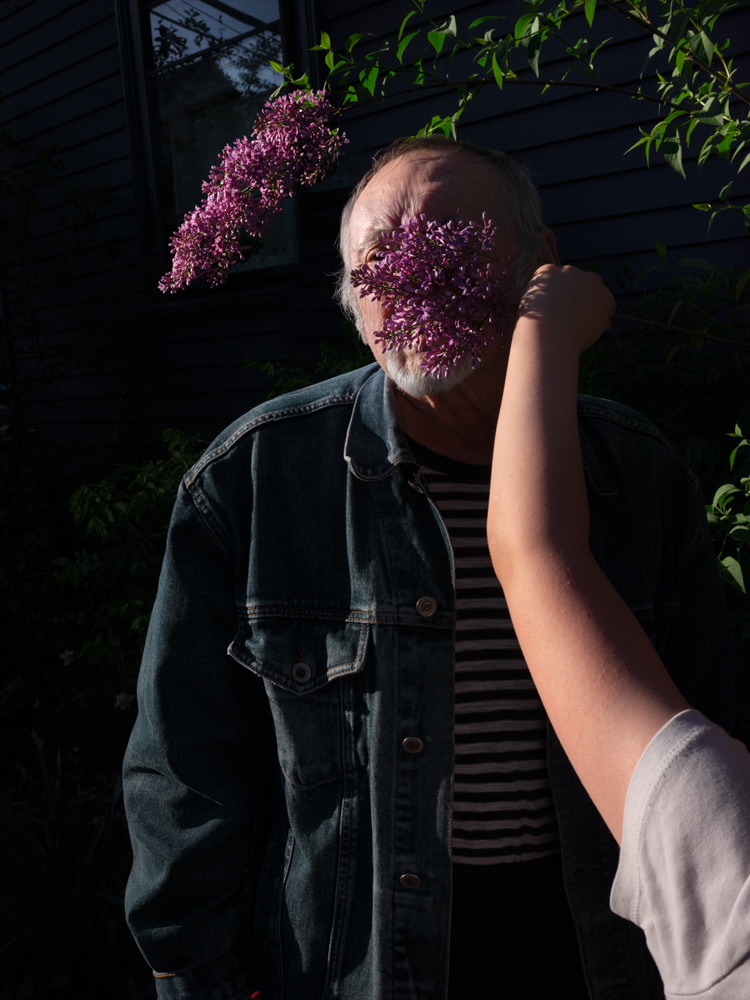
©Anastasia Sierra, Flowerhead
Becoming a parent often heightens our awareness of vulnerability. How did motherhood change the way you see the world—and yourself—as an artist?
Motherhood has shaped me as an artist. I had taken photography very seriously for years before becoming a mother, but my practice didn’t really have a backbone.
I started making pictures about motherhood partly out of necessity—it was difficult, logistically, to make pictures elsewhere—but of course it gave me so much more. At first, I thought making pictures about my own life was just a placeholder, something to do while I waited to “get back to normal.” But it felt so good, so freeing, and so meaningful. I finally felt that I had something to say, rather than trying to force meaning into the pictures, as I often had with fashion.
Most importantly, it drew me closer to the things that matter most. There is something so wonderful about simply being in the sun with the people I love, listening to the shutter, and not wanting to be anywhere else.
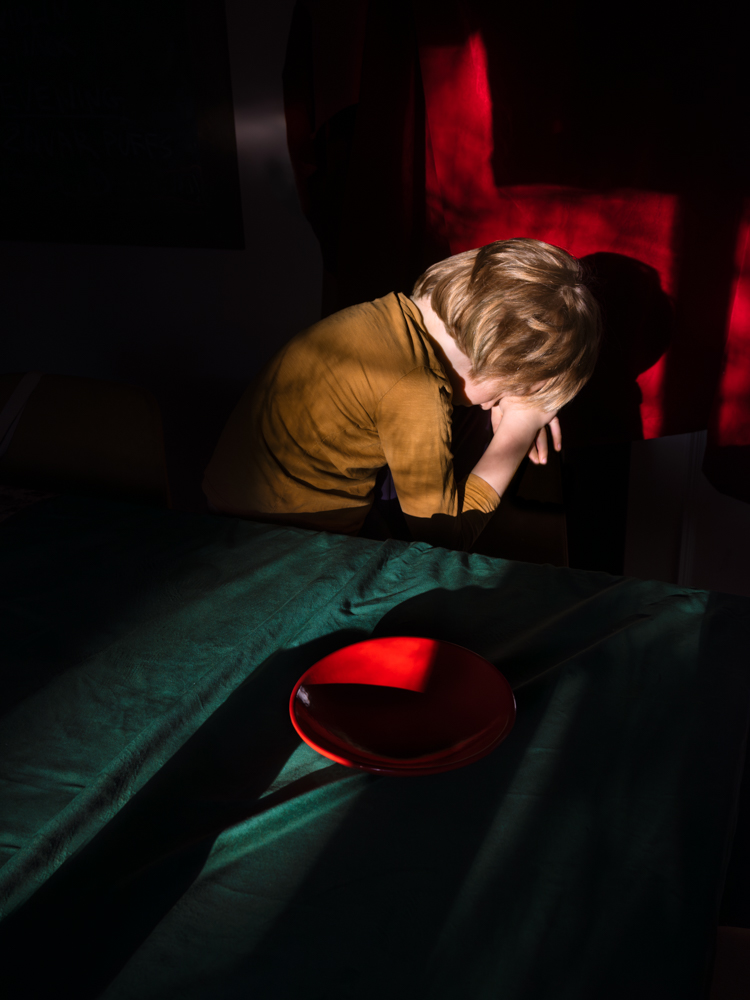
©Anastasia Sierra, Guilt
At the same time you were raising your son, you became a caregiver for your father. How did those parallel roles shape the emotional core of this work?
They made the work—and, needless to say, my life—more complicated, but also brought my father and me closer. Early on, there was a feeling of living under the same roof but worlds apart, and I think making pictures together helped change that.
The work often circles around fragility and impermanence, but also around how difficult it can be to reach the people we love. Photography gave us a way to connect without relying on words.
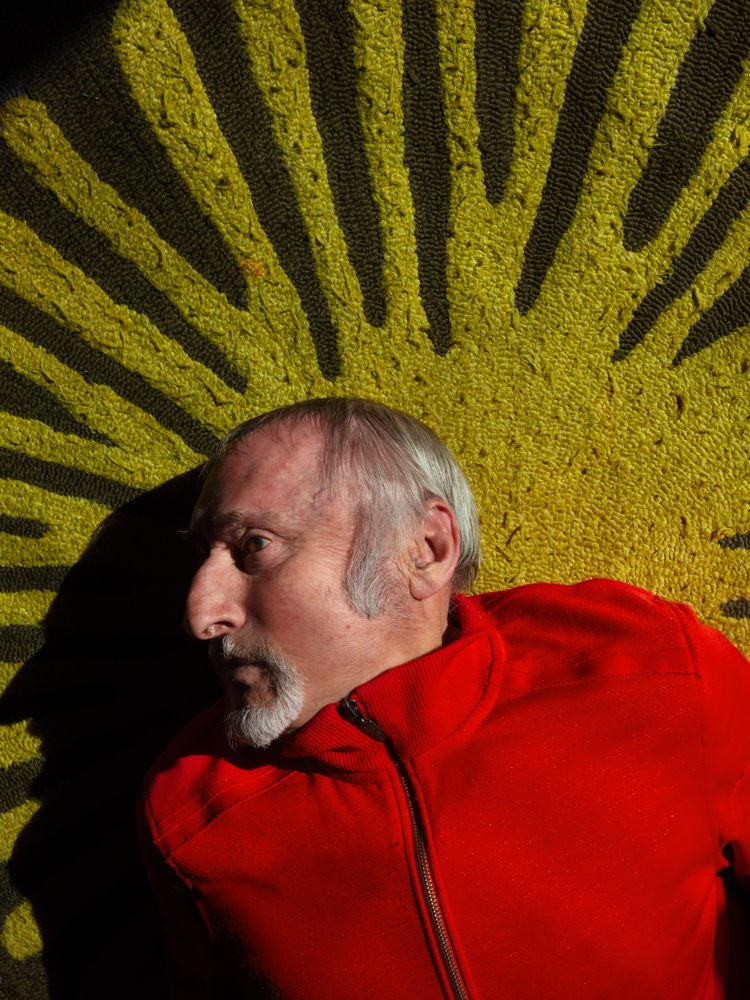
©Anastasia Sierra, Helios
Many of the photographs feel cinematic, almost like scenes from a fairy tale or surreal film. Were there literary or visual influences that informed the work?
A lot of my influences come from literature. I’m drawn to strangeness and have always loved magical realism. Pedro Páramo by Juan Rulfo was an early influence, particularly in the way the boundaries between the living and the dead, memory and reality, seem to dissolve. More recently, Nightbitch by Rachel Yoder resonated with me because of the way it uses transformation and the surreal to express the psychological intensity of motherhood.
I’m interested in images that feel emotionally true without being literal—where something familiar can suddenly become strange, theatrical, dreamlike.
My most recent inspiration is Sheila Heti’s Pure Colour. I love how she talks about finding the right amount of distance between us and the people we love. I think it’s one of the questions I am trying to answer with my work.
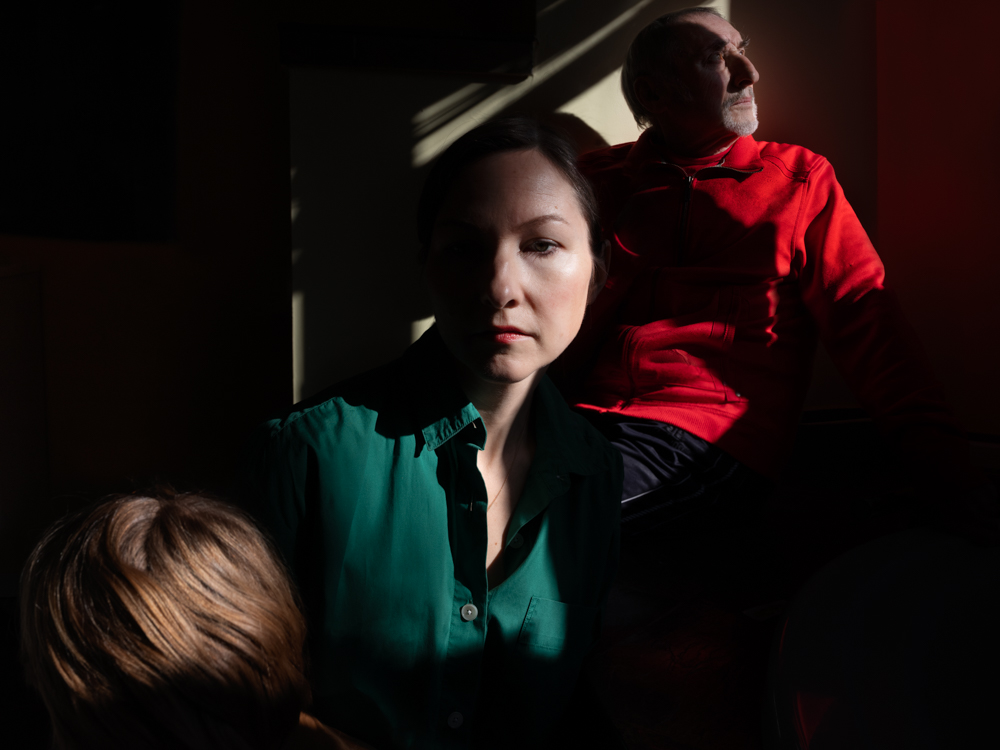
©Anastasia Sierra, Lineage
Color plays an important psychological role in the photographs. How did you think about color as a storytelling device?
Color excites me. I can’t pinpoint when this started, but the fascination has been with me for a while and has become more pronounced over the years—in interiors, clothes, and pictures. The other day, I was on my way to get groceries and saw someone walking down the street with amazing fiery hair and a purple coat. I didn’t have a camera with me, but they looked so striking that I followed them for a few blocks.
When I first started making images with my son at home, I was especially drawn to the way high-contrast light brings out color. It was like a switch: I could be going about my morning and then see the light touch the yellow chair in the kitchen, and it felt like a portal into a different world. I wanted to make pictures there.
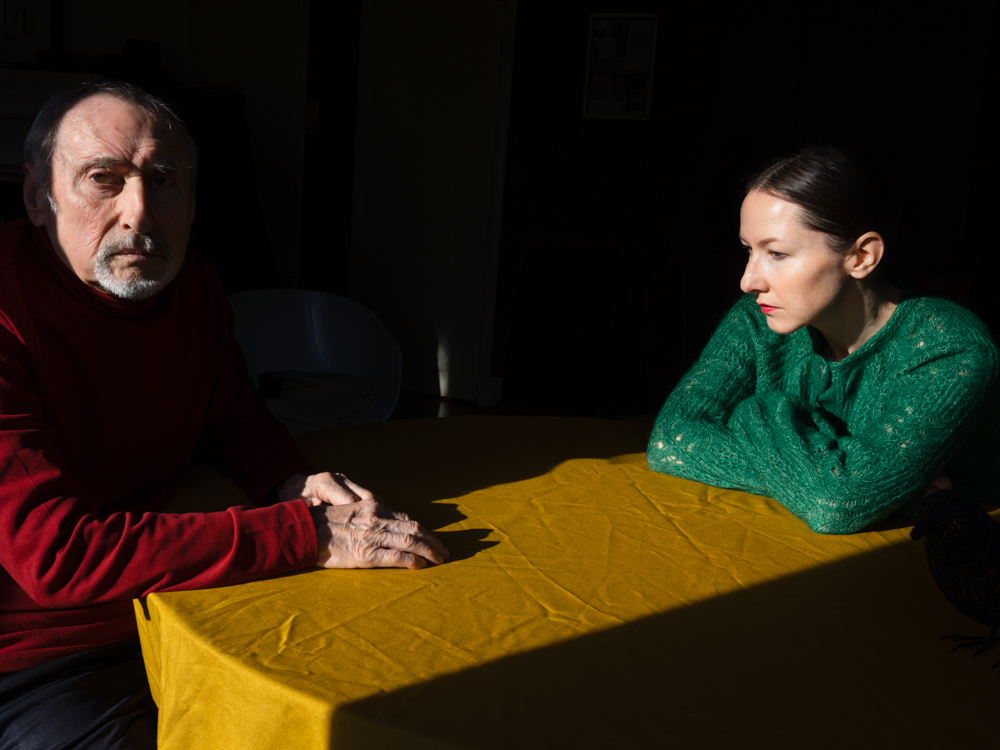
©Anastasia Sierra, Listener
Although the work is deeply personal, it feels universally relatable. How do you balance autobiography with creating space for viewers to bring their own experiences to the photographs?
I think it happens quite naturally. I’ve never been interested in documenting my life in any straightforward way. I don’t have many “real” pictures of myself on my phone. Now that I’m a mother, I do take a lot of pictures of my son, but they’re all pretty sloppy. I’ve never been interested in using photography simply to record my life, so I build these fictional worlds. And although the project is specific to my family, I think it is also quite anonymous. You don’t really learn what kind of people we are or how we live. It’s us in the pictures, but in some ways, it could be anyone.
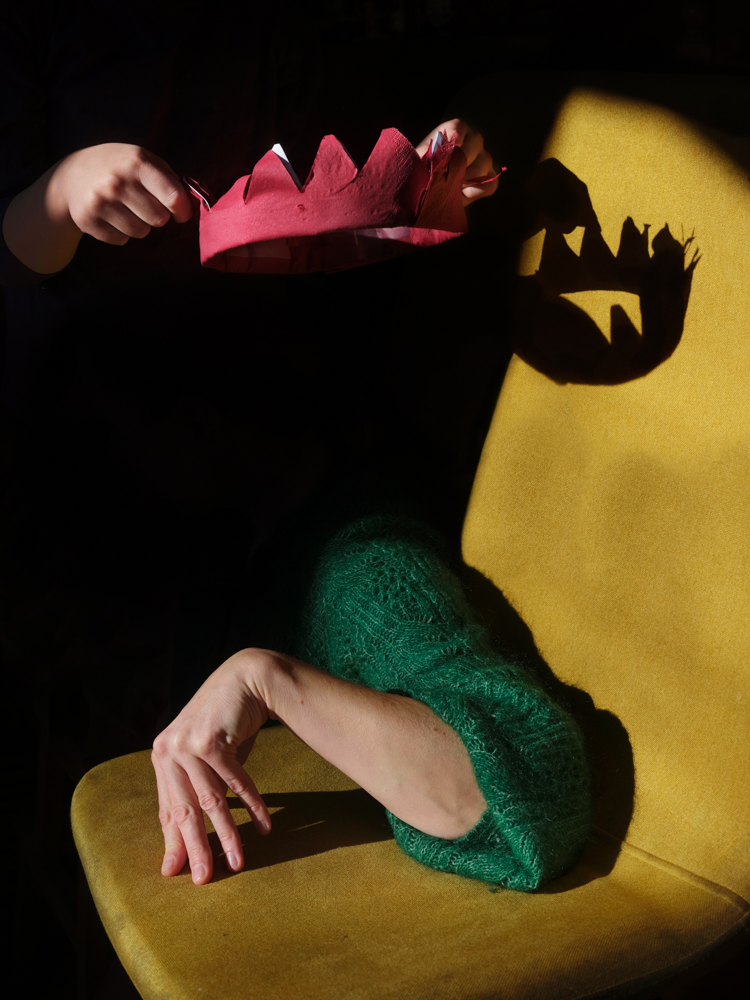
©Anastasia Sierra, Majestry
Looking back, do you see The Witching Hour as a document of a particular moment in your family’s life, or as an ongoing meditation on love, caregiving, and the passage of time?
My hope is for it to remain an ongoing practice, though I do think the project is likely to have different chapters. The work I’m making now feels distinct from the earlier images, and I think about it differently, even though the actual imagemaking process has largely remained the same. I expect it may shift again in the future.
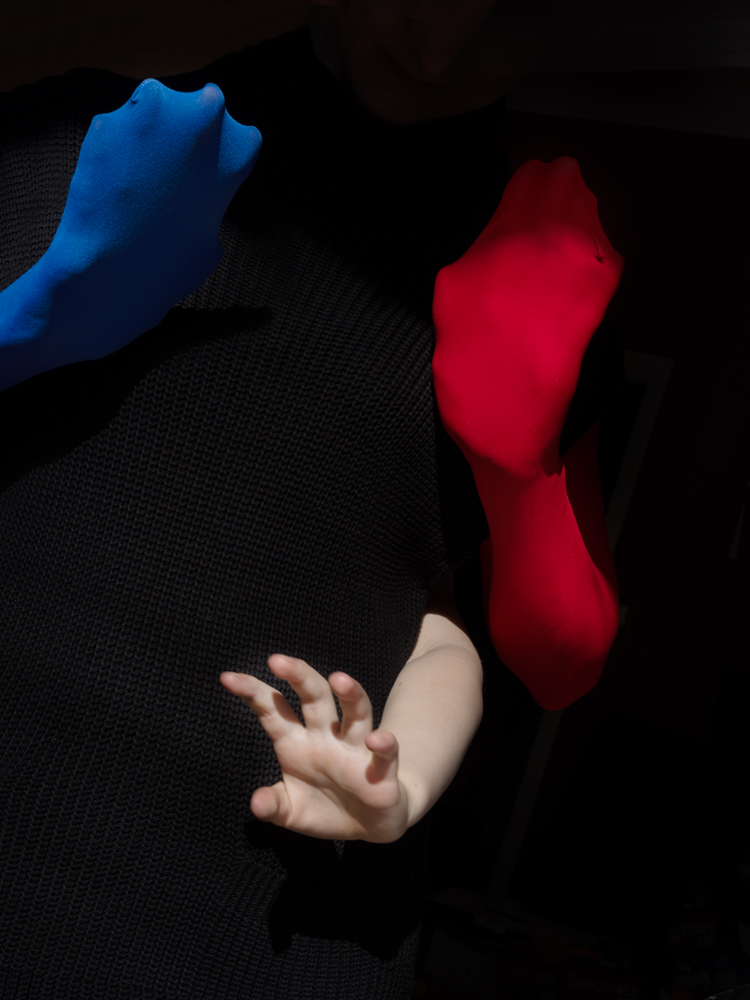
©Anastasia Sierra, Monsters
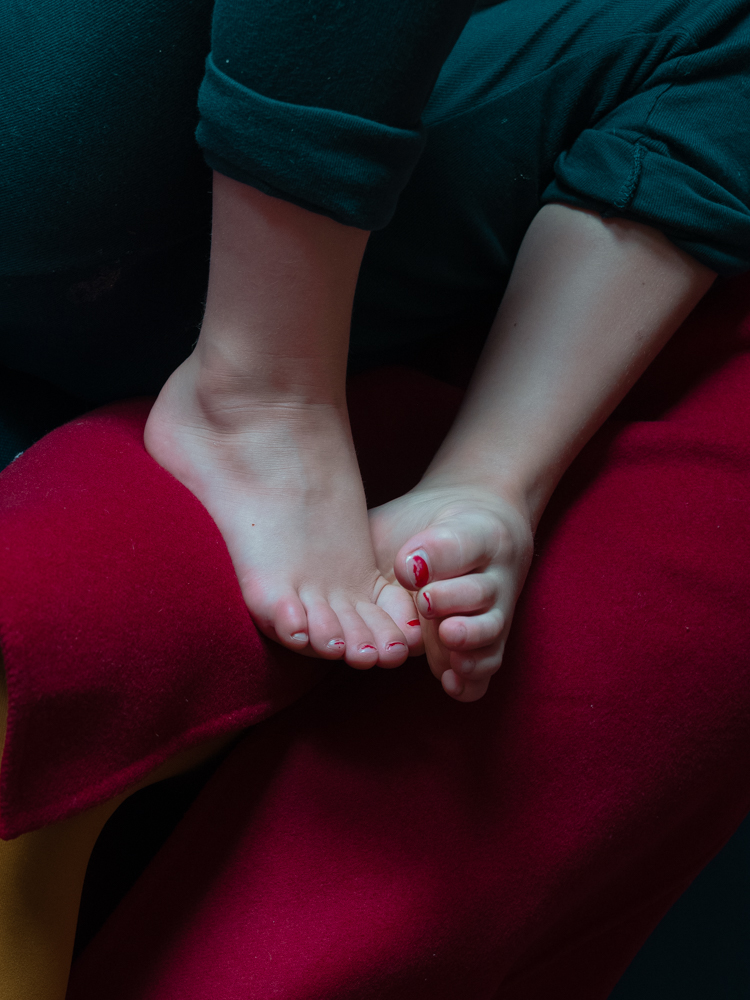
©Anastasia Sierra, Polish
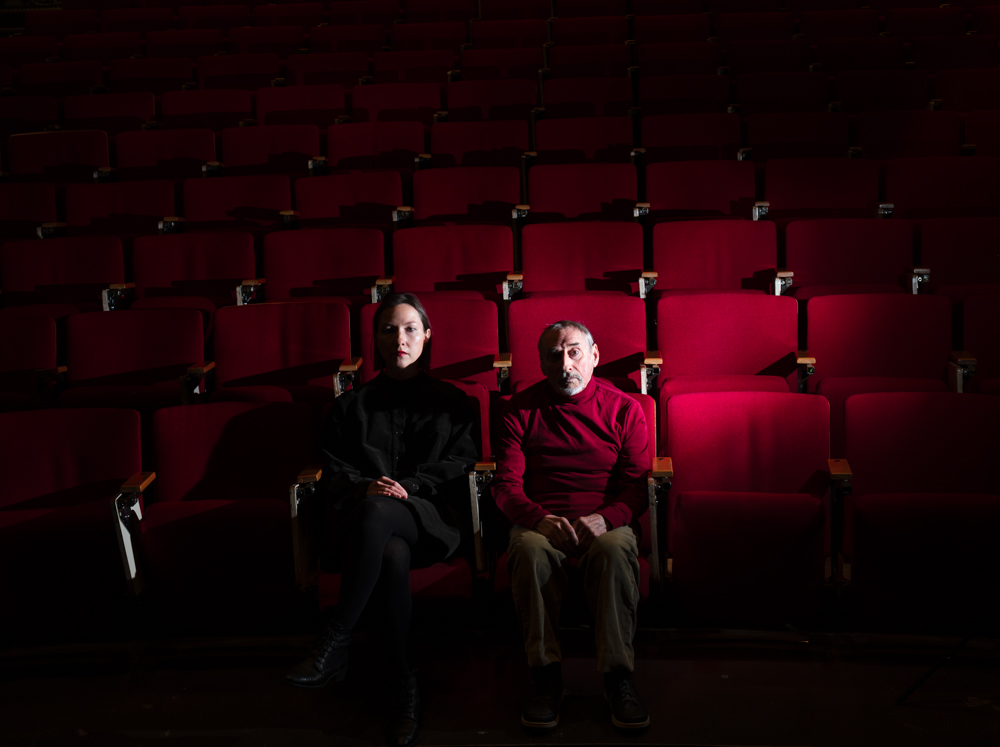
©Anastasia Sierra, Stage
Posts on Lenscratch may not be reproduced without the permission of the Lenscratch staff and the photographer.
Recommended
-
The 2026 Lenscratch Honorable Mention Student Prize Winner: Anastasia SierraAugust 7th, 2026
-
The 2026 Student Prize Honorable Mention Winner: Luke RosingAugust 6th, 2026
-
The 2026 Lenscratch 3rd Place Student Prize Winner: Diana SosnowskaAugust 5th, 2026
-

The 2026 Lenscratch 2nd Place Student Prize Winner: Em WallAugust 4th, 2026
-
The 2026 Lenscratch 1st Place Student Prize Winner: Mehrdad MirzaieAugust 3rd, 2026