In Focus: The MFA Review: James Madison University
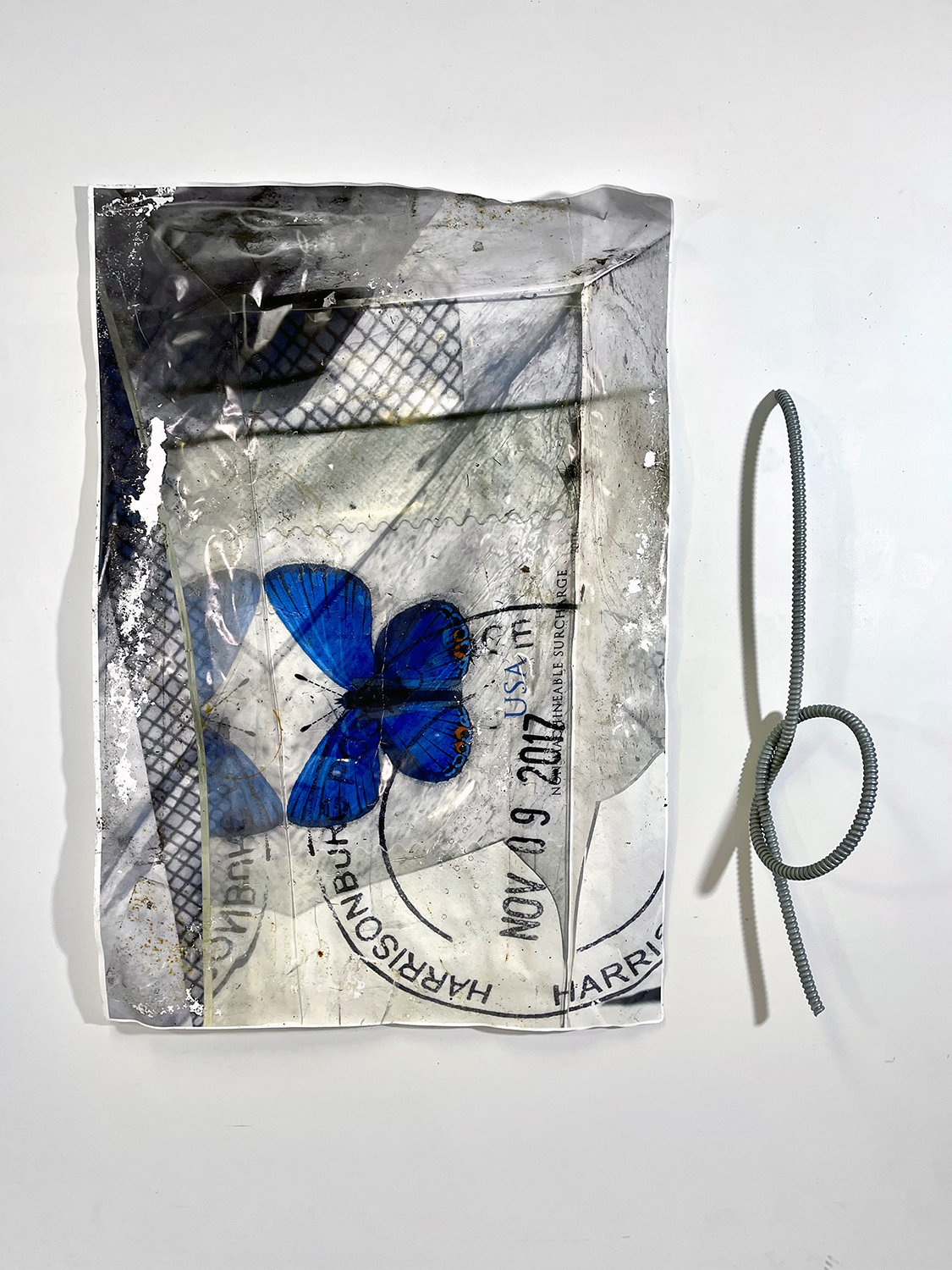
©Corinne Diop, Professor, Graduate Director
Each installment of In Focus: The MFA Review highlights a different MFA program for photographic artists, offering readers a concise overview of its identity, curriculum, faculty, student experience, financial support, and post-graduation outcomes. It also serves as a showcase of the creative work produced by faculty, students, and alumni. Rather than functioning as rankings or endorsements, these features are intended as practical starting points—tools to help prospective students compare programs, identify what matters most to them, and make more informed decisions about their graduate education. While certain details shared in these articles may change over time, my hope is that these program snapshots offer a clear sense of what each represents in the present moment.
Thank you to Corinne Diop for completing this interview and compiling all the images/resources!
Institution name: James Madison University
Degree Title: MFA in Studio Art
Location: Harrisonburg, VA
Link to Program Page: https://www.jmu.edu/sadah/programs/graduate/studiomfa.shtml
Link to Application Page: https://www.jmu.edu/sadah/programs/graduate/mfa-application.shtml#apply
Instagram: @jmu_sadah
Additional Links: https://www.jmu.edu/grad/programs/snapshots/art-studio-mfa.shtml
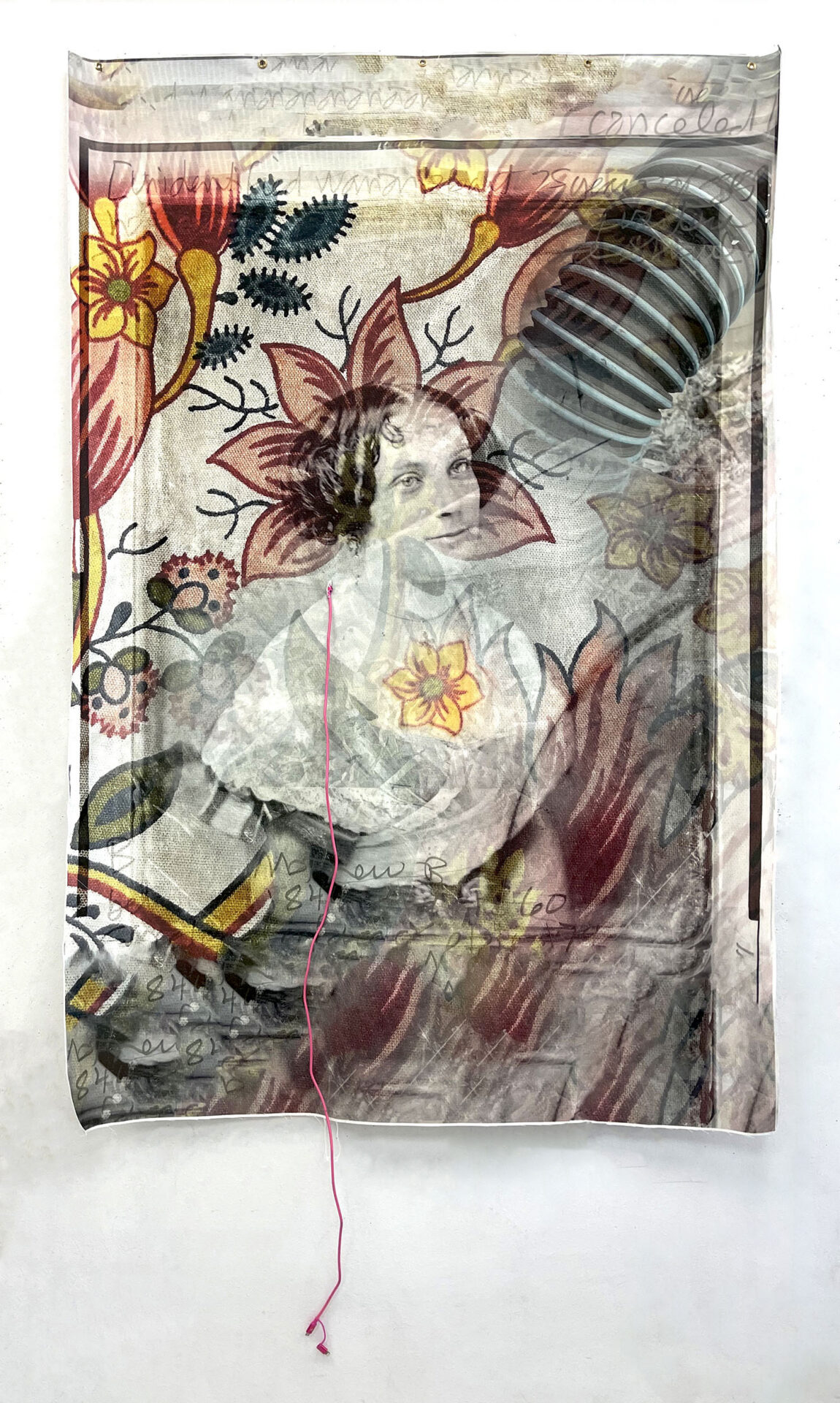
©Corinne Diop, Professor, Graduate Director
Tell us a little about your program. How would you define its scope and purpose?
The MFA in Studio Art at James Madison University is a three-year, interdisciplinary program designed to support independently motivated artists as they advance their creative practice, critical thinking, and professional development. Through coursework, critique, mentorship, and self-directed studio research, students are challenged to deepen their intellectual, philosophical, and artistic engagement while developing a sustainable and meaningful practice.
The MFA program is in the School of Art, Design, and Art History (SADAH), one of three schools in the College of Visual and Performing Arts (CVPA) along with the School of Music and the School of Theatre and Dance. The Forbes Center for the Performing Arts, the Duke Hall Gallery of Fine Art, and The Arts at 131 West Grace are vibrant art hubs on campus that enrichen the graduate experience.
JMU is a community-engaged anchor institution in the city of Harrisonburg, VA. Located in of the beautiful Shenandoah Valley, Harrisonburg is approximately 120 miles from both the heart Washington, D.C. and Richmond, VA. With a population of just over 52,000, its status as one of Virginia’s most culturally diverse small cities creates a rich environment for artistic exchange that the graduate program is part of.
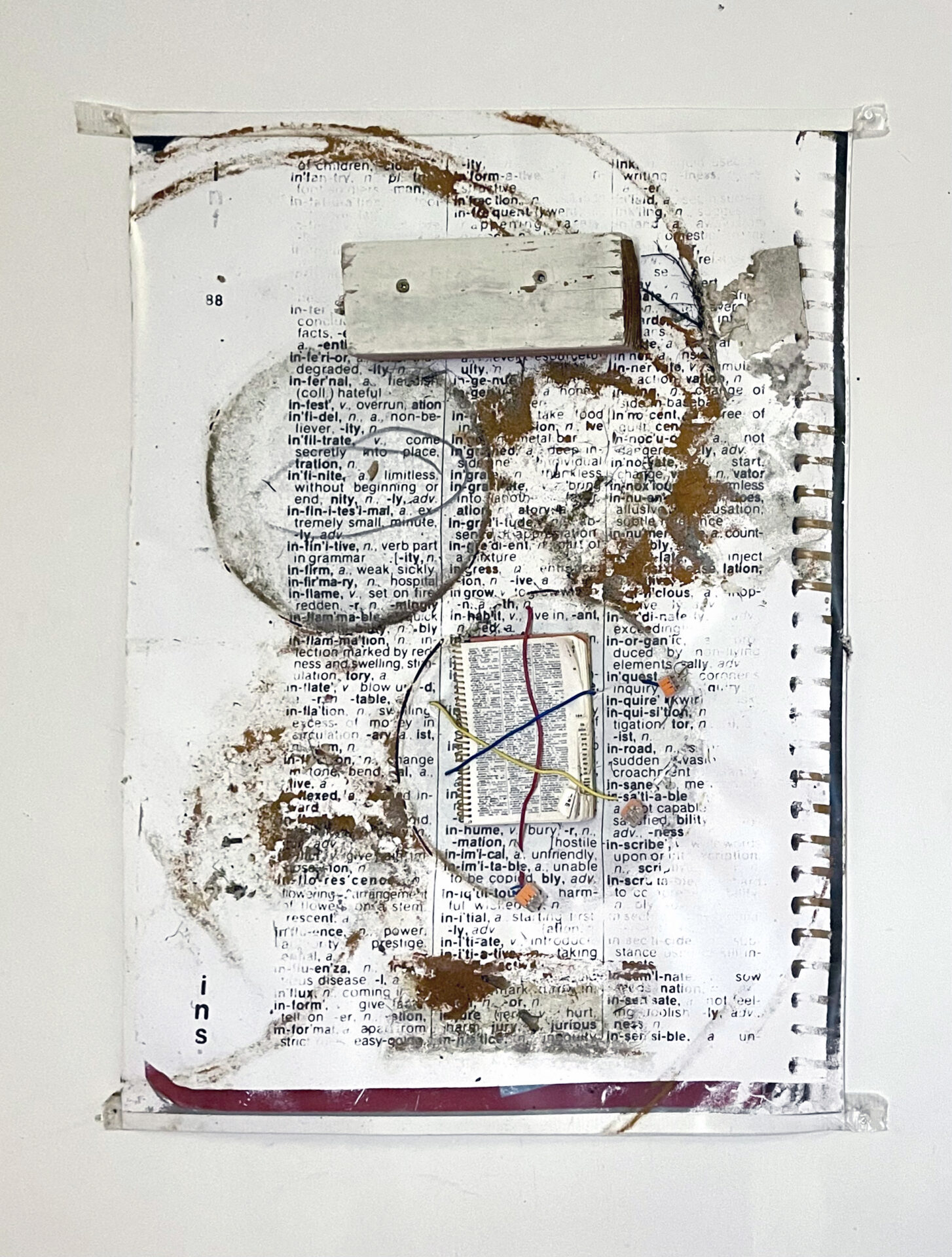
©Corinne Diop, Professor, Graduate Director
What would you say makes your program special?
What makes the JMU’s MFA program special is its close-knit yet diverse community and its strong commitment to supporting graduate students. The program’s small size fosters meaningful interactions among students, faculty, visiting artists, and the community. Recent MFA students have come from South Africa, India, Iran, and Nigeria, as well from many areas of Virginia and across the United States.
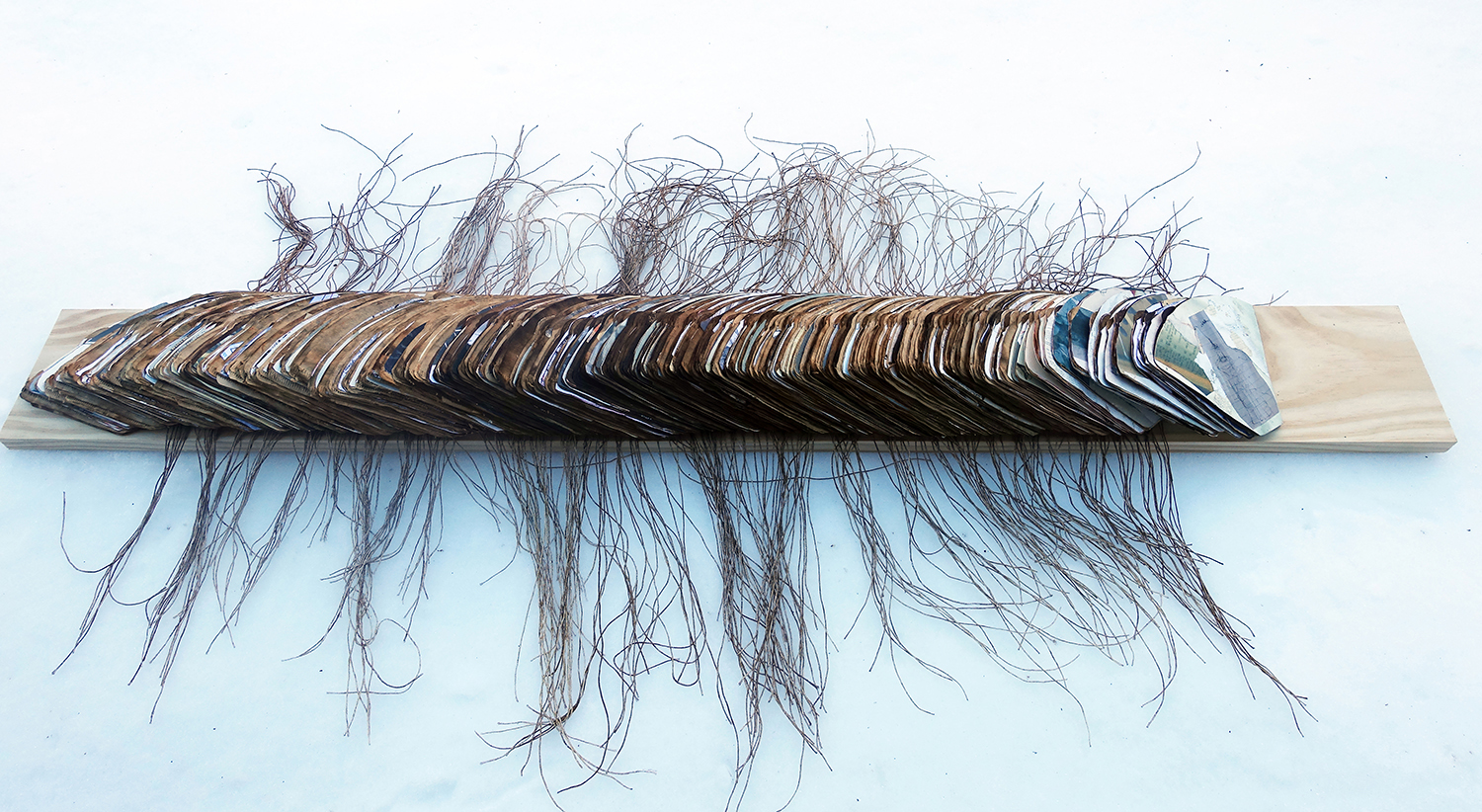
©Dymph DeWild, Associate Professor
What specialized facilities are available for student use (i.e. darkroom, lighting studio, print lab)?
Photography labs support analog, digital and experimental processes, providing graduate students with 24/7 access to a wide range of facilities and equipment. Resources include a digital lab with 24″ and 44″ large-format printers, desktop printers, and flatbed and film scanners; alternative process work rooms with exposure units; an advanced darkroom with 35mm and 4”x5” enlargers; medium- and large-format cameras for checkout; a fully equipped lighting studio; papermaking and book arts equipment; and work areas, including a secure outdoor patio space.
Additionally, grads with photo-based work benefit from experimentation and cross-media research with the other studio areas. Photographic methods are integrated into Printmaking through silkscreen, intaglio, and lithography processes, and digital images can be translated into woven textiles using the Jacquard loom in Fibers, carved into wood via CNC technology in the Woodshop, or applied to ceramic surfaces through decal printing in Ceramics.
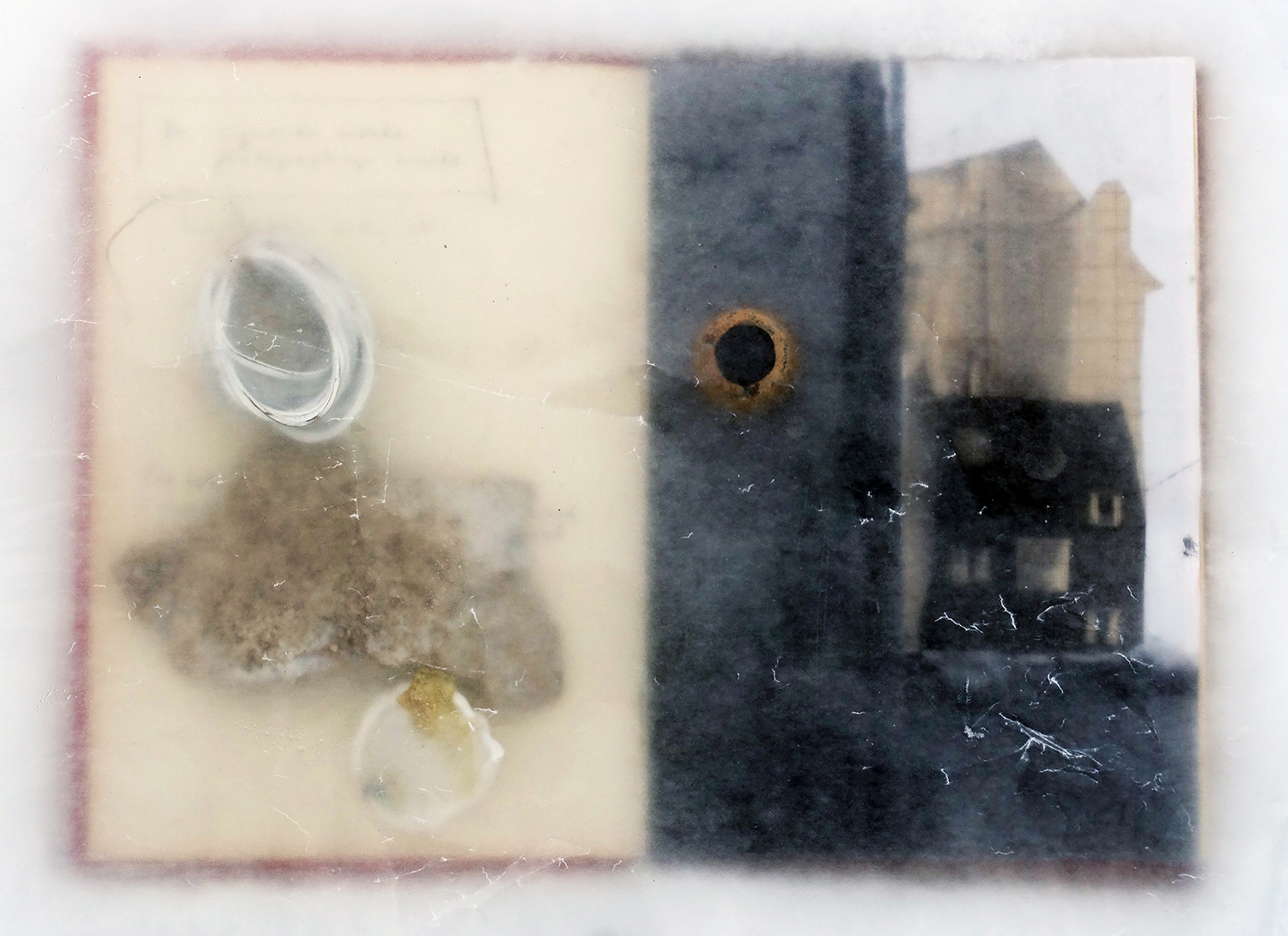
©Dymph DeWild, Associate Professor
Is your program strictly photography-focused, or does it encourage/allow interdisciplinary work?
While students can focus on photography, they are not expected to remain within a single medium and instead are encouraged to use whatever materials, technologies, and processes are most relevant to their creative and conceptual goals. Since$(+$(3 a three-year program that allows time for exploration, there are ample opportunities to investigate a wide range of studio areas, including ceramics, fibers, metals, painting and drawing, papermaking, photography, printmaking, sculpture, sound/video, and post-studio practices.
As part of a liberal arts university, there are added opportunities for collaboration beyond the art school environment. Grad students regularly connect with faculty and students in non-art disciplines, expanding their creative research in meaningful ways. For example, a grad working with night photography collaborated with a Creative Nonfiction professor who was researching light pollution, resulting in a jointly published photo essay, Seeing the Light, and another who worked with AI-derived religious iconography invited a religion professor to serve on her Thesis Committee.
In addition, the college has codified arts-integrated outreach through the Office of Creative Propulsion (OCP) which is designed to actively support interdisciplinary work through grants, programming, and team-taught special topics courses that bring together faculty and students from different disciplines. Recent examples include Time and Art, co-taught by professors in Music and Interactive Design, Movement, Motion Capture & Machines, co-taught by professors in Dance and Engineering, and Sustainable Cities, co-taught by faculty in Political Science and Architectural Design.
©Dymph DeWild, Associate Professor
Do you specialize in a particular area (i.e. documentary, experimental, environmental work)? And once in the program, is a student able to shift their focus if their creative interests change?
One of the strengths of the MFA program is that it is not built around a particular photographic specialization or aesthetic, so there is no cookie-cutter feel to the work produced. Grad students can shift their focus as their interests evolve during the program, and in fact, that kind of growth and exploration is seen as an important part of the graduate experience. Whether a student refines an existing direction or moves into entirely new terrain, the expectations are that the work remains rigorous and responsive to critical feedback.
Grad students can study under a wide range of studio faculty, who are active artists themselves, as well as graduate faculty in art history, art education, and design. This allows students to seek mentorship from the faculty members best suited to support their developing interests and research. However, by the third year the general direction should be fairly locked in, with a committee of at least three faculty selected for oversight of the final thesis exhibition and scholarly document.
©Jeremy Starn, MFA Candidate
How structured is the curriculum? Are there required courses, or is it more self-directed?
The curriculum balances structure with flexibility and self-direction. As a NASAD-accredited MFA program, students must complete 60 graduate credits that combine regularly scheduled coursework with increasingly independent studio research. NASAD guidelines require that at least 65% of coursework be studio-based and at least 15% be devoted to academic study, such as art history, criticism, or theory.
Each semester, graduate students take ART 600: Graduate Integrative Seminar, a cornerstone course that provides an ongoing forum for critical discussion, peer critique, and engagement with visiting artists. First- and second-year students enroll in ART 602: Contextual Practice during the summer, a course that furthers student-initiated projects and creative research and encourages off-campus explorations. The third-year students enroll in ART 700: Thesis Research both semesters as they develop and complete their thesis projects under the guidance of their Thesis Committee.
Beyond these requirements, the credits are filled with electives that allow students and their advisor to shape the coursework to suit their artistic interests and research goals.
©Jeremy Starn, MFA Candidate
Does the program incorporate video work or emerging media such as AI, VR/AR, or 3D/360 imaging?
Many students integrate video and moving-image work alongside their photography. Recent graduate work has included explorations of AI-generated imagery combined with traditional craft practices, such as AI-derived images materialized into CNC-carved wood, machine embroidery, and wood-framed photographic transparencies. A current grad has used AI-derived digital negatives for cyanotypes and incorporated an AI-generated sound into a photo and light installation.
In addition to the 3D printers, laser cutters, and other technologies available in SADAH, students also have access to campus resources for emergent forms. The JMU Library Makery provides facilities and technicians for help with 3D fabrication, laser cutting, and digital production, while JMU X-Labs, a team-focused technology lab, offers expertise and collaborative opportunities in virtual reality (VR), augmented reality (AR), and 360-degree media. Students will find that there is support for incorporating evolving technologies into their work.
©Alexandria Searls, MFA Candidate
Does the program offer career development support, such as portfolio reviews, workshop/conference attendance, or networking opportunities?
Working in the studios and galleries for the assistantship provides significant professional experience. The grads go through a year of Teacher Training in at least two different classes before being assigned to teach independently the final year, providing important skills in syllabus, course design and classroom management. They also end up with solid portfolios of student work and teaching philosophies for job applications. Grads are often assigned to Foundations classes such as Color and Composition, Form and Space, or Drawing, but those with the appropriate skill set have taught ART 260 Black and White Darkroom, ART 360 Digital Photography, or other studio art classes that build their CVs.
Graduate students also benefit from ongoing professional practice advice, critiques, studio visits, and engagement with professors and visiting artists in group classes and scheduled events throughout the program. For example, each semester the graduate faculty, grad students, and an invited Visiting Critic meet in the main gallery for an End-of-Semester Review where each grad displays and presents their work, followed by Q&A. Additionally, a Grad Slide Slam, Grad Open Studios, and Grad Solos are also regular events.
The grads have many opportunities for engagement both on and oc campus, with the wide range of their 2025-26 accomplishments noted here: https://www.jmu.edu/grad/student-awards/accomplishments/2025-2026.shtml#art
©Alexandria Searls, MFA Candidate
What are key graduation requirements (exhibition, thesis paper, portfolio, etc.)?
During the final year, each graduate student works with a Thesis Committee that consists of a Chair, two additional SADAH graduate faculty, and any additional invited faculty. Key requirements for thesis completion include an exhibition by the graduating cohort in Duke Hall Gallery of Fine Art, a scholarly document published in the search-optimized Scholarly Commons that serves as a rigorous support of their work, a public gallery talk, and an Oral Comprehensive Assessment with their committee. The MFA is recognized with on-stage hooding at commencement along with the PhD and other terminal degrees.
©Olivia Luke, Alum
Who are your current faculty members? What are their areas of creative interest?
There are currently 22 full-time SADAH faculty who have graduate faculty status that allows them to teach graduate-level classes, participate in graduate reviews and events, and serve on Thesis Committees. They are listed here with their bios and examples of work: https://www.jmu.edu/sadah/programs/graduate/graduate-faculty.shtml
Of this group, there are ten graduate studio art faculty who are the core of MFA program, working individually with students and chairing the Thesis Committees:
Dymphna De Wild, Photography, Papermaking, and Book Arts
Corinne Diop, Photography and Mixed Media (and Graduate Director)
Nieko McDaniel, Painting and Assemblage
Jon McMillan, Ceramics
R. Mertens, Fibers and Sound
Mark Rooker, Metals
Greg Stewart, Sculpture, Social Practice, and Performance
Brett Taylor, Printmaking and Expanded Media
Lisa Tubach, Painting and Video
Susan Zurbrigg, Painting
©Olivia Luke, Alum
Are faculty members primarily full-time or adjunct?
The graduate faculty members are all full-time. Outside artists may occasionally be hired for a specific class as an adjunct.
How involved are faculty in mentoring students beyond coursework?
Faculty attend regularly scheduled grad events, such as End-of- Semester Reviews, and they serve as Assistantship Supervisors for work in the studio areas, galleries and Teaching Training. Students often invite select faculty for studio visits or consult about technical advice based on their areas of expertise.
©Karena Solanki, Alum
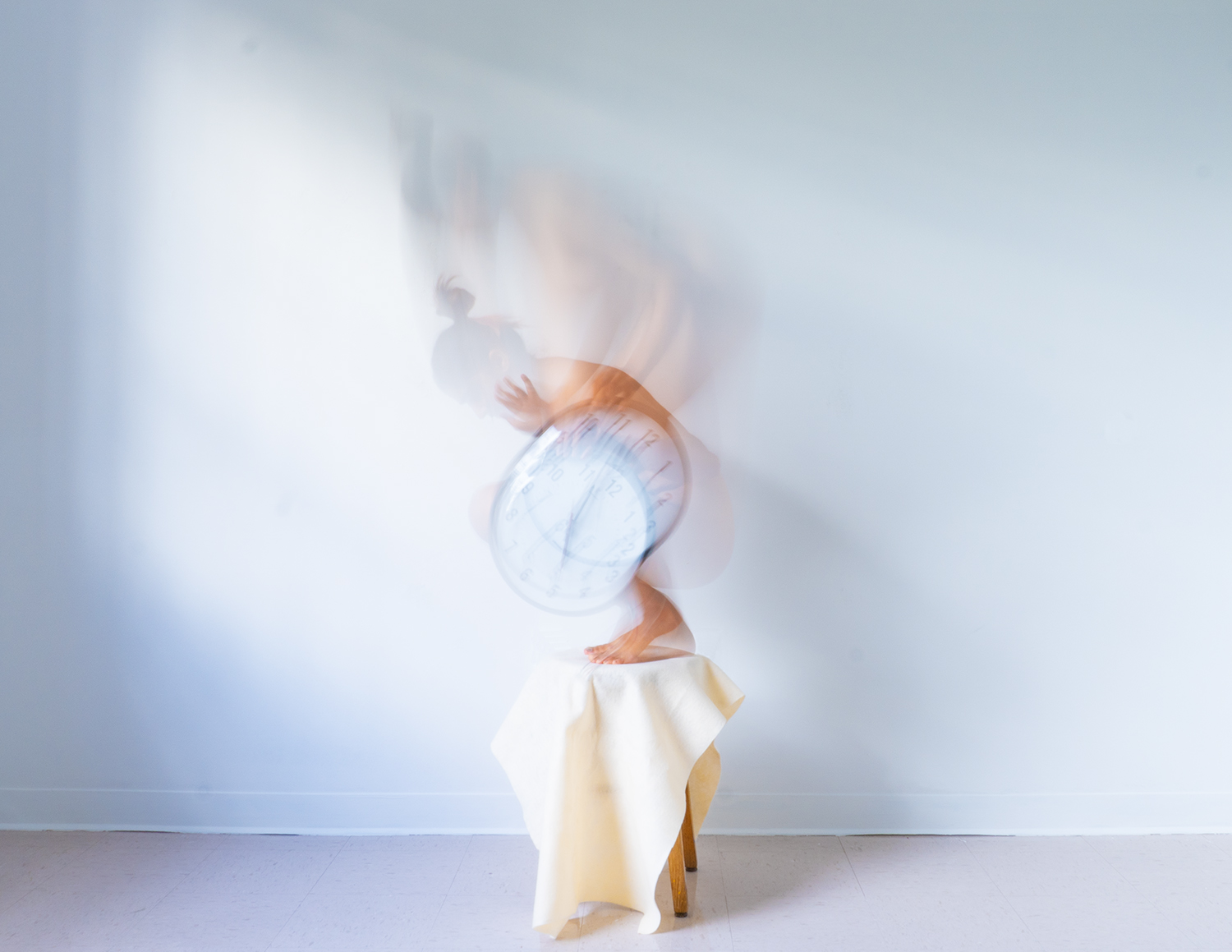
How often do guest artists, curators, or critics visit for lectures and/or critiques?
There are frequent opportunities for visiting artist and scholar interactions that include public presentations, class meetings, individual studio visits, receptions, and/or meals on or off campus. For example, the guests for Spring 2026 included Brooklyn-based artist Natalie Wadlington; Professor Tae Jin Kim from Kookmin University in South Korea; Taiwanese American photographer and video artist, Jawshing Arthur Liou, from Kennesaw State University; Roger Gricith, a former MoMA Sculpture and Objects Conservator, now freelance; Tom Ashcroft, Western Carolina University, and Michael Webster, Wofford College, both featured artists in a sound-based art exhibition, Depth Soundings; and, Pato Hebert, artist and activist from Tisch School of the Art’s Department of Art & Public Policy. Past guest curators and critics have selected grad student work for exhibitions and published reviews of their work.
©Karena Solanki, Alum
How many students are admitted each year, and how many are photography focused?
Two or three grad students are usually admitted each year. The exact number is based on the number of available assistantships and studios. There have usually been at least two in the grad cohort who focus on photography at any given time, but there are often others who add photo or video into their practice.
What is the approximate cohort size, and what effect does this have on critiques, collaboration, and networking?
Since there are eight funded assistantships and eight private grad studios, the cohort size is normally eight. There is currently a ninth student who is part-time and lives locally who did not need an assistantship or studio. Managing the size of the cohort also keeps critiques, semester reviews, and class sizes manageable. The students know each other well from the shared studio building and they are usually together in at least one class each semester. Since they tend to have differing skills sets and backgrounds, there is continuous sharing of knowledge and collaboration.
©Yulin Yuan, Alum
What kind of work are current students creating?
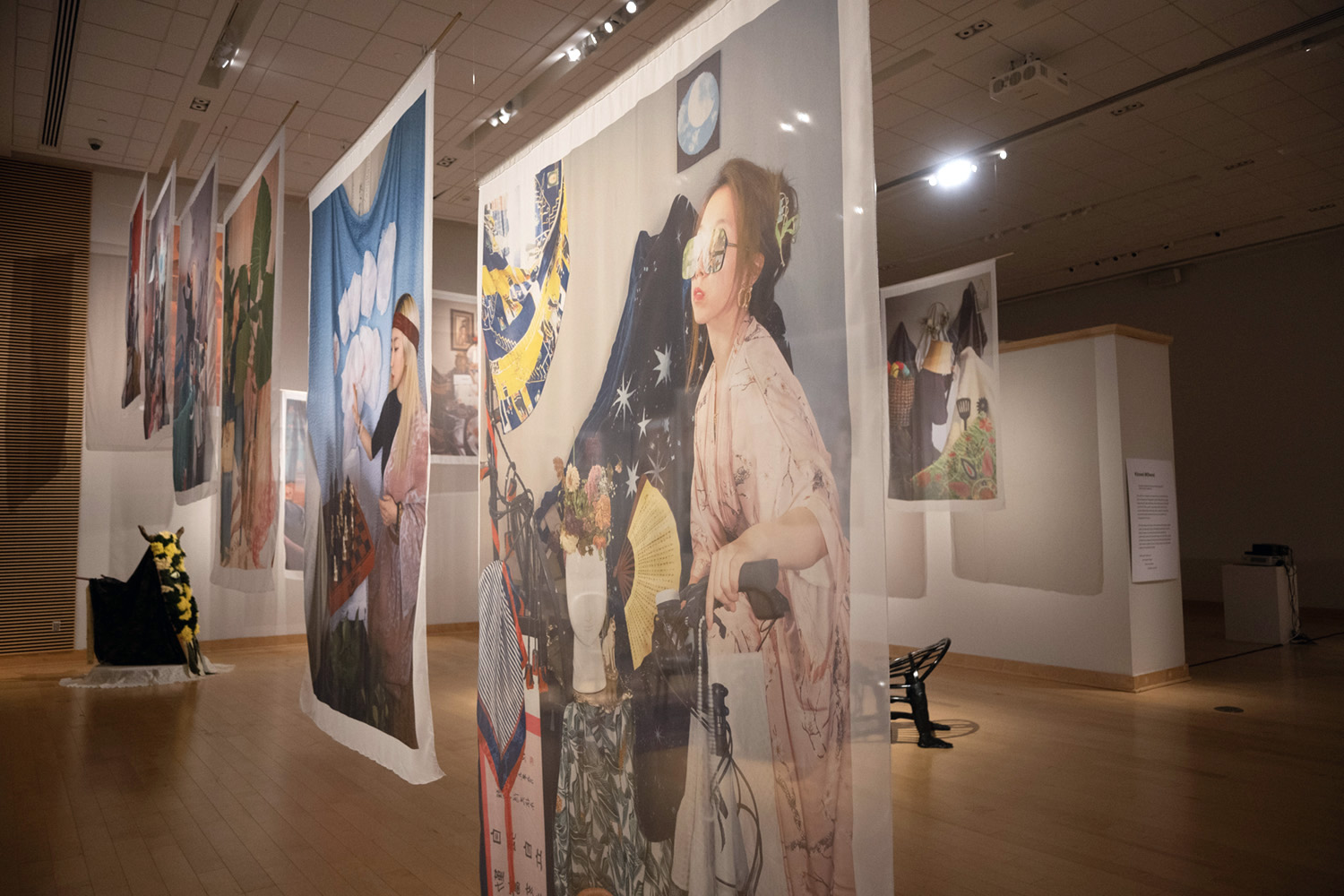
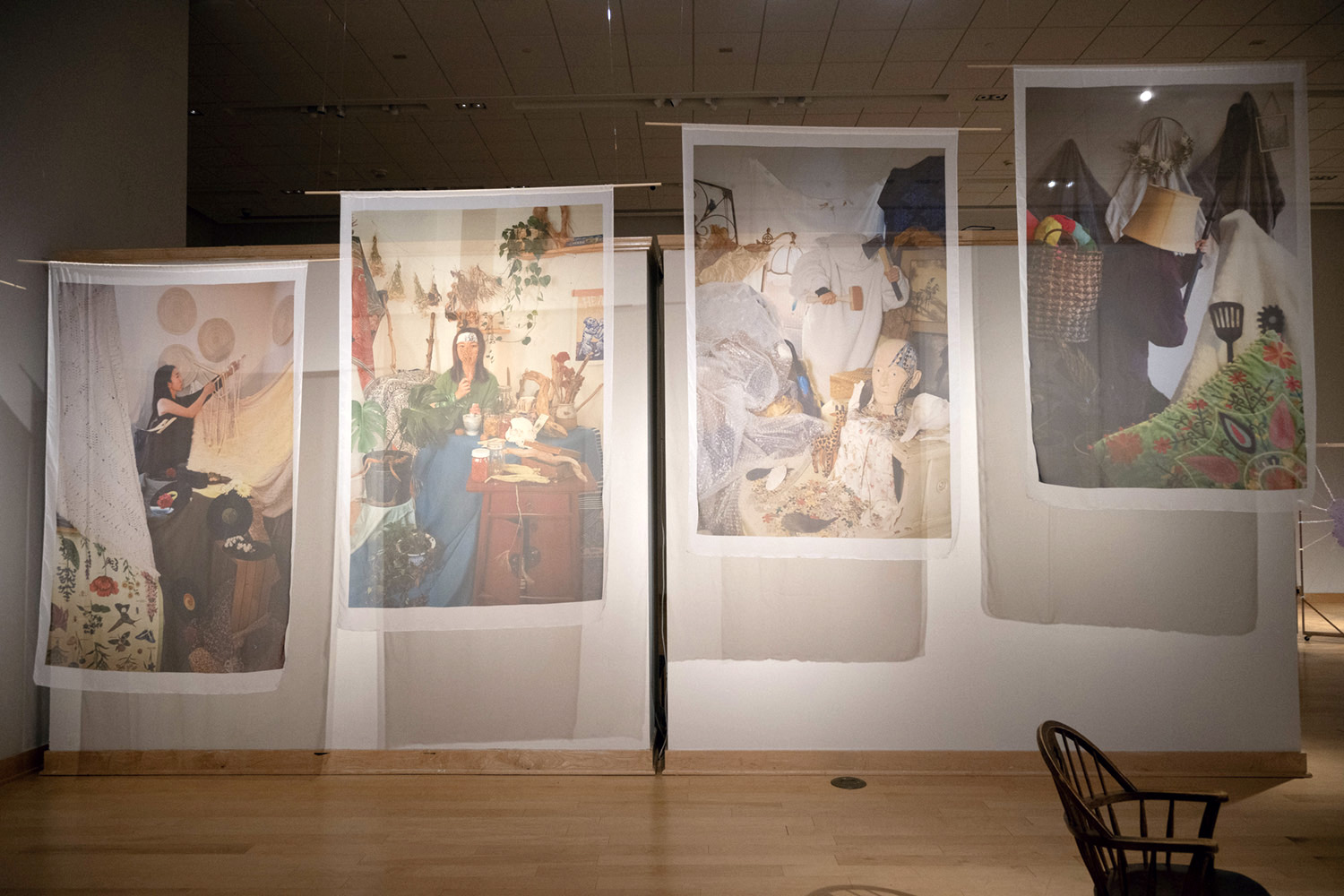
The current grad work is extremely varied. Here are three examples of lens-based work:
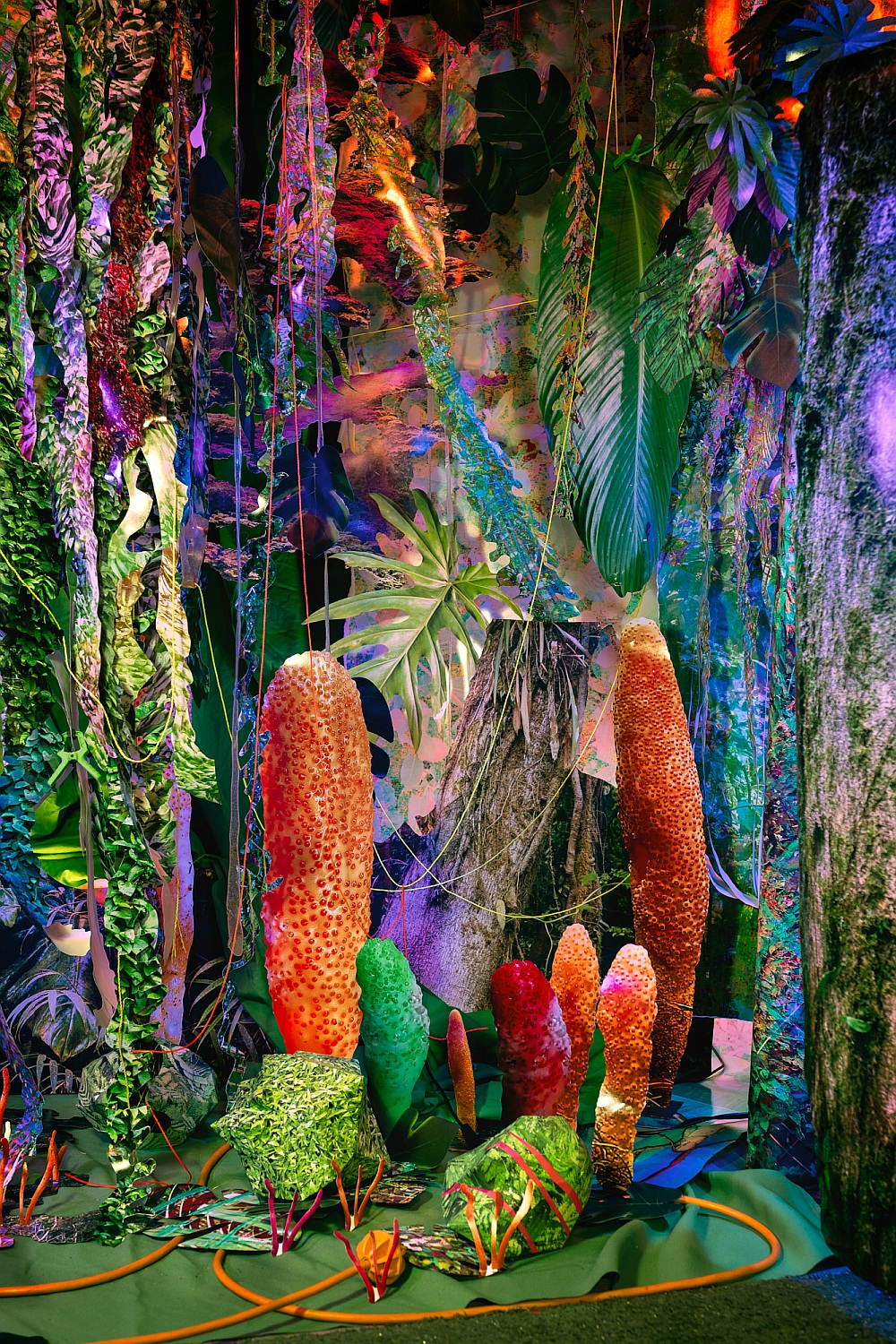
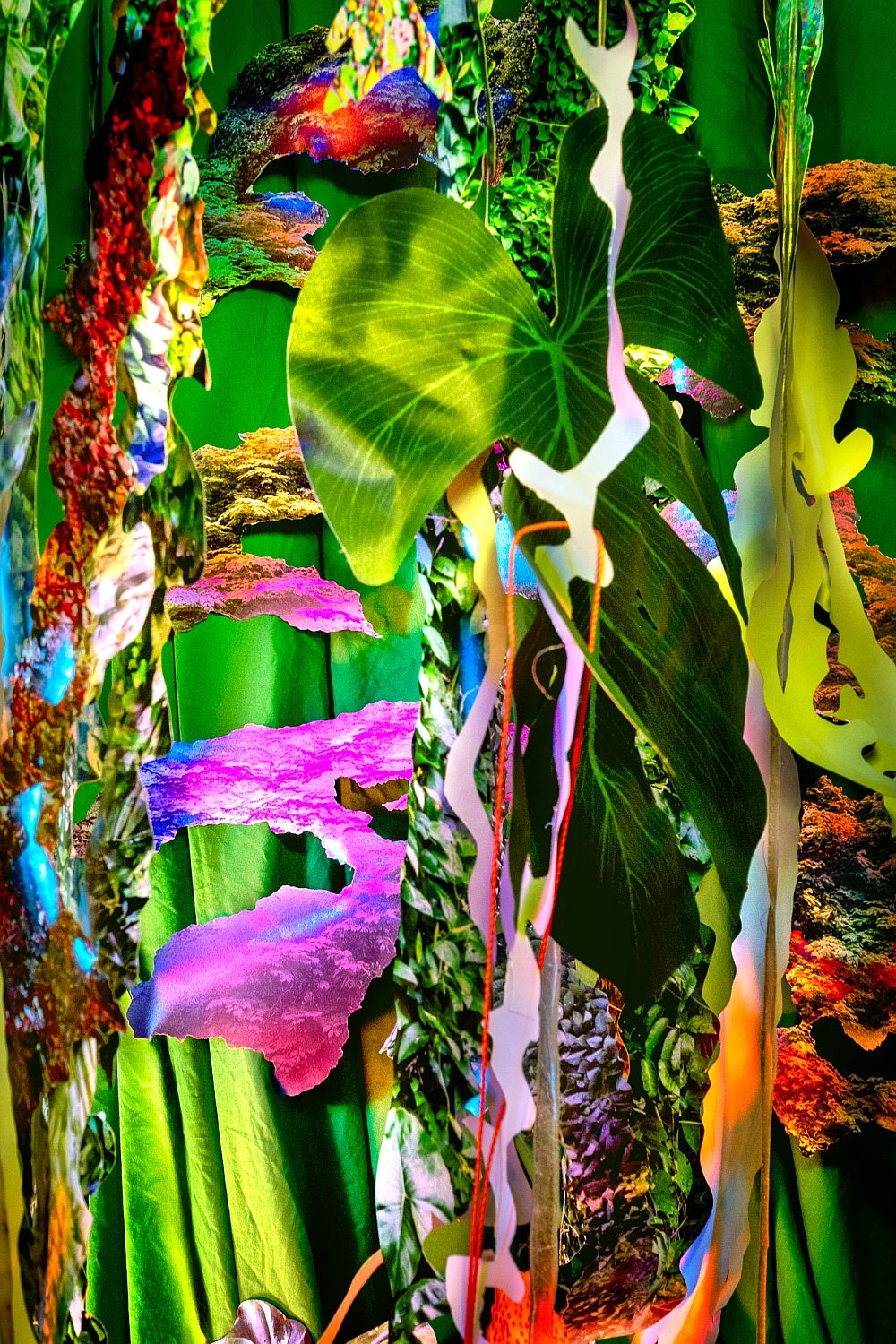
Heading into his final thesis year, Jeremy Starn challenges viewers to navigate the complexities of “queer ecological entanglement.” Starn bridges the organic and the artificial by staging photographic cut-outs of the natural world within hyper-colorful, fabricated studio environments. In an interactive component of the installation, viewers are invited to pick up the receiver of a dial-up telephone to hear AI-generated messages about photographic theory.
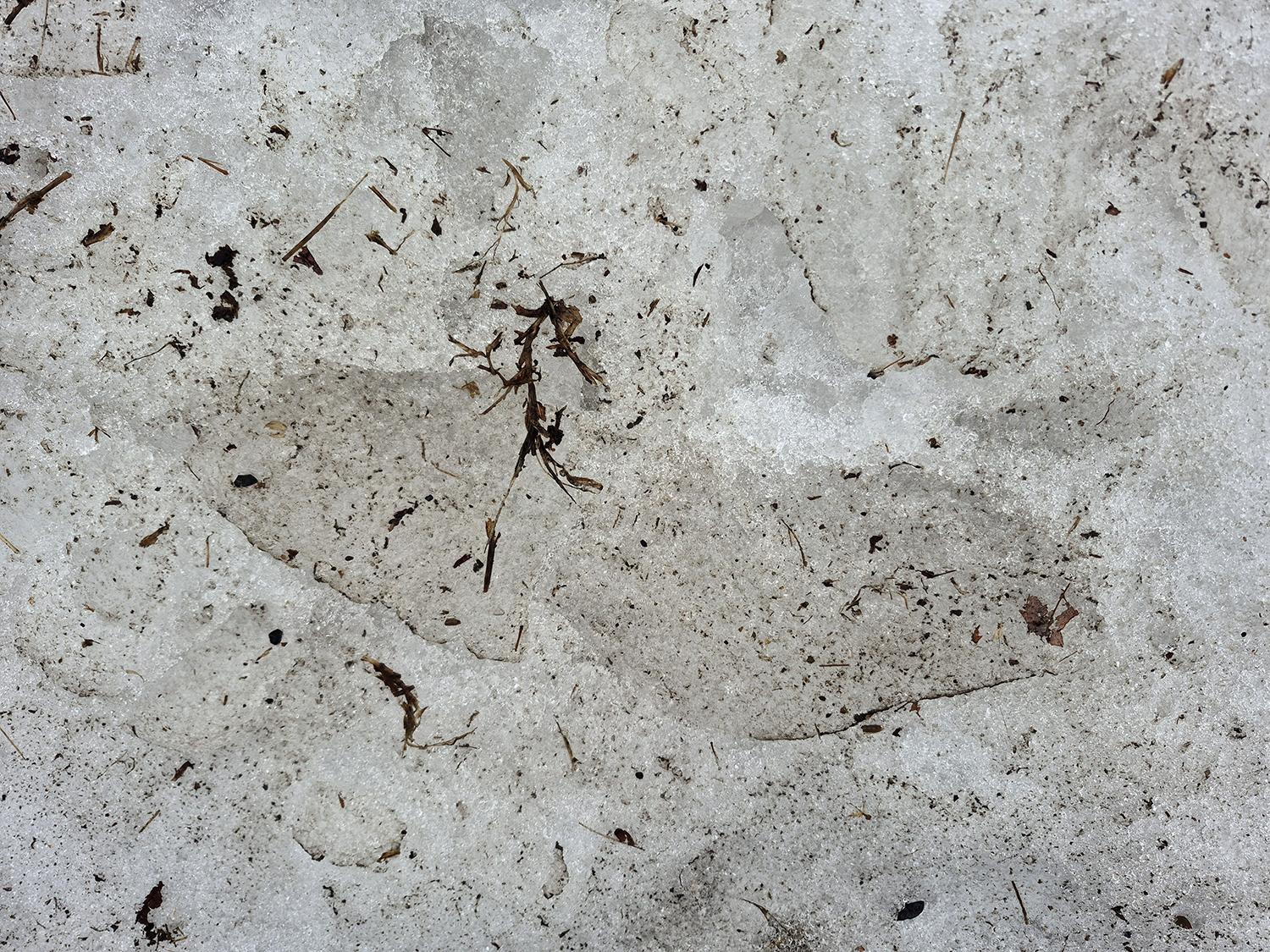
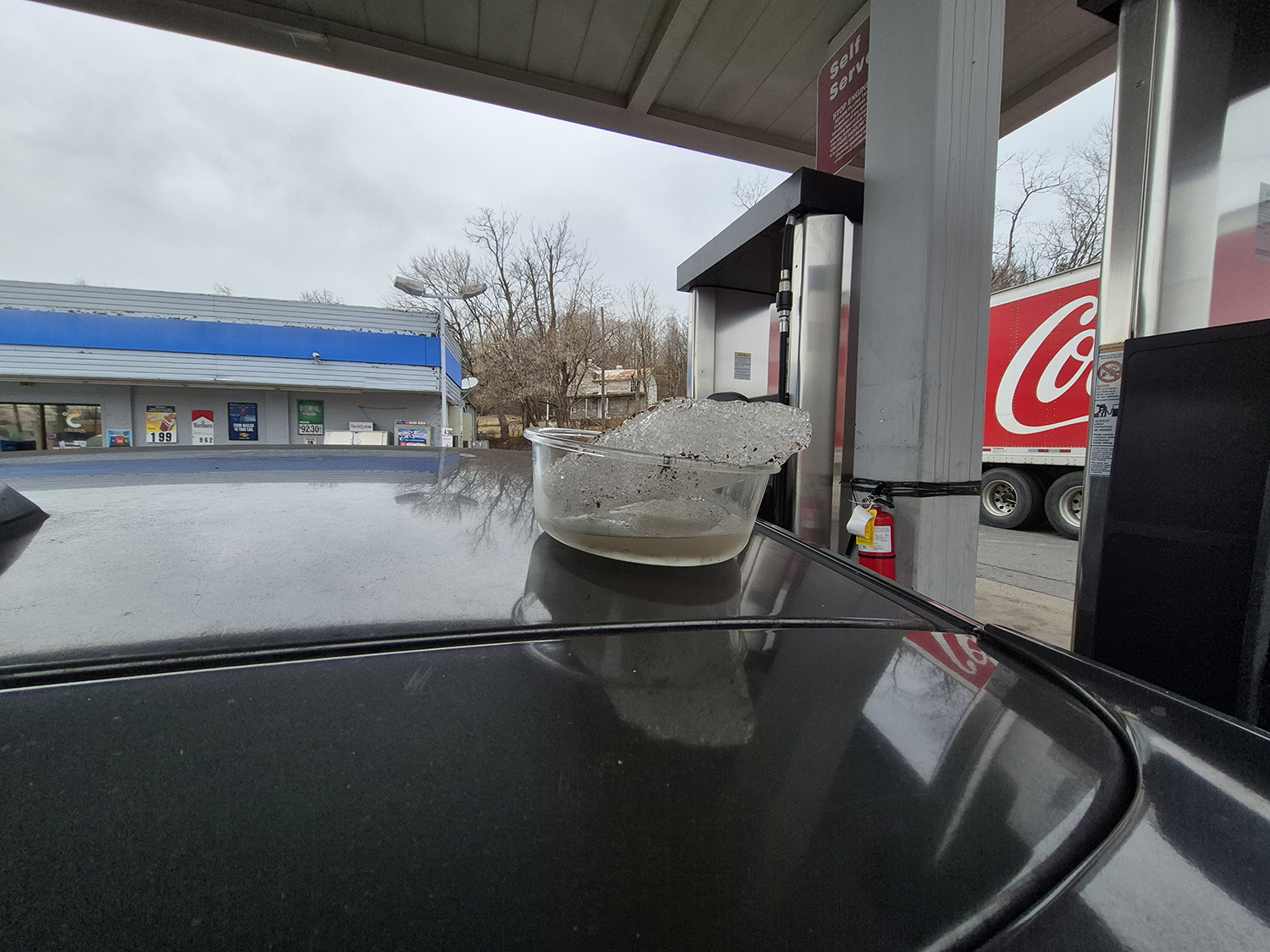
Utilizing the local landscape of the Shenandoah Valley as backdrop, rising second-year graduate student Alexandria Searl explores themes of presence, erasure, and human rights. In a recent series of large-scale color photographs, Searl documents a powerful, performative intervention: the physical transportation of a man’s footprint cast in ice. As the ice is carried across the valley, its gradual melting serves as a poignant, physical protest against the unconstitutional violence enacted by ICE.
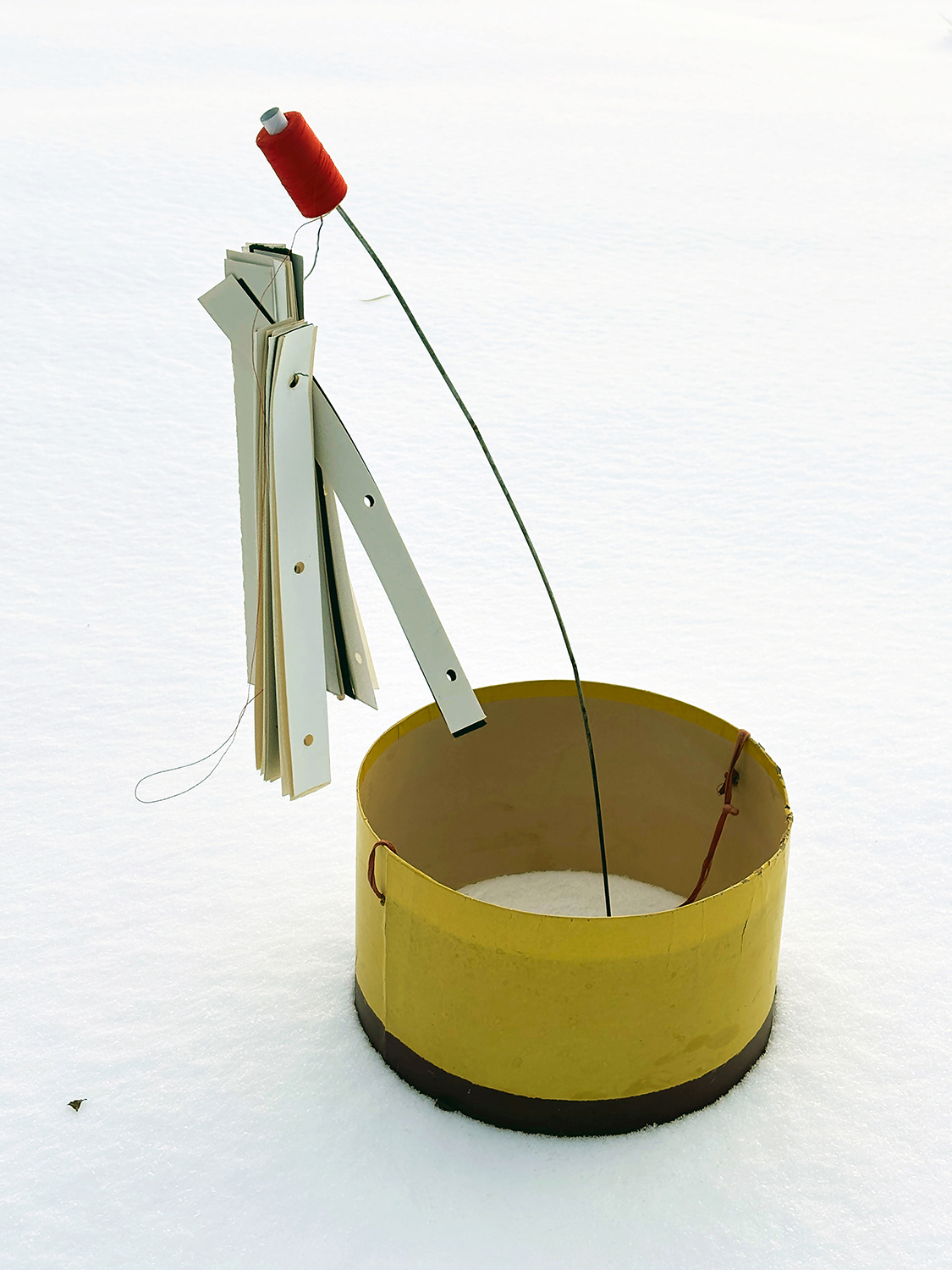
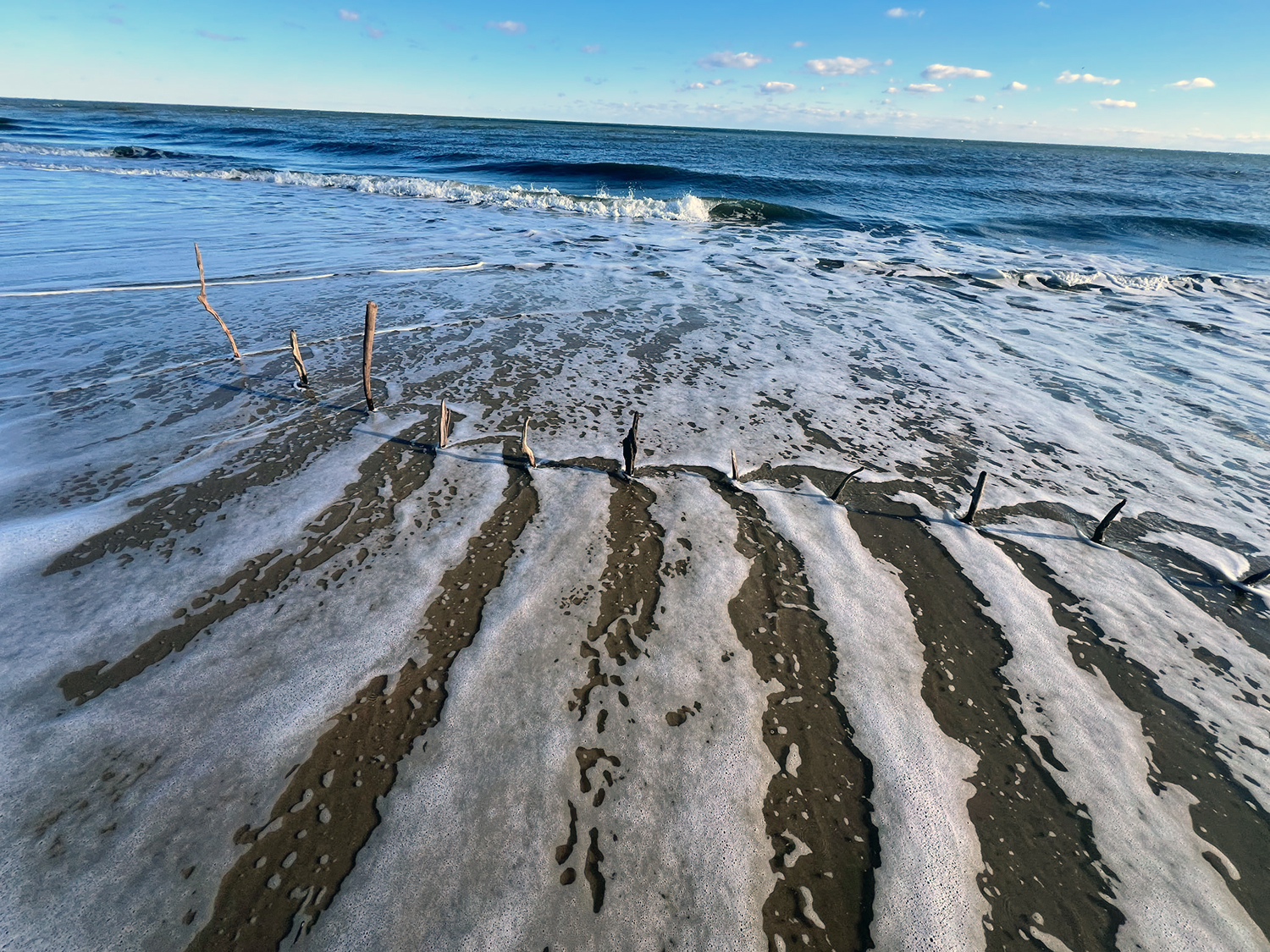
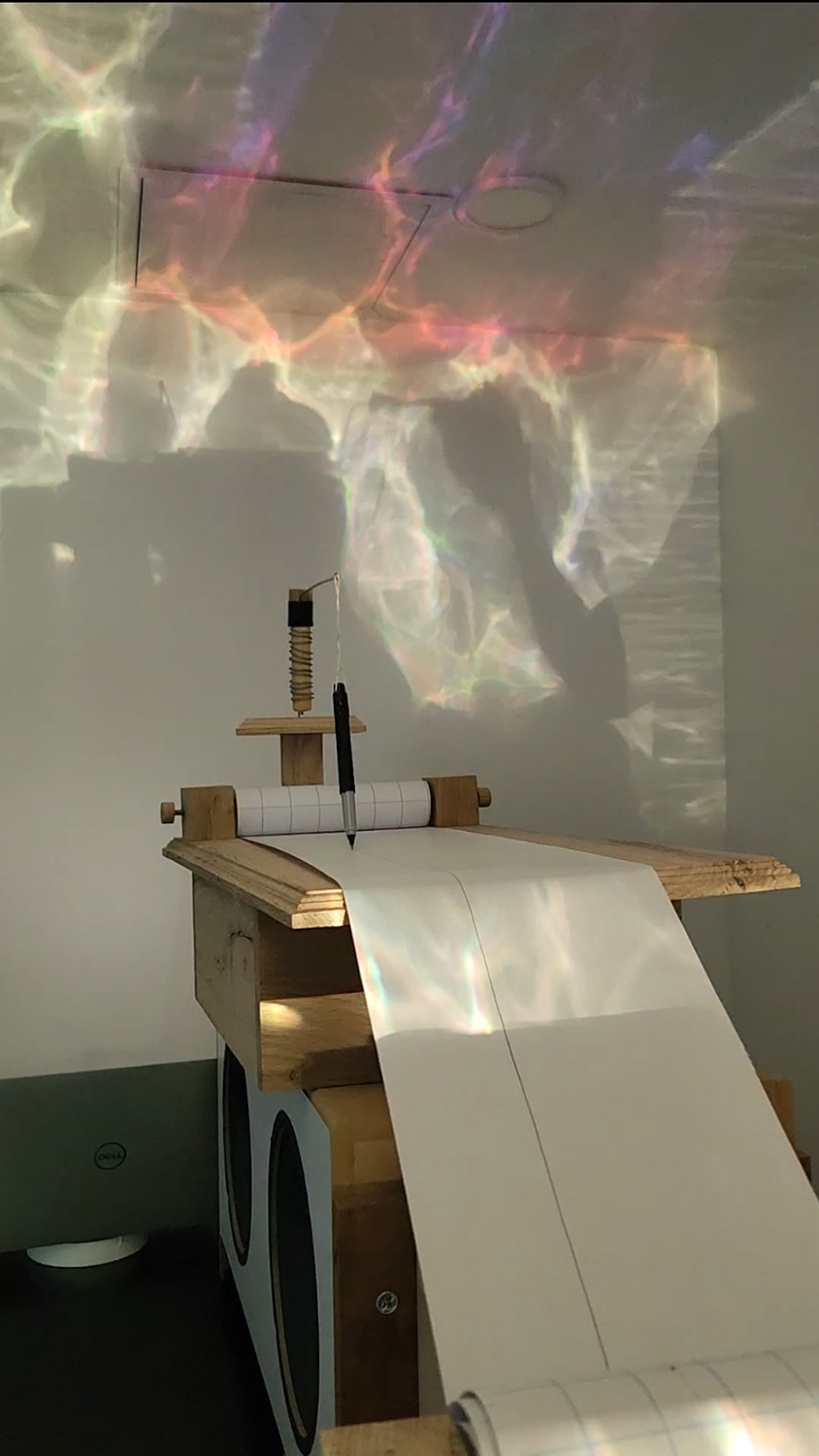
In the video piece, Weave, Unweave, by recent 2026 graduate Olivia Luke, a row of driftwood placed at the water’s edge disrupts the ocean’s natural flow, tracing rhythmic patterns into the foam like the teeth of a loom. Luke extends this concept of “weaving” in Recording in Progress, a mechanical structure designed collaboratively during a seminar on Time and Art that translates the intangible threads of movement, sound, light, and shadow into units of measure that appear to record time.
©Yulin Yuan, Alum
What is the total cost of the program (and duration), and what funding options are available? Are there teaching assistantships, and what percentage of tuition do they cover?
All full-time students admitted to the MFA program are recommended for a Graduate Assistantship that pays for full tuition (in-state or out-of-state) and graduate comprehensive fees for 18 graduate credits per year plus a stipend set by The Graduate School (currently $10,110 per year / $5,055 per semester) in exchange for 20 hours of work per week. Third year students may be eligible for a Teaching Assistantship to independently teach a class, with a slightly higher stipend (currently $11,865 per year / $5,932.50 per semester). The 6 summer credits are not covered by the assistantship but are paid for by the program whenever possible (in-state $548 per credit/ out-of-state $1202 per credit).
Living expenses for graduate students are estimated at $16,200 per year. However, international students have additional international student fees and health insurance requirements, and to obtain a visa, they must verify that they have all educational and living expenses available for their first 12 months in the US. JMU’s International Student and Scholar Services (ISSS) has proven to be very helpful at providing information and assistance.
©Aniko Safran, Alum
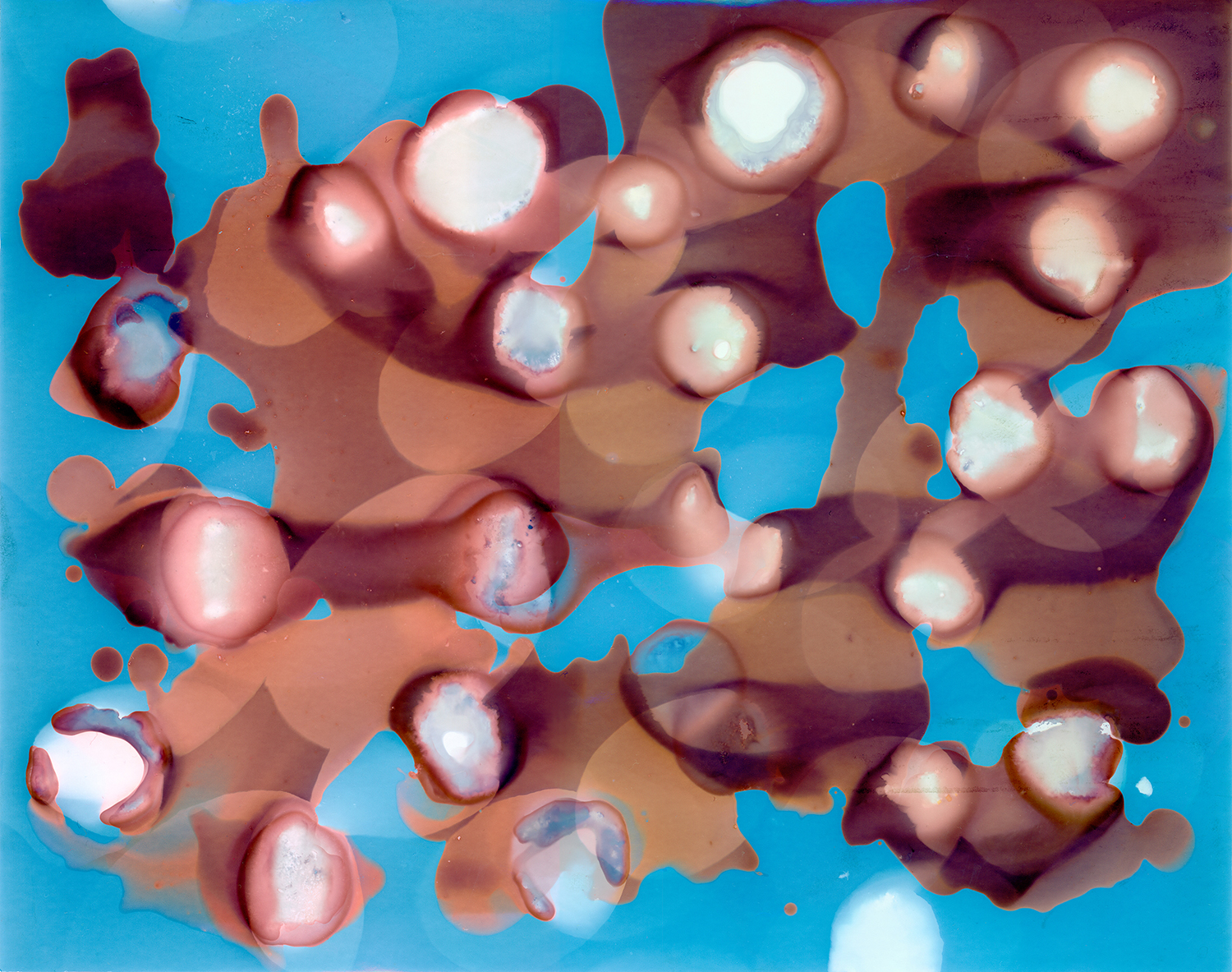
Are additional grants/resources available to support student projects?
Grad students can apply for SADAH Grad Professional Development Funds for materials, travel to a conference, or other needs. The Graduate School offers a Travel Grant and a Global Opportunity Grant, the Office of Creative Propulsion offers Project-based Support for Integrative Arts, and the Graduate Student Association offers Professional Development Grants.
There is a good track record of grads or recent alum being selected for the Virginia Museum of Fine Arts Fellowships (Graduate-level, $6,000 and Professional, $8,000). Additionally, the Office of Sponsored Programs helps grads find and apply for outside grants and funded opportunities.
©Aniko Safran, Alum
What types of careers do alumni pursue, and how does the program support students after graduation?
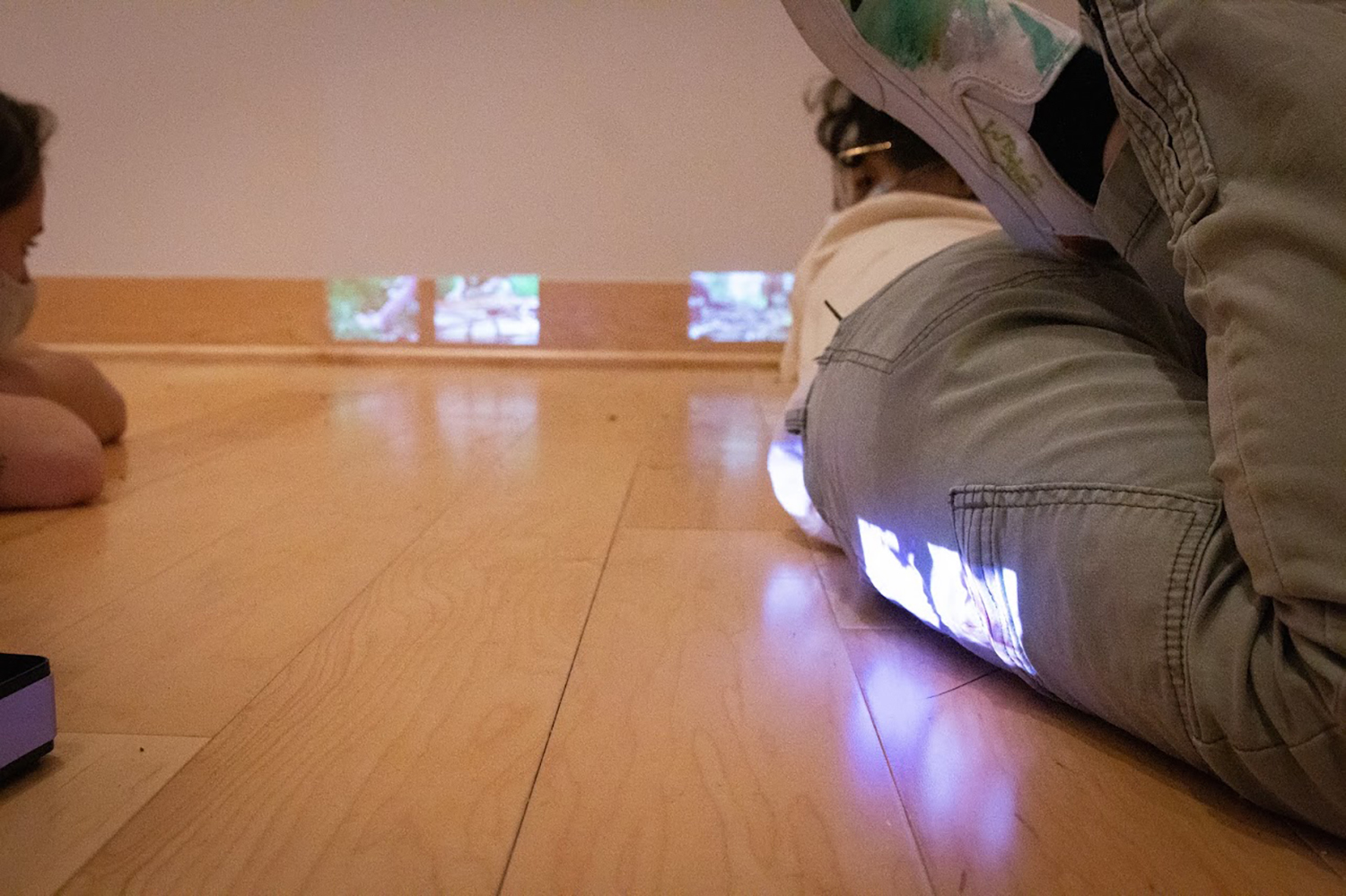
The alumni have a wide range of careers including full-time artist, university or community college professor, private high school teacher, university studio tech, non-profit arts administrator, gallery owner, store owner, scenic artist/designer, stage carpenter, artist/farmer, artist/university adjunct and/or art center teacher, web designer/developer, tattoo artist, graphic designer, visual merchandiser, and more.
Grads usually stay in close communication with their Thesis Committee and the JMU community after graduation for recommendation letters, advice, and collaborative opportunities. Grads sometimes stay on as adjunct in SADAH the year following graduation if they need time to transition to a career, and there are quite a few other universities, colleges, and art centers in the area that hire part-time or one-years. They can also apply for the Presidential Engagement Fellows Program that funds recent alum to work on projects for select university programs with the aim of developing personal and professional leadership skills.
©Sarah Phillips-Hooley, Alum
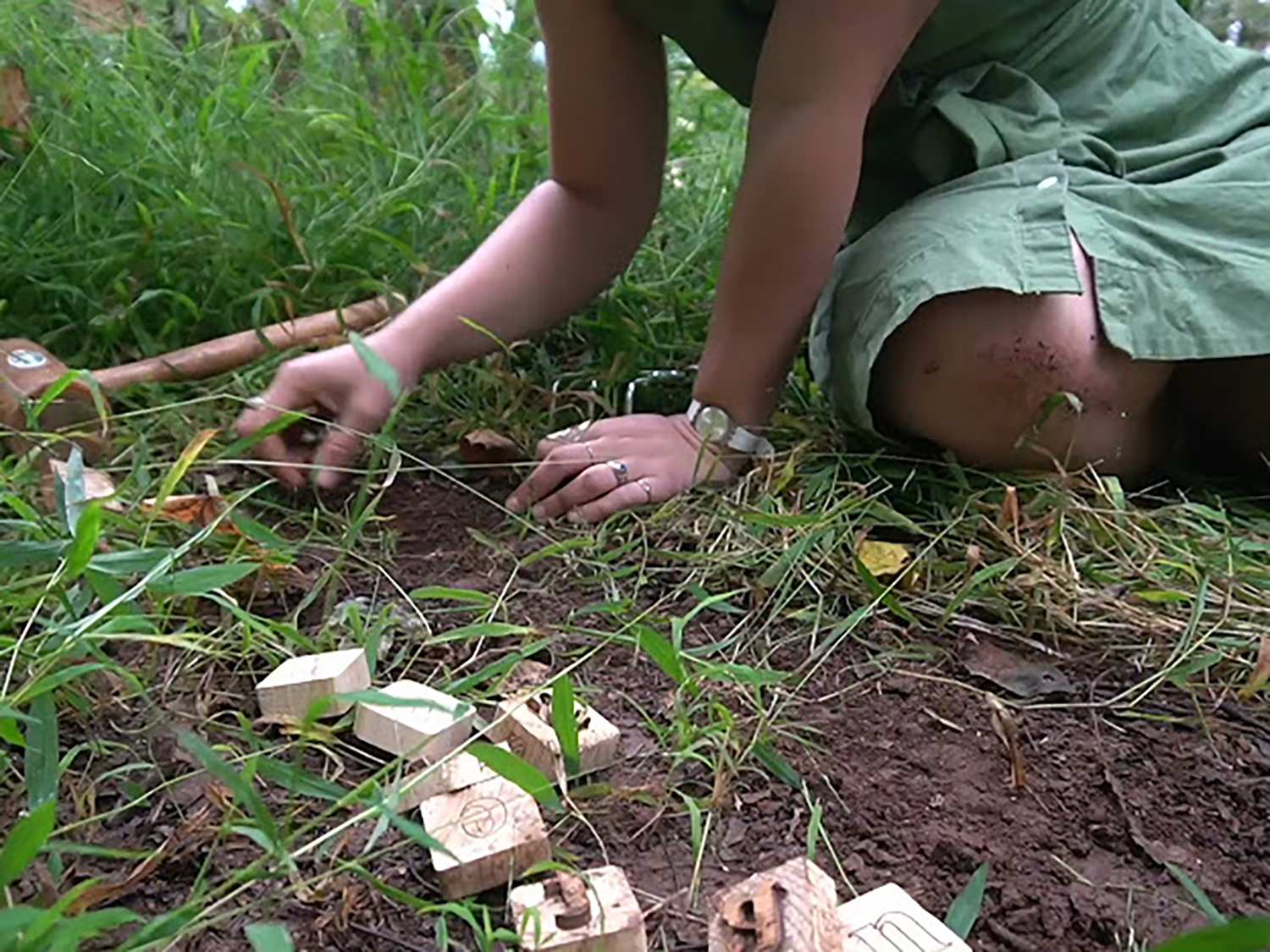
How connected is the alumni network, and do graduates stay involved with the program?
Thanks to social media and a SADAH newsletter, news of events and accomplishments for the current and past grads are widely shared. It is not surprising to have recent or long-past MFA grads from all dicerent years show up to the Thesis Exhibition receptions or other significant art events, such as their former grad professor or peer’s exhibition opening, even in other cities. Former grads have often been tapped to participate in group or solo exhibitions and projects or to return as visiting artists or critics. Even though they move on to far-flung locations, each grad remains a valued member of the arts community.
©Sarah Phillips-Hooley, Alum
Posts on Lenscratch may not be reproduced without the permission of the Lenscratch staff and the photographer.
Recommended
-
In Focus: The MFA Review: James Madison UniversityNovember 29th, 2026
-
In Focus: The MFA Review: University of KentuckyNovember 28th, 2026
-
In Focus: The MFA Review: University of GeorgiaNovember 27th, 2026
-
In Focus: The MFA Review: University of Arizona, School of ArtNovember 26th, 2026
-
In Focus: The MFA Review: Northern Illinois UniversityNovember 25th, 2026