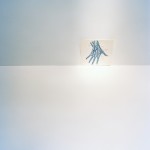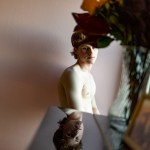
PhotoNOLA Review Prize: Lee Deigaard
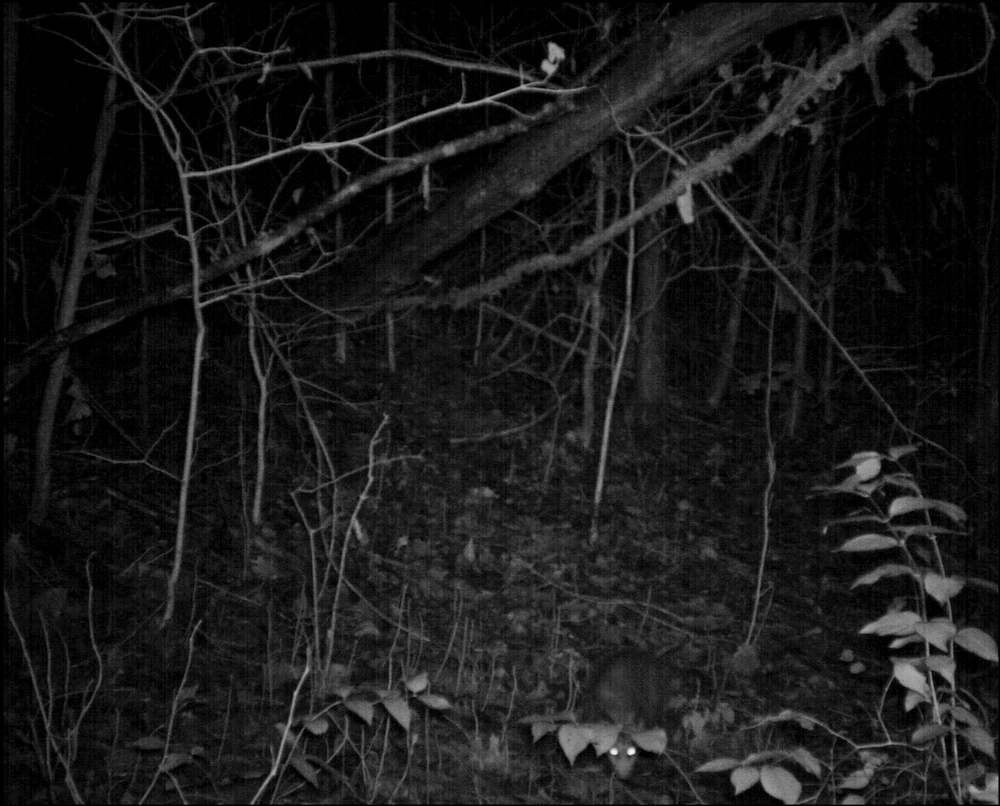
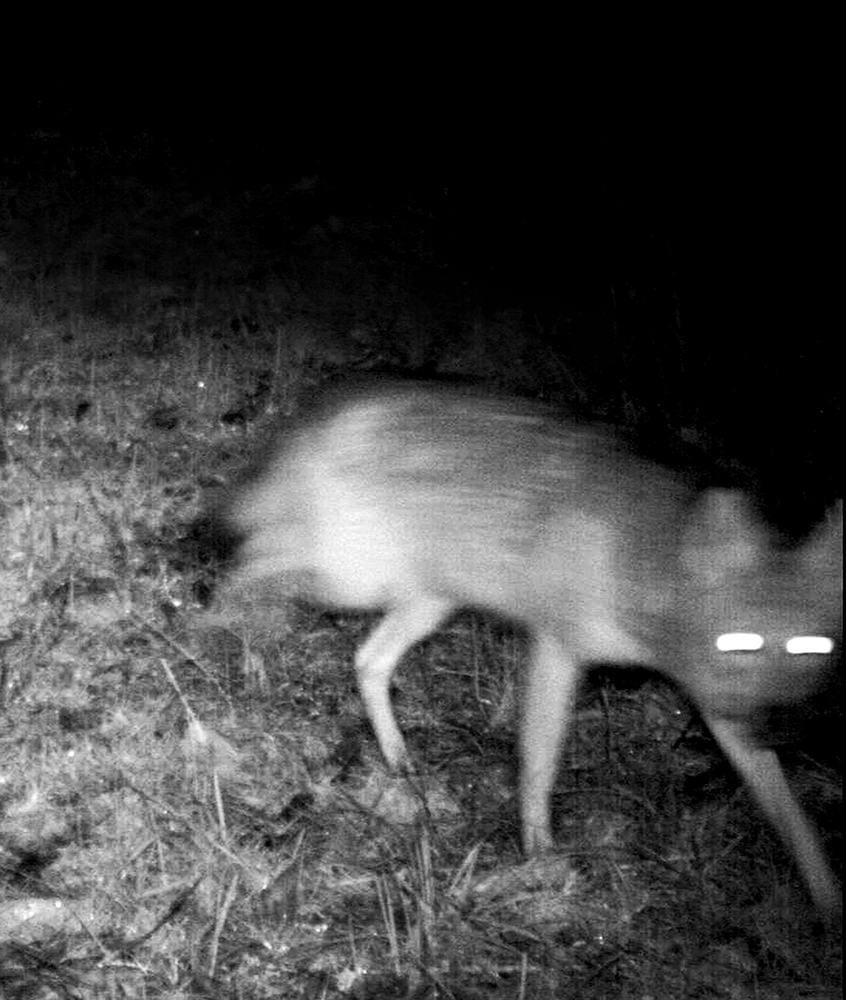
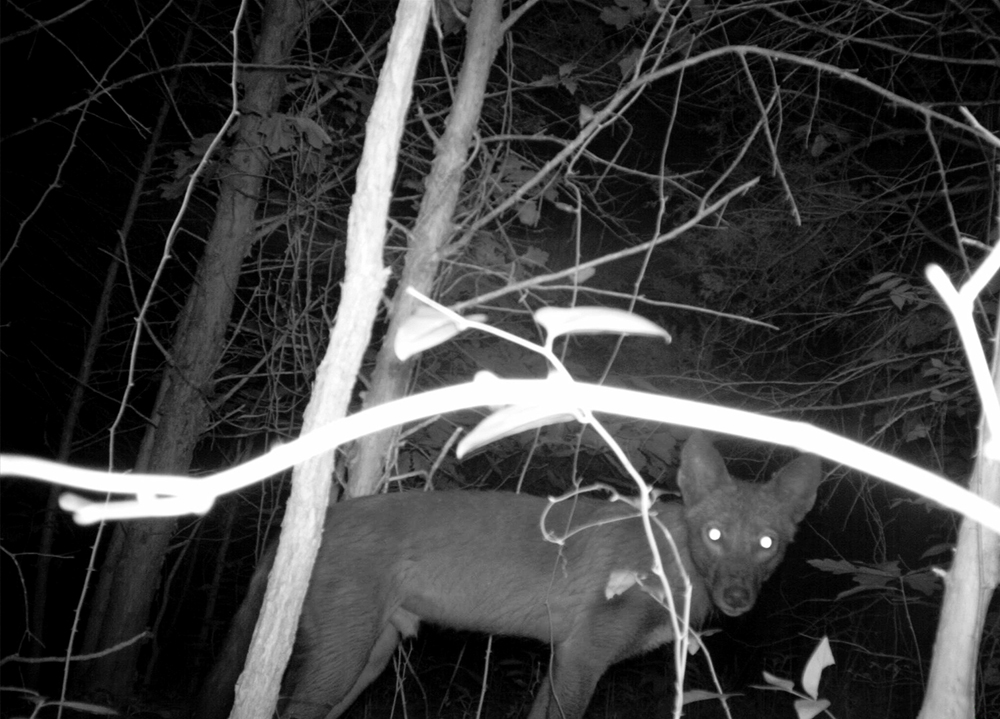
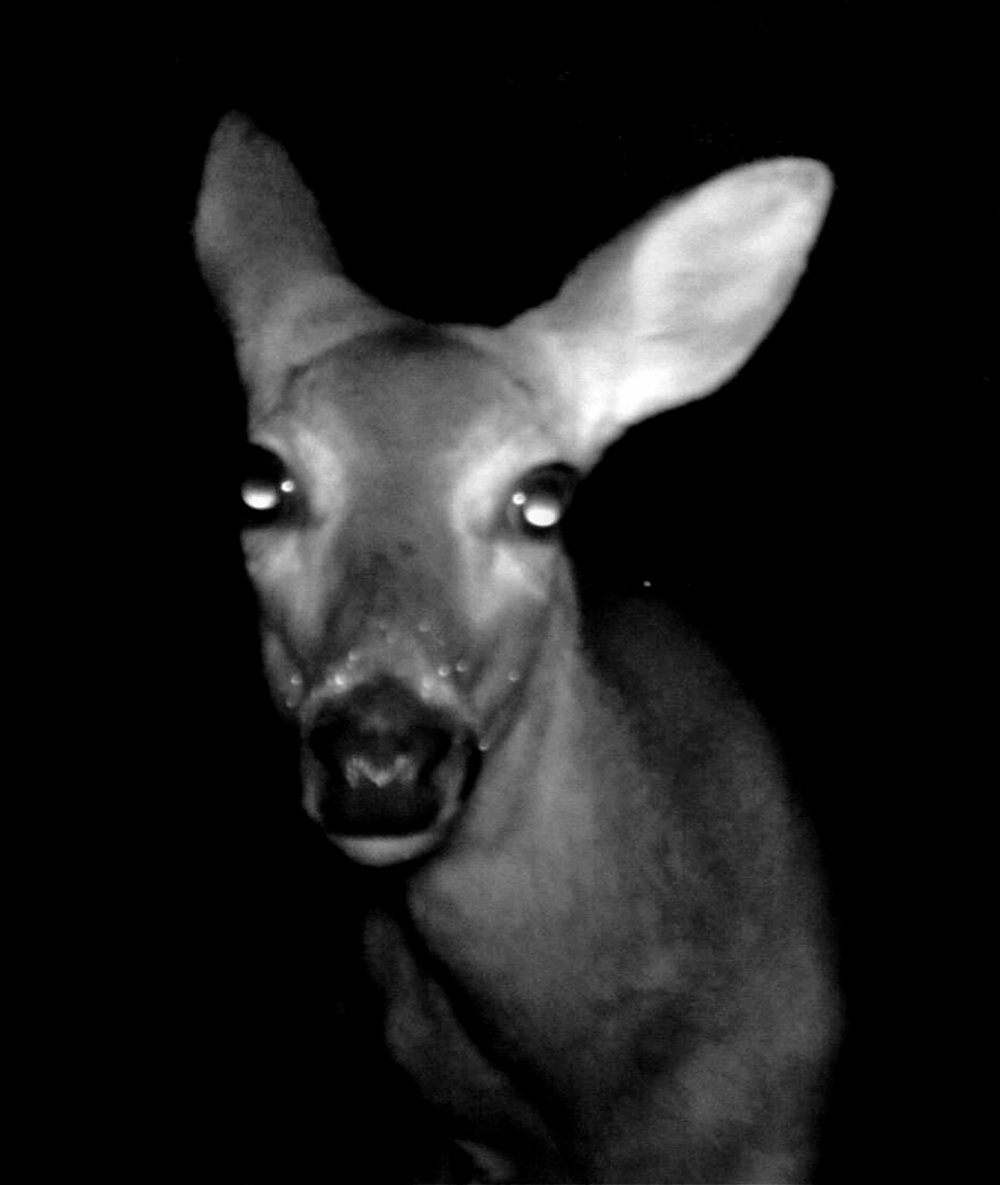
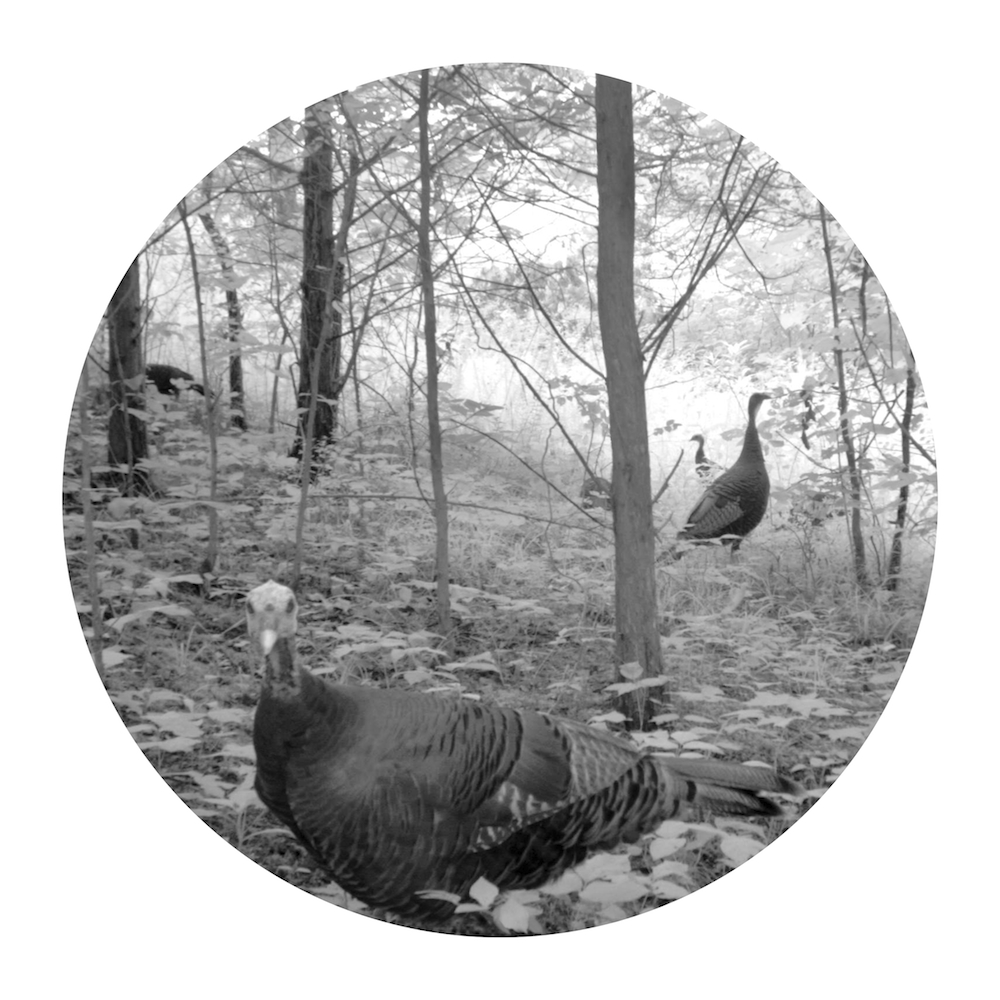
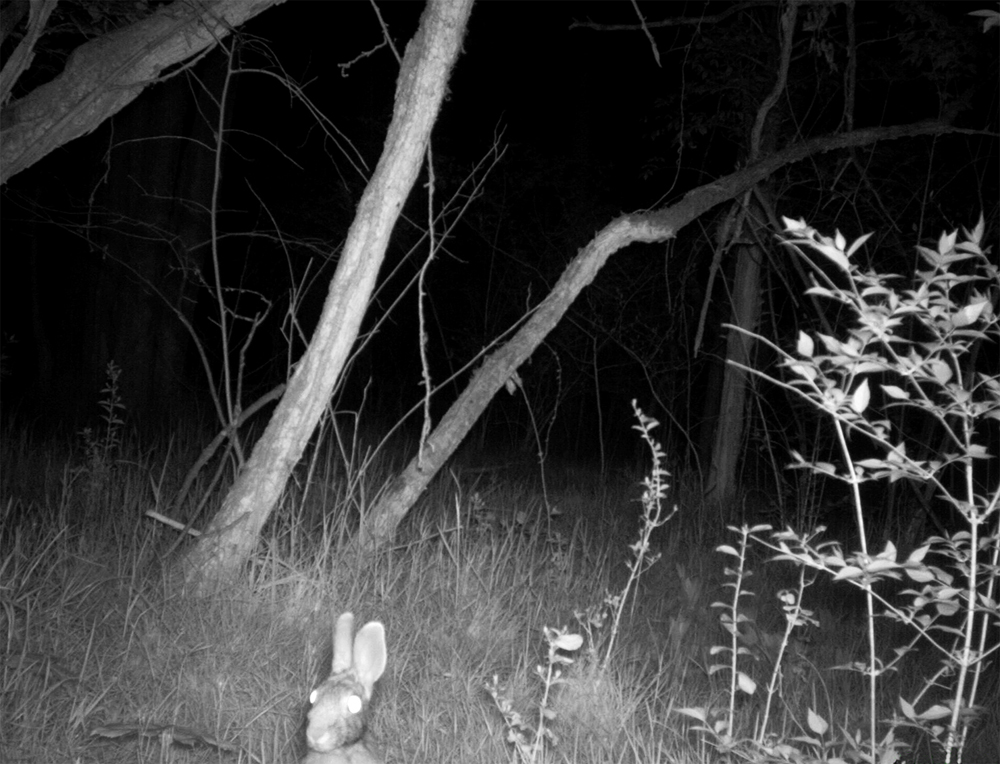
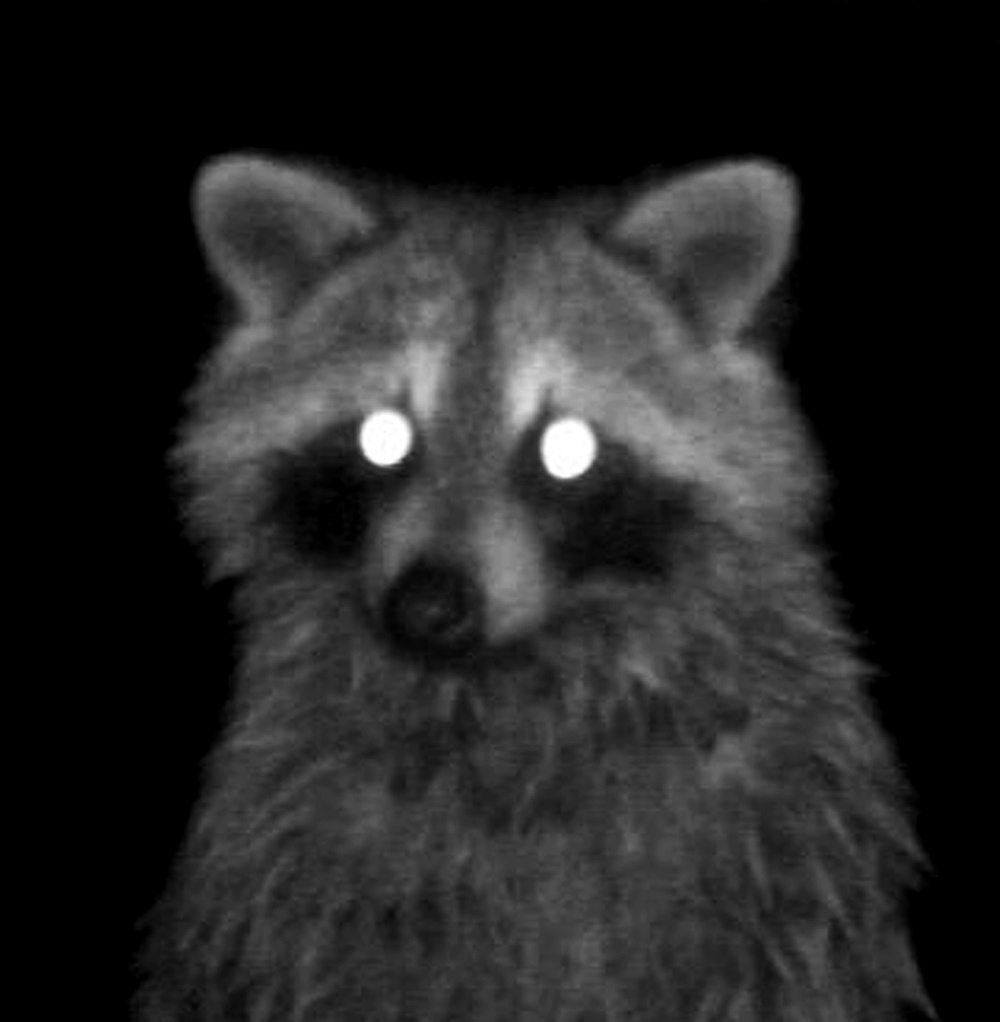
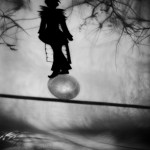
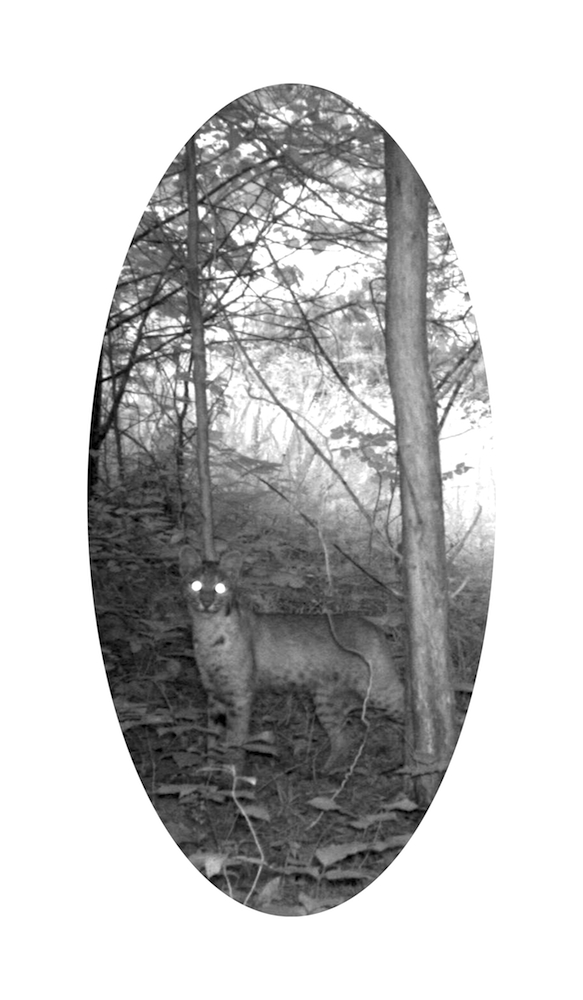 Lee Deigaard has created a wonderful series about things that go bump in the night and for that effort received 3rd Prize for her project Unbidden. As a result of her award, her photographs will appear on the PhotoNOLA website. Her black and white images of animals after dark, with glowing eyes, are spooky and magical at the same time. Her varied presentations add to the effect of memorializing life on the other side of the sun.
Lee graduated from Yale University with a major in fine arts and earned graduate degrees from the University of Michigan School of Art and Design and from the University of Texas at Austin where she held a Michener Fellowship in Creative Writing. In 2012 she won the Clarence John Laughlin Award for photography for her series of nocturnal images of animals “Unbidden”. In 2013, she had solo shows at the Alexandria Museum of Art, the Acadiana Center for the Arts, the University of New Orleans, and the Contemporary Art Center in New Orleans where her multi-level video, photographic, and sculptural installation “SubMERGE” remains on view through Feb 2, 2014. Her solo show of photography “Trespass” and her video installation “PULSE” are on view at the Ogden Museum of Southern Art through April 6, 2014. She is an artist member of the New Orleans collective The Front.
Unbidden
I use the camera hunters use. When animals know me, I wield it handheld and shoot blindly, a proprioceptive choreography in the dark.
With wild animals, I keep my distance. I learn only what they choose to announce.
Privacy. Incursions. There is no informed consent. Woman with a camera. Hunter with a gun. Something is taken.
In the woods, my blunter senses are a bubble. The animals around me hold their breath. I don’t know the half of what goes on. The deer watch from a distance. I keep my head down. If our gazes meet, they bound away, their foraging disturbed. Winter is coming.
I saw a big cat. Bigger than a bobcat, a panther. The dogs ran about, excited, but the panther was cloaked. There and yet somehow not there.
She looked at me. I froze. Like a deer, we say. A deer in headlights. The incidental moment. The stolen moment. The deep introspection of moments between motions.
I looked down. At my feet the cat’s breakfast, interrupted, a freshly killed squirrel.
At night, the coyotes move close, singing to the passing train. The bobcat strolls under the porch. The armed poacher with his dog and his lantern passes along the crest of the near hill.
Flight response. Hair trigger reflex. The gun, the flash. Empathy unfolds after the fact.


My work portrays animal protagonists and the landscape we mutually inhabit.
I am interested in ways of seeing and being seen: the meeting and crossing of gazes, looking through and seeing [what is] past. The mind’s eye, the forensics of memory, recollection, and projection, the existential filters of species and tree branches and deep darkness.
Eyes are windows, windows are viewfinders, boundaries, frames, and lenses.
Object, subject, free will, trespass are illuminated in the hidden moments between moments. The plasticity of identity, of identification, shares borders- human and animal, light and dark, body and space.





Posts on Lenscratch may not be reproduced without the permission of the Lenscratch staff and the photographer.
Recommended
-
Student Prize: Top 25 to WatchAugust 2nd, 2026
-
The 2026 Paula Riff Award Winner: Angélica ArbulúJuly 3rd, 2026
-
The 2025 Paula Riff Award Winner: Marni MyersJuly 2nd, 2026
-
The 2024 Paula Riff Award Winner: Minwoo LeeJuly 1st, 2026
-
The 2023 Paula Riff Award Winner: Paula McCartneyJune 30th, 2026






![In the early morning of Sunday, September 15, 1963, four members of the United Klans of AmericaÑThomas Edwin Blanton Jr.,Herman Frank Cash, Robert Edward Chambliss, and Bobby Frank CherryÑplanted a minimum of 15 sticks of dynamite with a time delay under the steps of the 16th Street Baptist Church in Birmingham, Alabama, close to the basement.
At approximately 10:22 a.m., an anonymous man phoned the 16th Street Baptist Church. The call was answered by the acting Sunday School secretary: a 14-year-old girl named Carolyn Maull. To Maull, the anonymous caller simply said the words, "Three minutes", before terminating the call. Less than one minute later, the bomb exploded as five children were present within the basement assembly, changing into their choir robes in preparation for a sermon entitled "A Love That Forgives". According to one survivor, the explosion shook the entire building and propelled the girls' bodies through the air "like rag dolls".
The explosion blew a hole measuring seven feet in diameter in the church's rear wall, and a crater five feet wide and two feet deep in the ladies' basement lounge, destroying the rear steps to the church and blowing one passing motorist out of his car. Several other cars parked near the site of the blast were destroyed, and windows of properties located more than two blocks from the church were also damaged. All but one of the church's stained-glass windows were destroyed in the explosion. The sole stained-glass window largely undamaged in the explosion depicted Christ leading a group of young children.
Hundreds of individuals, some of them lightly wounded, converged on the church to search the debris for survivors as police erected barricades around the church and several outraged men scuffled with police. An estimated 2,000 black people, many of them hysterical, converged on the scene in the hours following the explosion as the church's pastor, the Reverend John Cross Jr., attempted to placate the crowd by loudly reciting the 23rd Psalm through a bullhorn. One individual who converged on the scene to help search for survivors, Charles Vann, later recollected that he had observed a solitary white man whom he recognized as Robert Edward Chambliss (a known member of the Ku Klux Klan) standing alone and motionless at a barricade. According to Vann's later testimony, Chambliss was standing "looking down toward the church, like a firebug watching his fire".
Four girls, Addie Mae Collins (age 14, born April 18, 1949), Carol Denise McNair (age 11, born November 17, 1951), Carole Robertson (age 14, born April 24, 1949), and Cynthia Wesley (age 14, born April 30, 1949), were killed in the attack. The explosion was so intense that one of the girls' bodies was decapitated and so badly mutilated in the explosion that her body could only be identified through her clothing and a ring, whereas another victim had been killed by a piece of mortar embedded in her skull. The then-pastor of the church, the Reverend John Cross, would recollect in 2001 that the girls' bodies were found "stacked on top of each other, clung together". All four girls were pronounced dead on arrival at the Hillman Emergency Clinic.
More than 20 additional people were injured in the explosion, one of whom was Addie Mae's younger sister, 12-year-old Sarah Collins, who had 21 pieces of glass embedded in her face and was blinded in one eye. In her later recollections of the bombing, Collins would recall that in the moments immediately before the explosion, she had observed her sister, Addie, tying her dress sash.[33] Another sister of Addie Mae Collins, 16-year-old Junie Collins, would later recall that shortly before the explosion, she had been sitting in the basement of the church reading the Bible and had observed Addie Mae Collins tying the dress sash of Carol Denise McNair before she had herself returned upstairs to the ground floor of the church.](http://lenscratch.com/wp-content/uploads/2019/02/001-16th-Street-Baptist-Church-Easter-v2-14x14-150x150.jpg)