Melonie Bennett: Holy Cow!
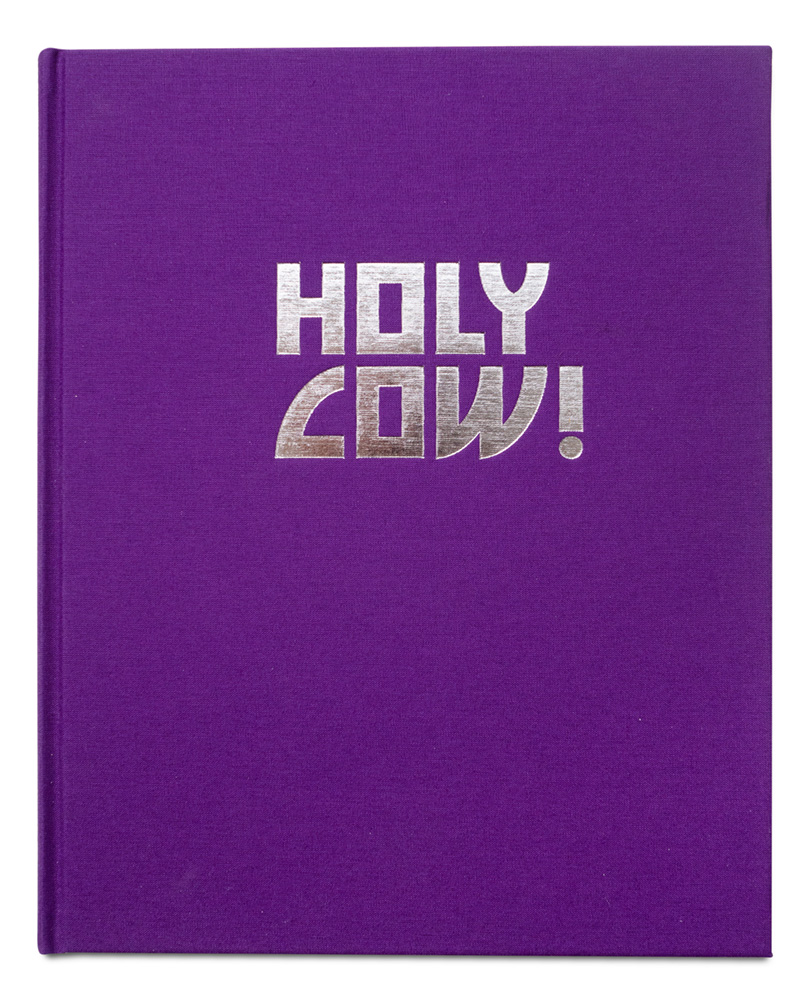
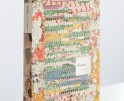
©Melonie Bennett. Book Cover, from Holy Cow! published by GOST Books
GOST has recently released a new monograph, Holy Cow!, by photographer Melonie Bennett. The work spans the 1990s and early 2000s and Bennett’s photographs navigate the intimate terrain of family life. Working within her immediate circle: parents, siblings, friends, and the ever-shifting collection of domestic relationships, Bennett constructs a vivid and unvarnished portrait of the emotional ecosystems that define her world.
Bennett and her siblings grew up on a dairy farm and although the family lived under constant stress, they coped by laughing, eating, fighting then talking and pretending everything was okay. She has always been drawn to photograph the absurd and unexpected, sharing a dog wearing cowboy boots, boys playing cards in bras, going home at 2am after a moose hunt, college kids streaking through the farmland and the juxtaposition of pregnant and beer bellies. Humor and irony were highly prized in the Bennett household, providing relief from the heaviness of everyday life. The work is intertwined with recollections and stories by the photographer’s brother, Merritt.
An interview with the artist follows.
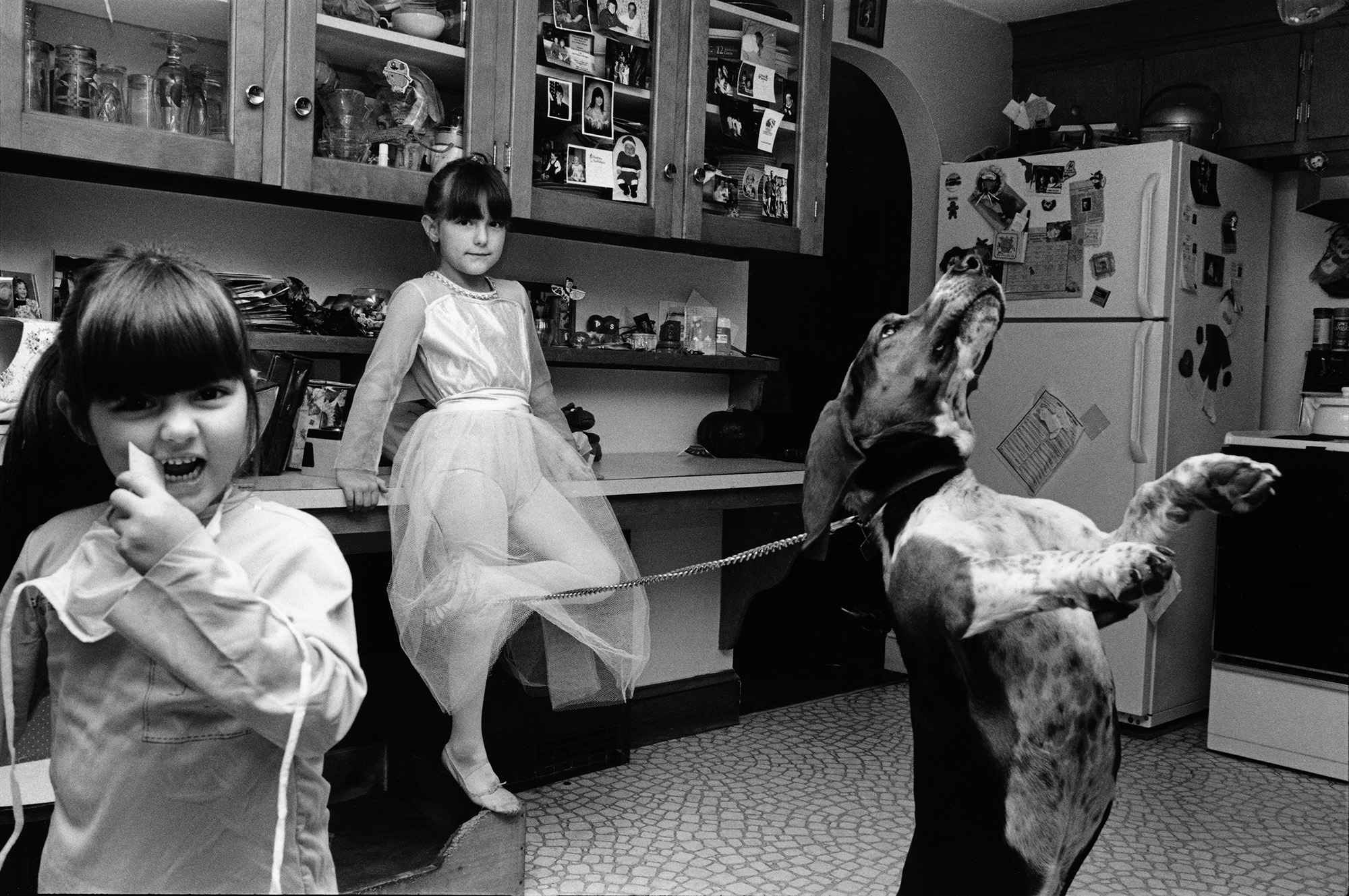
©Melonie Bennett. Bridget, Brittany and Waldo, Halloween, 2000, from Holy Cow! published by GOST Books
‘This collection of photographs presents the world I know—the complicated, mad world that includes my father, mother, brother, sister, friends, dogs, babies, extended families and the stuff of life. There are no pictures of the land, only the landscape where they set themselves loose and live with their pleasures and troubles, and with themselves and each other.
In high school, I was shy and naive. When my father spread manure in fields that bordered classmates’ homes, I wanted to be invisible. Being the oldest, I thought I had to behave. I never dared to party or skip school. It wasn’t even an option. My siblings sure made up for it—they were wild. But I found my groove. I took a high school darkroom class, at the same time that I took on the role as the designated driver for family and friends to parties. This gave me the license to observe and take pictures of what other people, including my family were doing. And I didn’t have to drink! What a gift from God.’
As photographing my family became more routine, Merritt thought it would be clever to start gifting me a single, unwrapped roll of film on these occasions. He would just laugh and say ‘that’s all you’re getting’—mocking me, my picture-taking and loving the ribbing he was doling out. But in fact, each time he had spent six bucks on me and had to make the effort to shop—this proved he loved me, right? I told him he should save his money and write down his stories as my gifts instead.’ -Melonie Bennett
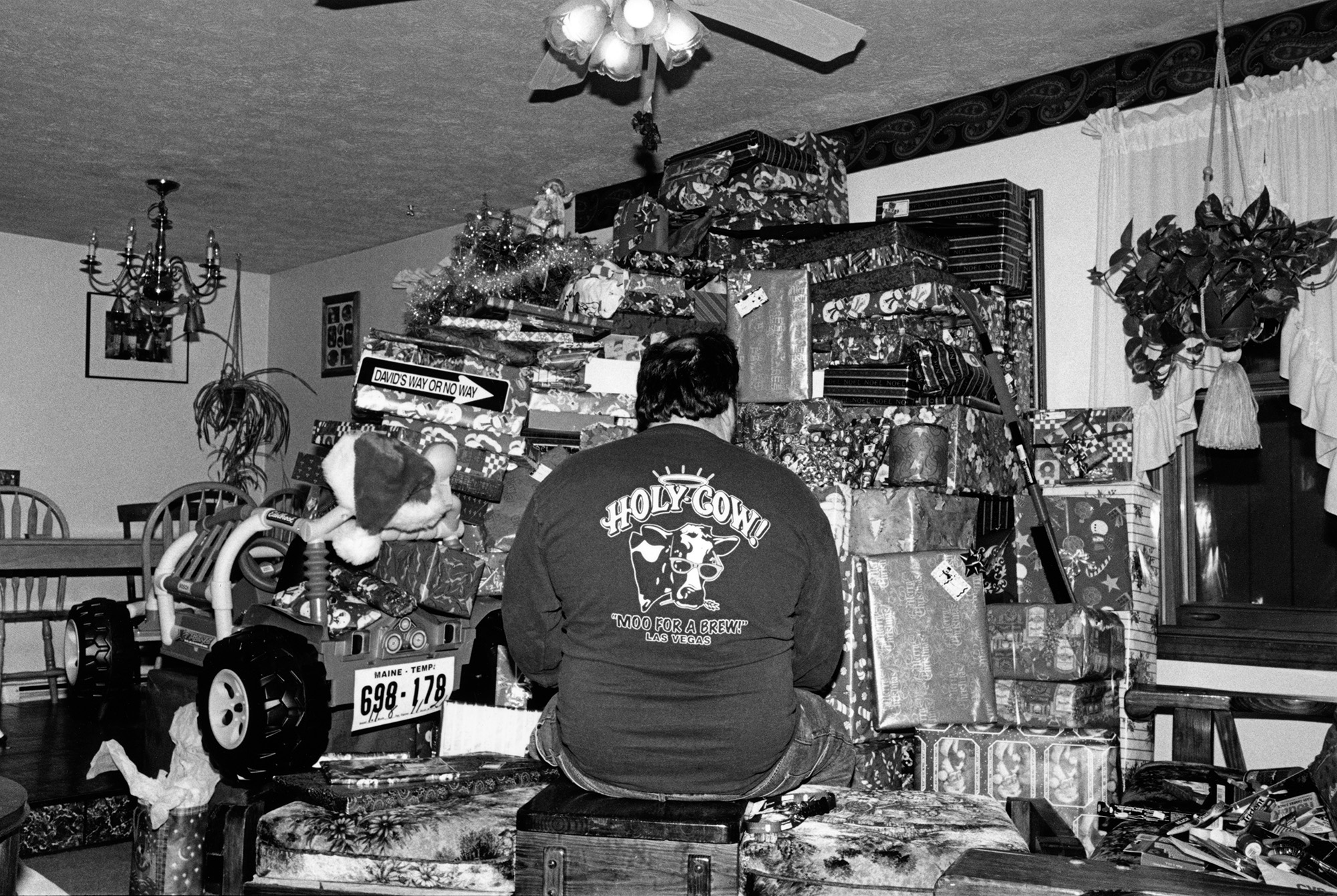
©Melonie Bennett, Christmas Eve at Dave’s House, 2001, from Holy Cow! published by GOST Books ( Our Christmas Eve ritual was to go to my brother-in-law’s house to help him bring out all of the presents and put them ‘under’ the Christmas tree. The angel was usually struggling to be seen, the tree invisible behind hundreds of gifts stacked around it. Dave tasked himself with placing each present according to size, weight and colour in whatever formation he envisioned that year. He took many cigarette breaks to critique his creation and after spending thousands of dollars and countless hours shopping, wrapping and stacking, he pondered it all with anticipation, just as his parents had done for him. He did cut the rule of making his kids eat the tangerines from their stocking before the presents could be opened.)
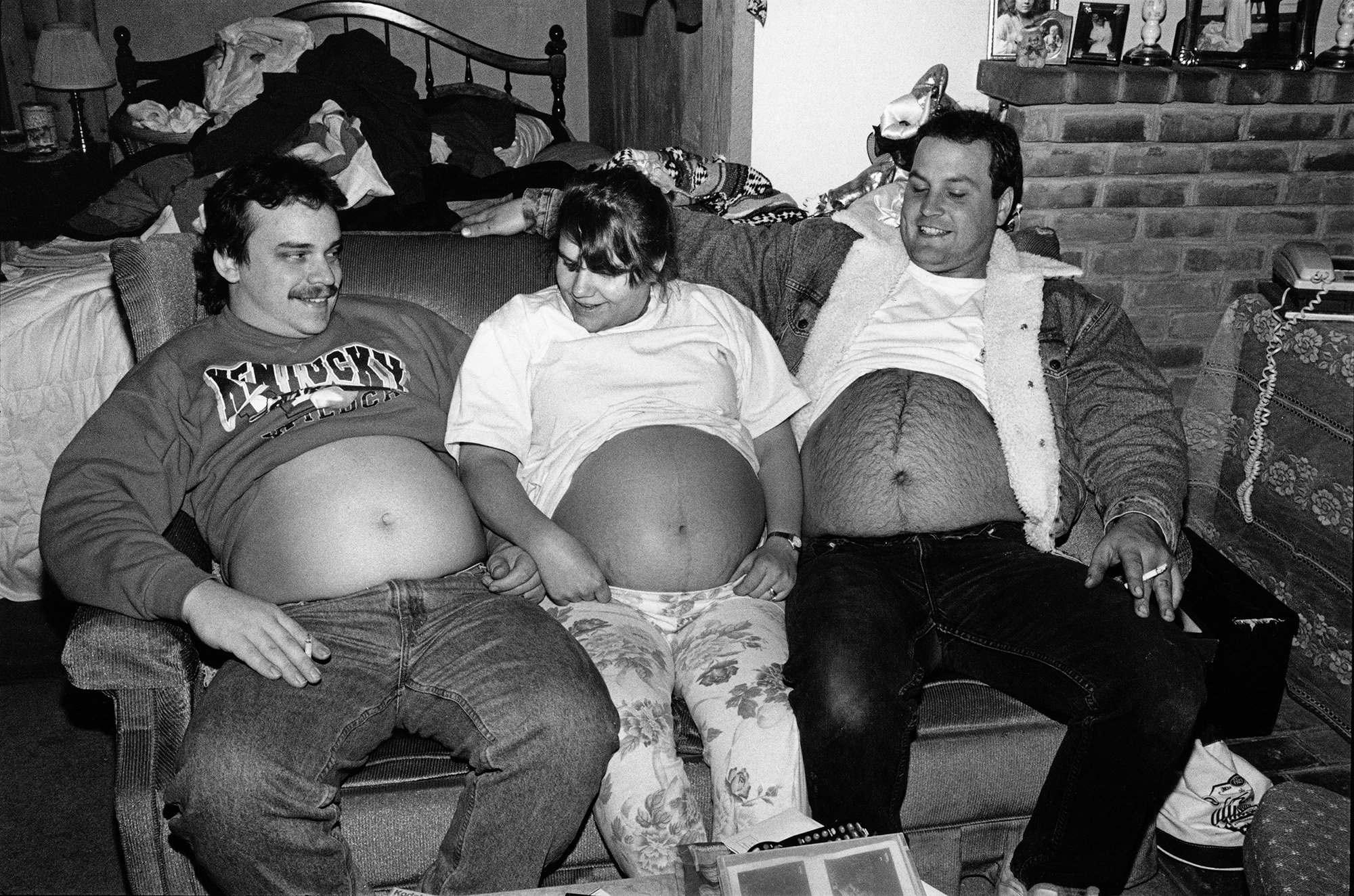
©Melonie Bennett, Mary, Nine Months Pregnant, 1996, from Holy Cow! published by GOST Books
What compelled you to release this work now, decades after the work was created.
I had the pleasure of working on a book with designer, Stu Smith, at GOST books in 2022 when he was designing a book for Judy Lauder. The book is called Presence: The Photography Collection of Judy Glickman Lauder. I have been an assistant to Judy Lauder for several years and my photographs are in her collection and were published in Presence. This is where Stu was introduced to my imagery and one thing led to another and here we are. I am so grateful to Stu and to Judy for their support and this opportunity for my work to be seen.
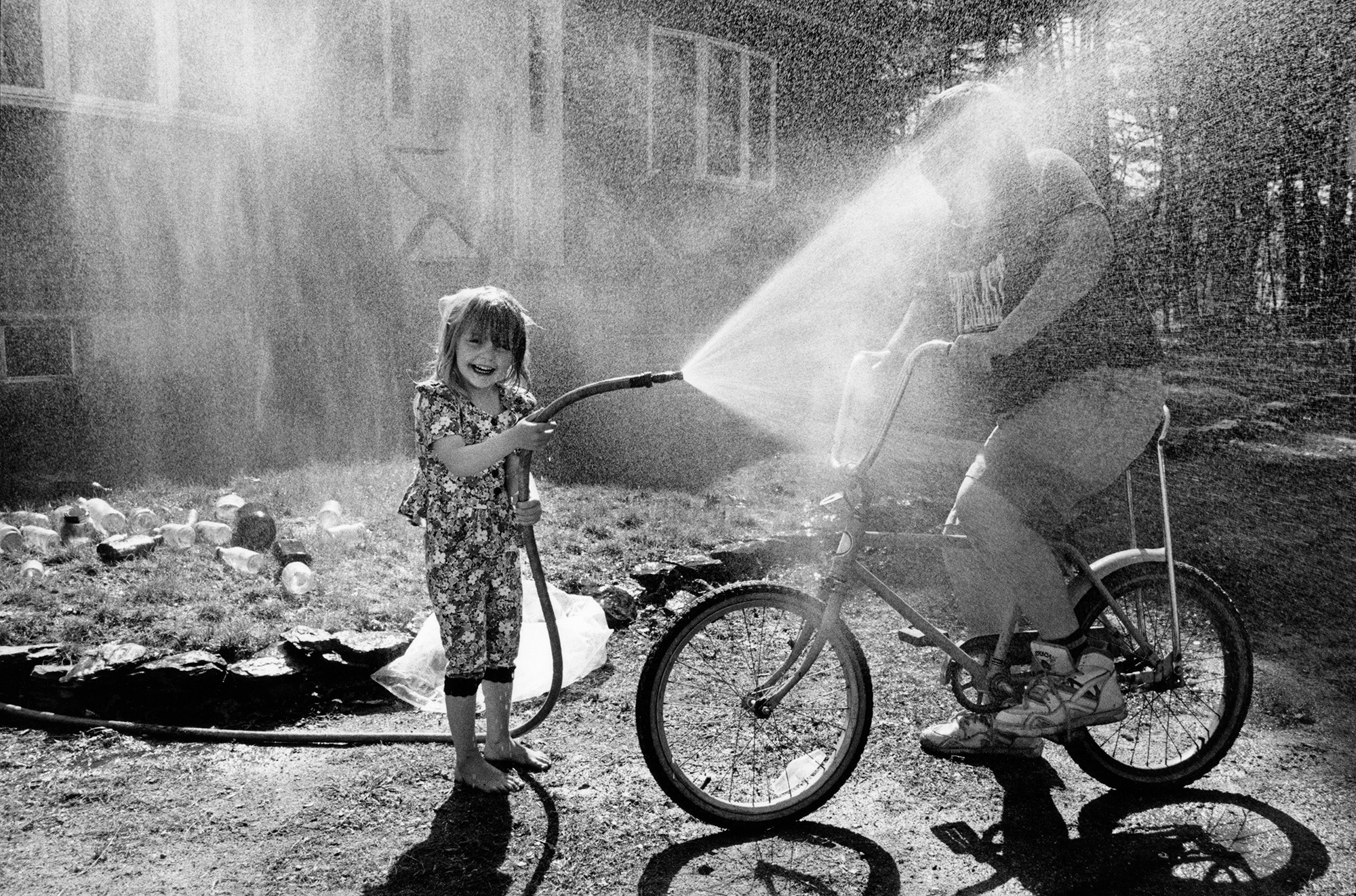
©Melonie Bennett, Monique Instigating the First Water Fight of the Season, 1993, from Holy Cow! published by GOST Books
How did the title, Holy Cow!, come about?
Wondering what the title would be was nerve wracking and it was also one of the last decisions. It was a huge question burning in my brain through the whole process. I hoped there would be words that could encompass what we were creating. I trusted Stu and his process, especially after just having worked with him. I love the witty titles and book covers he had previously designed and just prayed he would do the same for me. He asked me for my input and my list of title ideas. My titles felt contrived, boring and rather corny. So this is how the title was born. One Christmas Eve I photographed my brother in law after he had just finished stacking an insane amount of presents “under” his Christmas tree as he was critiquing his creation. He happened to have a shirt on that said “Holy Cow, Moo for a Brew”. The definition for Holy Cow says it is a common exclamation of surprise and seemed to fit the mood of many of my images. It was playful and would create a certain amount of curiosity. Meanwhile, I had been working very hard on extended captions not knowing if they would enhance the book. We decided the photos in the book would be represented in the back by a thumbnail of each photo with the title and extended caption. I was told to think about it as a place where all the captions would end up working together to give deeper glimpses of meaning as to what we were all about. I then realized many of my captions made reference to the farm, which was my family’s home base and where many of my photos are taken. So the cow references brought everything full circle! I love the purple cover and biblically loose design.I chose a barn red color for the interior end pages, which were the color of all of our dairy barns. The inspiration for the title font came from a picture I took of my husband dressed as a member of the rock band KISS. They used the KISS logo font for the title, which I thought was clever.
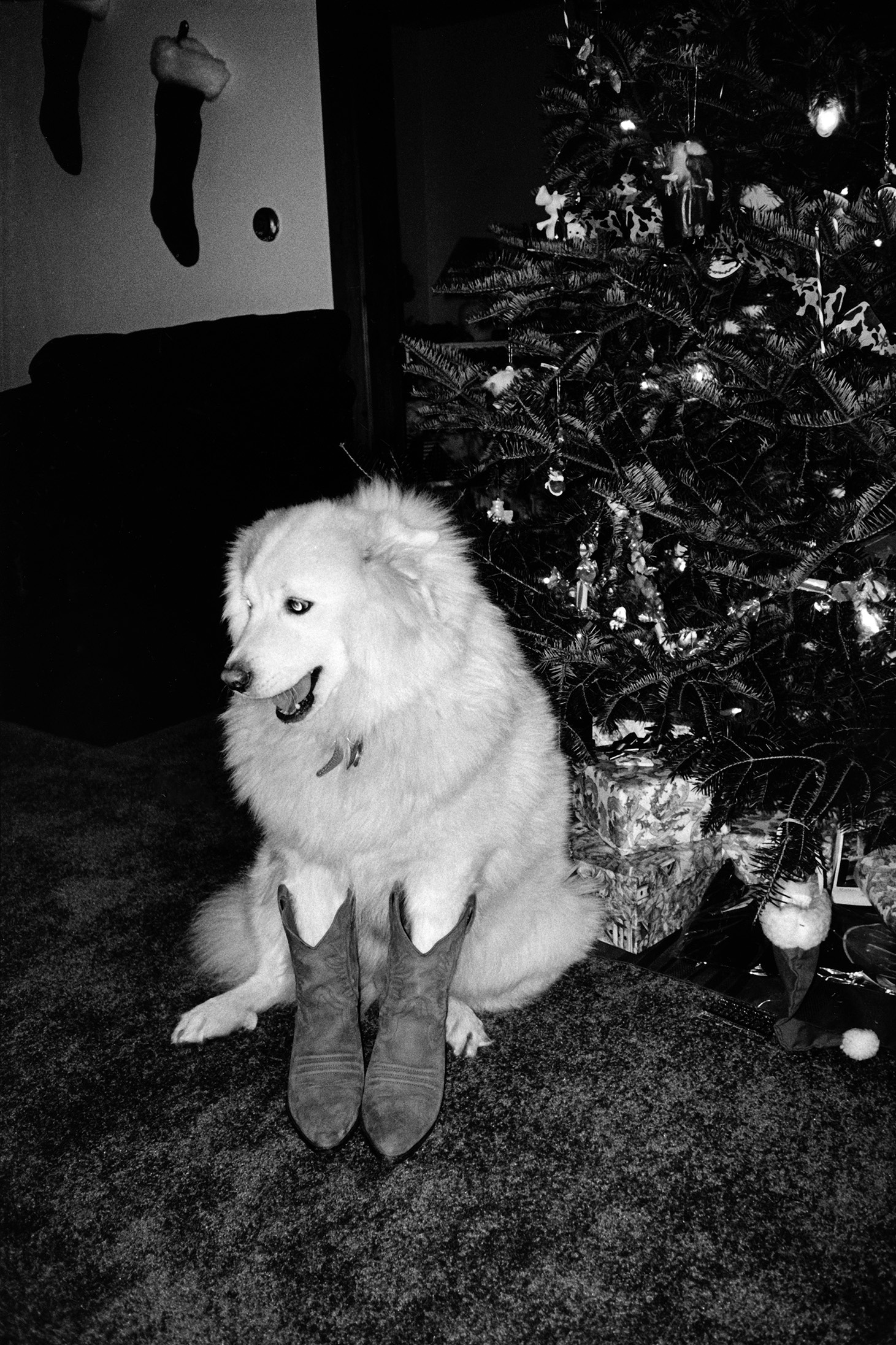
©Melonie Bennett, Nikita, Cowboy Boots, 1997, from Holy Cow! published by GOST Books (Nikita, our rescue dog, loved snowmobiling, boating, canoeing and riding in the back of the pick-up truck.)
Humor seems central to the photographs—can you talk about the role humor played within your family and how it functions within the work itself?
Humor really saved me as a child. It was tough growing up having to care for 100 head of cattle day in and day out. We all had chores and responsibilities that most people would never understand. As hard as it could be, it was the absolute best place to be- haying fields, driving tractors, looking out to see all the cows had broken the electric fence and were running down the road. We didn’t go on vacations to Disney World or even to the lake a few miles away. So we were insulated in our own world in many ways. We were all we had for entertainment and we made the best of it. We all loved to laugh at ourselves and at each other. So when it came to my photography, I wanted to show what I found amusing and what I saw in situations from my perspective. I hoped people could get a laugh and be in a little awe at the creativity of the humans around me. On a deeper level, the humor is used to lighten harder situations. The camera actually becomes a welcome support system in the more difficult times. I didn’t know this consciously for quite some time, but when I lift the camera up between myself and someone else, it feels like the personal emotions and worries I’m having recedes, because my mind shifts gears to a visual perspective. I get very wrapped up and engaged when trying to see a photo. If I can find the bright spot in something that is sad, then I can go with that instead of the heavier experience. Like the photo of my dad, in a hospital bed after a knee replacement operation. He was in a lot of pain and was very uncomfortable and he hated being there. He repeatedly kept pressing the morphine button, while he was trying to make a business call and had his lists and notes out. We could see this was not working very well for him. In the photo, I just love his lost expression. He is trying so hard to be productive, but he does not realize the drug has kicked in and that is why nothing is making sense for him.
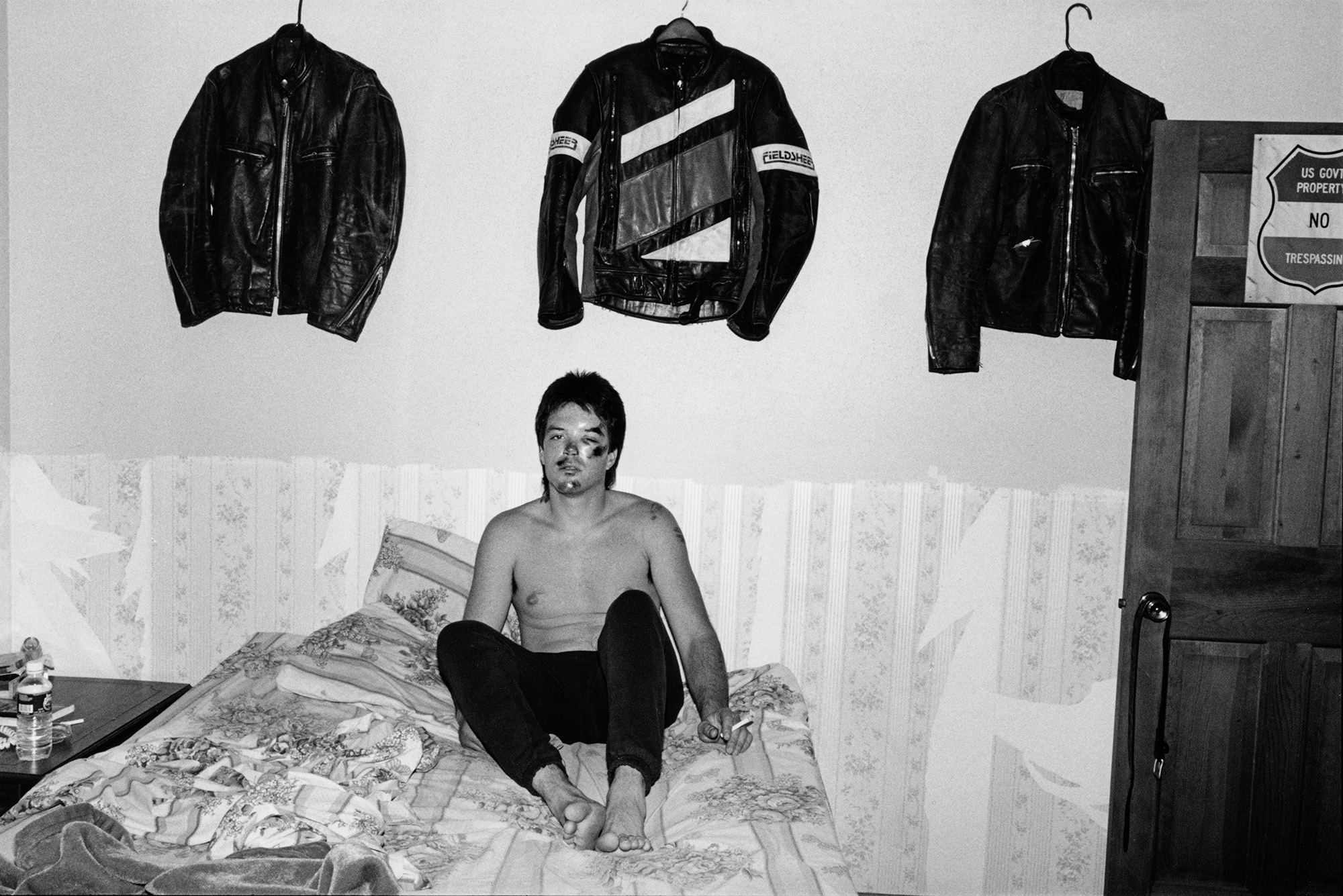
©Melonie Bennett, Road Rash, Merritt Retires Another Leather Jacket to His Bedroom Wall, 1999, from Holy Cow! published by GOST Books (When I visited Merritt after one of his motorcycle accidents, I discovered how he decorated his bedroom. He said after crashing his bike he always retired the jacket he had been wearing. On opposing walls he had also nailed up ‘trophies’ of casts, bent handlebars, broken bike parts and had even used gloves as window treatments.)
The project spans the 1990s and early 2000s. Looking back now, what do these photographs reveal to you about that particular moment in American culture?
I grew up in the 70’s and 80’s, which I loved, but the 1990’s and early 2000’s were really a sweet spot in my eyes. People were still able to buy a home at a young age, have kids-live the American dream. The family unit was valued and not being torn apart like it is now. I am so glad I had parents that stayed together, even though it would have been easier in many aspects to throw the towel in. I feel like when I look back at my photos I yearn for these good ole days, when you stuck together and you did what was right. Nowadays, many kids are more apt to sit in dark rooms gaming or are constantly on social media and electronics. They are not socialized and are ridden with anxiety, depression and addictions. There is no lightness or humor to extract out of that in that.
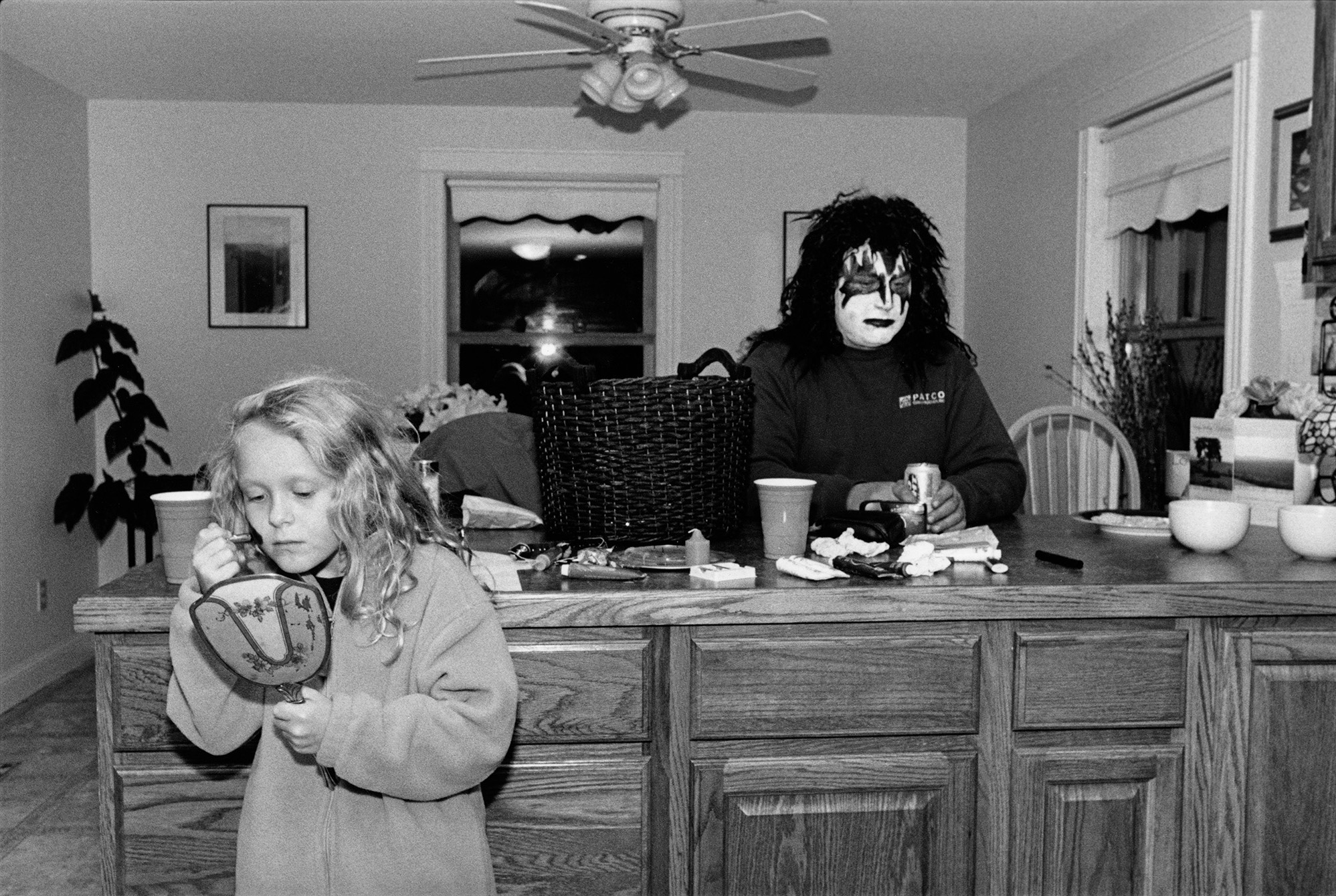
©Melonie Bennett, Rozada and Scott, Halloween, 2003, from Holy Cow! published by GOST Books (We met at my sister’s house to get dressed up, before heading out for karaoke and a Halloween costume contest. We went as band members of KISS.)
There is a strong sense of performance in some of the images—people posing, joking, exaggerating versions of themselves. How conscious were your subjects of the camera, and how did photography become part of the family dynamic?
Photography became part of my family dynamics during college. I started carrying my camera with me all the time, especially when I was at home. After college I was worried I would get out of practice or lose my “eye” because I had to figure out how I was going to earn a living. I thought my art would have to be on the back burner, but I had easy and constant access to family and friends and I felt like there was good material to be had there. I would say that all my family have been very good sports. They always knew when I was taking pictures because of my proximity and the flash going off in their faces. They understood what I was doing, but they didn’t necessarily understand why people would want to go see them in a gallery or museum.
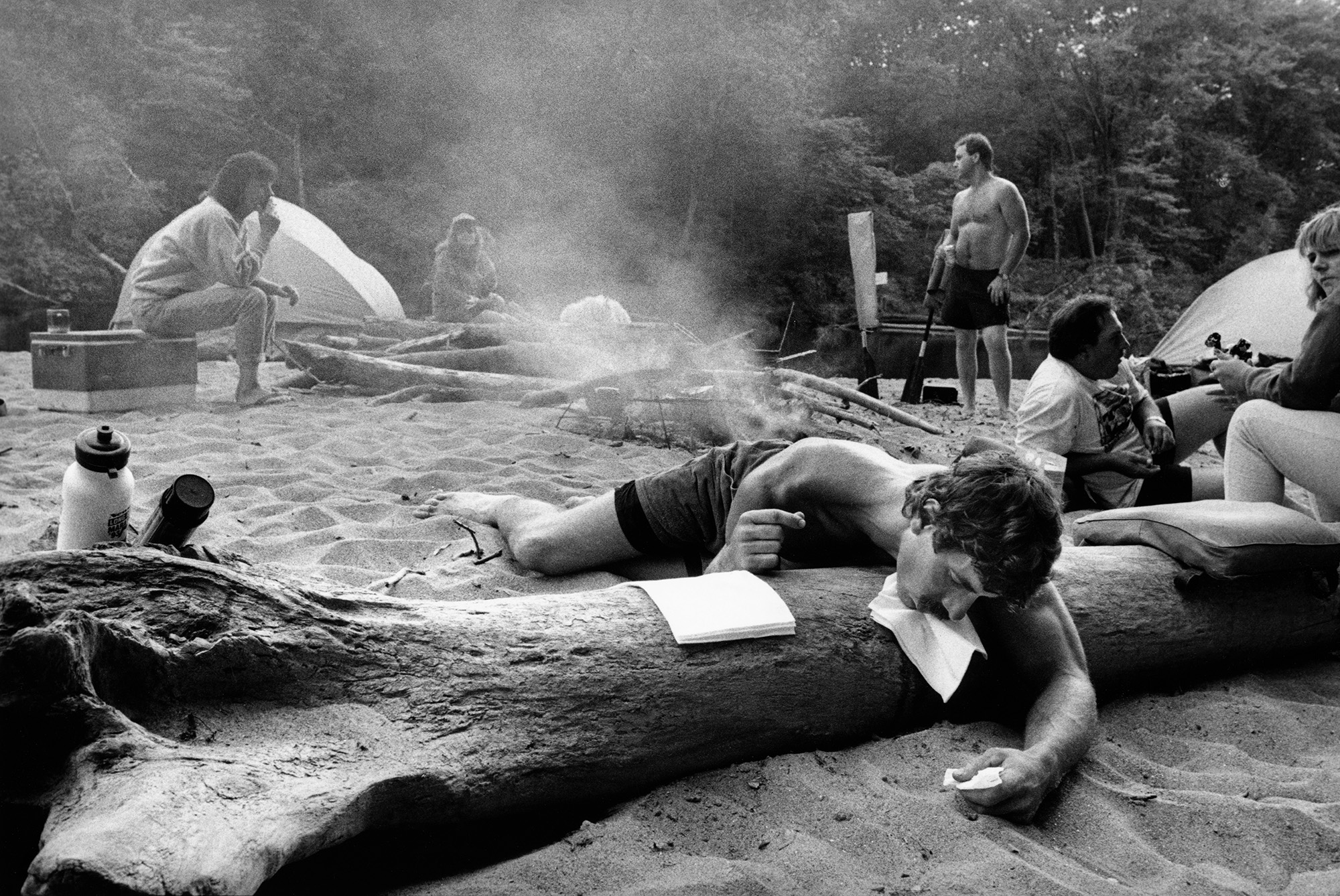
©Melonie Bennett, Steve Passed Out, Saco River Canoe Trip, 1997, from Holy Cow! published by GOST Books (After a long day of paddling and drinking, Steve passed out. The only civilized thing his girlfriend could think to do for him was put a few napkins under his chin.)
Tell us about your Equipment.
I am not technologically driven. The less equipment the better. All my work is quick and candid. I would not have stuck with taking pictures if it required set up, direction, settings etc. The Pentax K1000 with a fixed 35mm lens worked perfectly for the small rooms I was usually in. I like to move myself around and put my camera frame where I could get the best shots. This camera and lens gave me that flexibility and forced me to be close to the subject, it was light weight and the images were sharp. A point and shoot is best for me.
I tried to upgrade several times to other cameras, thinking I was missing out on something or I felt like if I had a more professional camera I would get better photos. Time after time I tried something new and could never get the effect I wanted or there would be a lag when I pushed the shutter and I would miss the picture. I wish I had just had the confidence and knowledge at that age that it’s what you do with the equipment you have that is important. I just wanted the camera to take a simple photo of what I was looking at, period. That is why I used a basic Pentax K1000 and Trix film. I also added a Vivitar 283 flash with a cord attached to a battery pack that I clipped to my belt or strapped over my shoulder. I had the flash set for one setting and everything between about 5 and 15 feet would be in focus and the flash would go off repeatedly when I needed it to. This was the one concession I made for equipment, it was worth carrying this external battery pack if I could get the pictures I wanted. I didn’t have to do anything except move, enjoy watching people interact and push the shutter. The Contax T3 I could lock focus by pressing half way down on shutter and as long as I let its flash recharge it worked for me. It was not quite as successful because the flash recycle time was slow, but I could take it anywhere because it was so small and compact. It gave me confidence that I had a fighting chance if something unexpected happened that I wanted to catch. I took the photo of Suzie at the Bahama Beach Club with that camera.
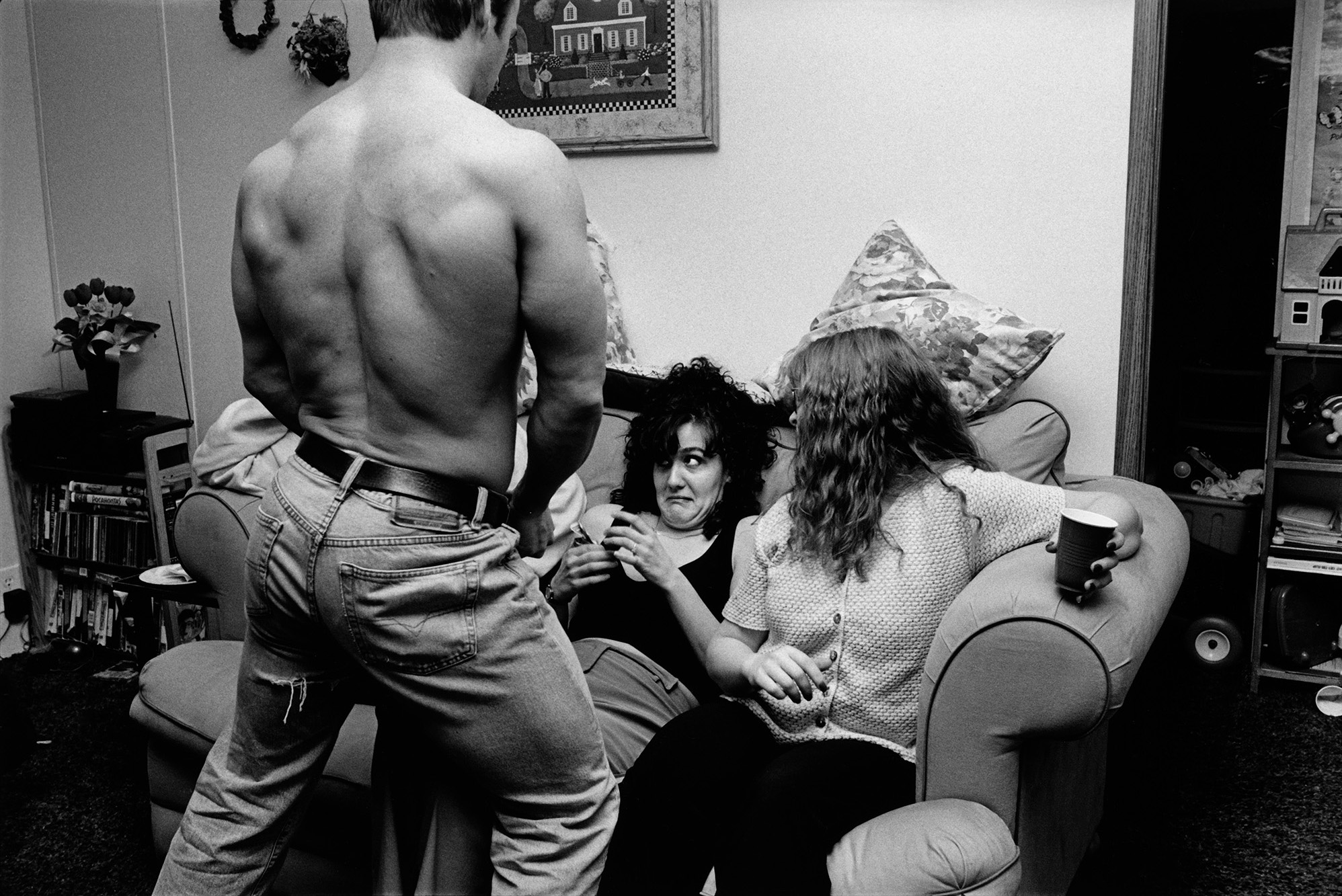
©Melonie Bennett, Surprise at Chrissy’s Bachelorette Party, 2001, from Holy Cow! published by GOST Books
Were there photographers, writers, or filmmakers who influenced your approach to photographing family and everyday life?
The biggest influence was my photography professor, Paul D’Amato, at Maine College of Art. He assigned projects for street photography. I was very shy at that point and thought this was going to kill me, but it made me step out of my comfort zone and allowed me to become brave enough eventually to photograph anywhere. I also took a Mary Ellen Mark class at the Maine Photographic Workshops in the early 90’s. She told me never to attend graduate school, because it would ruin my natural way of seeing. She was very supportive of my work, which coming from her gave me a great sense of encouragement. I love the psychological aspect of Diane Arbus’ work. Shelby Lee Adams I admire for the work he put into the relationships with the people he photographed-it shows in his imagery. I love Elliot Erwit’s timing and sense of humor and Duane Michals was one of the most profound photographers I have ever had the chance to meet and hear speak.
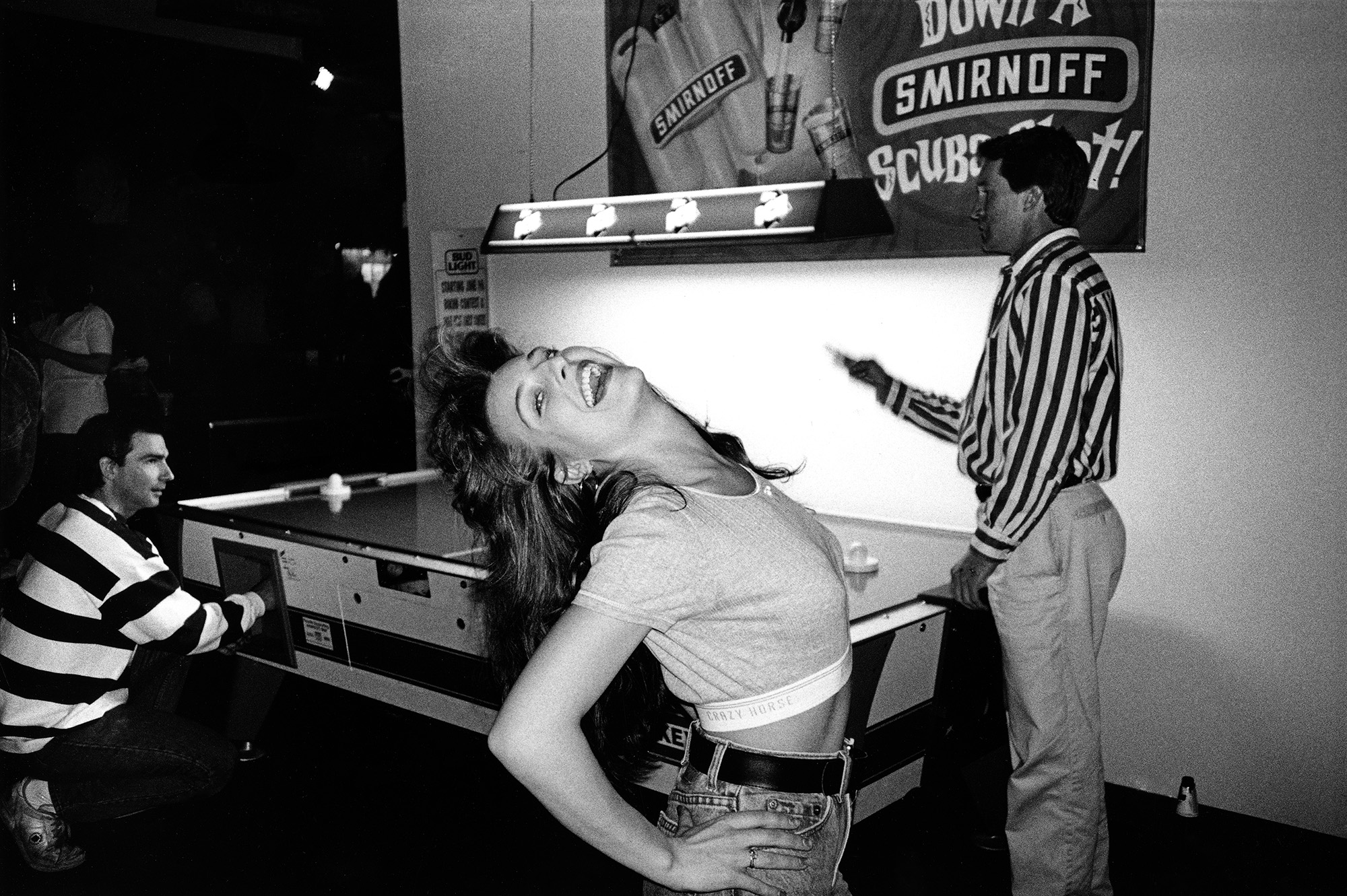
©Melonie Bennett, Suzie, Bahama Beach Club, 1996, from Holy Cow! published by GOST Books
Family photographs are often expected to preserve idealized memories. Your work does something much more layered and psychologically rich. What do you hope viewers recognize about their own families when engaging with these images?
I hope they could look at their own simple joys, the frustrating relationships and all that is around them the good and the bad and make the best of it. I am always checking my perspective. This is key because your cup can be half full or half empty in any situation you find yourself in. Relationships mean more than money and things and I like to look for the silver lining.
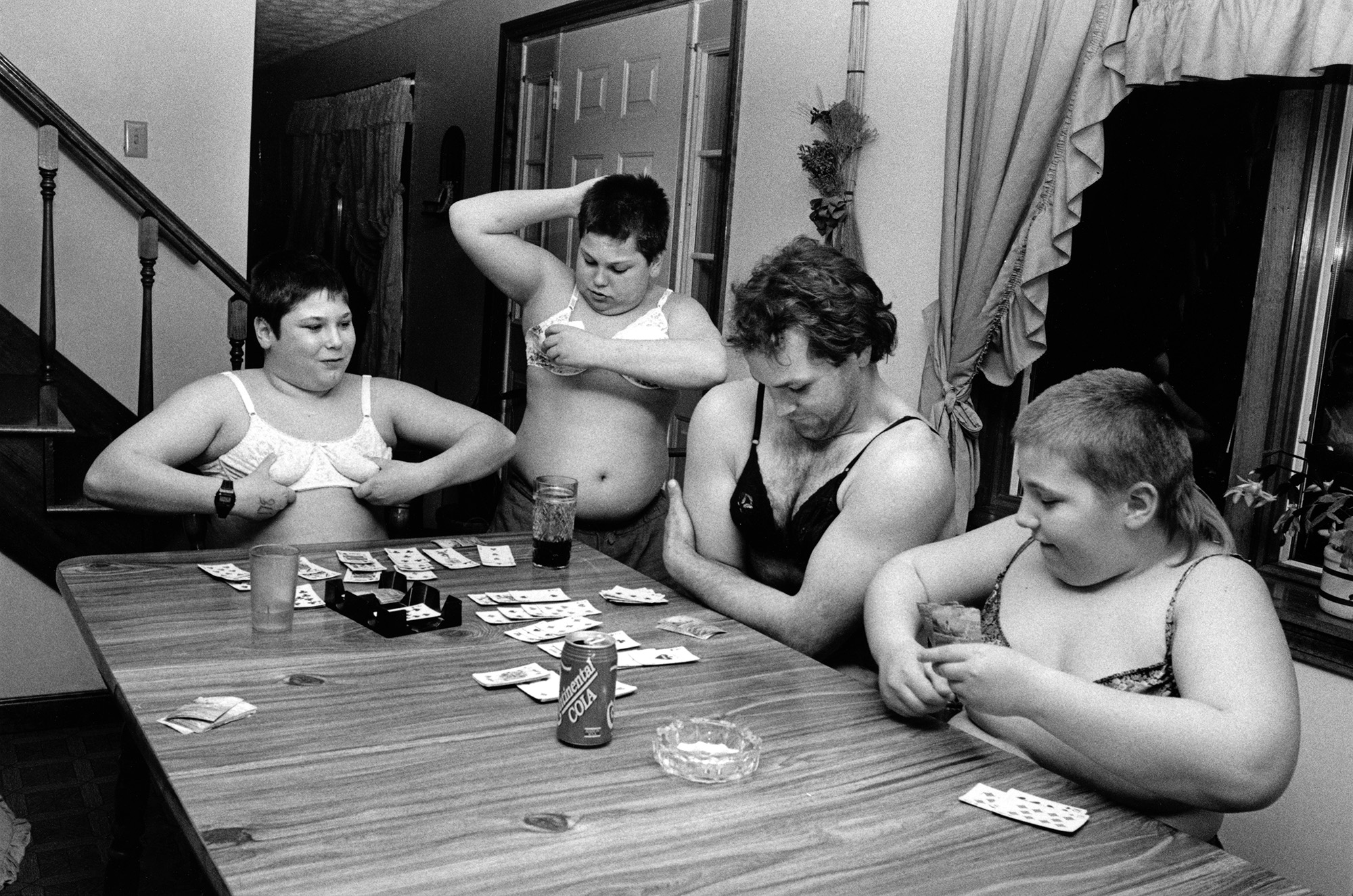
©Melonie Bennett, The Boys Experiencing What it Would be Like to Have Cleavage, 1993, from Holy Cow! published by GOST Books(Scott and I lived with his sister and three nephews for a few months. We paid his nephew, Robert, to do our laundry. One night, when I came home from work, the boys were all playing an ordinary game of cards at the dining room table. I left the room and when I came back, they were all wearing my bras. What I found most amusing was they had done this as a prank, but became thoroughly engaged in the process.)
What surprised you most about seeing this work gathered together as a monograph after so many years? And what was the process in getting the work published?
To start with, I was having nightmares about not fulfilling my creative potential, using my God given gifts. I knew I would get to my 70’s and 80’s and really regret that I never did anything with this body of work. I had put so much time, effort and joy into it. What I loved the most about this process through the years, was that I was under no pressure. There were no deadlines. I did the best I could to stay consistent and keep photographing through lifes ups and downs and I was a was free to go at my own pace.
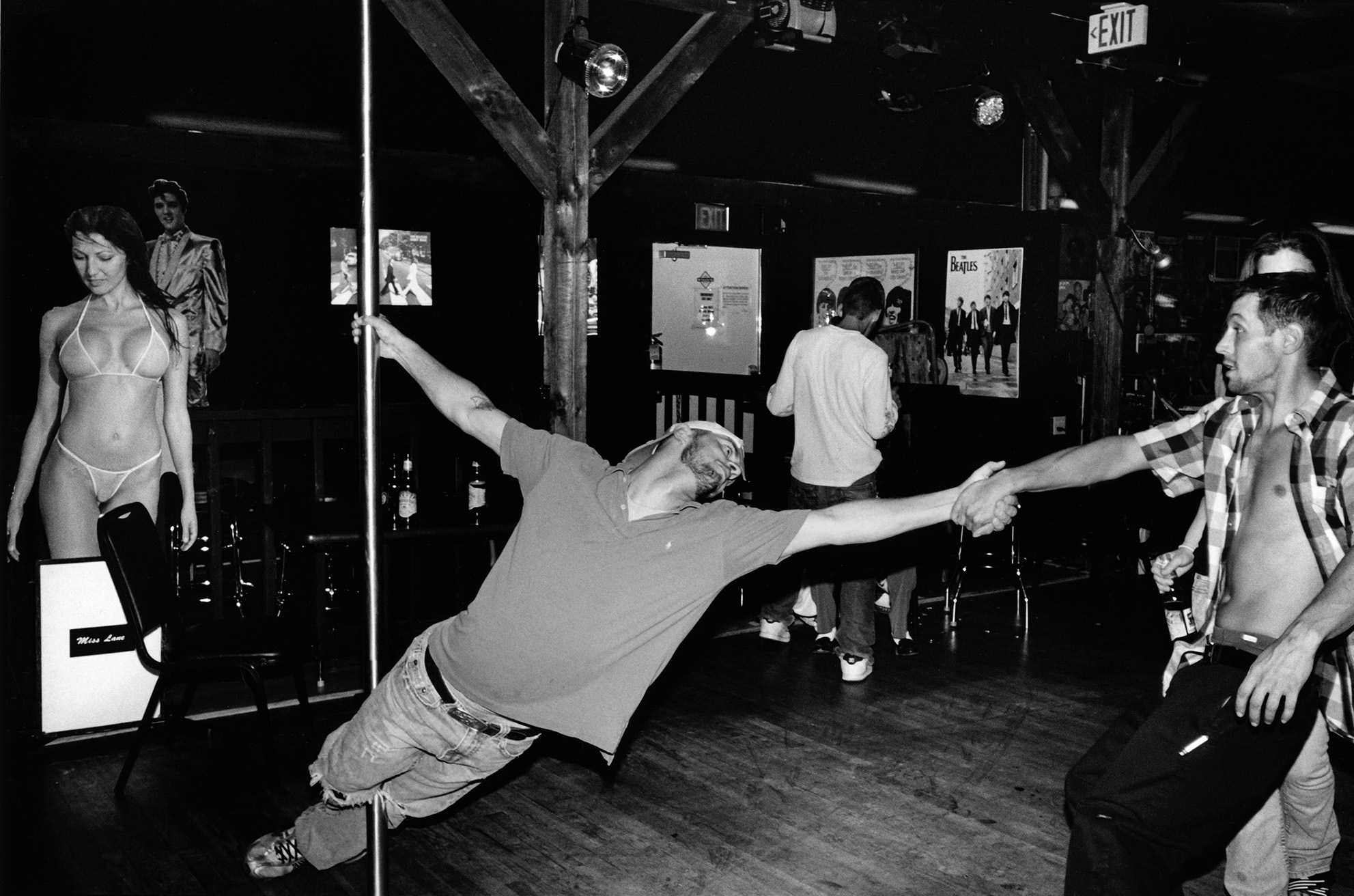
©Melonie Bennett, Travis and Chippa, Stripper Pole at Memory Lane Music Hall, 2010, from Holy Cow! published by GOST Books
The work is so authentic and honest, did you realize what gold nuggets you were capturing at the time?
It was kind of like mining. I definitely knew when I got a nugget. Sometimes I could tell when I was taking the pictures that I got something. The good ones were usually few and far between. I am the type that has to take a lot of shots to get it right. I looked at my contact sheets and marked potential keepers. I would have an elated feeling when I knew I got one and if I repeatedly went back to look at it and I was still just as excited, I would know it was a keeper. They just kept adding up in that fashion. All of my pictures are mostly candid. I am not directing, just observing.
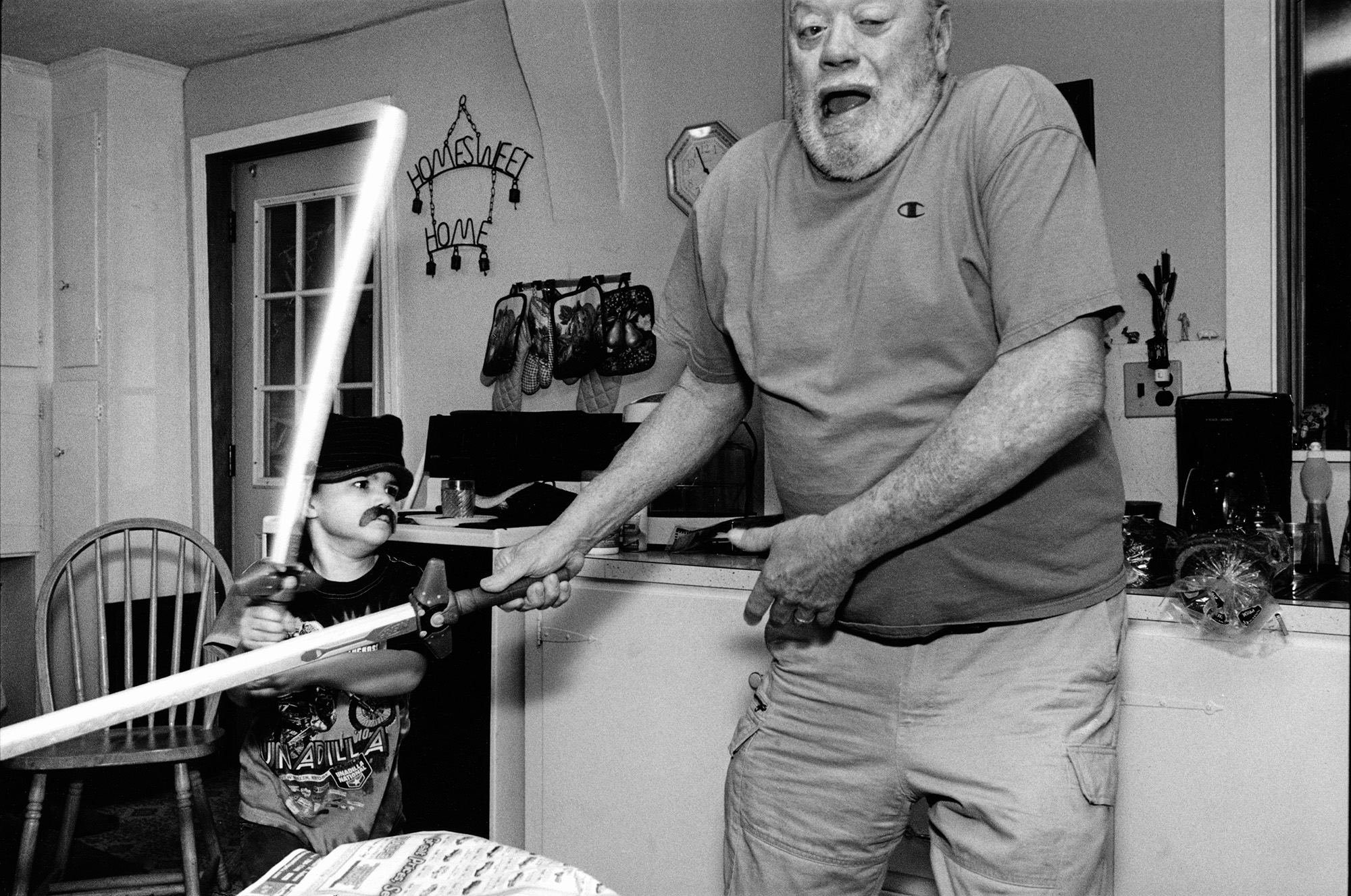
©Melonie Bennett, Wyatt Lancing Dad, Swordfight, 2011, from Holy Cow! published by GOST Books
Did you see a lot of it as humorous, or did that come decades later? (I particularly love the comment ” After a long day of paddling and drinking, Steve passed out. The only civilized thing his girlfriend could think to do for him was put a few napkins under his chin.”)
I always feel like I am attracted to the quirky, funny things people do, what they think up. So I always look for the humor, the irony, juxtapositions, expressions, gestures. The guy passed out on the log would have been an ok photo without the napkin, but when I walked by and saw that I had a spike of adrenaline. That is usually a sign of a potential picture. That one extra element can take an image a step above the ordinary.
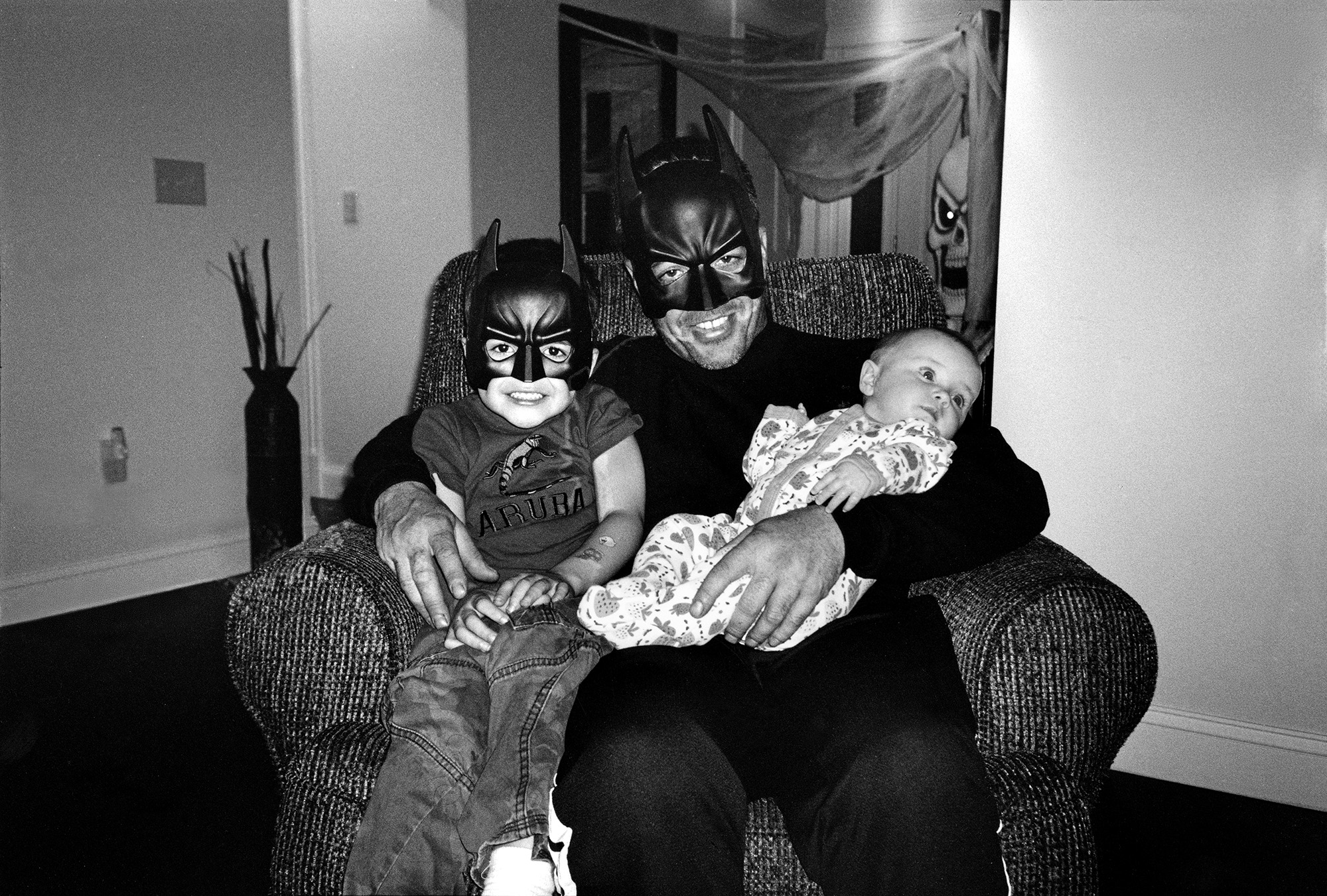
©Melonie Bennett, Wyatt, Merritt and Cinderella, Halloween, 2010, from Holy Cow! published by GOST Books (On Halloween, Merritt charged his kids a ‘candy tax’—helping himself to his favourite candy bars from their stash at the end of the night. Wyatt began a relationship with his sister, Jocelyn, months before she was born. At four years old, he was trying to figure out what having a sister was going to mean for him. He called her ‘Cinderella,’ Cindy for short. He used to ask her questions and would put his ear to her mom’s stomach and intently listen for responses, which he was usually quite satisfied with. His biggest question was, ‘Are the horses and pumpkin going to come out with Cindy?’)
How do your family and friends feel about seeing the work in print?
They get a huge kick out of it 98 percent of the time. It became quite a unique family album. The picture of Suzie was printed as a mural on the side of the Norton Art Museum in Florida. I had not seen her in years, but I contacted her knowing she would enjoy the unexpected use of her image. In another sense it doesn’t really phase them. It’s just who they are.
The work is such a moment in time collection–you in your youth seeing the quirkiness of what is going on around you. Any chance of continuing the saga today?
Too much has changed. I have tried with digital and there is no chemistry for me there. I would like to develop something where I could just use my cell phone. When I see something, it is distressing when I know what I could have done with film. If there were to be a continuation, it would be a different look, process and approach.
Posts on Lenscratch may not be reproduced without the permission of the Lenscratch staff and the photographer.
Recommended
-
Claire Beckett: Defense LanguageJuly 26th, 2026
-
Reuben Radding: Heavenly ArmsJuly 23rd, 2026
-
Zackery Hobler: Beneath Two SkiesJuly 20th, 2026
-
Danielle L Goldstein: TransienceJuly 19th, 2026
-
Laurie Lambrecht: tēxēreJuly 17th, 2026