Mexico Week – David Muñiz: Between the Archive and the Algorithm
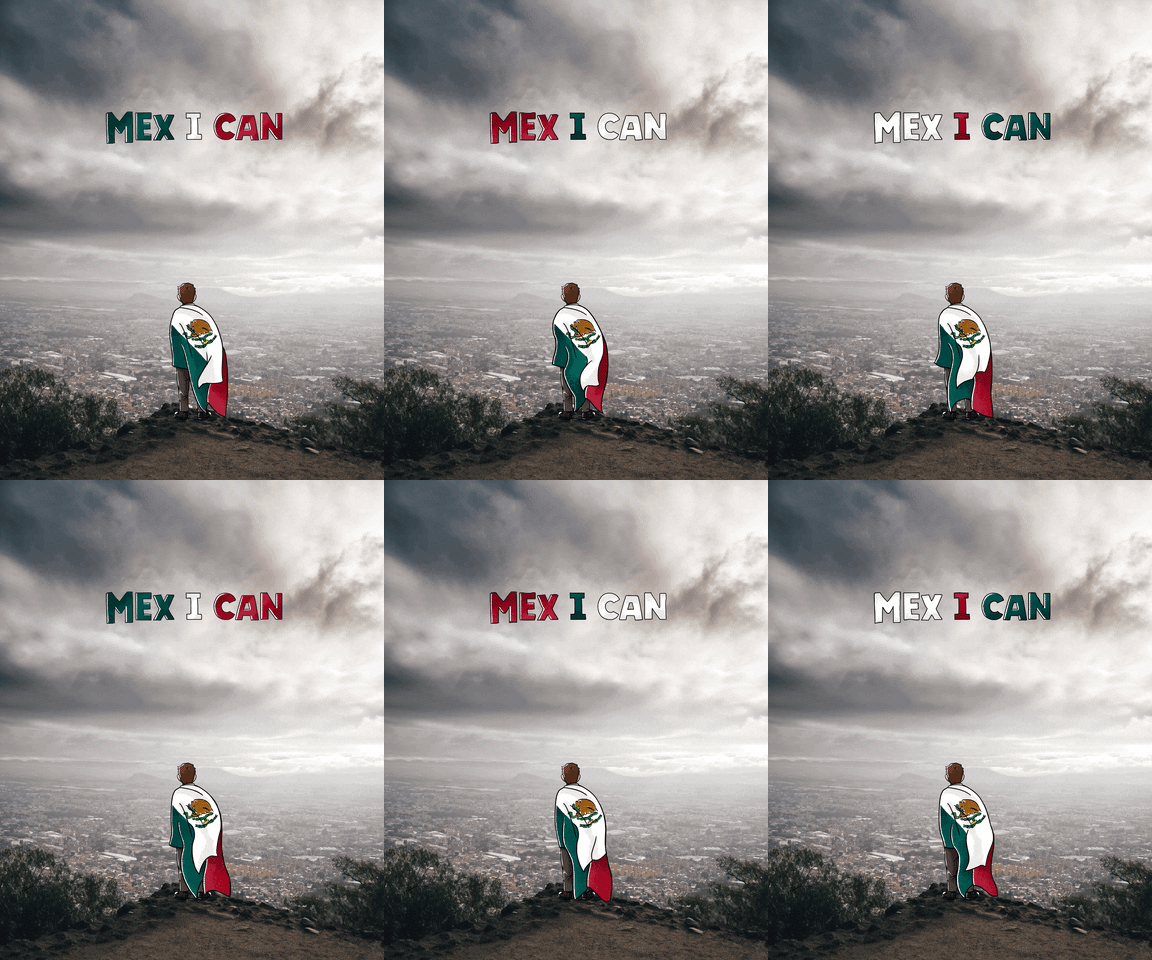
©David Muñiz, MEX-I-CAN
When I think of Mexico Week I don’t just see it as a series of interviews, but as a compass of what’s yet to come.
Seven artists, each working from a different place—whether it’s femininity, nature, society, history, identity, architecture, or the unconscious—share an undoubtable longing to express themselves in an innovative and true way.
While doing these interviews I didn’t only find photographs. I found passion, devotion, ideas, processes, humor, time, effort, and a true sense of humanity that deserves to be shared.
This isn’t an academic work. It’s a series of conversations about how our practice as photographers continues to evolve day by day. About how life shapes us and grants us the power to give meaning to what we capture with a click.
In a rapidly changing world, these artists continue to honor the origin of the word “photography” by bringing light and stories into it.
These photographers can look to the past and the future, move between worlds, and build a contemporary curiosity that will inspire many more to follow the path they’ve traced. The image is changing, and I believe we should stop for a moment and ask “What is Mexican photography saying today?”
The artists are: Iñaki Bonillas, Tomás Casademunt, Paola Dávila, Carol Espíndola, Cristina Kahlo, Gerardo Montiel Klint, and David Muñíz.
I met David Muñiz through his work as an ambassador for a photography brand, but quickly realized that his practice went far beyond representation or technique. I was struck by the clarity with which he uses photography as a tool to communicate, inspire, and above all, build community. In his work, photography becomes social in the deepest sense of the word: a space for encounter, exchange, and collective construction. David belongs to a generation who grew up with technology as an integral part of daily life, and he decided to expand its use in all directions—even to the past. He blends both timelines to create a longing for the old ways, without leaving the new ones behind. His work suggests that advancing doesn’t always mean going forward, sometimes it means learning to connect with what is and what was.
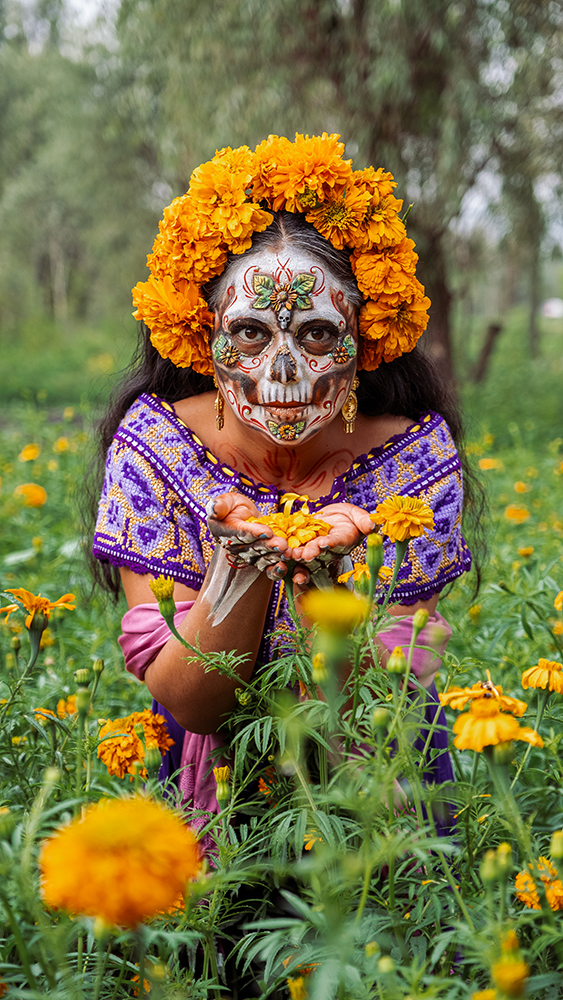
©David Muñiz, Catrina en el Día de Muertos (Catrina on the Day of the Dead)
David Muñiz is a 27-year-old visual artist based in Mexico City. He began taking his first photographs at the age of 15, initially as a hobby, driven by the desire to capture moments and convey the emotions he experienced while doing so. That connection between image and feeling is what sparked his passion for photography. He studied Visual Arts at the National Autonomous University of Mexico (UNAM), with a disciplinary focus on photography.
Currently, David works in content creation through photography and video, which has allowed him to collaborate with brands and companies at both national and international levels. Through his social media platforms, he shares his visual work while also creating educational content, reviews, tips, and recommendations related to the world of photography, combining his artistic vision with a warm, contemporary narrative.
Follow David on Instagram: @edavidm
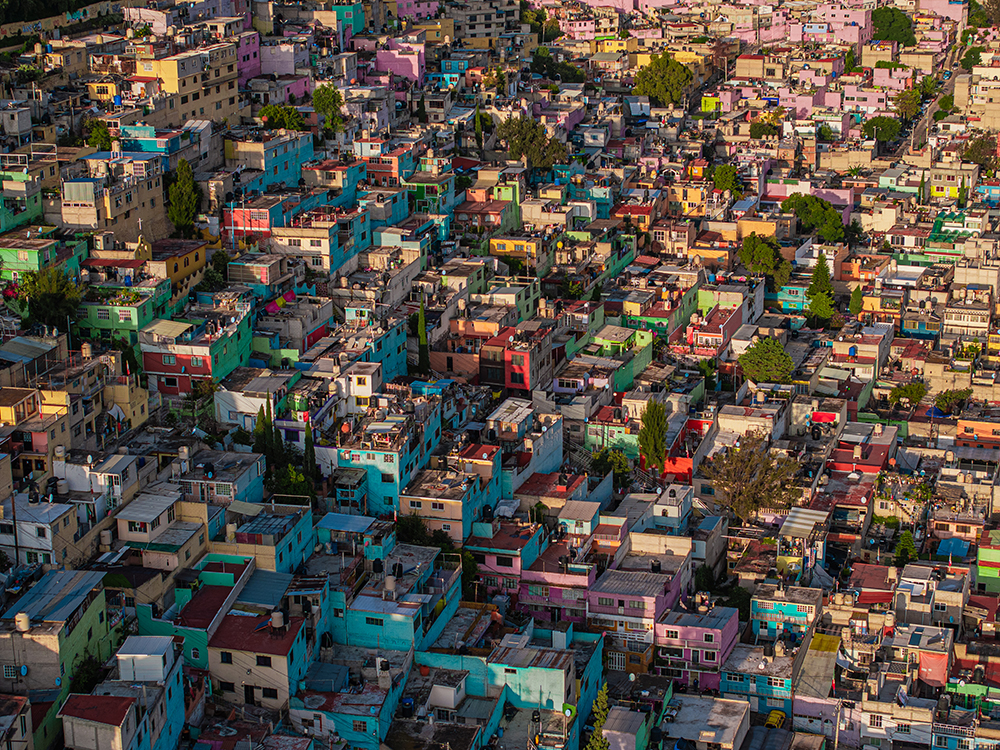
©David Muñiz, Colonia Gabriel Hernández y su color (Gabriel Hernández Neighborhood and Its Color)
I work with photography as a way to explore and share my surroundings through multiple formats and experiences. My practice mainly exists in the digital world: not only through finished images, but also by showing processes, behind-the-scenes moments, tutorials, equipment tests, and the way a photograph is built from the initial idea to the final result.
I am interested in photography as a space for community and learning, where the visual does not remain solely in the final image, but becomes a tool to inspire new generations of creators. At the same time, I am drawn to archiving and memory. Projects like Rollos Antiquos (Old Rolls) arise from the need to recover photographs and share them as a bridge between the past and the present, reminding us that there was once a time when images lived in negatives, on paper, in family albums.
I photograph from Mexico and through its contrasts: celebration and nostalgia, color and shadow, identity and community. For me, an image is not complete until it is shared, because it is in the gaze of others that a photograph truly comes to life. – David Muñiz
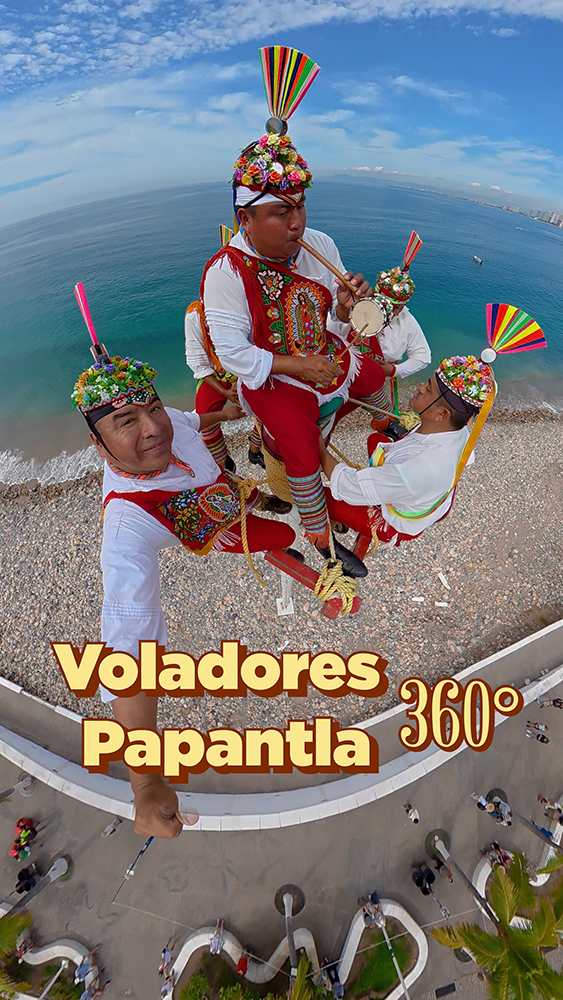
©David Muñiz, Voladores de Papantla (The Fliers of Papantla Ritual)
Lou Peralta: What led you to choose photography as a way of existing? Why create images?
David Muñiz: I create images because, to me, seeing is like being inside a movie theater. I walk through the world feeling like my eyes are the camera and that reality is a motion picture.
Photography is the way I’ve discovered for sharing that field of vision with others: as if I were inviting the viewer to sit next to me and enjoy. Through each image I try to transmit something: an emotion, a setting, an experience, or simply to make time stop for a moment that turns into a powerful, aesthetic, and significant one.
LP: You found your way into photography and became highly successful before you reached the age of 20. That’s truly remarkable. Why do you think your work echoed so much?
DM: Photography began pretty much as a game to me—and I’ve tried to keep it that way until now. It was never a plan. It wasn’t like I woke up one day and decided to be a photographer. It was more on the intuitive side. I started to take pictures of things my eyes were drawn to, and little by little I realized there was more to that. With time, that “game” became my work, and people liked it. Discovering that a picture doesn’t end when you take it, but when you share it, was beautiful and impressive. It stops being yours, and arises as someone else’s.
LP: When did you come to understand that you needed to focus on how to professionally continue with your practice? How did that shape your vision?
DM: It began after I discovered photography wasn’t a hobby, but my passion. I remember the first thing I did was dive into the internet and try to become self-taught. I searched the basics: how a camera works, the settings, and the principles of the image. Later, while I was in high school in Prepa 2, there was a technical extracurricular class called “Photographer, Laborer, and Press.” That’s where I consciously shaped my personal outlook. I learned how to work in the analog and digital worlds. From developing film in the developing room to the tools and processes ushered in with the digital era. Later, I studied Visual Arts at the School of Art and Design at the National Autonomous University of Mexico (UNAM). Having to study while also working allowed me to compare both worlds: academia versus real-life practice. I think those two learning paths coexist in my vision all the time. Being self-taught gave me a strong push, curiosity, and freedom; while the academic side gave me direction and depth.
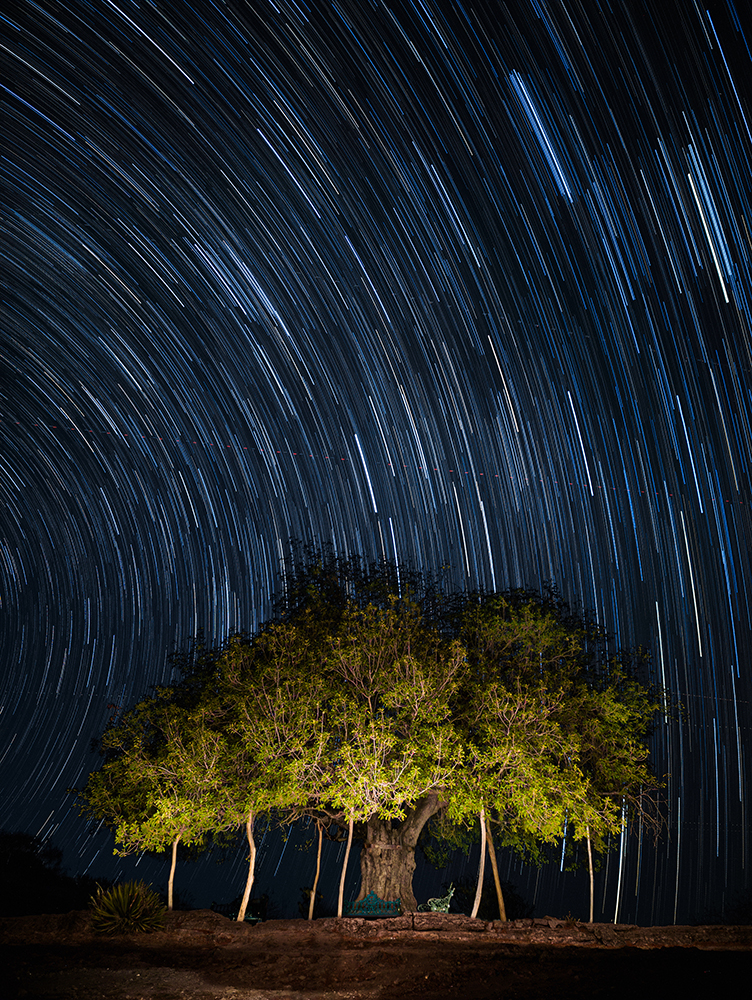
©David Muñiz, Oaxaca Star Trails
LP: Do you remember a book, movie, videogame, or series that left a mark on you as a kid and that you now realize has influenced your way of seeing art?
DM: My visual education was especially shaped by cinema and pop culture. I reckon the impact Beyonce’s visual album Lemonade had on me. More than a record it was a revolutionary project: an album that became a movie, where each song had its own visual part. It was a complete narrative constructed with color, symbolism, and emotion. I believe that was one of the first times I understood that images could be just as powerful as music; and that I could create a whole universe from them.
At the same time, I can also remember earlier and more personal references. For example, in my childhood one of my favorite films was Tarzan. Even though it’s animated I remember how impressed I was by the scenes, the movement, and the way the jungle felt alive through the camera.
LP: When you create an image, what moves within? Where does that spark come from?
DM: When I take a picture, something moves within me as if it were trying to freeze a frame from a movie I’m watching. The spark comes from the need to share a scene as clearly as I feel it. It’s not only sharing something “pretty,” but actually building a moment that has that atmosphere and emotion in my very own universe. When I click, I feel like I’m inviting someone else to take a look from my seat. Photography becomes that language that allows me to say: “this is what I saw, but above all else, this is what I feel.”
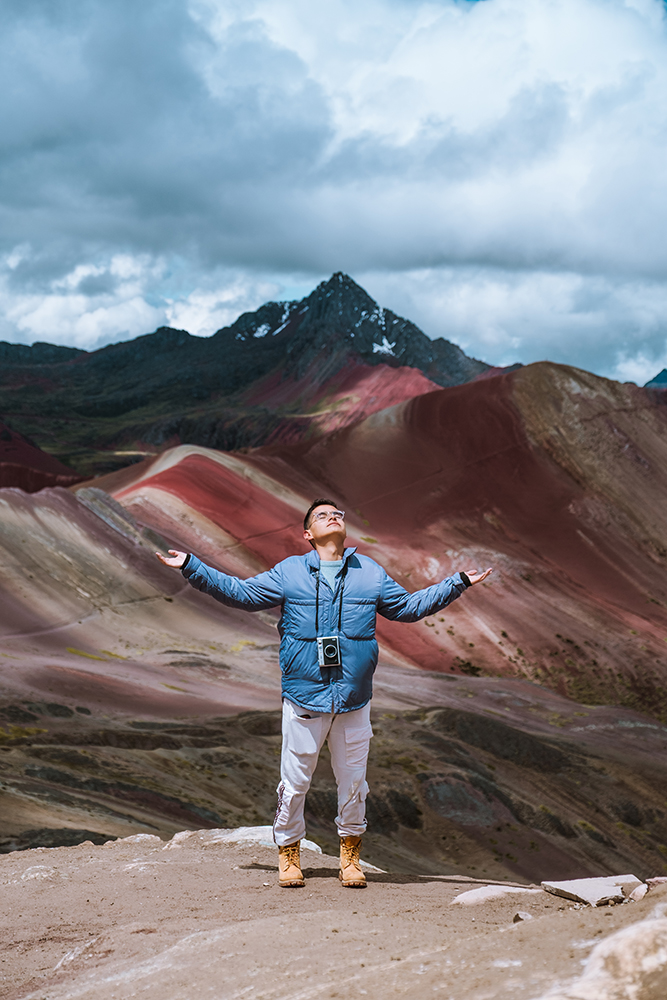
©David Muñiz, Autorretrato en Perú (Self-Portrait in Peru)
LP: There’s a picture of yours that many people have made a symbol of Mexican identity: MEX-I-CAN. How was that picture born?
DM: That picture was taken two weeks after the earthquake that struck Mexico on September 19, 2017. It was the first time I’d seen Mexico City in true chaos: fallen buildings, extreme traffic, and a collective sensation of frailty and vulnerability I’d never experienced up close before. But with that shock came something stronger: solidarity. From my lens I asked myself, how can I give something back? And the idea to create an image that showed that spirit was born.
I imagined a simple, yet symbolic image: a human, an open landscape, and a flag. To assemble it I asked a close friend to accompany me and to pose. That day, the sky was gray, and I understood the clouds were part of the picture. It provided an atmosphere of grief and nostalgia, and permitted the flag to stand out with strength and pride. The best thing about it was discovering how the image began to mean different things to different people. Each person had their own interpretation, even those who live in a foreign country were able to connect with the Mexican identity in the image.
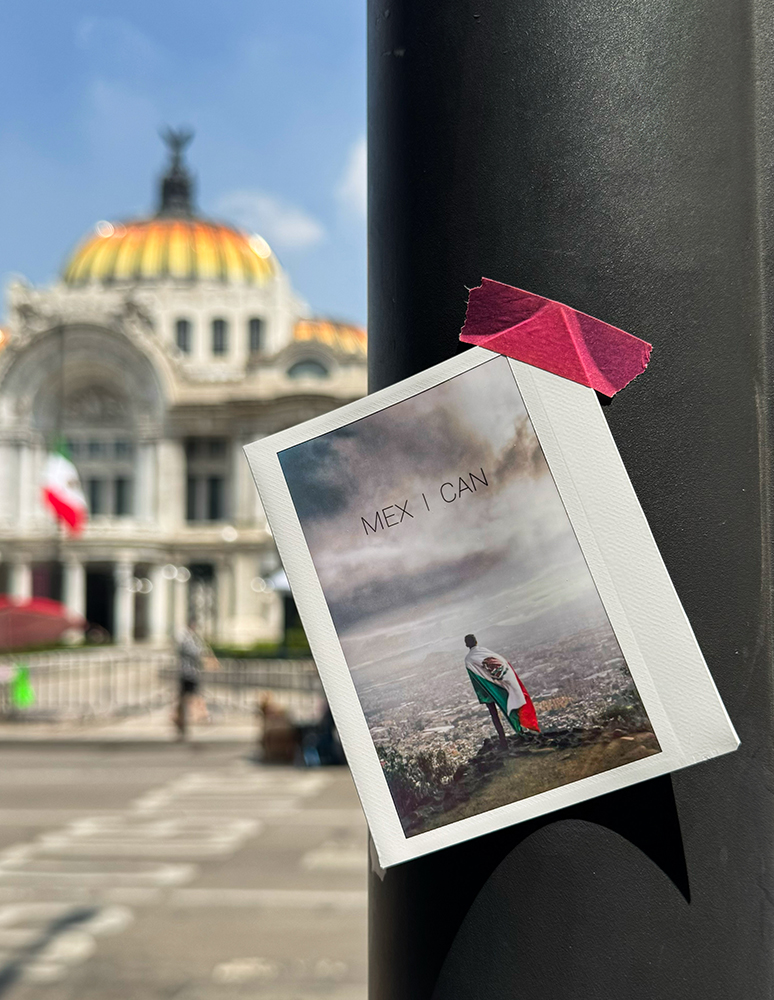
©David Muñiz, MEX-I-CAN, dejando 10 fotos instantáneas por la Ciudad (leaving 10 instant photos around Mexico City)
LP: There are many Mexican elements in your work. How would you define them?
DM: I believe the idea of something being “Mexican” can’t be defined in just one way, because Mexico lives in constant contrasts. It can be maximalism or minimalism, depending on the architecture, the landscape, or the moment. It can also be pure joy, like a party or the Guelaguetza, while being nostalgic and memory-filled like Día de Muertos (Day of the Dead). Everything that can live within this country. So, to me, a Mexican picture is not a formula, but a mix of extremes: color and shadow, celebration and remembrance, intensity and silence.

©David Muñiz, China oaxaqueña (Native Woman from Oaxaca)
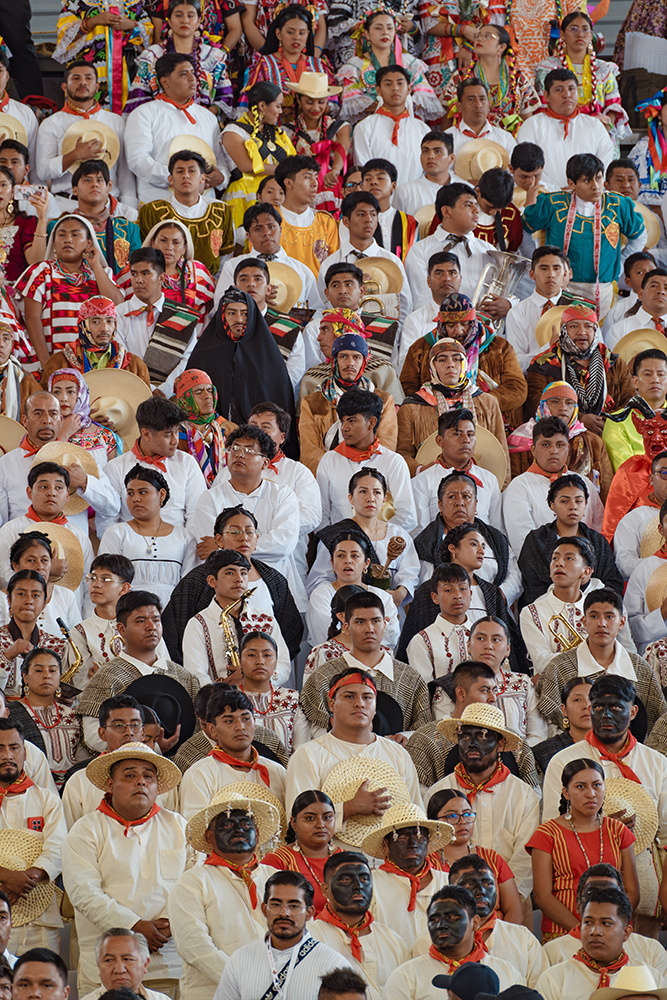
©David Muñiz, Panteón de Atzompa en Día de Muertos, Oaxaca (Cemetery of Atzompa on the Day of the Dead, Oaxaca)
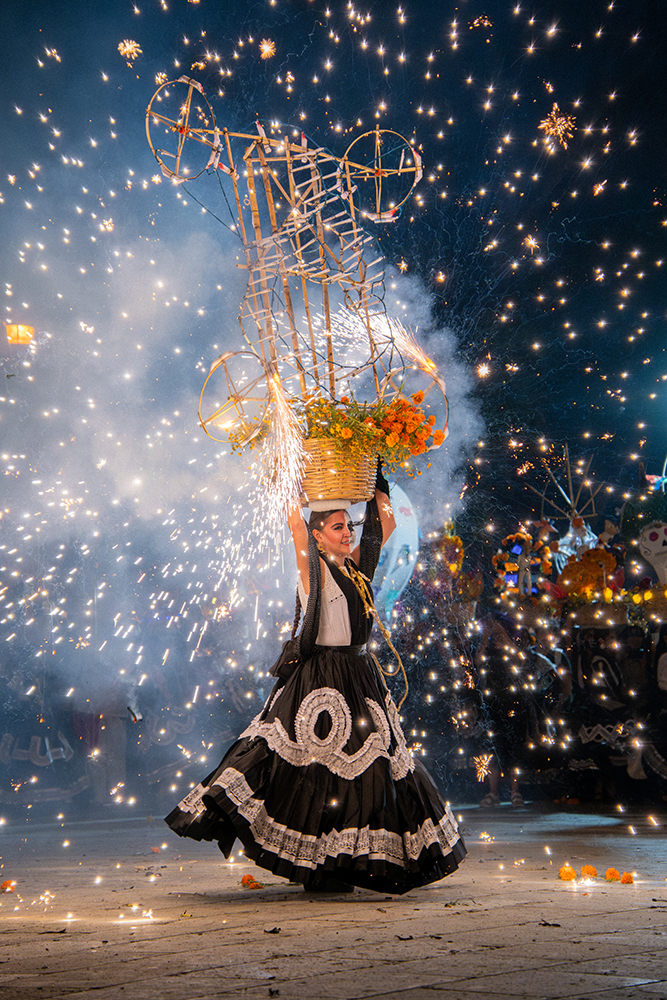
©David Muñiz, Oaxaca en el Día de Muertos (Oaxaca on the Day of the Dead)
LP: I feel like your generation speaks to the image from a very different place than the previous ones. What do you think about this?
DM: My generation lives photography from a very different place, indeed. Especially in the way images circulate and find their audience. Nowadays, photography isn’t only seen in a museum or a gallery; it’s also digital. An Instagram profile can be a personal gallery, an open portfolio, and a space where work meets community. Despite many people telling me that wasn’t the way to do it, most of the opportunities and the resonance of my work have been because of that. The search is still the same as in the past: to see, tell, and excite; it’s just a different outlet.
LP: You move between digital and analog, how do you feel when using “old” methods? How do you think your pictures will look 20 years from now?
DM: I was situated in a very particular generation, the one that lived both worlds. My first pictures were taken with a roll: they’re physical. But later, everything turned digital. My Old Roll project rose from that tension. To work with images that precede me is like opening a window to a Mexico that no longer really exists, while being able to show the new generations that there was a time when pictures lived on paper, in negatives, and in boxes.
As for the second part of the question, I don’t know how they’ll look, but I imagine technology will transform our relationship with images completely. That’s precisely the reason why I’m interested in keeping the human quality within a shot.

©David Muñiz, Proyecto de rollos antiguos (Old Roll project)
LP: In this day and age, the word “influencer” can mean many things: marketing, community, visibility, etc. What does it mean to you to influence through photography?
DM: That’s a beautiful question. I think “influencing” from photography can mean something way deeper than mere numbers. To me, the most important thing is motivating the upcoming generations. Just as I learned by searching for videos, I like to think someone can be inspired by what I share. That’s the reason why I became interested in including videos and behind-the-scenes content: it’s not only showing the final image, but the process. There’s the place where photography can go beyond the algorithm: when it becomes community, learning, and a creative thrust.
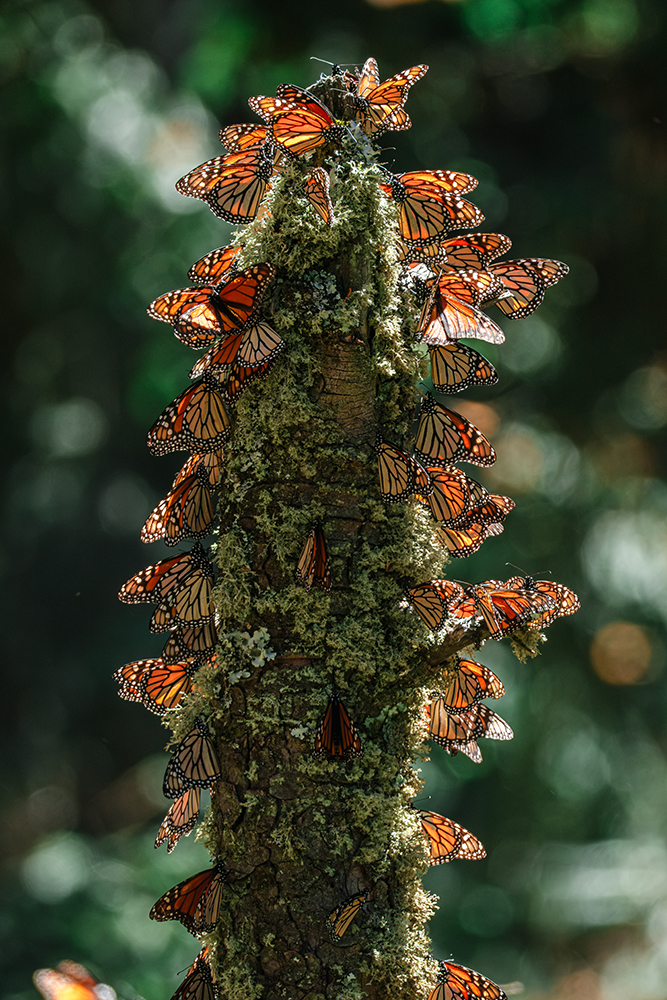
@David Muñiz, Las Monarcas (The Monarch Butterflies)
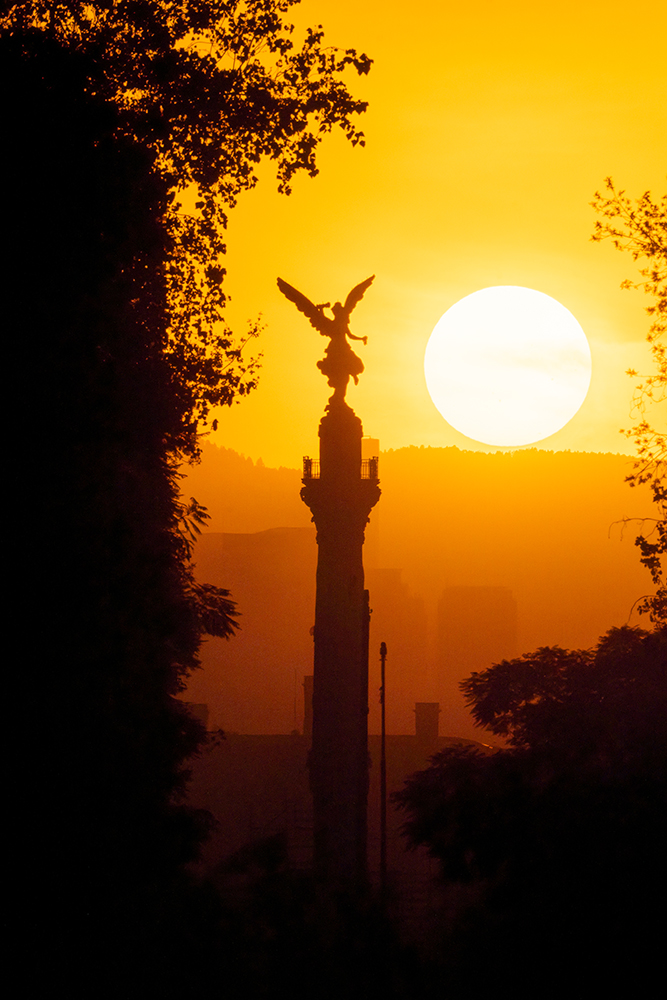
@David Muñiz, El Ángel Dorado (The Golden Angel)
LP: You’re very active on social media. From concerts and trips to camera testing and instant film. How did you come up with that idea?
DM: It all comes from my constant search to not remain in a single place. I’m a person who gets easily bored, so photography has been an endless way to explore. I get a thrill when experimenting with different formats and places. Sometimes I take an Instax to concerts and give the prints away to people with iconic looks. It’s a small gesture that turns an image into something immediate, yet human. There also comes to mind my relationship with the archive: playing with digital, while salvaging analog. At the end of the day, everything is brought together through my community. To share what I see and discover is what excites me.
LP: Your practice expands through a wide range of genres, from wildlife, to portraits, and commercial photography. What place does being considered legitimate by museums or galleries have in your life? Is it something you want or does your compass point elsewhere?
DM: It’s certainly an appealing option to explore. It’s not the same to look at an image on your phone than it is to do so once it’s printed and hanging in a museum or gallery. I love visiting art exhibitions because the scale and time with which you look change the image. Despite the fact that my compass points mostly to the digital world, I don’t reject that horizon. I’d love to see my work in institutional spaces. And adding to that, just a little spoiler . . . I’m compiling a book with the Old Roll project as a way of taking that archive into the physical world.
LP: Congratulations! So, by the looks of it you enjoy sharing your experiences and knowledge with other photographers. If you could focus on them learning one thing, what would it be? What’s your advice to them?
DM: I’m mainly interested in sharing this idea of not limiting yourself too soon. Photography is exploration, like learning different languages. From portrait, documentary, landscape, analog, to digital photography, everything nurtures the eye. Even if later on you choose to specialize in one, having done the others broadens your sensitivity. Nothing shapes your outlook more than testing it all. If I could go back to the very beginning, that would be my advice: don’t rush to define yourself. Have fun and explore first.

© David Muñiz, Azul Baja California (Blue Baja California)
LP: And lastly, where do you think photography is heading in the future? Where do you see yourself?
DM: If I’m being honest, I don’t know how to answer this, because I don’t even know what I’ll be doing tomorrow. The only thing I know for sure is that I want to keep doing what I love, but with the tools the future provides. Photography will continue to transform, and it’s inevitable that technology such as artificial intelligence will be a part of it. However, rather than seeing it as an enemy, I believe the challenge is to understand it critically. Learning how to use the new tools without losing the essence. Because no tool is ever going to be able to replace the human gaze and sensitivity that a photographer has. I want to keep growing without leaving who I am behind the camera.
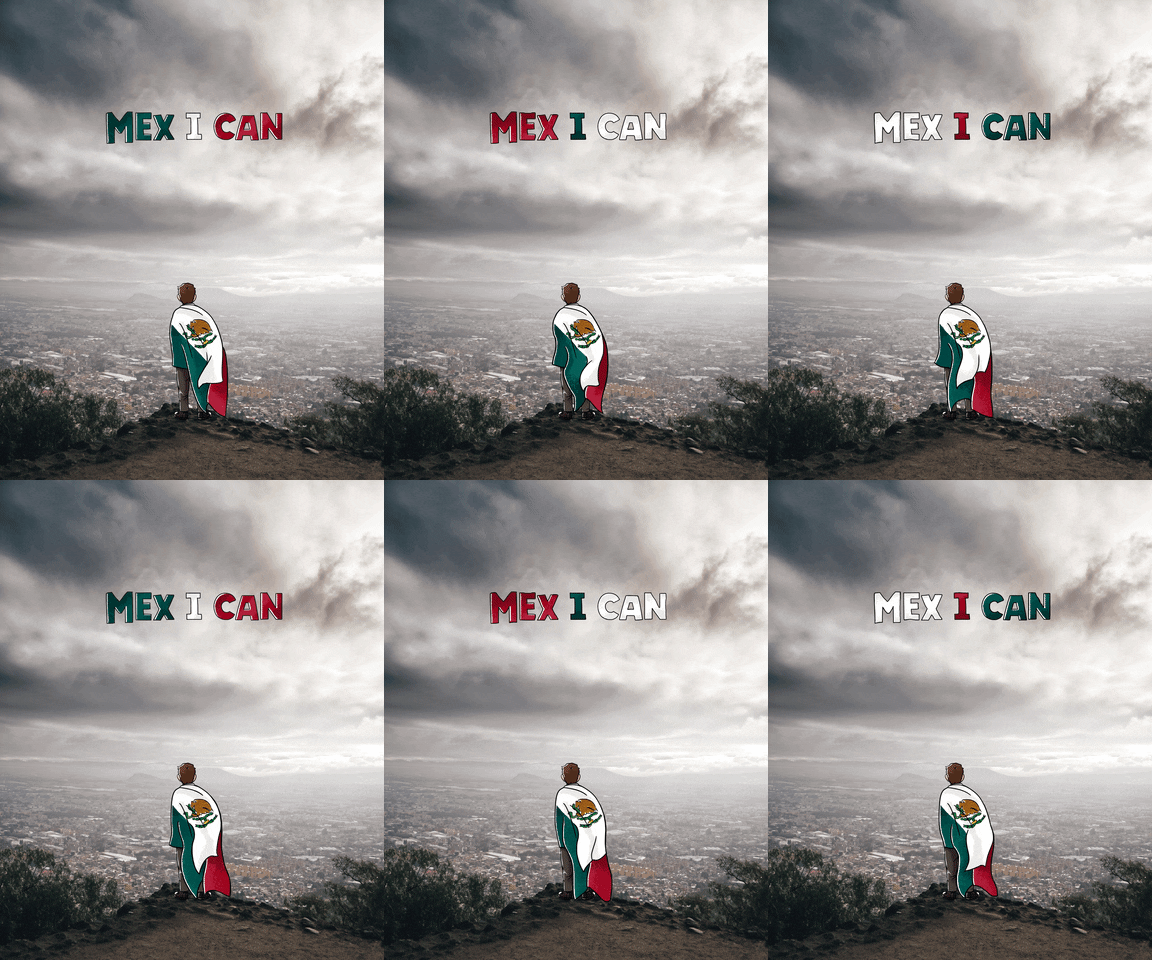
©David Muñiz, MEX-I-CAN
Lou Peralta is a visual artist and contemporary photographer based in Mexico City. She belongs to the fourth generation of a family dedicated to portrait photography—a legacy that continues to nourish her ongoing exploration of the genre. Her practice expands the limits of the two-dimensional photographic image, reimagining portraiture as a sculptural and spatial experience through hand-built structures using materials such as paper, fabric, agave fiber, and wire.
Her work has been featured in solo and group exhibitions in Mexico and abroad. Peralta is a Fujifilm brand ambassador through the X-Photographers program. Recent recognition of her work includes being selected for the Photolucida Critical Mass Top 50 (2023 and 2025), the FRESH Photography Award (2025), the 22nd Santa Fe Photography Symposium in New Mexico (2023), and the selection of one of her works for the Ibero Puebla Biennial (BIP) 2025, and an artist residency at The ANT Project (2026).
Posts on Lenscratch may not be reproduced without the permission of the Lenscratch staff and the photographer.
Recommended
-

Maxime Riché: ParadiseMay 11th, 2026
-

Motherhood: Corinne May Botz: Milk FactoryMay 7th, 2026
-

Motherhood: Kerry Payne Stailey: The Children (I Never Had)May 6th, 2026
-

Vital Impacts: Carlos Folgoso Sueiro: Beyond the LakeMay 3rd, 2026
-

Vital Impacts: Clea T. Rekhou: Beyond the SteppeMay 2nd, 2026