Enid Crow: American Values
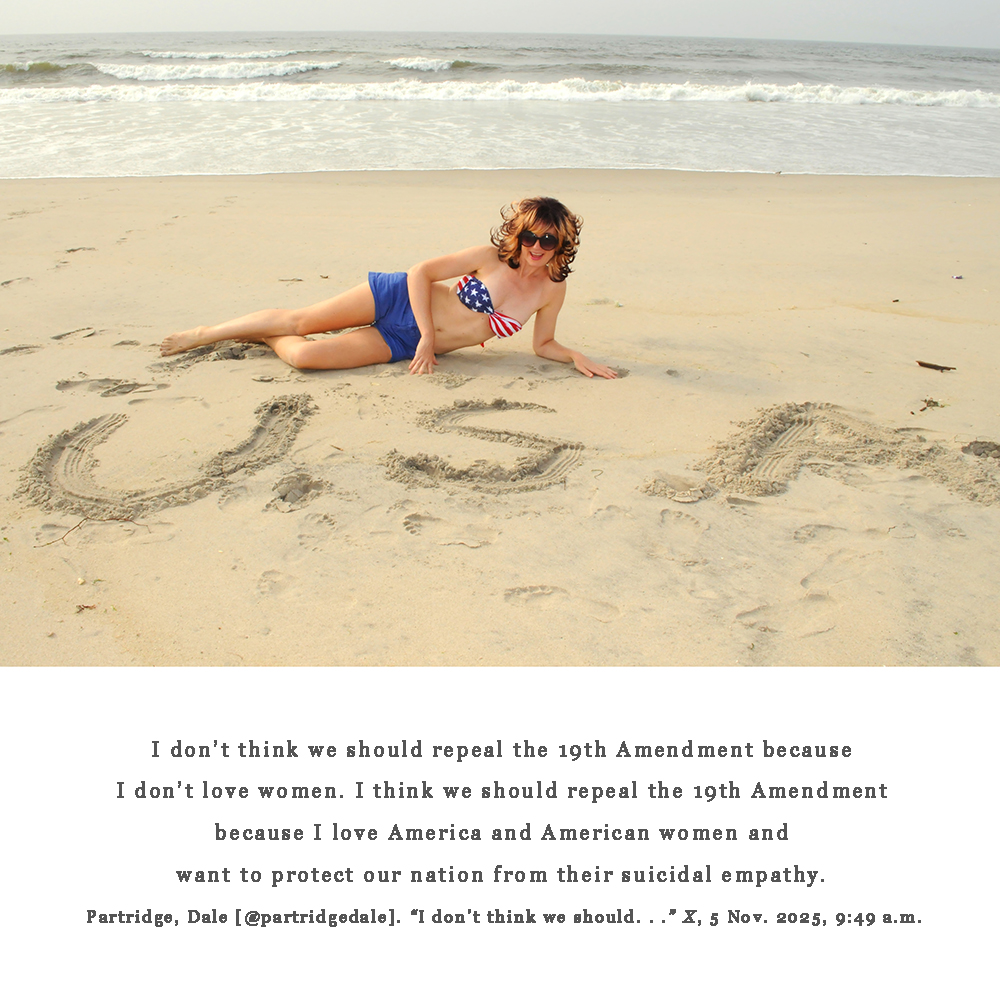
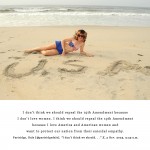
©Enid Crow, Self Portrait, American Values: 19th Amendment
Sometimes the best way to tell a story is to act out all the characters yourself, just to make sure it’s done right. Artist Enid Crow has a legacy of self-portraiture, using her humor and theatrical sensibility to speak to issues of our time. In her series, American Values, she focuses on the the symbols, performances, and contradictions of contemporary American nationalism. Through a series of meticulously staged self-portraits, Crow transforms herself into an array of recognizable characters—from gun rights advocates and patriotic enthusiasts to aspirational social climbers draped in red, white, and blue. By inhabiting these personas, she exposes the ways identity, ideology, and patriotism are constructed, performed, and consumed.
Drawing on her background in theater and a decades-long practice of character-based self-portraiture, Crow uses humor, parody, and exaggeration as tools of social critique. Like an actor moving through a cast of roles, she occupies multiple viewpoints while maintaining a critical distance from them. The resulting photographs are both playful and unsettling, inviting viewers to consider how national myths are shaped, who benefits from them, and what values are revealed beneath the surface of patriotic display. In an era marked by political polarization and resurgent nationalism, American Values offers a timely examination of the stories Americans tell about themselves and the identities they choose to perform.
A conversation with the artist follws.
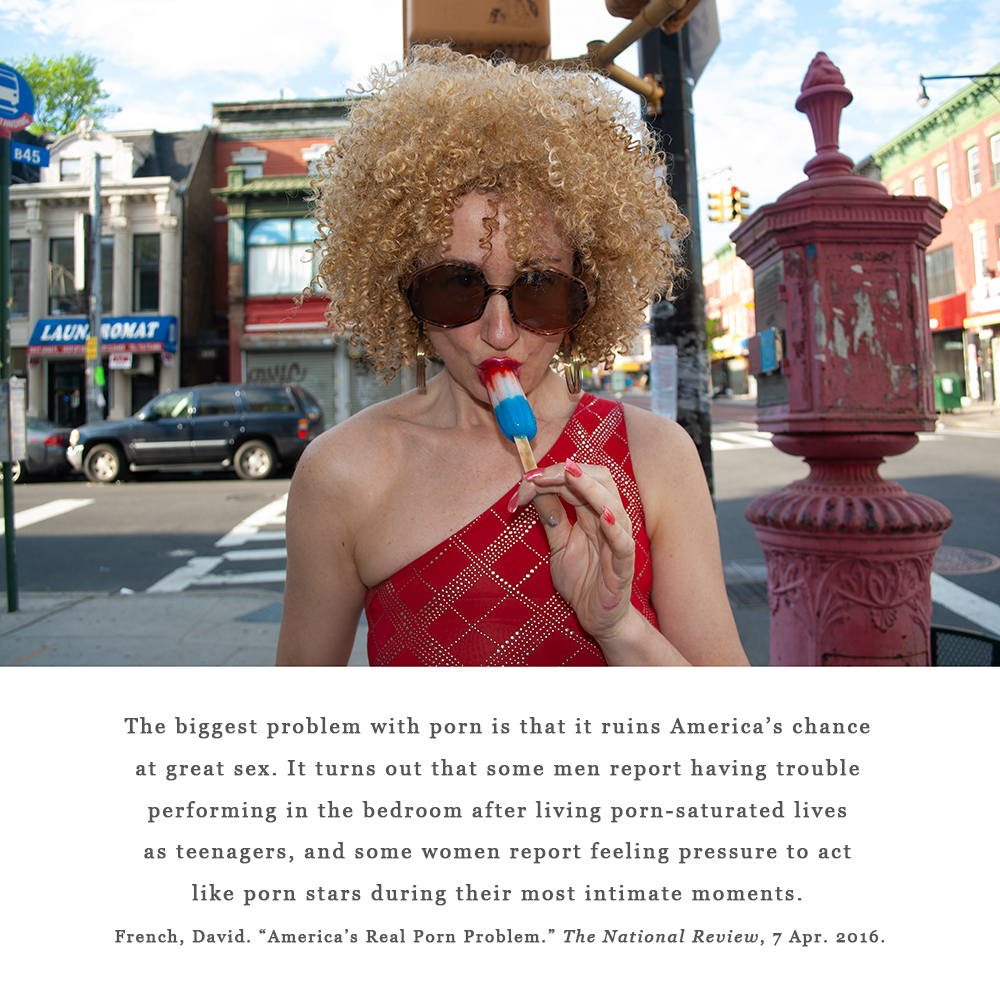
©Enid Crow, Self Portrait, American Values: Bomb Pop
American Values
American Values is a series of self-portrait photographs that probes, pokes fun of, and protests American values and nationalism. In the ongoing series of 50+ photos, I take pictures of myself as male and female characters dressed up in red, white, and blue outfits, the colors of the American flag. In some photos, Jan Peterson has assisted.
The series is influenced by vernacular photos, photojournalism of election conventions, Nikki S. Lee’s self-portrait projects, and Suburbia, Bill Owens’s 1973 photojournalism book that documents the lives of middle-class Americans. In Owens’ series, he uses quotes from the subjects of his photographs to explore American life. In my series, I use quotes found in social media posts, blogs, newspaper articles, academic journals, and other sources to supplement my pictures and paint a picture of many facets of American culture.
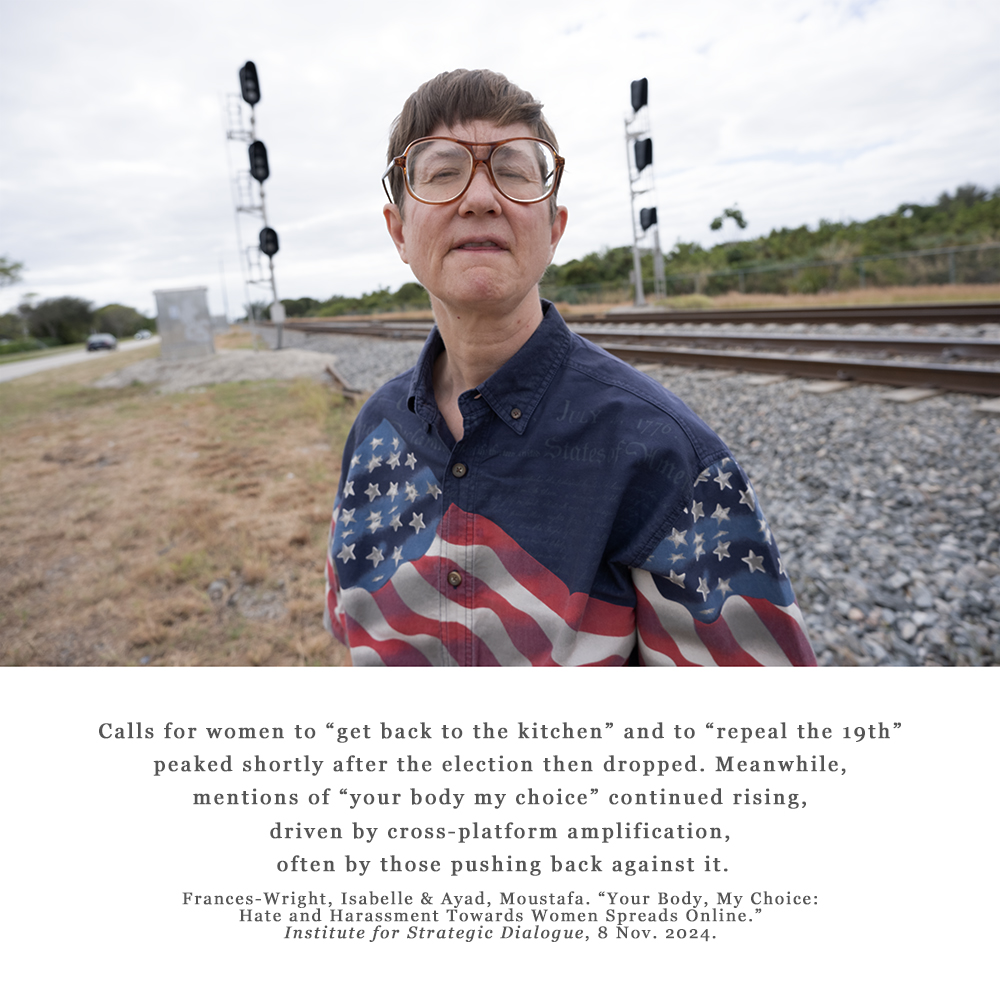
©Enid Crow, Self Portrait, American Values: Certain Men
Enid Crow, b. 1968, Auburn, NY) is a New York City based conceptual artist. She makes staged, self-portrait photographs as costumed characters and short videos. With humor and parody, her character-driven photos address social issues such as the rise of American nationalism, unfair labor practices, the environment, phobias, and equal rights.
Examples of Crow’s projects include American Values (a quasi-documentary of American nationalism and values), Happy Workers (self-portraits commenting on labor), Action for Endangered Mollusks/Insects! (self-portraits impersonating endangered species), and Disasters (self-portraits as characters observing undefined disasters off-screen).Crow began taking pictures of herself in the 1980s as a teenager enrolled in a modeling school known as the Wendy Ward School of Charm. Later, while studying acting in college, she started posing as characters in her photos.
Crow is a former artistic fellow of A.I.R. Gallery and BRIC Arts Media. She has had four solo shows (NYC, Portland, Geneseo, and Lamoni, Iowa) and regularly participates in group shows. She holds a B.A. and M.A. in theatre/performance studies from the State University of New York at Geneseo and Northwestern University, respectively, an M.Ed. from the University of Florida, and a J.D. from the New York University School of Law.
Instagram: @enidcrow
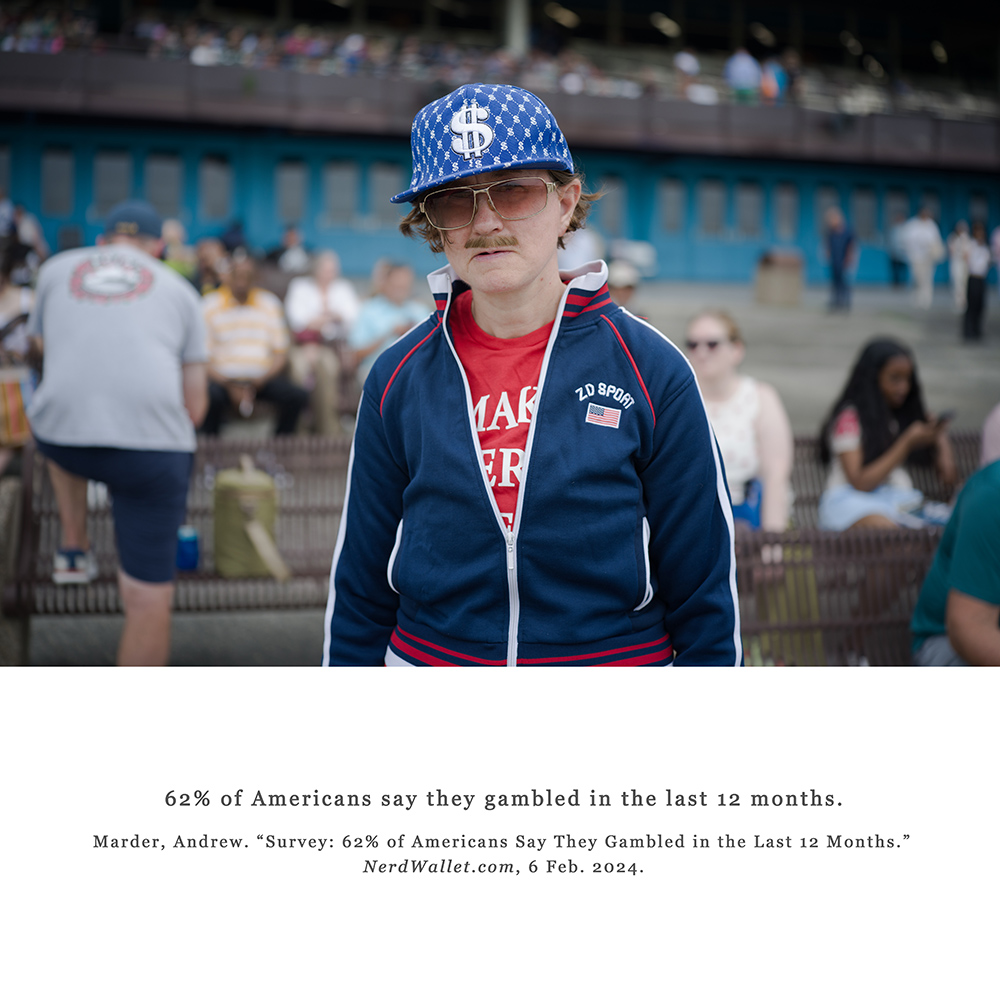
©Enid Crow with assistance from Jan Peterson, Self Portrait, American Values: Racetrack,
Tell us about your growing up and what brought you to photography….
In the mid 1980s, when I was about 13, I attended the Wendy Ward School of Charm in upstate New York. The School wanted the students to get headshots done at a glamour photo studio chain, but my parents said no because they thought it was a money-making scam. So I took my own glamorous headshot with a Pentax K1000, a shutter release cord, and a studio I made in my basement with a bedsheet backdrop and a desk lamp for the studio light. I had braces and a bad feathered haircut and I tried to pose like sexy ladies in Breck Hair Spray ads. Those were very (unintentionally) silly pictures and I try to carry that silliness forward in my self portraits today.
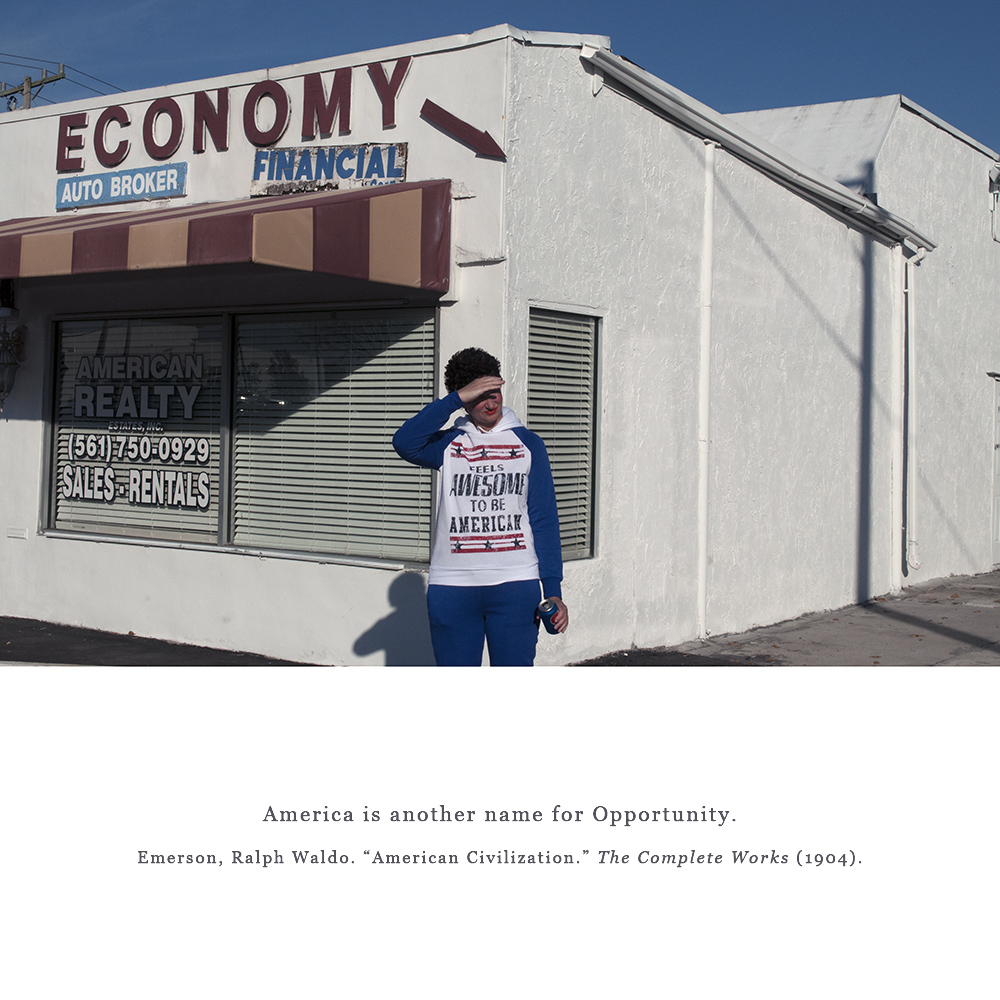
©Enid Crow, Self Portrait, American Values: Awesome of be American
Did you start your photographic journey with self portraiture?
I’ve almost exclusively done self portraiture since I was 13. After the Wendy Ward School of Charm, I studied theatre/performance studies in undergraduate and graduate school and I continued taking pictures of myself. My self portraits grew out of play-acting, wearing/making costumes and sets, and inventing stories.
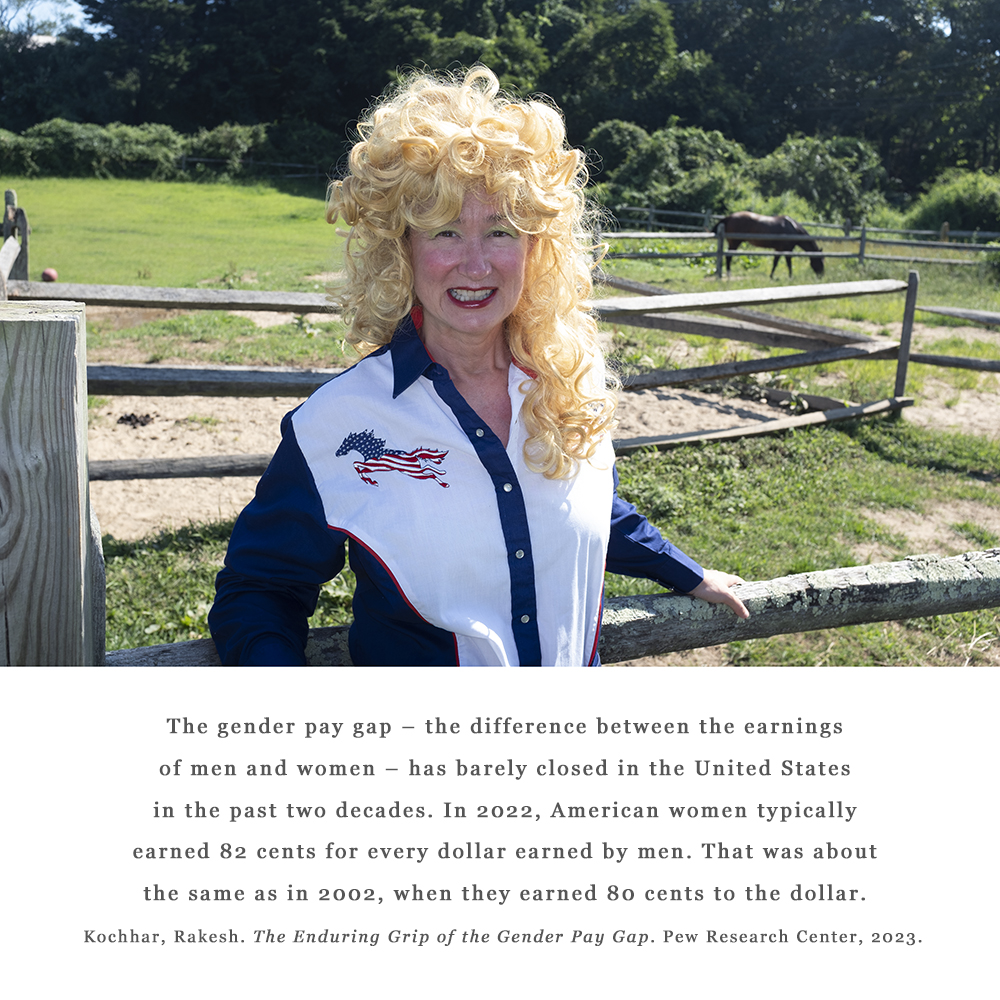
©Enid Crow, Self Portrait, American Values: Gender Pay Gap
What first compelled you to begin American Values, and why did self-portraiture feel like the right vehicle for this exploration?
I lived in the Japanese countryside for three years. During that time when I was far from home and other Americans, I wondered what it meant to be American and what is an American identity. I wanted to explore that question in this series. I use self portraits as a vehicle for documenting parts of American life because it is fun making up and playing characters.
The American Values series is influenced by Nikki S. Lee’s self portraits in American subcultures and, even more so, by photojournalist Bill Owens’ book of pictures of California in the 1970s called Suburbia. Bill’s intimacy with his subjects was great. I particularly love the quotes from his subjects that he included under his photos because they added so much context. I love how his photos are simultaneously earnest, funny, curious, and critical of American suburban life.
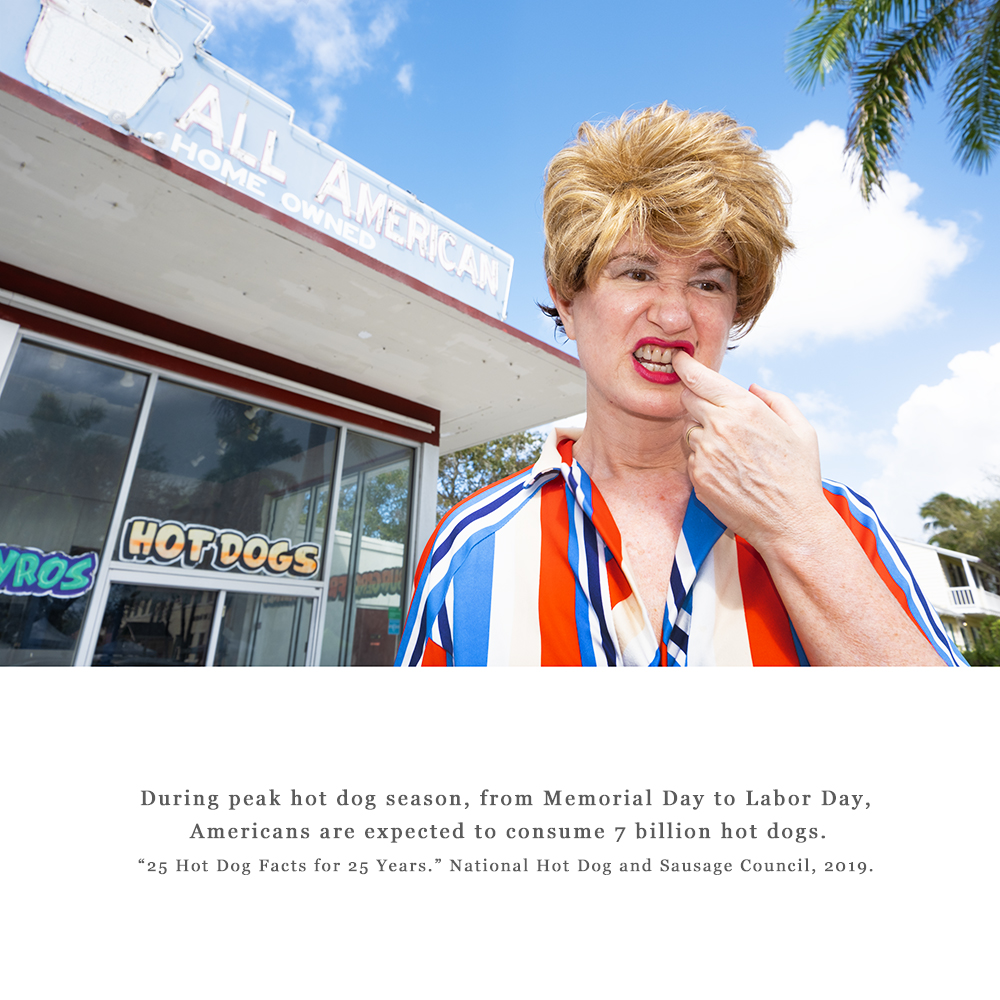
©Enid Crow, Self Portrait, American Values: Hot Dogs
Your photographs reference vernacular photography and Bill Owens’s Suburbia. What draws you to the visual language of the everyday, and how does it strengthen the work’s critique?
Even though vernacular photography is not uniquely American, it is such an important part of American life. Vernacular photos tend to be straightforward, familiar, and relatively easy to understand. Often the subject is in the middle of the picture, and the subject is more important than the composition. Sometimes, these photos are goofy and bizarre. In American Values, I didn’t want to distract the viewer with composition or artistry, so I borrowed the center composition, goofiness, etc. from vernacular photos.
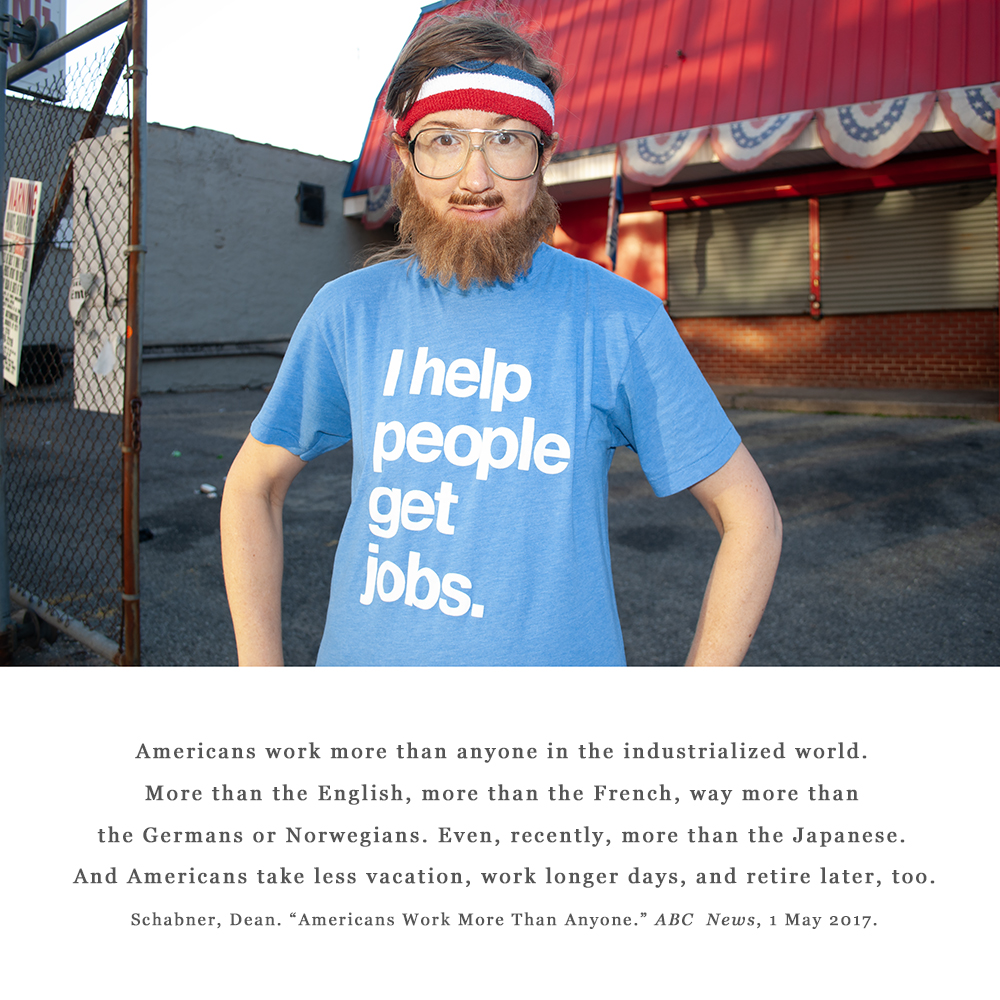
©Enid Crow, Self Portrait, American Values: Jobs
Your work balances humor with pointed social critique. How do you decide where comedy ends and discomfort begins?
I think comedy is powerful and it often provokes people to think about uncomfortable topics they want to avoid. I try to make pictures that are like observational standup comedy, where humor, critique, and discomfort overlap.
The title American Values can be read both sincerely and ironically. What does that phrase mean to you today?
As a prompt, “American values” lends itself to an expansive series because there are so many diverse values among individuals and small groups, and also collective values that emerge from trends, like how we spend our money and the laws we pass. There are about 50 pictures in the series now—I’ve been shooting it since around 2012. I hope to shoot the series for the next few decades.
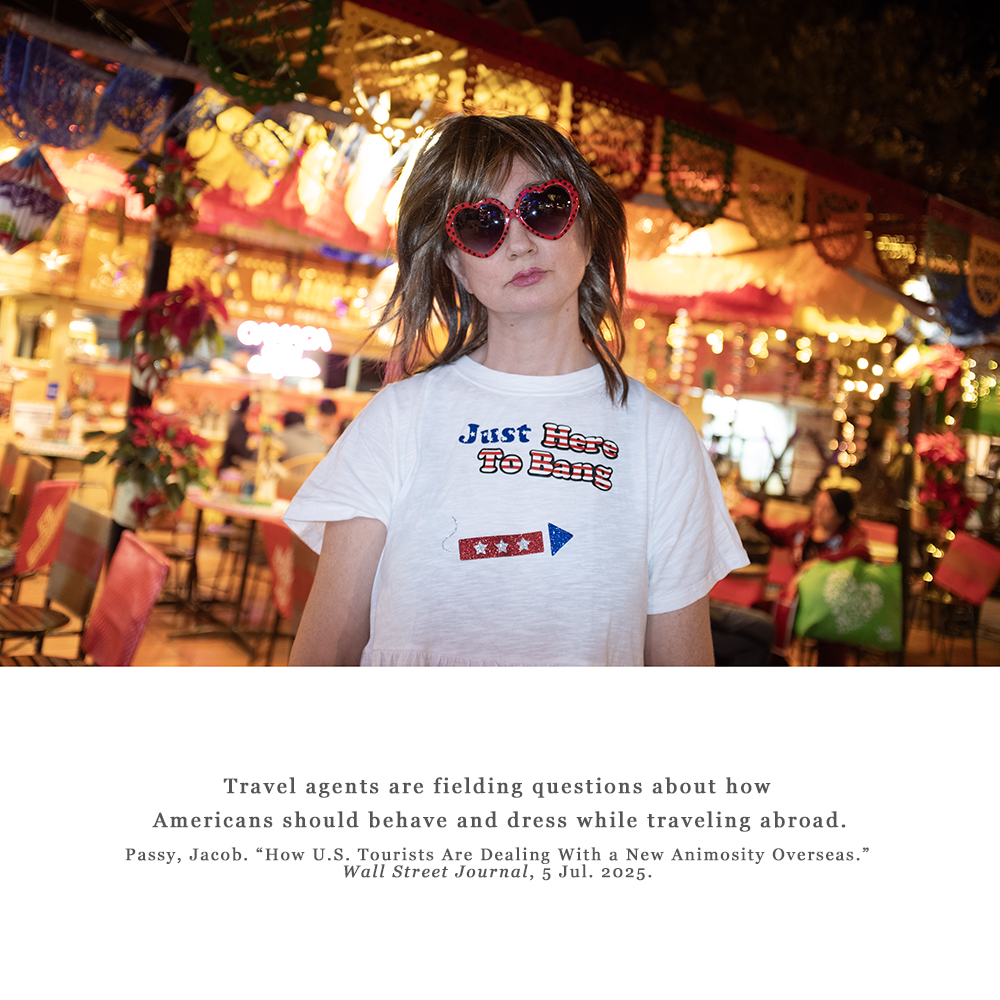
©Enid Crow, Self Portrait, American Values: Just Here to Bang
What role does performance play in your practice? Do you feel transformed when you step into these characters?
All of my self-portrait photographs and series are driven by characters and performance—I start by picking out a costume and inventing a character out of the clothes and wigs. Yes, I do feel transformed when I’m dressed up. I play male and female characters that are extremely different from the way I present myself in every-day life. The last weekend of June 2026, I went to a horse betting race track dressed as a man—I would never go there as myself. It was freeing and so much fun. I felt like a spy.
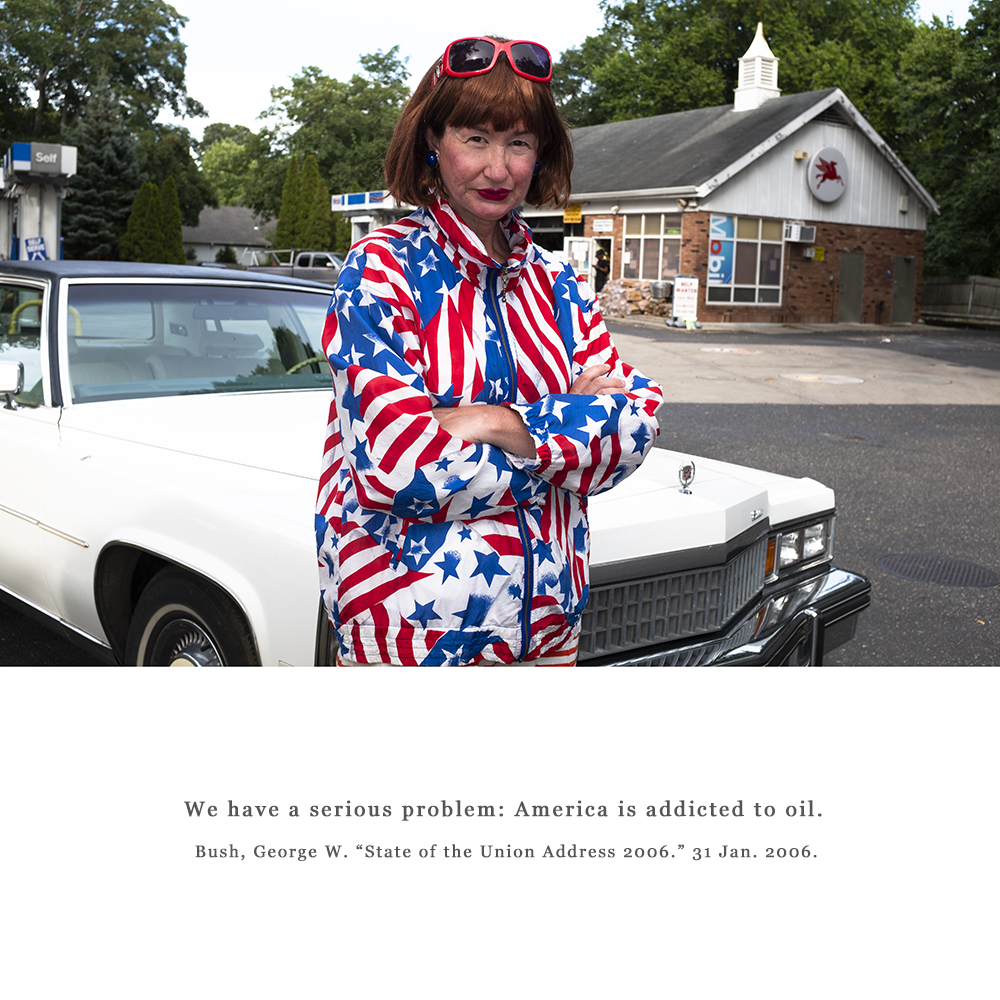
©Enid Crow, Self Portrait, American Values: Oil
Who and/or what inspires you?
I love clothes and hairdos and they inspire my characters.
My husband Jan Peterson, a photographer and retired director/cinematographer, inspires me. In the American Values series, he helped me take some of the complicated pictures that I couldn’t do with a tripod and a timer and he can help coach a performance out of me if I’m stuck.
I get inspired looking at all kinds of photographs and by music and writing; here are some I’ve been thinking of lately: At the Griffin Museum of Photography, in June 2026, I found a new book by James Traggianese called Plant Life, a vivid and clever comedic series about plants growing in a city, and I was introduced to Mari Saxon’s fantastic fairy-tale inspired self portraits. The Eugene Smith show curated by the incredible Momo Muroi at the Tokyo Photographic Art Museum in 2026 was moody, intense, and unforgettable. I loved discovering the self-portraiture of Alena Solomonova through Lenscratch.
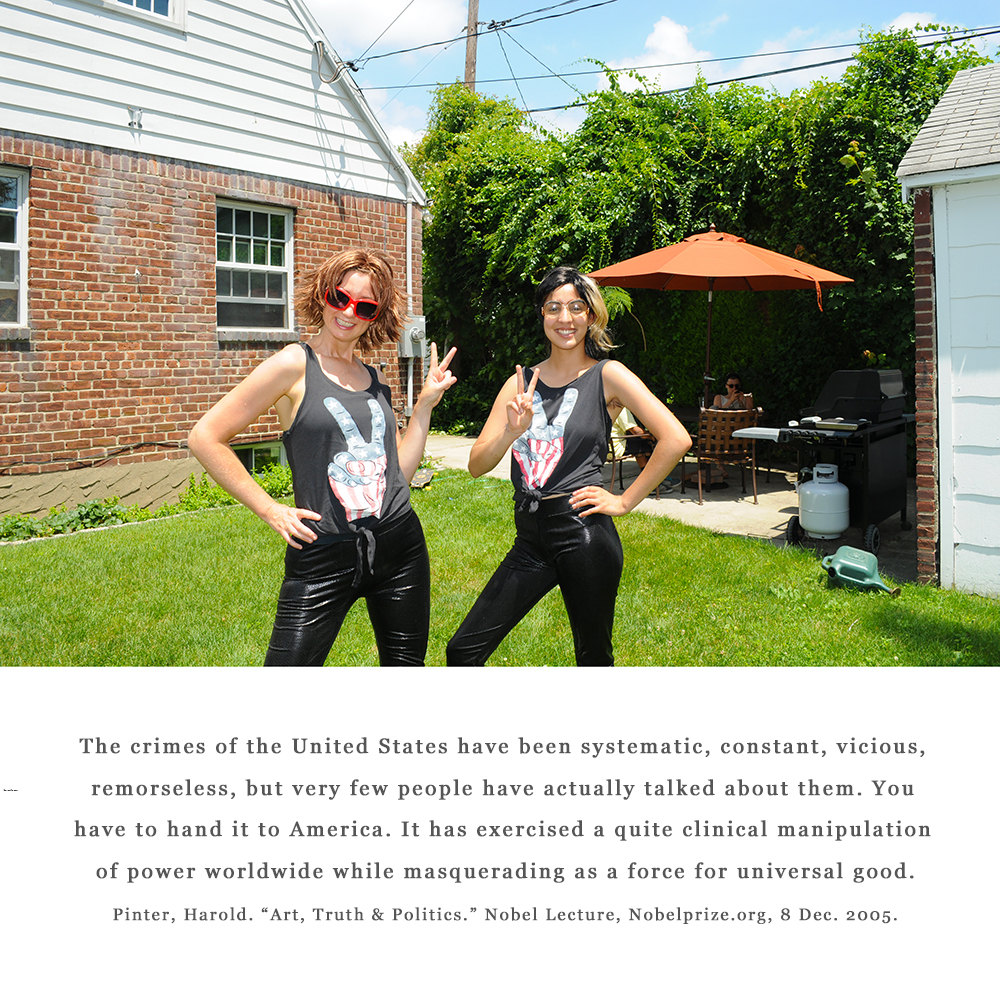
©Enid Crow, Self Portrait, American Values: Peace
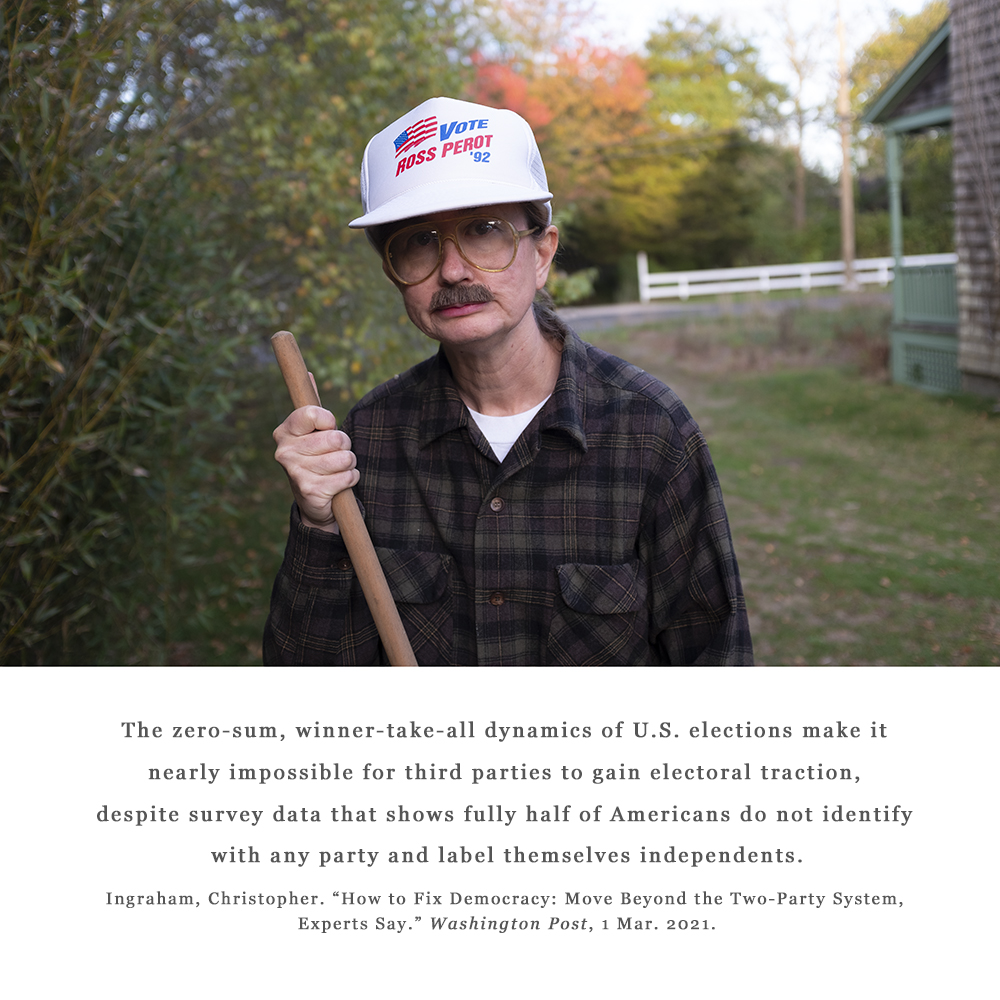
©Enid Crow, Self Portrait, American Values: Ross Perot
What’s next?
I retired from my job as a lawyer in October 2025, and I’m really excited to finally be able to work on art projects full time. For the next few months, I’m focusing on Action for Endangered Mollusks!/Action for Endangered Insects!, a series of self-portrait photos where I embody endangered clams and bugs as middle-aged women and men doing mundane human activities.
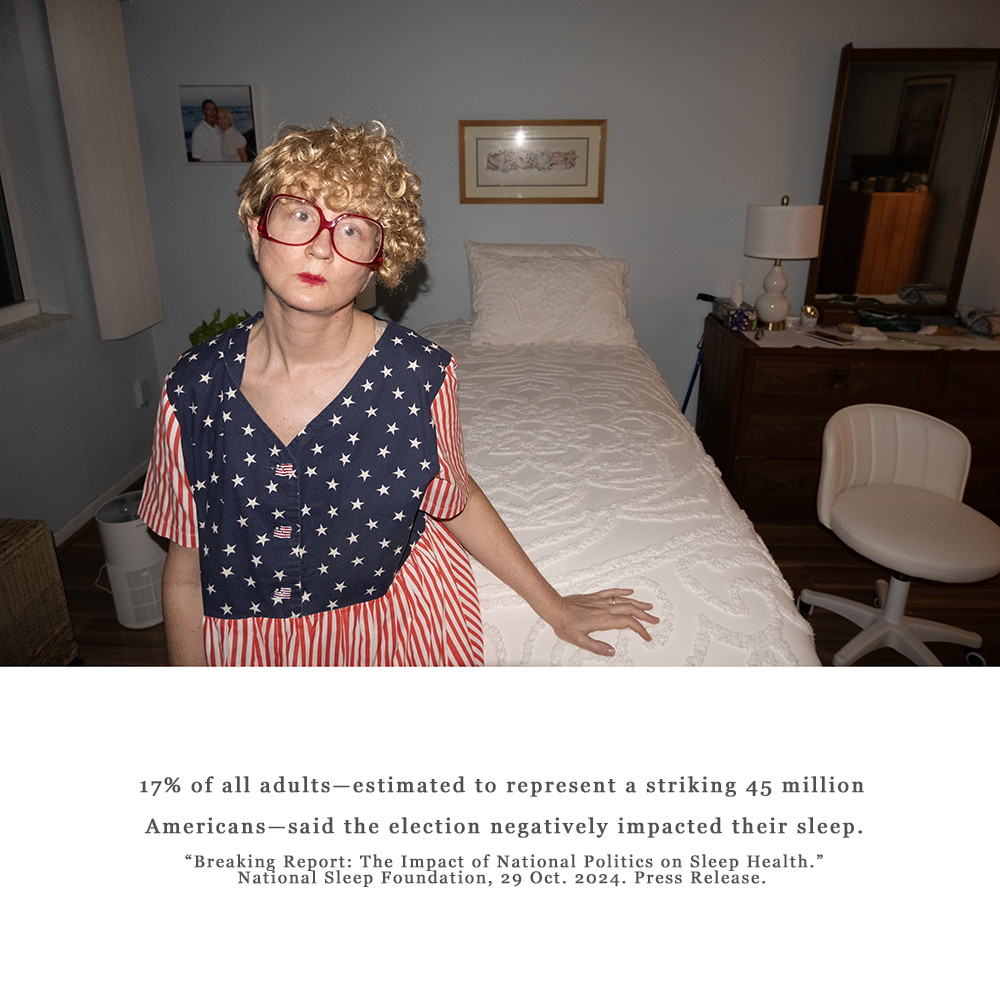
©Enid Crow, Self Portrait, American Values: Sleep
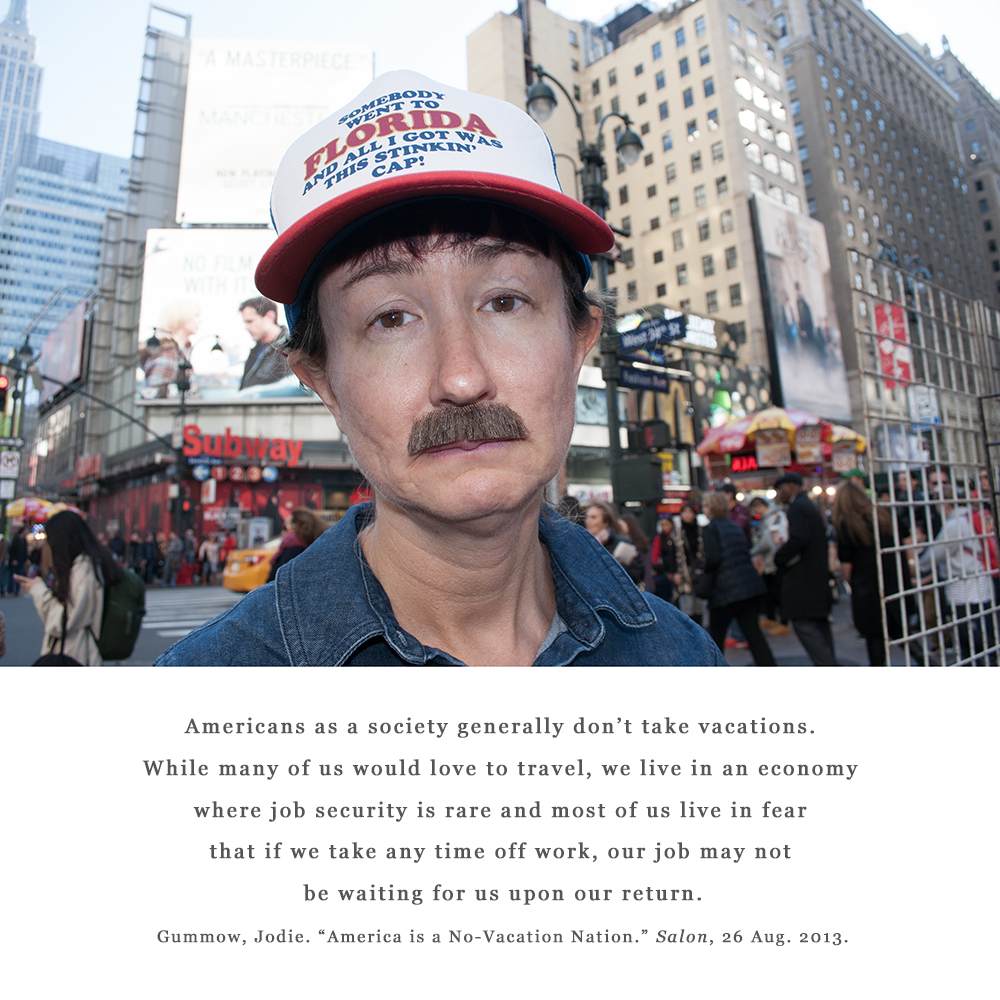
©Enid Crow, Self Portrait, American Values: Vacations
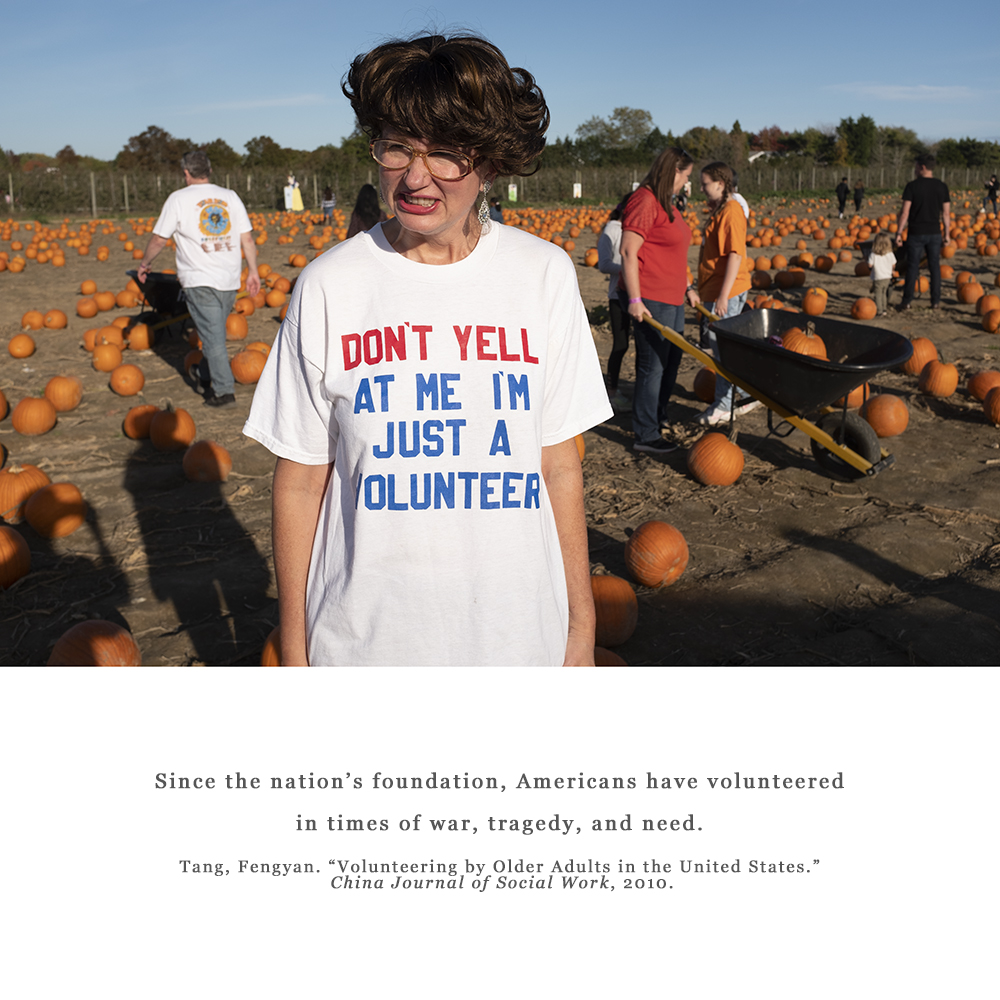
©Enid Crow, Self Portrait, American Values: Volunteerism
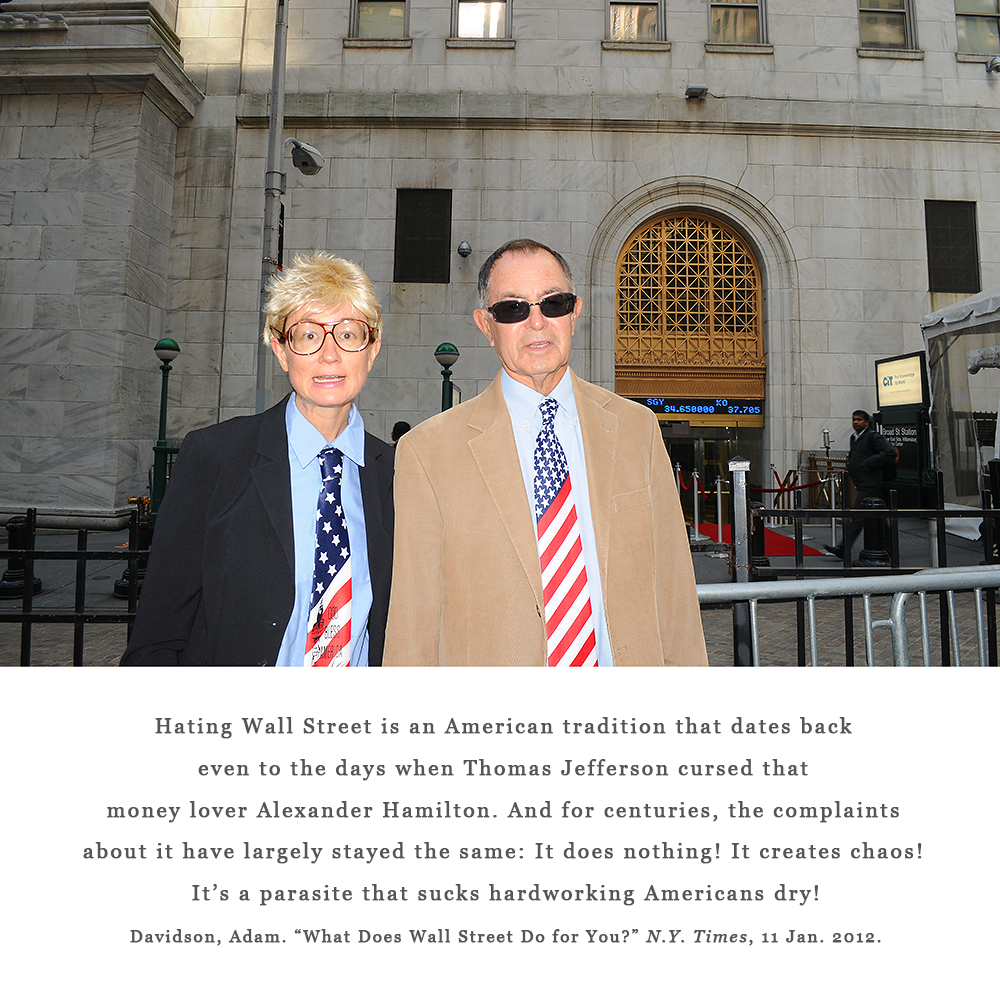
©Enid Crow, Self Portrait, American Values: Wall Street
Posts on Lenscratch may not be reproduced without the permission of the Lenscratch staff and the photographer.
Recommended
-
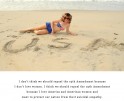
Enid Crow: American ValuesJuly 5th, 2026
-

Alena Solomonova: Self IncompleteJune 26th, 2026
-
The Infinite Light of Duane MichalsJune 16th, 2026
-

HANDMADE ARTIST BOOKS WEEK: VERONIKA SCHÅPERSMay 29th, 2026
-
HANDMADE ARTIST BOOKS WEEK: Ryoko AdachiMay 28th, 2026