The Art of Documentary Photography: Carol Guzy
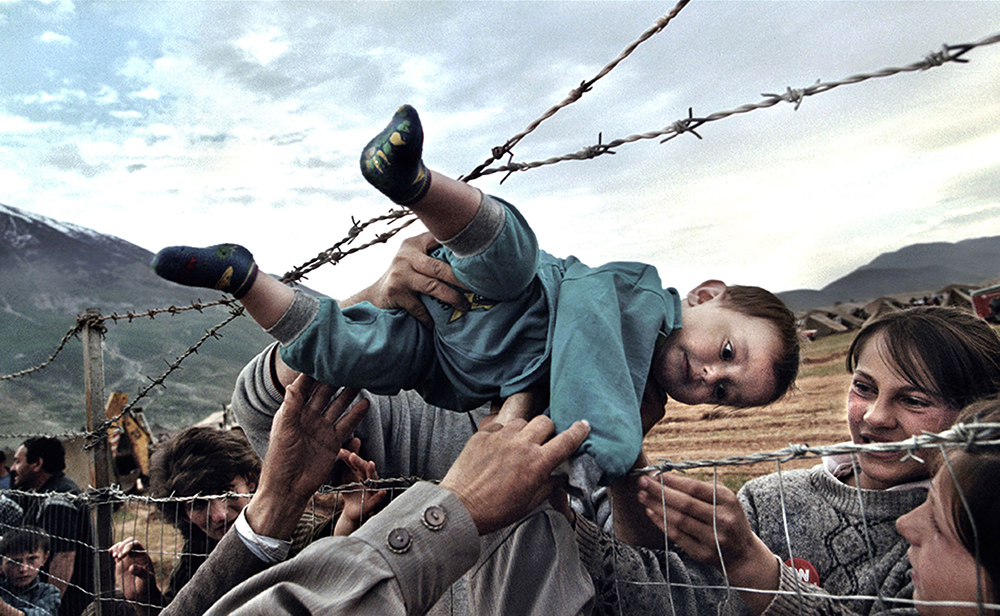
KOSOVO’S SORROW – ETHNIC CLEANSING “REUNION” Kosovar refugee Agim Shala, 2 years old, is passed through the barbed wire fence into the hands of grandparents at the camp run by United Arab Emirates in Kukes, Albania. The members of the large Shala family were reunited here after fleeing Prizren in Kosovo during the conflict. . (The grandparents had just crossed the border at Morina). The relatives who just arrived had to stay outside the camp until shelter was available. The next day members of the family had tents inside. The fence was the scene of many reunions. When the peace agreement was signed, they returned to Prizren to find their homes only mildly damaged. There were tears of joy and sadness from the family as the children were passed through the fence, symbolic of the innocence and horror of the conflict. (Photo by Carol Guzy/The Washington Post) Kukes, Albania May 3, 1999
It’s a beautifully composed photograph. A baby is being passed through barbed wire. At first it seems alarming, until you notice that the adults seem relaxed, happy even. What is going on? It’s an intriguing photo that pulls you in and lingers in your mind.
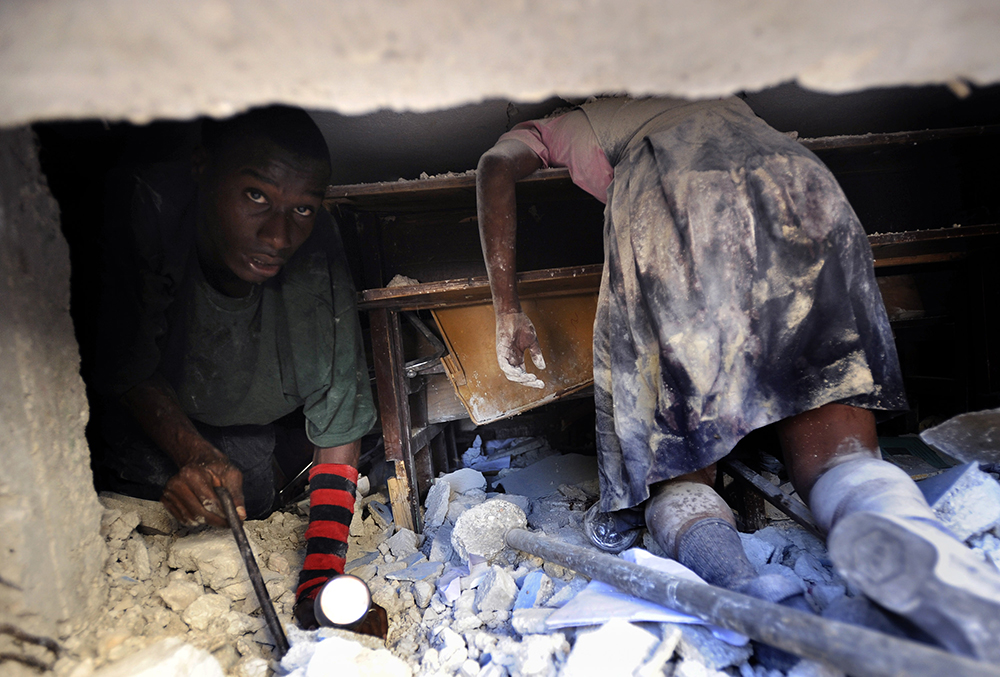
©Carol Guzy, A Haitian man tries to rescue a live teacher trapped amid the rubble of the devastating earthquake in Port-au-Prince as he crawls past a schoolgirl that perished at Ecole St. Gerard.
Four Pulitzer Prizes for:
1986 = Mudslide in Amero, Colombia
1995 = U.S. military intervention following a military coup.
2000 = Refugees in Kosovo, Albania.
2011 = Earthquake in Haiti that killed more than 100,000.Overseas Press Club of America
2018 — Robert Capa Gold Medal Award
1996 – John Faber AwardNational Press Photographers Association
1990 — First woman to receive Newspaper Photographer of the Year
1993 – NPPA Newspaper Photographer of the Year Award
1997 — NPPA Newspaper Photographer of the Year Award
2009 – NPPA Best of Photojournalism, Enterprising Picture StoryWhite House Press Photographers Association
2021 – Lifetime Achievement Award
Photographer of the Year – Eight times
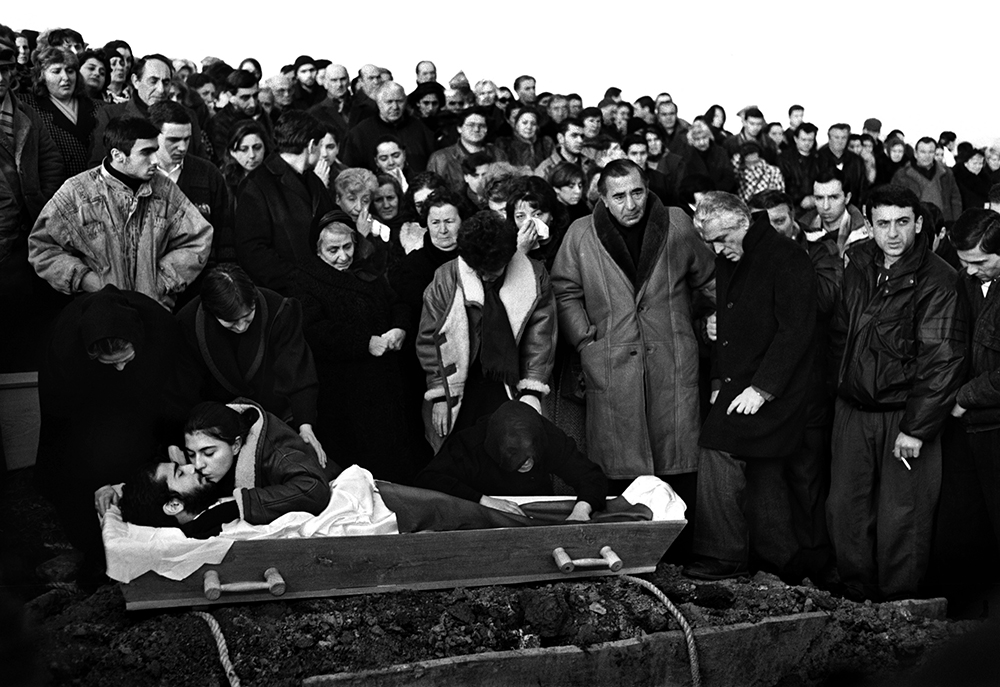
©Carol Guzy, FINAL KISS Conflict after fall of communism Tbilisi Soviet GA
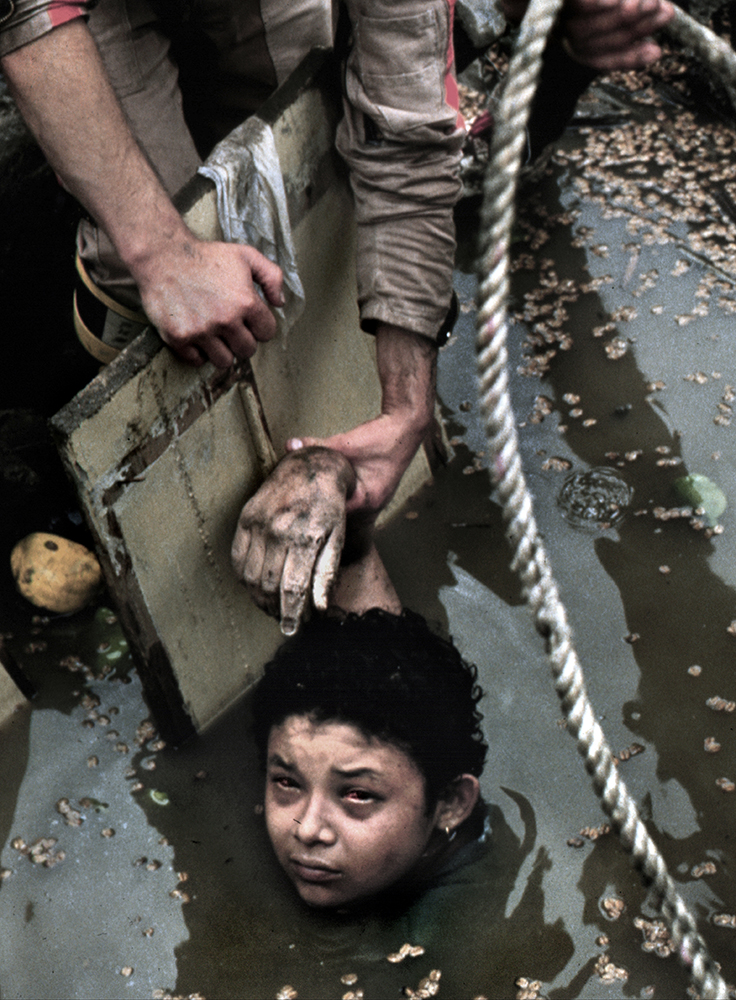
©Carol Guzy, “FINAL MOMENTS” MUDSLIDE IN COLUMBIA Omayra Sanchez looks up from her watery grave. The 13 year old girl was trapped in the mudslide which covered her town of Armero Columbia, killing more than 25,000 people. Although rescuers tried to free her, they were unsuccessful. After 59 hours she died, becoming a sad symbol of the devastating tragedy. Photo by Carol Guzy/ Miami Herald/ Armero Columbia 1985
The Photojournalism Archive, aims to preserve and curate the work of photojournalists whose images are at risk of being lost to history amid the rapid decline of the newspaper industry and the constraints imposed on their ability to preserve their work.The project will create an online, digital-only archive dedicated to preserving the best photojournalism visual stories in a curated catalog that will be open-access and publicly available. Making these pieces of history public will provide valuable insight into life and time that might otherwise be forgotten.
Images convey much more than words, providing readers with a vivid and immersive experience that can help better communicate critical information more effectively. The photojournalist whose photos enhanced newspapers and other publications provided a vital pictorial history of local events.
When newspapers first began digitalizing their content and making it available online, a fateful decision was made to save storage space by not archiving photographs. The short-term savings in cost and storage capacity set a course that is marginalizing photojournalism and creating a lopsided historical record.
At the same time the dramatic decline of the newspaper industry has cut deeply into the pool of working professional photojournalists. According to the report on The State of Local News for 2022, newspapers are continuing to vanish at a rapid rate. An average of more than two a week are disappearing. Since 2005, the country has lost more than a fourth of its newspapers (2,500) and is on track to lose a third by 2025.
The goal of The Photojournalism Archive is to begin addressing this gaping hole in the digital historic record and work cooperatively with the publications to preserve the work of staff photographers and share it with the public. The archive will allow photojournalists to curate their best stories, those that give voice through their powerful images to the marginalized, downtrodden, and those suffering through the most difficult times of their lives. The stories will be fully accessible to the public to study, and better understand a threatened profession.
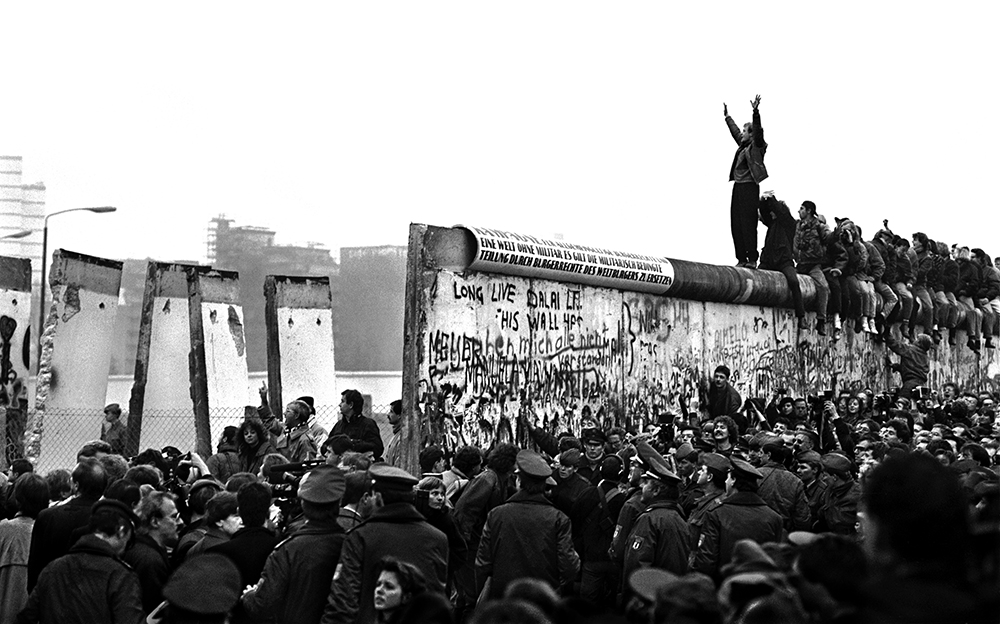
©Carol Guzy, FREEDOM Fall of the Berlin Wall Germany1986
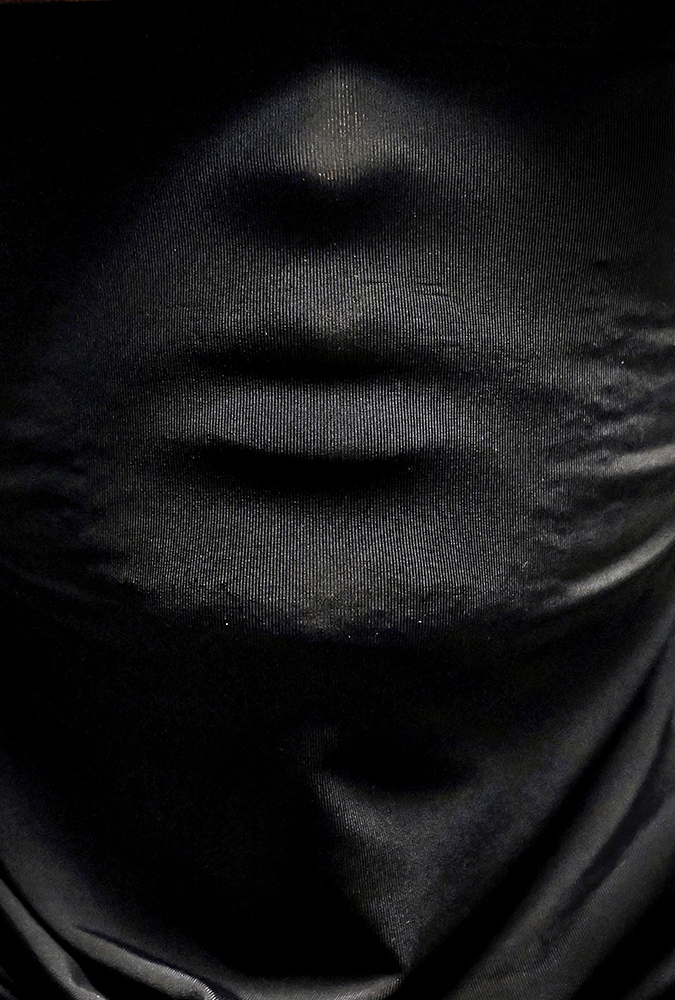
©Carol Guzy, Masked ICE agents and federal officers detain people after they attend hearings at immigration court in New York NY on July 16, 2025.
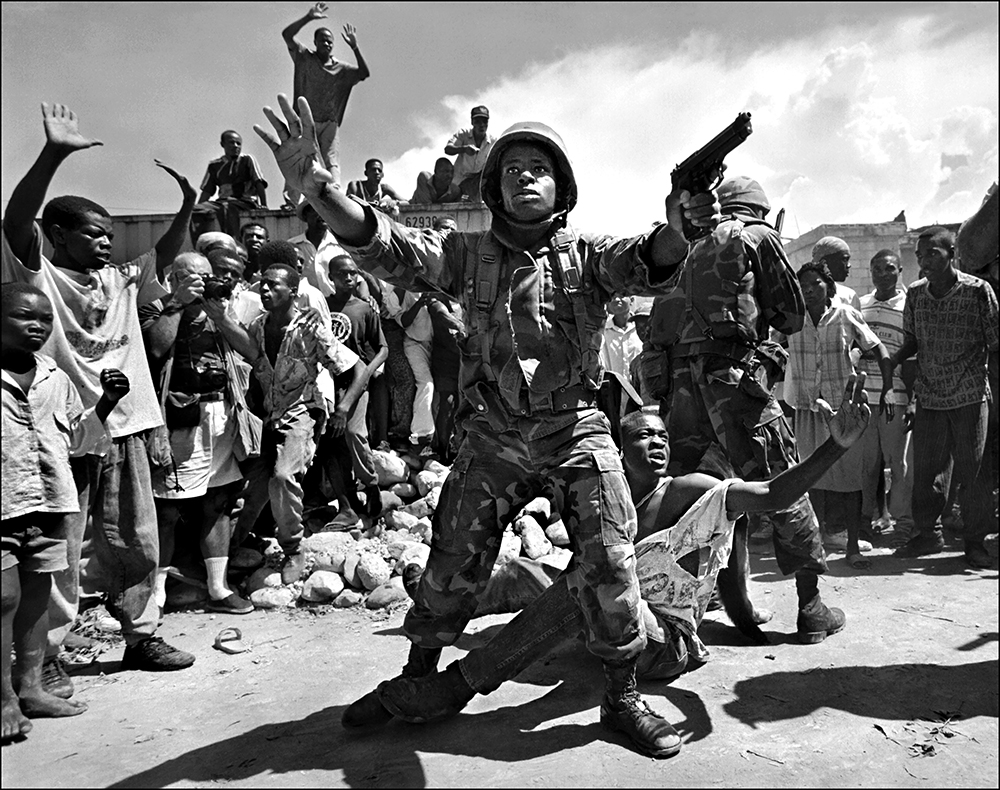
©Carol Guzy, INTERVENTION Shortly after the military intervention of Haiti, a U.S. soldier steps in to protect a man suspected of throwing a grenade into a joyous democracy march, killing and injuring numerous pro-Aristide demonstrators in yet another act of intimidation by para-military thugs. The soldiers arrested him, saving his life from an angry and bitter crowd looking for justice after many years of repression. Port-au-Prince, Haiti 1994
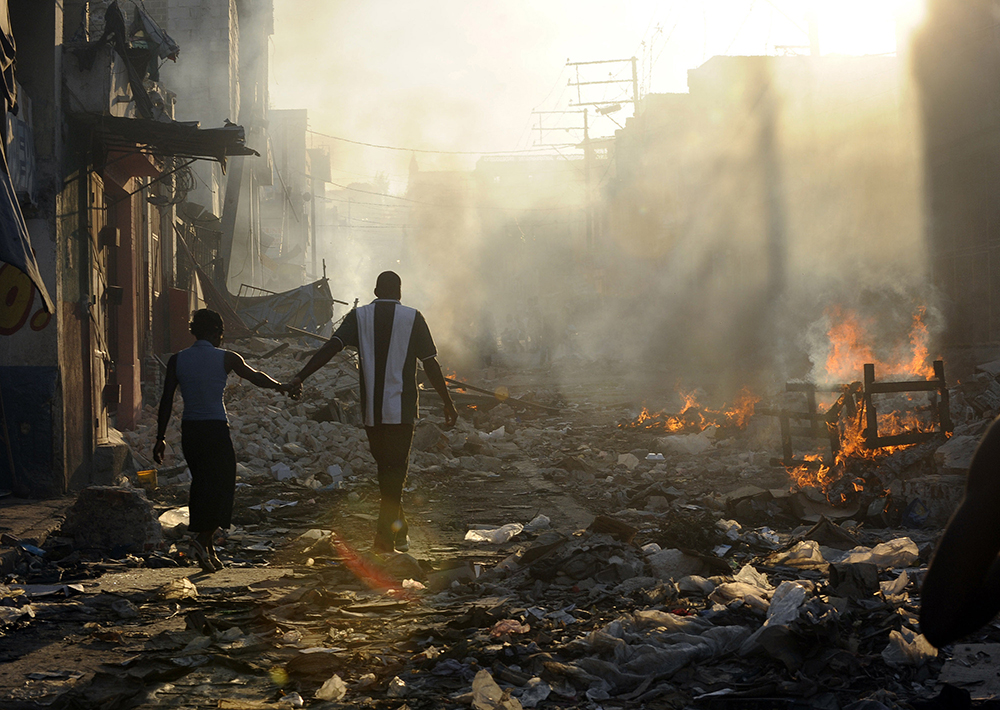
©Carol Guzy, A couple walks past as Haitians burn debris from the earthquake devastation in Port-au-Prince as people take goods from destroyed stores in the marketplace.
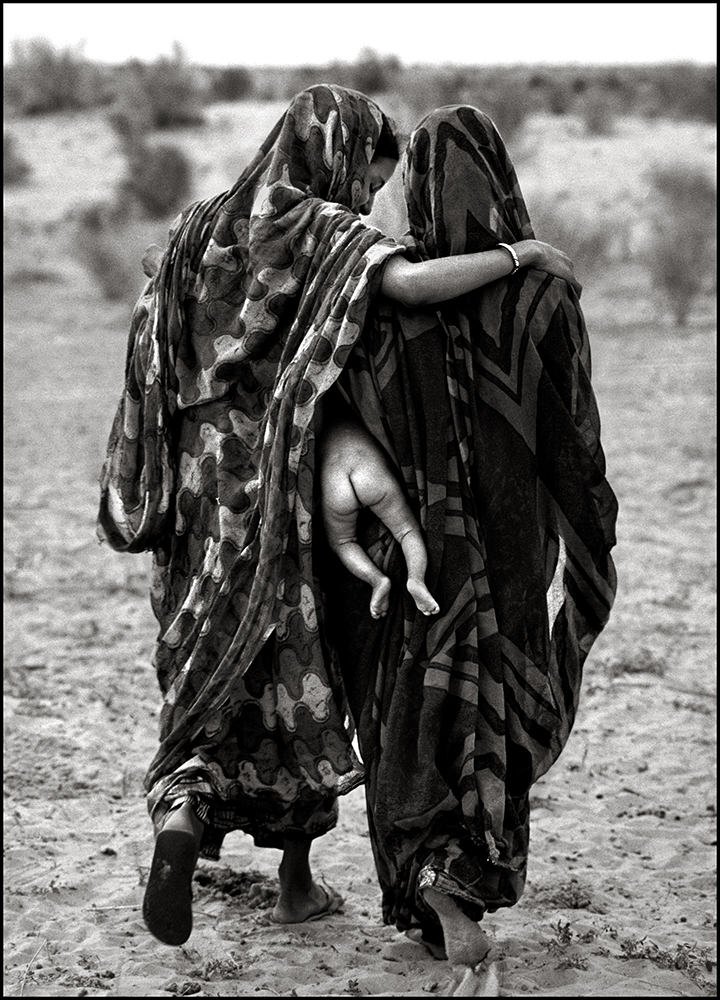
©Carol Guzy, NOMADS Mali, West Africa
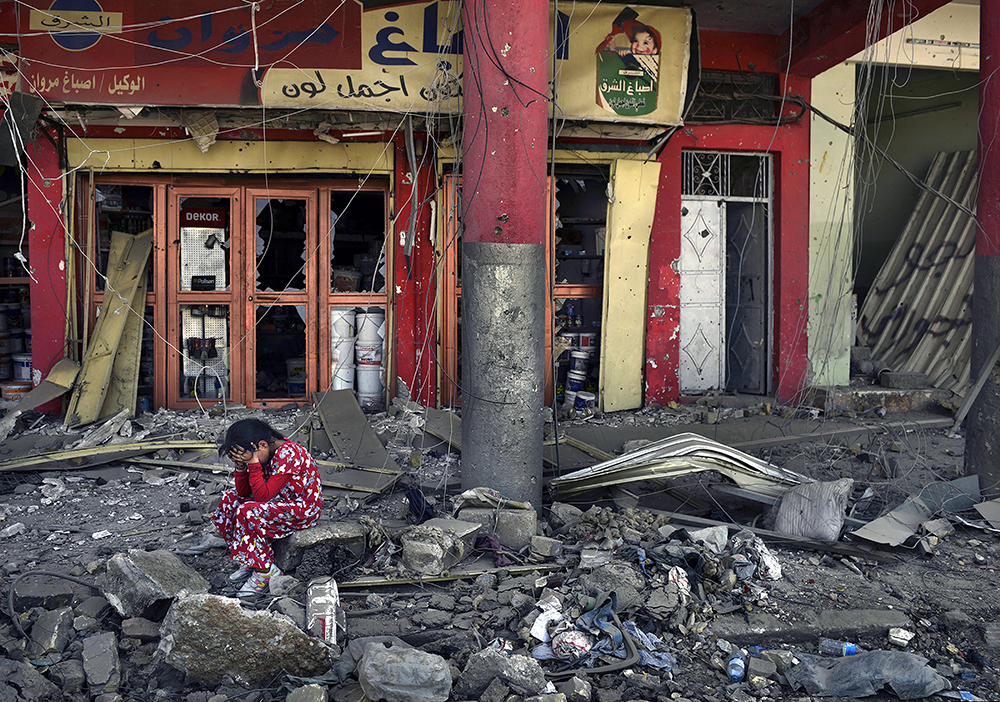
©Carol Guzy, A little girl holds her head in her hands amid ruins of the Old City in West Mosul, Iraq on July 6, 2017. Most who survived now face an uncertain future, forgotten in the limbo of IDP (Internally Displaced Persons) camps. The scars of emotional trauma are even more difficult to heal than the physical wounds. Their lives are shattered, they lost loved ones and all personal belongings, while surviving day to day, in non-stop terror, between suicide bombs and repressive ISIS doctrine for three long years. The war in Mosul is over, but it left a society in ruins and a continuing humanitarian crisis for these victims facing an uncertain future. SCARS OF MOSUL, THE LEGACY OF ISIS STORY SUMMARY: The self-proclaimed Islamic State formed by ISIS, ruled over the civilian population of Mosul until Iraqi forces waged a fierce battle to liberate the ancient city. The citizens who called this home were trapped or held captive as human shields. Wounded and weak, they arrive at a medical triage and transport area near the Old City, struggling to grasp the remnants of their lives. The war is over but its aftershocks remain in a massive humanitarian crisis.
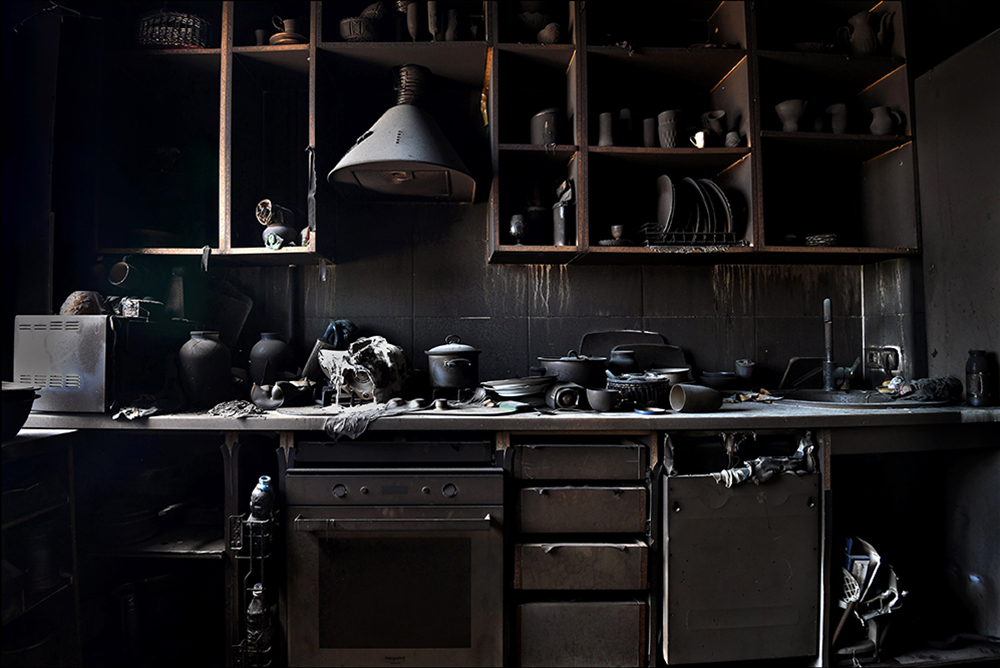
©Carol Guzy, LIFE, INTERRUPTED. Borodianka, Ukraine. April 21, 2022. SUMMARY: Eerie paintings in shades of burnt sienna. Remnants of everyday life, frozen in a macabre stillness at the precise moment time stopped when Russian bombs rained down on Ukraine’s dwellings in liberated towns of Irpin, Borodianka and Kharkiv. Baby cribs and wheelchairs. A kitchen table still holds food left uneaten. What were they cooking that last day of normal? Twisted metal, empty chairs, melted microwaves. Charred cameras that once held tender family photos. A coffee cup sits on a table near a recliner, singed and flaking. Precious mementoes reduced to dust. Yet Exquisite light kisses the scorched palette. Lives interrupted. Or extinguished. Too painful to ponder what the power of these weapons of destruction does to human flesh at the point of impact. Civilian things. Not the stuff of combatants. Humanity’s hopes, dreams, loves – in war, they are merely ‘collateral damage’. A popular cat café is in ruins, once the scene of camaraderie and conversation over cappuccinos. Broken glass becomes a metaphor for shattered lives. Survivors, saved from the bombardment by a fickle destiny of circumstance, visit in bittersweet homecomings to pick through pieces of their former reality. Others will never return. Their life’s breath now a faded memory among precious keepsakes scattered in living rooms of ash.
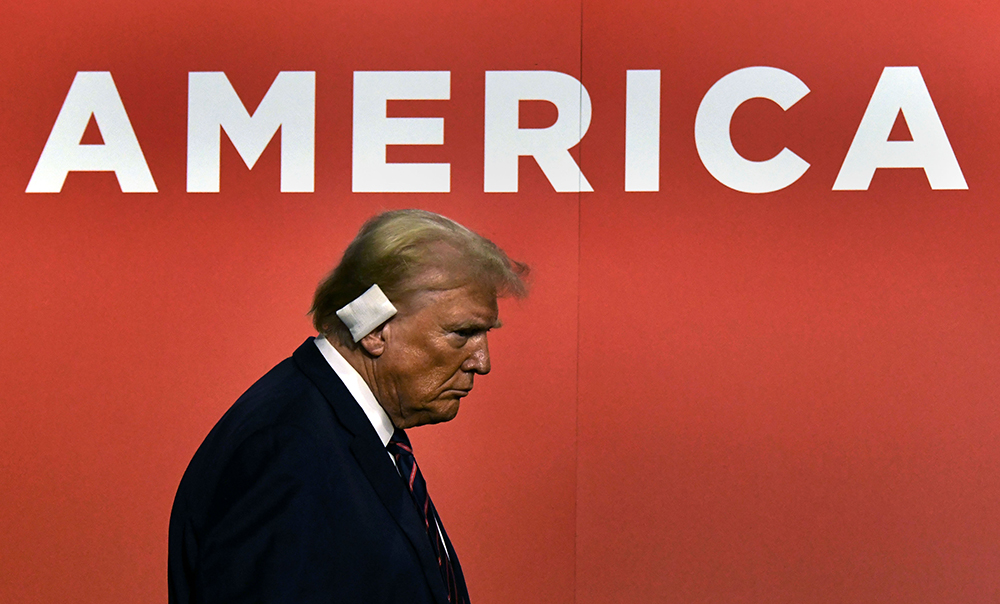
©Carol Guzy, Presidential nominee DONALD TRUMP attends the Republican National Convention continues at the Fiserv Forum in Milwaukee WI on July 17, 2024.
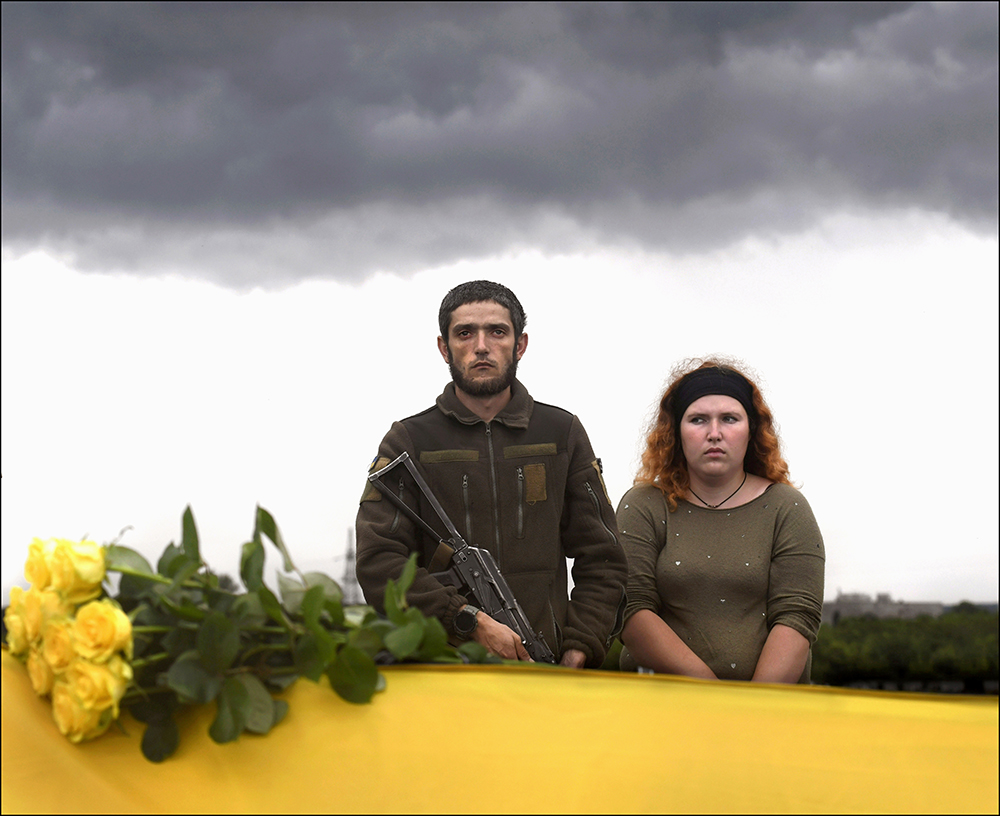
©Carol Guzy, ns killed in the Russian invasion as war crimes investigations continue. The wails of weeping loved ones echo throughout the land. Soldiers are not the only casualties of war as its toll reaches far from the frontline and families bury their dead, dealing with the tragic aftershocks of loss.
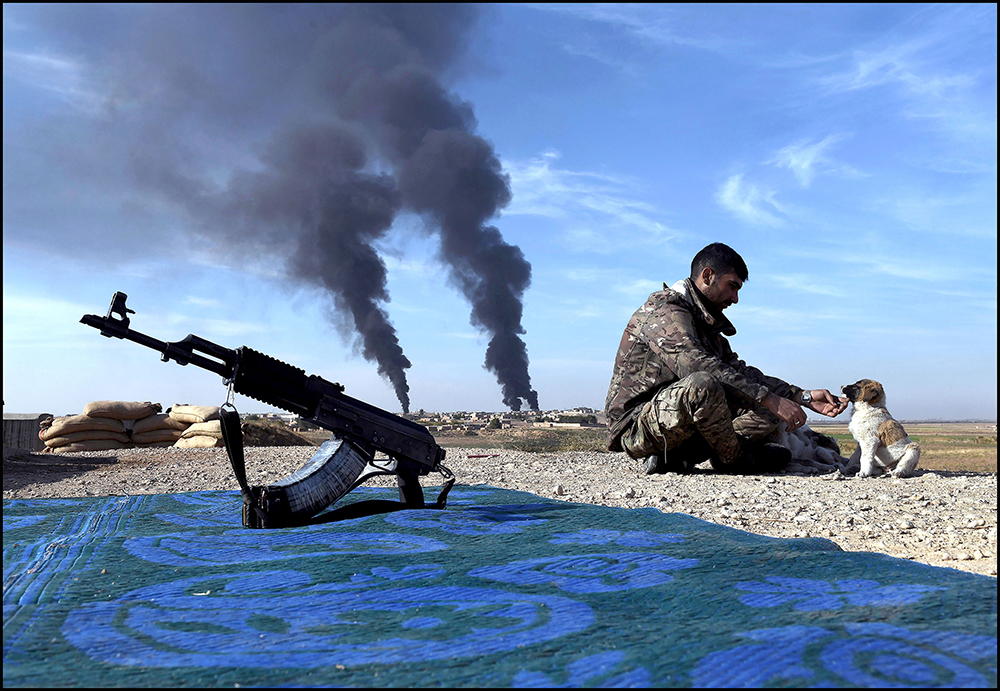
©Carol Guzy, Syrian Kurdish YPG soldiers care for puppies at a checkpoint on the road to Tel Tamir, Syria on November 12, 2019. Smoke from burning oil is used as a shield from drones and airstrikes. Fierce conflict waged after U.S. President Donald Trump pulled troops out which was viewed by many as a betrayal of Kurdish allies.
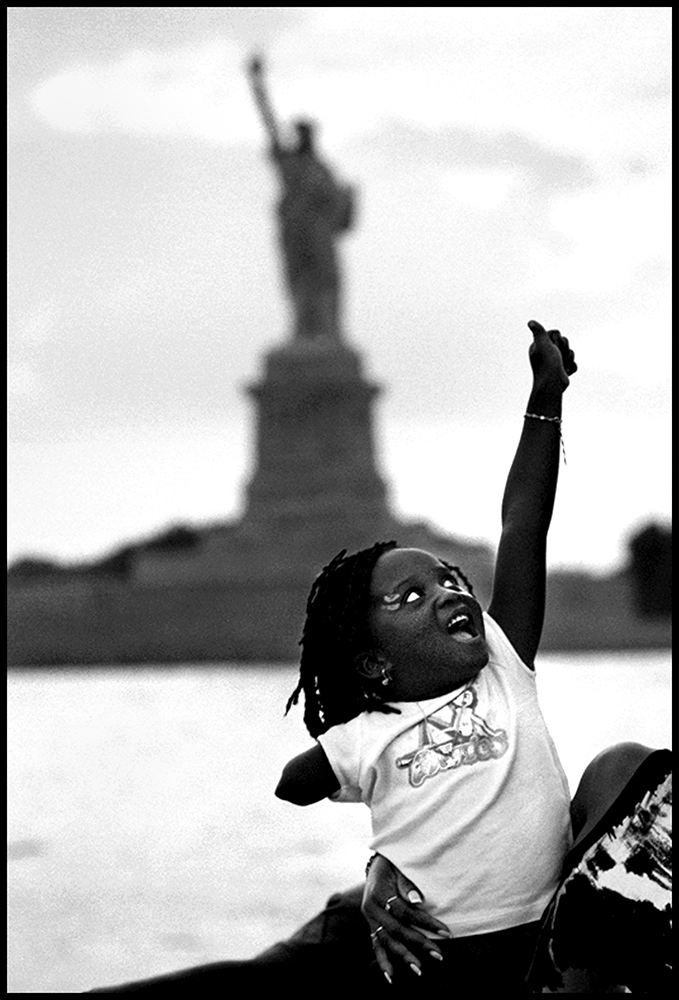
©Carol Guzy, WOUNDED MESSENGERS Memunatu Mansaray imitates the Statue of Liberty, America’s symbol of freedom, during a charity boat tour in New York, NY on July 4, 2004. She lost her arm when rebels in Sierra Leone shot through her, killing her grandmother as they fled an attack at a mosque during a conflict where many civilians had limbs amputated by rebels as a form of intimidation and control of blood diamonds. She was adopted by the McShane family in DC and has grown up to be an enchanting young woman with many talents in art, soccer etc. The story of Sierra Leone’s war victims chronicles their physical and psychological rehabilitation, their assimilation into American society and the tenderness that has surrounded and nourished them. The group of eight amputees traveled to the United States by the humanitarian act of a New York doctor with a desire to fit them with limbs and opportunity. They had endured a particular brand of rebel brutality yet the spirit they maintained in spite of the atrocities profoundly touched their caregivers. Limbs had been amputated but not vitality. The love that surrounds them transcends both racial and cultural barriers to mend wounds inflicted by man’s inhumanity. These individuals put a face on a tragedy shared by so many in their homeland and highlight the challenges they still face. It is a radiant example of the greater good that can be accomplished by the small acts of a few compassionate hearts that are determined to make a difference – one person at a time. Imagine the innocence of a child. Imagine that child trembling in terror as her parents are savagely killed before her eyes and is then ordered to put her arm on the roots of a cotton tree and watches as it is cut off with a crude machete. Some mercifully faint with the first cut, others bleed to death and those that that survive are haunted the rest of their lives by the memories. The rebels in Sierra Leone used this particular form of brutality as a means to intimidate
Posts on Lenscratch may not be reproduced without the permission of the Lenscratch staff and the photographer.
Recommended
-
Alessandra Bobba: A Family Journey, A Lifetime of LoveJuly 10th, 2026
-
Robin Dahlberg: Breaking PointJuly 7th, 2026
-
Mark Edward Harris: NORTH KOREAJune 15th, 2026
-
Elizabeth Li: Three GorgesJune 13th, 2026
-

Amy Gaskin: Marilyn Forever! Marilyn Monroe—A Symbol of HopeMay 30th, 2026