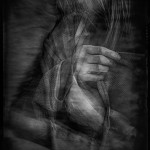
McCall Hollister in Conversation With Douglas Breault
©McCall Hollister
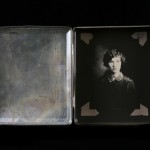
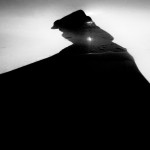
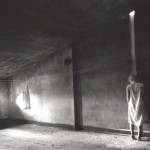
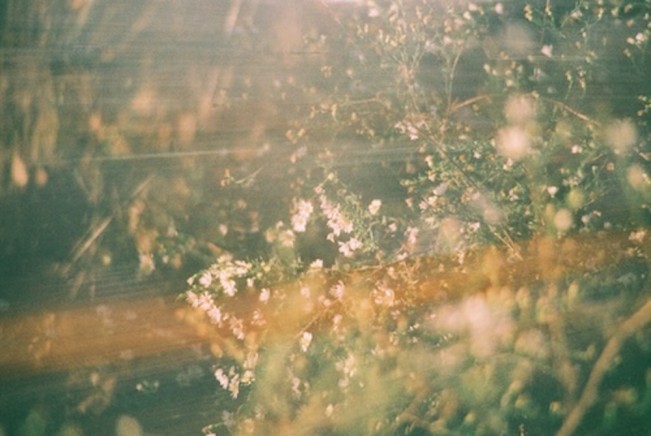
When I first met McCall Hollister, they told me all about how they collect rocks. It took some listening for me to understand, but I connect with that compulsion to collect and hold something as simple as a dull brown rock. There is something profound about operating at a slower speed and digesting the details and curiosities of something that has lived millions of years before us and will likely live millions more after us. Their methodology isn’t careless; McCall’s photographs feel limitless in their hope of holding onto something that maybe isn’t ours to keep. Their photographs conjure wonder like rocks, if you look long enough, in the sense that they are distinctly simple and dense with the possibility of a past and future life.
McCall is childlike in the best sense of the word, sweeping the landscape for unassuming objects and vistas that build an archive of the tactile. It is exciting to be unsure exactly what you are looking at in an image. Often perched in the window seat of a train, their photographic work runs parallel to rock collecting, guided by an inescapably introspective imagination that merges what is fleeting with what is constant. McCall also makes books with their images and writing, further considering the limits of having and holding something that will age and transform over time.
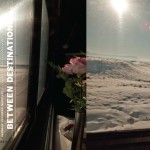
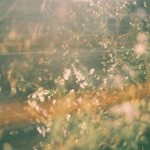
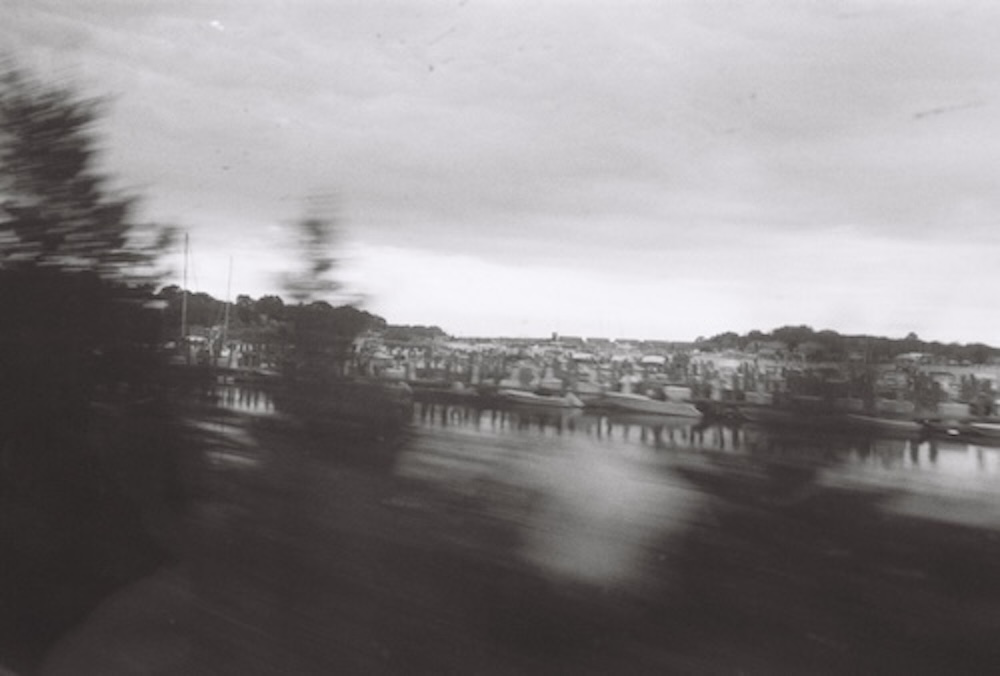
Their photographs ride the line of boredom in a mesmerizing way, catching glimmers of sun on water, reflections in glass, and, of course, rocks. When I look at their photographs, I wish I never held an iPhone as my attentiveness to the swirling world shortens every day. The blur from the movement of the train carries us through these ideas, offering solace from overthinking the details within the frame. The photographs flatten and distort these open spaces, hypnotizing the viewer and inviting them to wander further into the wide-eyed flash of a momentary thought produced from curious eyes.
How does your observation and understanding of the landscape change when you are moving at a rapid speed?
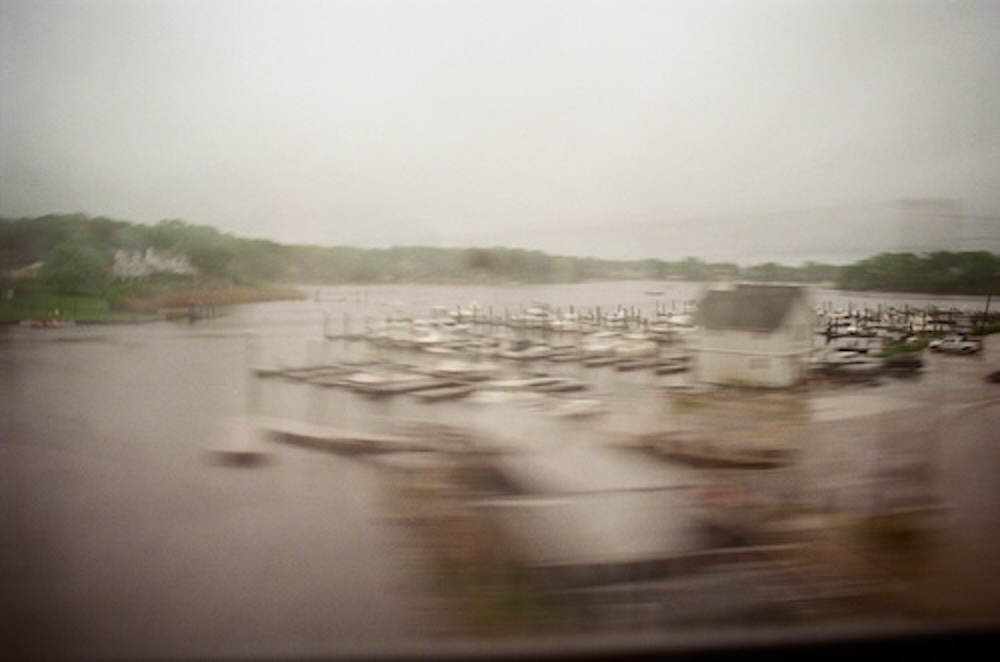
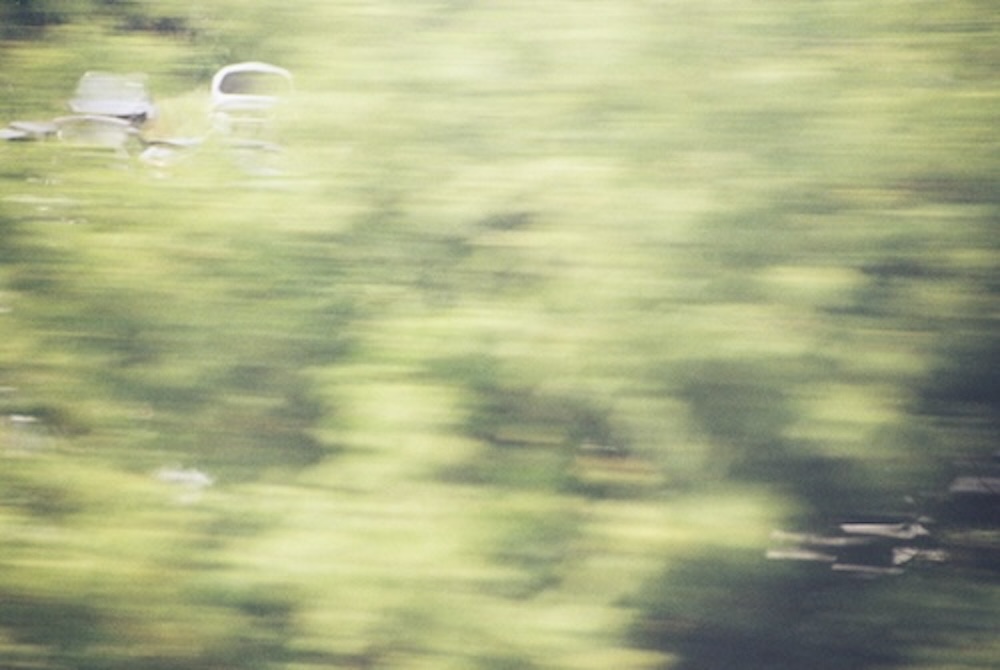
I’m not interested in recognizing specific places. Sure, I enjoy identifying a landmark as much as the next guy, but when I’m shooting on the train I’m not worried about orienting myself, I only care about how we move. This is true even when I know the route by heart, which is the case with my usual ride on the Amtrak Northeast Regional up and down the Atlantic Coast.
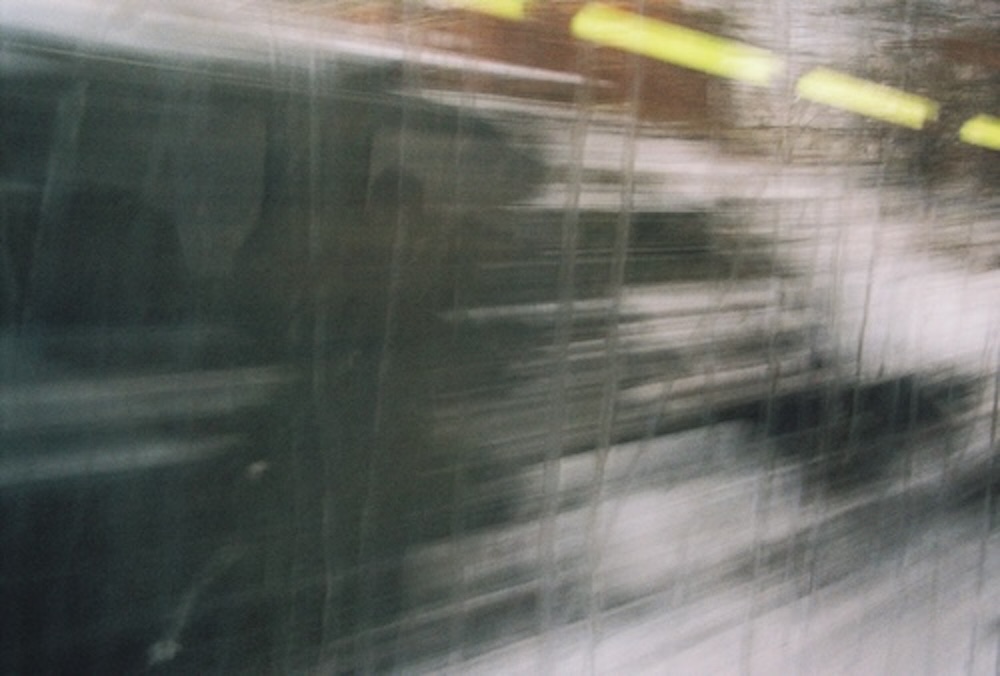
It’s all sensory — I love the way it feels to ride the train, like how it rumbles and hums and sometimes whistles. There’s a particular rhythm for how the landscape moves as you watch it, how you can force it to slow down by focusing on a particular tree or rock, how you can speed it up by letting your eyes glaze over. Sometimes I take off my glasses to watch the window, let it all get blurry and messy. You can’t get that same feeling in a car, not safely, or at least not in New England.
©McCall Hollister
In part, that’s why shooting out a moving train is so addictive; there’s no time to plan images. I move out of impulse, sometimes I don’t even check the viewfinder, the less I think about it the better. As soon as I start waiting for the right moment to shoot I get disappointed, because no matter how hard I try to capture what I’m seeing, I am always, always missing something. The best images happen when I can surrender to falling short, which can be immensely difficult, especially when we pass the ocean.

©McCall Hollister
How does photography fit into your larger process as an artist who does a lot of collecting and cataloging?
My background is in museum studies and I’m continually fascinated by collections — So often our motivations for amassing collections are fraught and subjective and messy, no matter how we as individuals and institutions say otherwise. I’m firmly in this category, I keep collections of everything from second-hand jigsaw puzzles to stripped screws taken from work. If left to my own devices, I would spend all my time taking and sorting things.
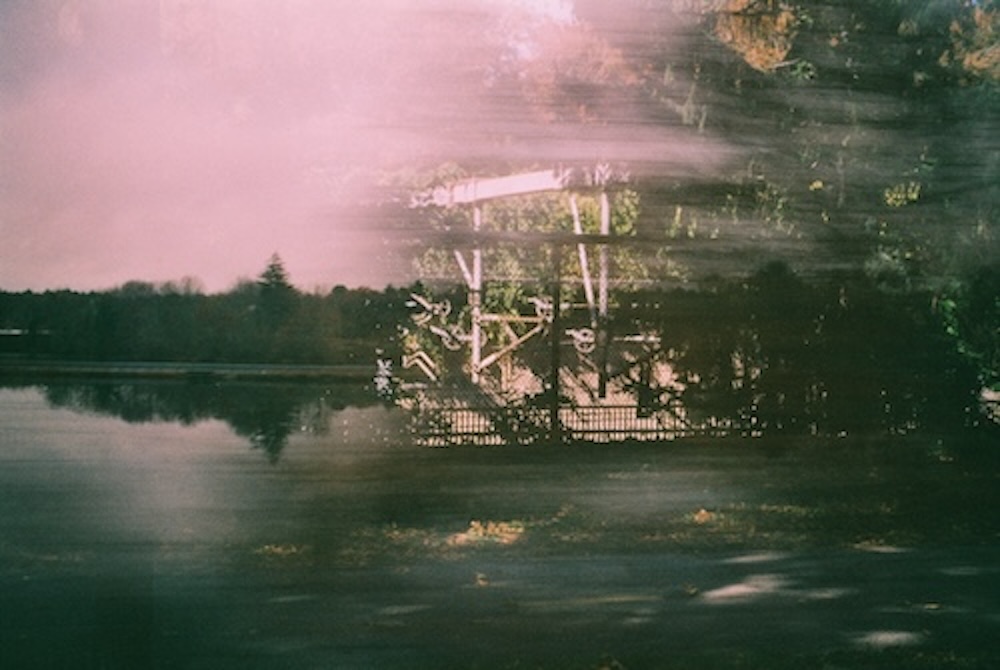
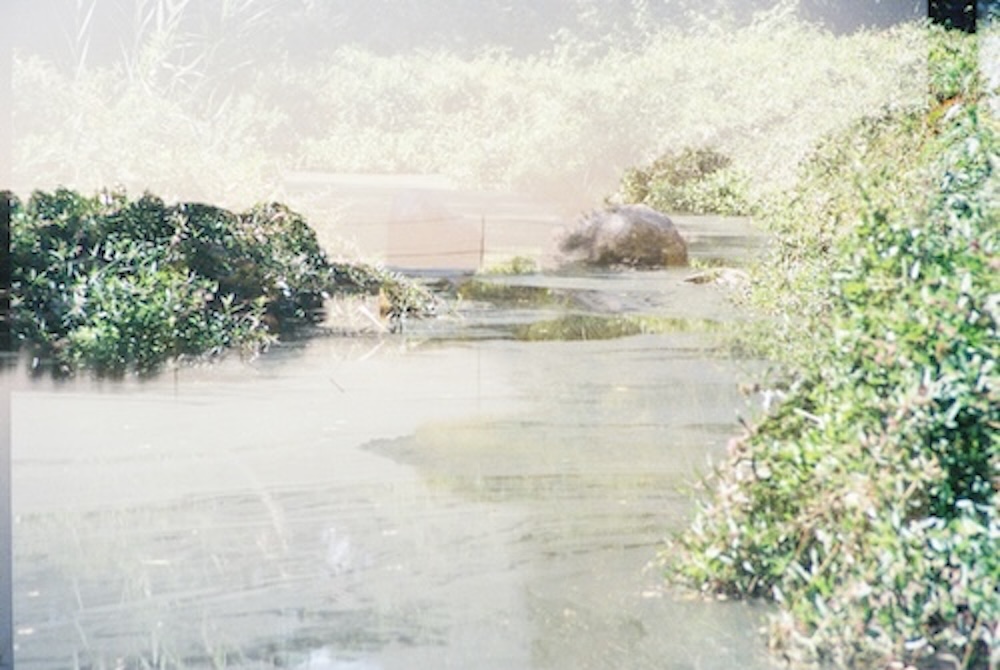
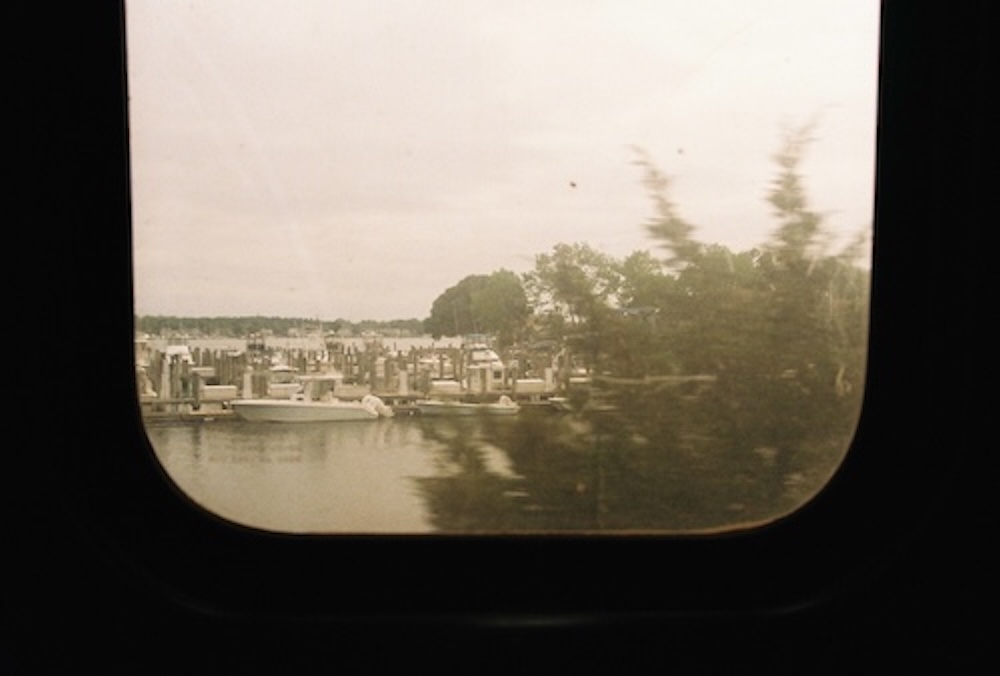
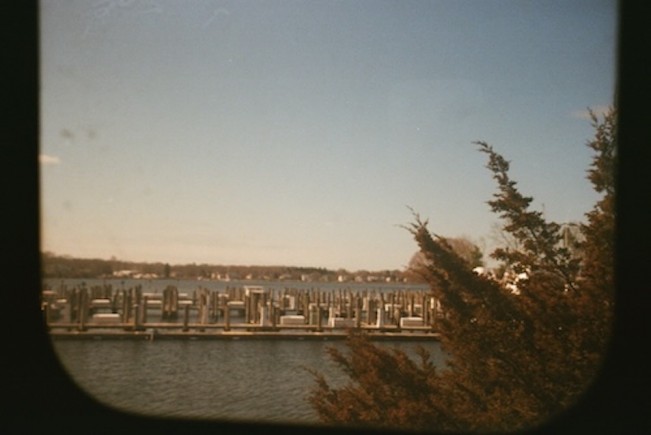
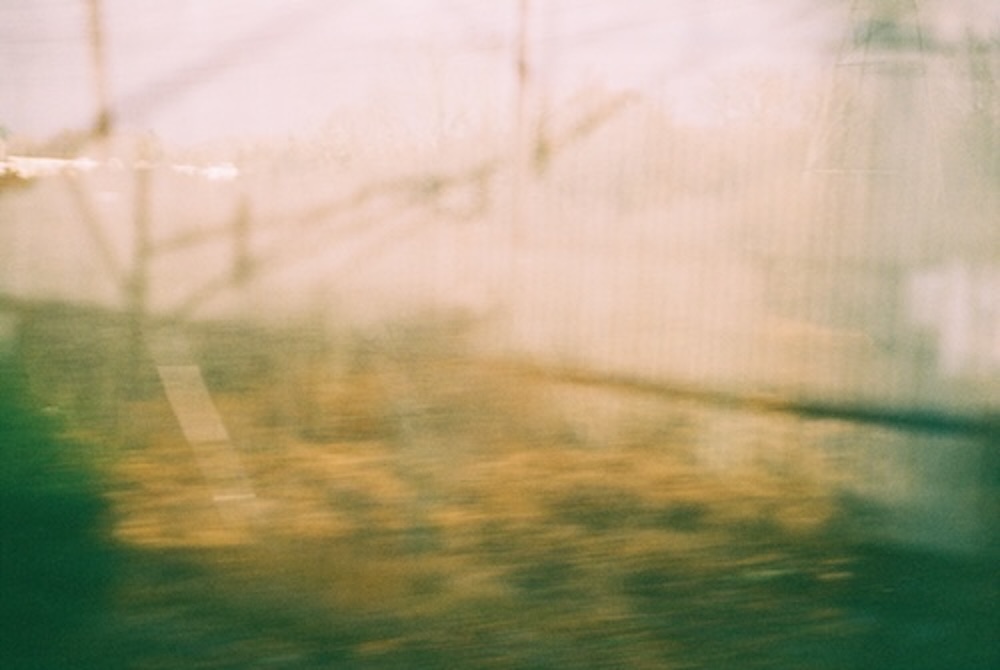
My experience in photography up until very recently has been limited to this “take first, think later” collecting mode, which has left me with tens of thousands of digital images to keep up with. I got interested in 35mm photography as a change of pace, only 36 exposures to deal with in a roll, sometimes even less. Perhaps I shouldn’t be surprised that trying to reign myself in backfired — I’ve taken 407 photos on the train in the past 18 months, and counting. I’ve even started double exposing film so I could save on developing costs. It’s a two part thrill: The rush of being on a moving train, and the rush of being surprised by the images I get back. Sometimes I attempt to retroactively identify and catalog the collection, but doing this without notes or points of reference is pure masochism. Most of the time I don’t try. Even so patterns eventually emerge — It’s become increasingly obvious I’m taking the same images over and over, even months apart. I’ve started to recognize what looks like the same tree overlooking the same harbor, for example.
This is where my book-making practice comes in as a narrative and organizational strategy. Structuring sequences is how I make sense of all the noise, where I can lean into improvisation. This is also crucially why I’m not interested in moving film: I know that if I wanted to record a train ride in it’s entirety, I could, but I’m not trying to document. I’m trying to recreate a sensation through flipping pages.
©McCall Hollister
Is there a reason that while riding public transportation, your images are void of other people?
As a general rule I avoid photographing strangers when I can help it. People are great, but ultimately riding the train is a solitary experience for me.
But I’m often in a bizarre negotiation with other people when I’m photographing in public. For a long time I just pretended people couldn’t see me, kind of relying on the same strategies I always have when I’ve felt uncomfortable in public. I often feel extremely conspicuous, which I often am, my camera is relatively small but it’s loud, which depending on how crowded a train car is means I can be shooting right in someone’s ear. I’m never purposefully rude, I try not to hog extra seats or push people around, but the more I shoot the more I feel territorial over the window view. It doesn’t matter how often I ride the train, I always want more, and I constantly need to remind myself to think beyond getting the shot I want. It’s not something I’m proud of, I don’t have any more right to a window just because I’m working.
©McCall Hollister
Being comfortable with being conspicuous is immensely difficult, I’m still making peace with the fact that getting what I want necessitates being visible. But I’ve gotten more comfortable with “breaking the rules” of the train: On the Amtrak I’ll camp out in the vestibule between cars and in the cafe car, I recently learned from a conductor how a seat ticket works so I can switch seats whenever I want. And people can be genuinely kind–My last ride was unexpectedly packed, so I had no choice but to join a four-seater with only two feet of space in-between the chairs, we were literally all knee to knee. Even still, the stranger across from me offered to switch seats so I could have a better angle out the window. That kind of stuff means a lot to me.
©McCall Hollister
©McCall Hollister
Where do you want to travel to next?
Hard to say. It’s easy for me to get stuck in habits, once I find a route that works it can be difficult to imagine going anywhere else. I know the rhythms of the Northeast Regional between Boston and New York City by heart: what side to sit on to best see the ocean, where we slow down and speed up, when I can rest my eyes and when I need to pay attention. Even when it becomes routine I’m a little in love with the fact that I live here, on this coast.
But there is a lot of traveling I want to do in the world, here in the US and otherwise. Most pressingly, I want to ride the Blue Water train from Lansing to Chicago, the same train I used to ride as a teenager growing up in Michigan. Mostly because I genuinely can’t remember how it looked, and I’ll take any opportunity to visit Lake Michigan.
©McCall Hollister
©McCall Hollister
©McCall Hollister
©McCall Hollister
McCall Hollister is a museum worker, visual artist, and bookbinder. Working primarily through handbound photobooks, Hollister combines writing and photography to explore psychogeographical landscapes and transition. Born in Boston, Hollister grew up in mid-Michigan before returning to Boston for school in 2021. Hollister received their BA in Arts & Humanities from Michigan State University in 2019, and their Masters in Fine Arts and Museum Studies from the School of Museum of Fine Arts at Tufts University in 2024. They currently work as a freelance art handler and bookbinding instructor, based in Boston, MA.
Follow McCall Hollister on Instagram: @mccall.hollister
Douglas Breault is an interdisciplinary artist who overlaps elements of photography, painting, sculpture, and video. His work has been collected, published, and exhibited nationally and internationally, including at the MFA Boston, the Addison Gallery of American Art, the Czong Institute for Contemporary Art (South Korea), Space Place Gallery (Russia), the Bristol Art Museum, and the Rochester Museum of Fine Arts. In addition to being an artist, Breault writes about art, curates exhibitions, and teaches photography at different colleges.
Follow Douglas Breault on Instagram: @dug_bro
Posts on Lenscratch may not be reproduced without the permission of the Lenscratch staff and the photographer.
Recommended
-
McCall Hollister in Conversation With Douglas BreaultMarch 6th, 2026
-
Jonathan Silbert: InsightsFebruary 19th, 2026
-
Anne McDonald: Self-PortraitsFebruary 17th, 2026
-
Photography Educator: Erin Ryan StellingJanuary 9th, 2026
-
The Female Gaze: Alysia Macaulay – Forms Uniquely Her OwnDecember 17th, 2025