Ben Alper: Rome: an accumulation of layers and juxtapositions
©Ben Alper
For the two decades I’ve known him, Ben Alper has made work about layering, wandering, and reimagination. From digitally altering and erasing scanned family photos to compositing the same urban landscape multiple times, his art is often about the fragmented ways we remember personal and collective history.
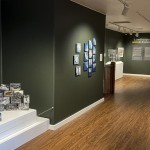
His latest exhibition, Memory Palace, up at Seasons LA through Feb 15, turns to Rome, one of the most over-photographed and historically loaded cities, with a mix of commotion and grace.
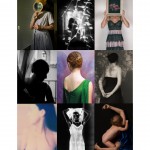
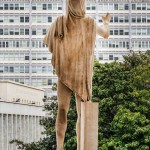
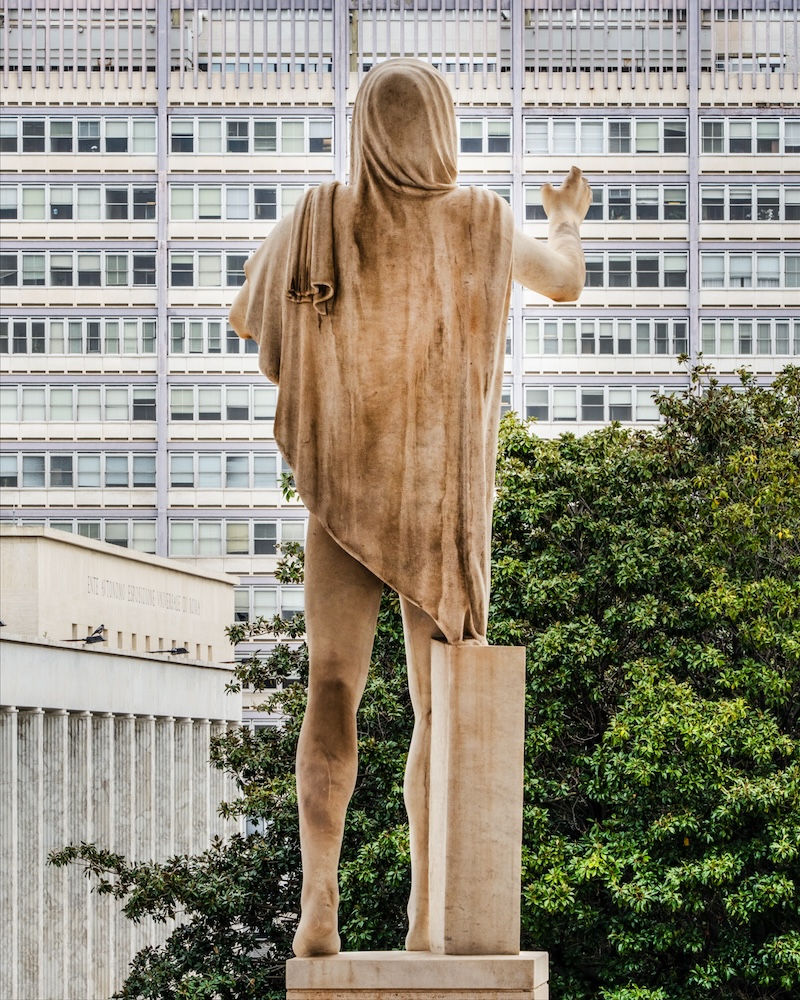
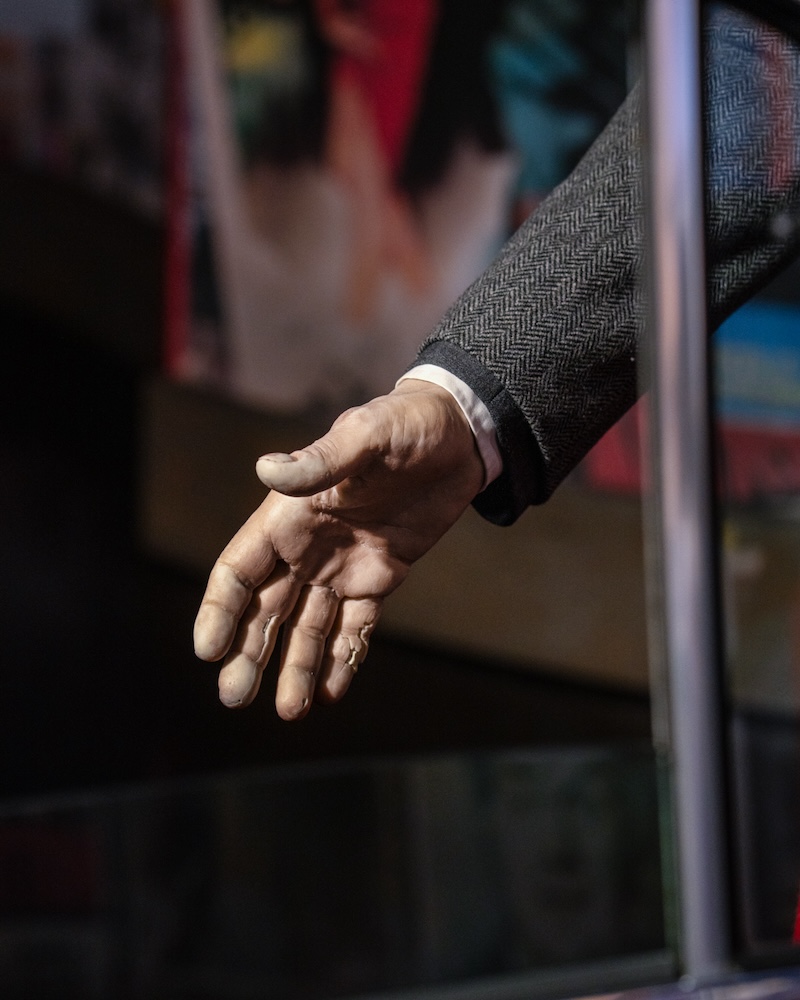
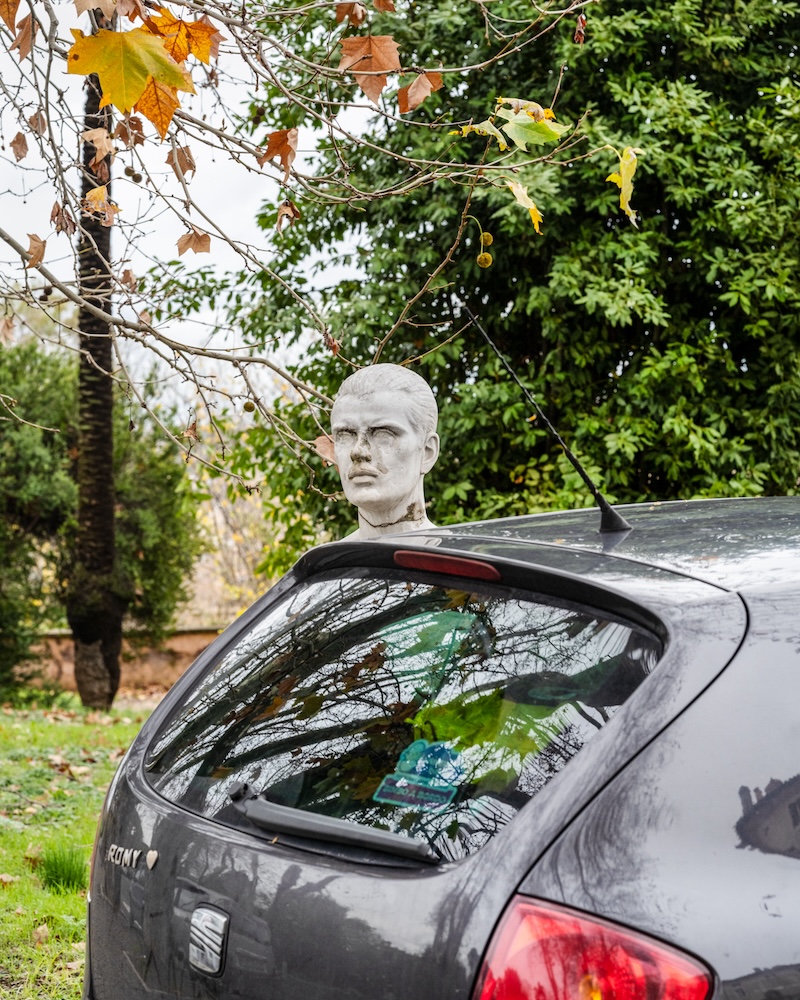
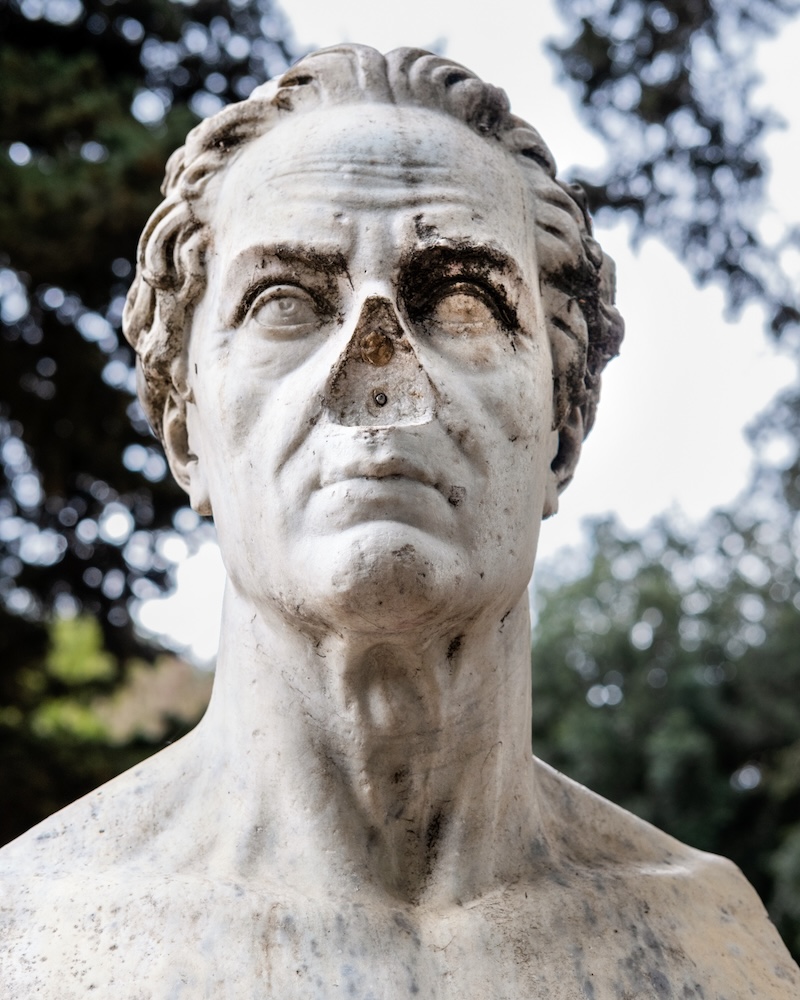
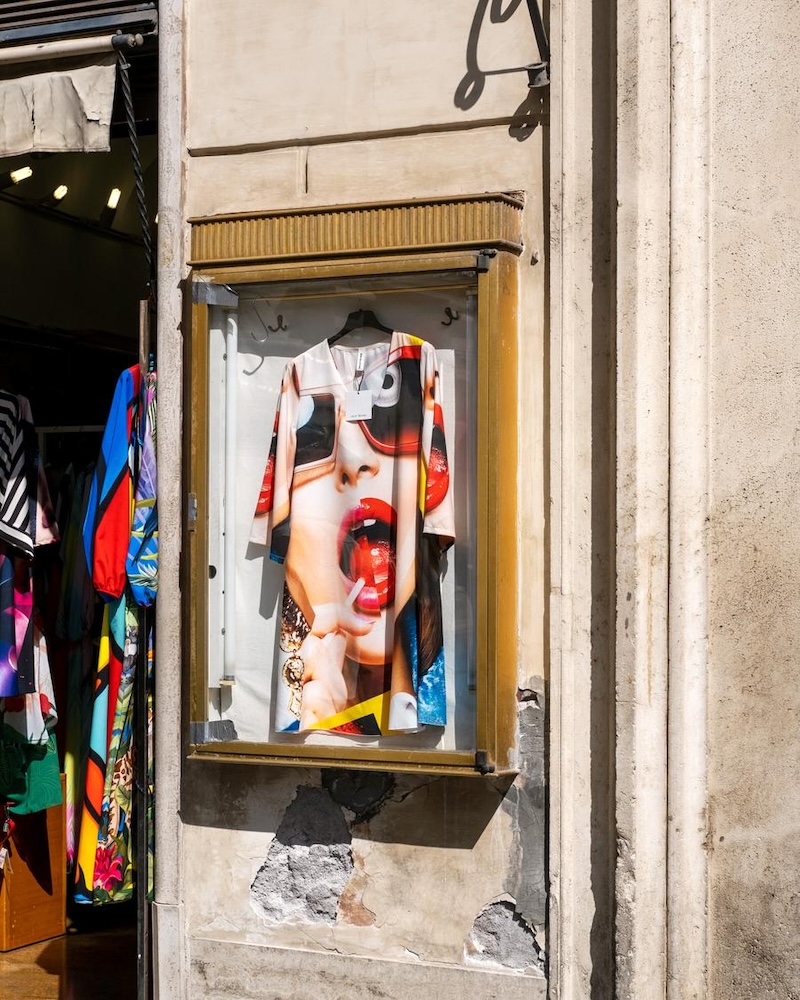
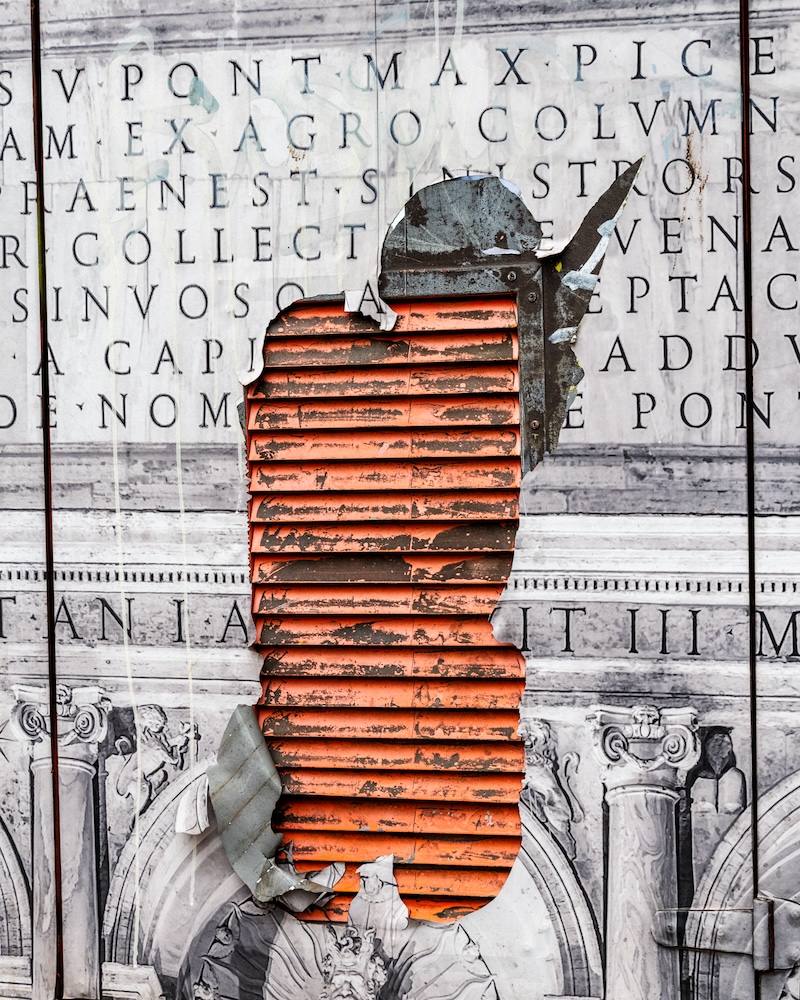
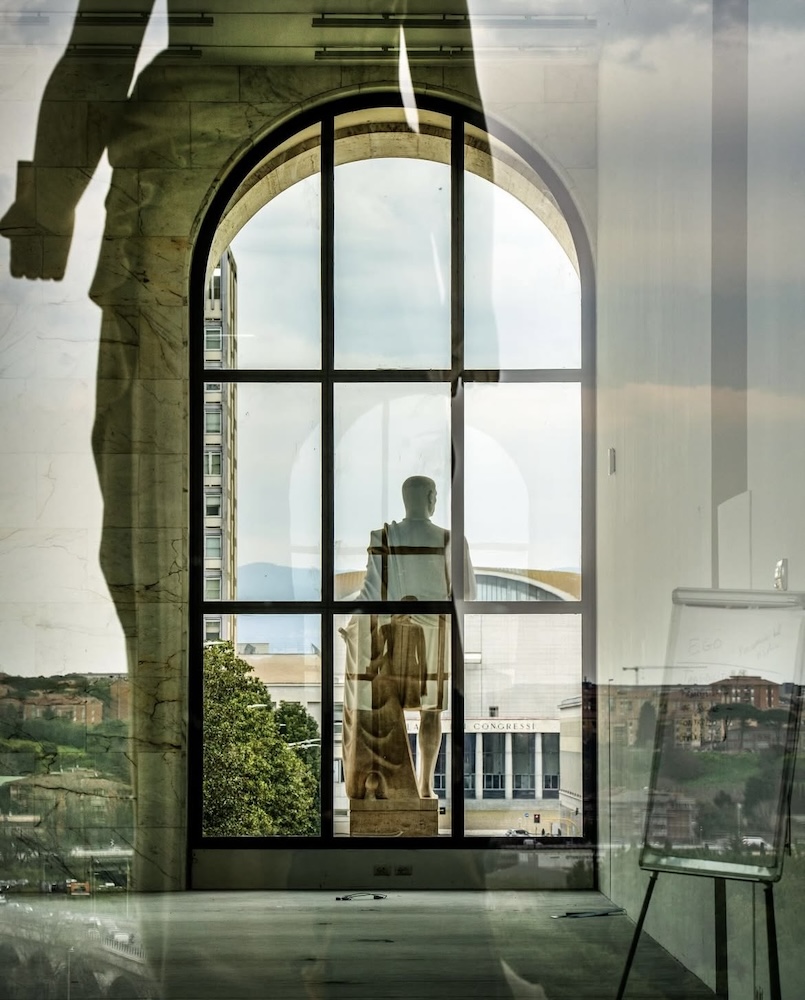
“Rome is a place of collision,” writes Alper, “where thousands of years flatten on each other, chaotically sharing space.” Statues of powerful men altered (and rhinoplasty’d) by time and restoration coexist with SUVs and cell phone-transfixed tourists. Colorful genZ teeshirts hang for sale on peeling paint in city markets. Seeing them together, the images feel wild yet calming.
I spoke to Ben to learn more about how the project took shape in a place worn down by centuries of looking.
©Ben Alper
Jon Feinstein: Why Rome?
Ben Alper When I first visited Rome with my wife in 2022, I was completely overcome by its beauty, its energy, and the scale of its history. I knew pretty immediately that I wanted to make a longer-term project there. It embodied so many of the thematic and conceptual things that have guided my practice over the years – ideas surrounding the trace, presence and absence, layering and compression. It also offered a physical landscape that allowed me to make the kind of spatial photographs that I’d wanted to make for a long time. So it was kind of perfect for me.

©Ben Alper
I understand there’s a lot of wandering, finding, and making. On your trips, did you have particular historical destinations and landmarks in mind or was everything purely organic?
It was a mix of both, but on balance, there was probably more wandering, chance, and spontaneity. With this kind of project, it can be hard to pre-plan too much, beyond perhaps picking a site in the broadest sense. So there was a kind hybrid situation that would occur – one where I would select a place to photograph (I would choose a stage, if you will) and then just remain responsive and open to what unfolded in front of my camera. Occasionally, I’d have a very specific image pre-visualized, but that was more the exception than the rule.
©Ben Alper
©Ben Alper
Were you listening to music while wandering and photographing? What was your soundtrack?
Honestly, most of the time I didn’t listen to music while photographing. I wanted to be attuned to the sounds of the city. But when I did want to escape a bit while making pictures, I would put something chill and soothing on – a sort of musical salve to the freneticism of Rome. Eluvium’s Copia was a go to at times.
©Ben Alper
When did everything start gelling as the “serious project” you hoped for, beyond a couple of impactful photos?
When I returned from that first trip in the spring of 2022, I already knew I wanted to go back. But even by the end of that first trip, I knew I had a “serious” project on my hands. There are a number of images from that first trip that have persisted in later edits of this work.
©Ben Alper
What preconceptions did you have about Rome when you started this work?
Before I ever experienced Rome firsthand, it already existed vividly in my imagination, shaped by photographs, films, and writing. Federico Fellini was a major influence for me; his Rome is ecstatic, chaotic, and dreamlike—a place where antiquity collides with decadent modernity. While his vision is more fantastical, I was struck by how closely my own experience aligned with its underlying sensibility.
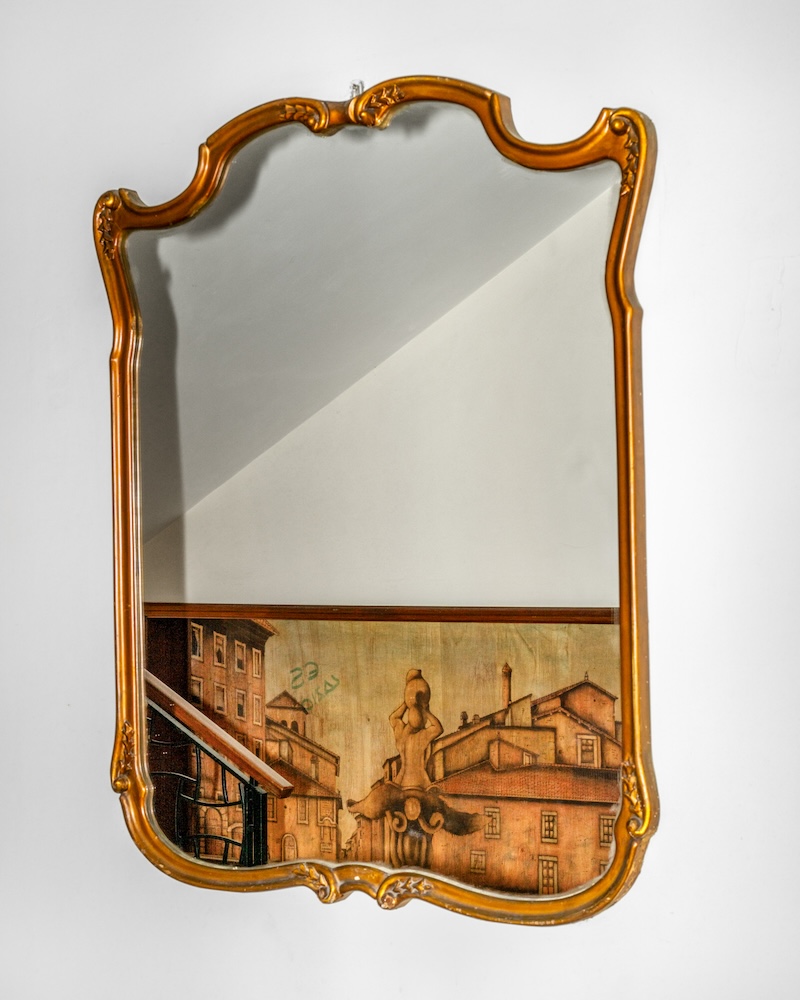
©Ben Alper
How did making the work, wandering about, and ultimately sequencing it change or confirm those ideas?
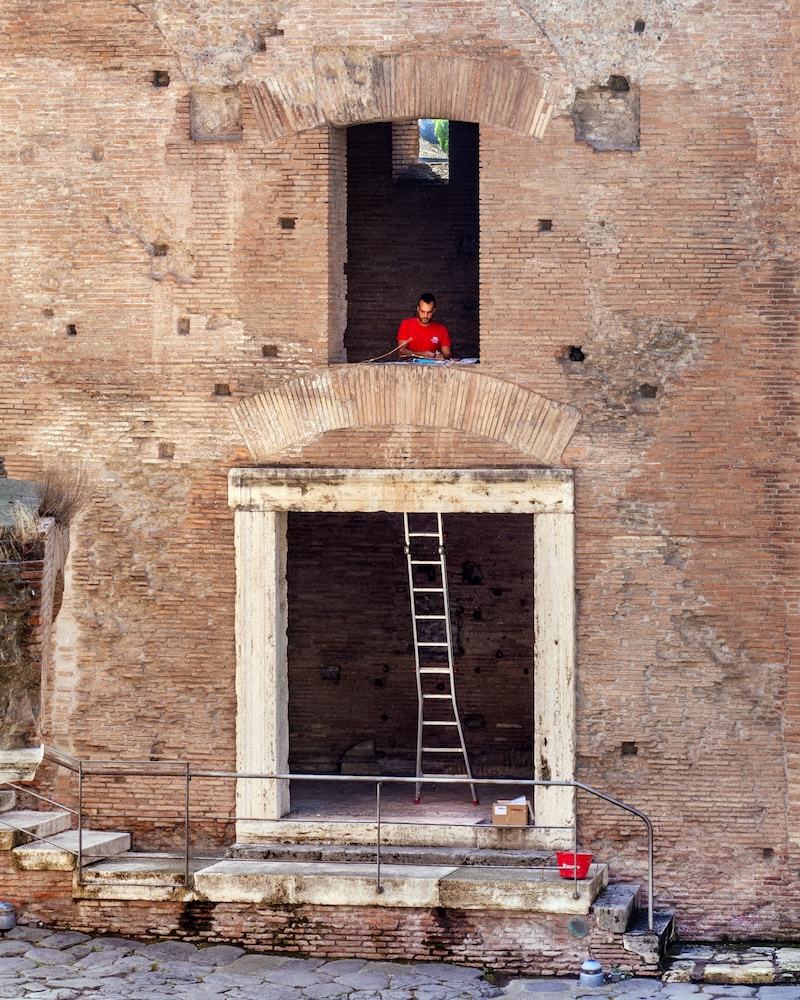
Making the work confirmed these impressions but also complicated them. Wandering the city shifted my focus away from iconic sites toward fragments, interruptions, and moments where past and present collide. Sequencing the photographs reinforced this way of seeing, allowing the work to function less as a linear portrait and more as a mental map—layered, associative, and unresolved, much like the city itself.
You use a quote from Graham Joyce: “Rome is a place worn out from being looked at” – Does this work create a new way of looking?
I’m not sure I would claim that the work offers an entirely “new way of looking”—that feels like too large an assertion. What I can say is that I was very intentional about developing a formal language that could visually embody the conceptual ideas informing the work. The layering, compression, flattening, density, and fragmentation aren’t aesthetic gestures so much as strategies for engaging a place that is, as Joyce suggests, exhausted by being seen—ways of slowing down perception and complicating the act of looking rather than trying to replace it.
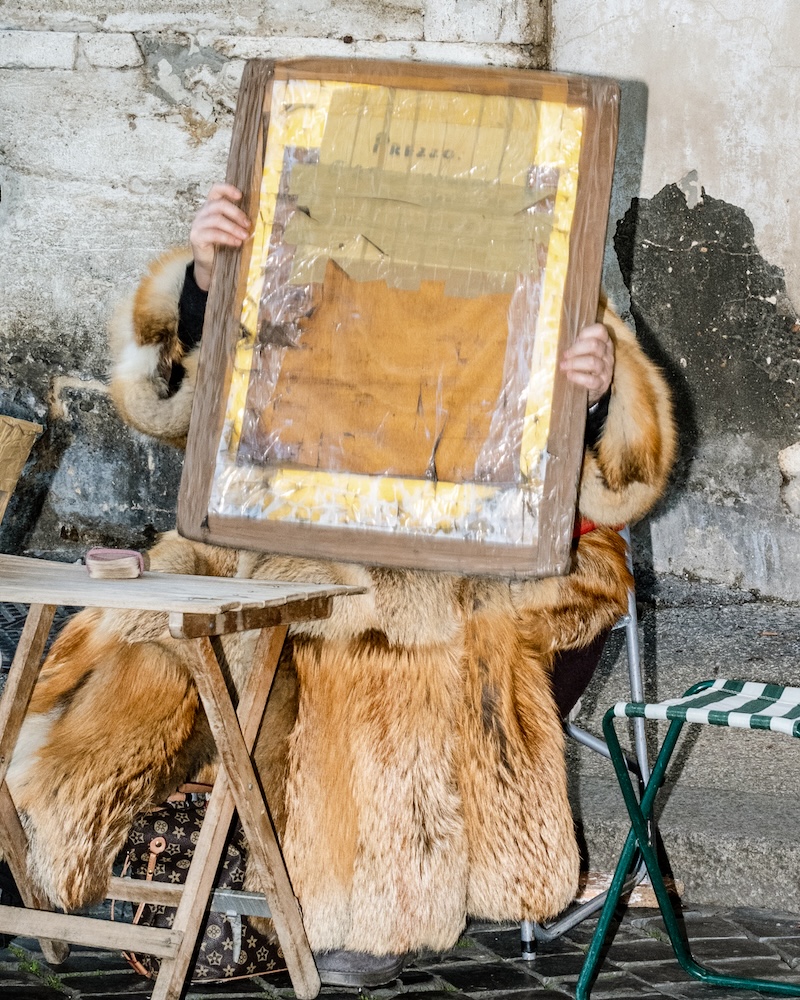
©Ben Alper
I love how this work takes a chaotic, maximalist approach and flattens it. Many of the images have so much going on yet they feel hyper-organized. They’re seductively overwhelming.
Being in Rome is often an overwhelming experience. It’s dense, cacophonous, and disorienting; the scale of its history is humbling in the truest sense. I thought a lot about how to make photographs feel that way—how to embody the complexity, accumulation, and layering that exist there.
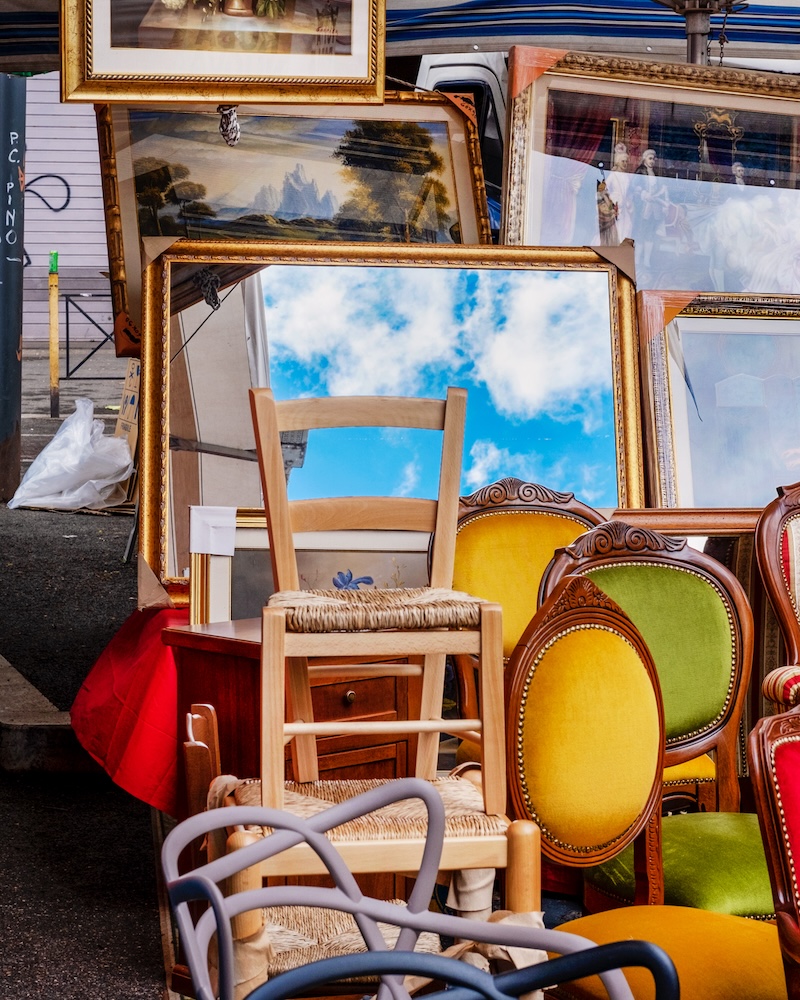
At the same time, I wanted to impose a kind of formal order on that chaos, flattening space and compressing information so that the images hover between excess and control. My hope is that the work draws the viewer in through that tension: it’s visually seductive, even overwhelming, but also tightly organized and encourages sustained looking rather than quick consumption.
©Ben Alper
I love the balance of calmer images amidst the chaos – a gaze at an old statue or worn wall. Do you think about this while shooting or did it come with the editing process ?
I think it’s a combination of both. While shooting, I’m attentive to finding—or deliberately seeking out—certain kinds of images that can carry specific thematic or conceptual weight. But the balance you’re describing really emerges in the editing process. That’s where I’m thinking most carefully about pacing, tension, and juxtaposition—how quieter, more contemplative images can create space within the series and sharpen the impact of the denser, more overwhelming ones.
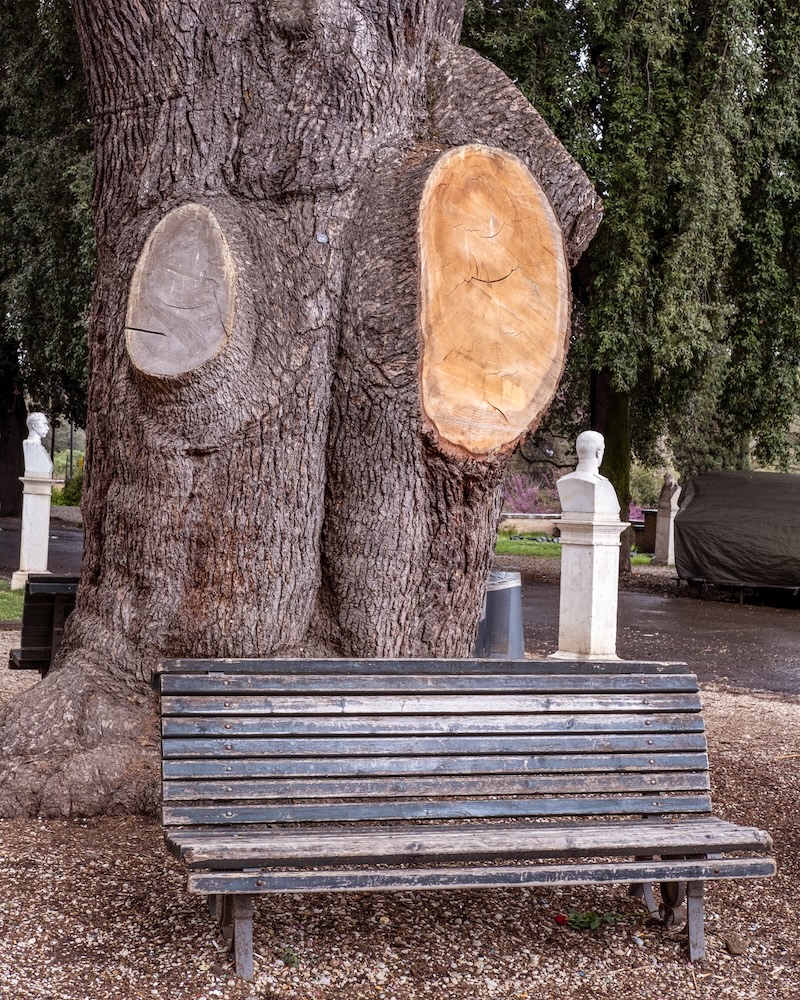
©Ben Alper
Getting back to that flattening of time, old, and new…mobile phones are a constant throughout this series.
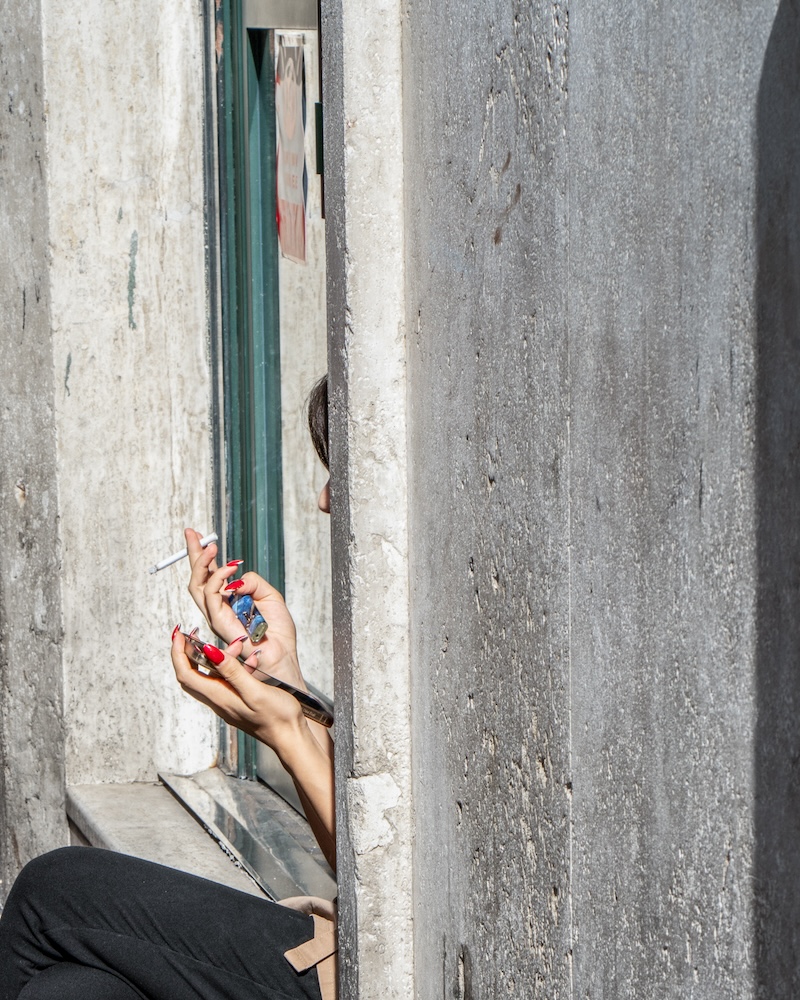
At the risk of sounding flip, their presence is simply a reflection of how pervasive they are in daily life. I was initially ambivalent about including them, but ultimately it would have felt disingenuous not to. Most of us now experience the world—especially places like Rome—through some form of mediation. In the work, cell phones point to mediation and the sense of performance it produces, but also to a subtle distancing: the device becomes a conduit between lived, physical experiences and their virtual counterpart.

©Ben Alper
How did you know this work was “ready” for a show (and more)?
After spending a month in Rome last spring, I had a deep feeling that I’d finished shooting for this project. I could have probably kept making trips for years and generating new images, but I’d amassed a large body of work. It’s always hard to know exactly when a project’s done, but at some point you just have to decide.
©Ben Alper
What do you hope viewers come away with?
As simple as it may sound, I hope viewers come away with an experience of Rome that feels unfamiliar—one that encourages them to think about the city, and its history, in a slightly different way. That’s an ambitious hope, but I still believe photography can meaningfully shape how we perceive a place. At the very least, I hope I’ve approached Rome with care and respect, acting as a thoughtful steward rather than just a collector of images.
©Ben Alper
©Ben Alper
Ben Alper lives and works in Carrboro, NC, where he divides his time between running Flat Space Studio and working on personal projects. He’s also 1/2 of Sleeper (a publishing studio based in NC and PA) and co-founder of A New Nothing, an online project space that facilitates visual conversations between artists.
Instagram: @benalper
Jon Feinstein is the co-founder of Humble Arts Foundation and lead curator at VSCO.
Instagram: @jonfeinstein
Posts on Lenscratch may not be reproduced without the permission of the Lenscratch staff and the photographer.
Recommended
-
Jordan Tovin: A Shaw DiaryMarch 21st, 2026
-
Houston Center of Photography: THE VANGUARD,Rebel Girl, and Soft Heat…and a conversation with Anne MassoniMarch 12th, 2026
-

A Collaborative Photographic Exhibition by Heather and Ben Mattera: Weight of It AllMarch 7th, 2026
-
Binh Danh: Belonging in the National ParkMarch 4th, 2026
-
Landscape ReEnvisioned Exhibition At the Monterey Museum of ArtFebruary 26th, 2026