BEYOND THE PHOTOGRAPH: Q&A WITH CURATOR GREGORY J. HARRIS
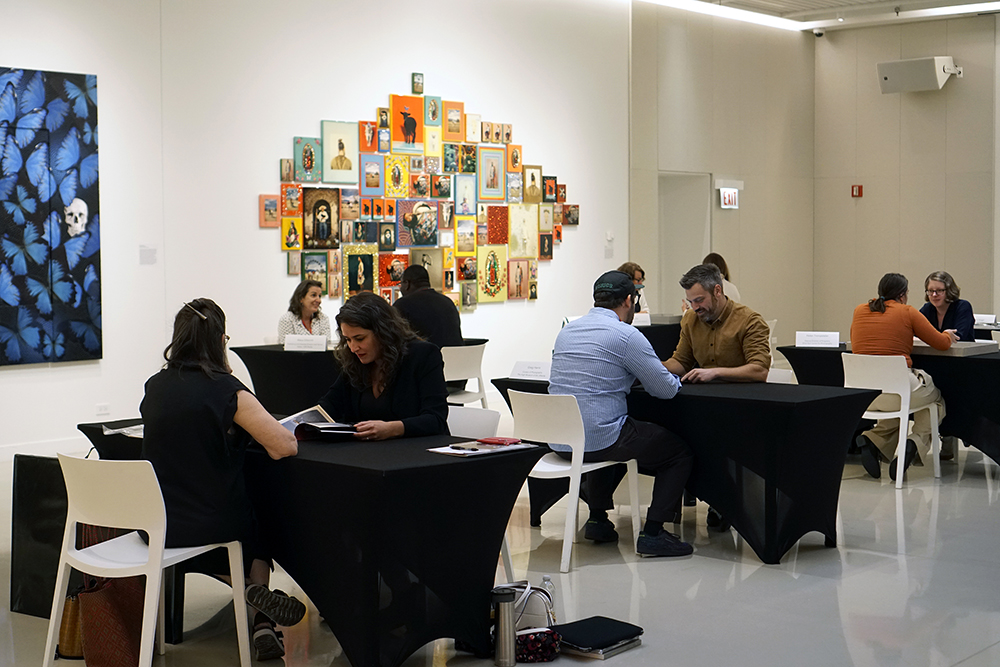
Portfolio Reviews at Filter Photo Festival, Chicago, Illinois, 2022. Photograph by Caitlin Peterson.
Beyond the Photograph is a Lenscratch Magazine monthly series dedicated to helping photographers grow their artistic practices beyond the camera. Capturing images is just one small part of a photographer’s journey. In this series, we’ll explore the tools, strategies, and best practices that support the broader aspects of a contemporary art career.
This month we speak with photography curator Gregory J. Harris of the High Museum in Atlanta, Georgia where he has curated over a dozen exhibitions with various artists. He is a curator, art historian and writer. Over the years, he has built some long-standing relationships with artists that he now calls friends. He shares some insights on how best to meet and maintain a relationship with a museum curator.
“I love the way photography connects you to the world. It’s such a relatable medium, and it’s something that everyone really understands.”
– Gregory J. Harris
Q: What is the best way to meet a curator: i.e. portfolio reviews, or other ways to facilitate a meeting that are respectful of your time and space? If not meeting you through some sort of organization, what is the best way to get in contact with you or other curators?
Portfolio reviews are definitely a good way to meet a curator and get a conversation started. It’s a structured format designed exactly for that purpose and is a productive introduction for both artists and curators. I also don’t mind if someone emails me directly (either out of the blue or following up after a review). I try to look at all the work that gets sent to me and respond to every email, but sometimes I’m too busy and can’t get to everything. Some people reach out through Instagram, which I also don’t mind, but I’m more likely to miss those messages. I enjoy it when a photographer mails me a book that they’ve published. Books offer excellent insight into the works and how a photographer structures a project. Attending openings, talks, or other events and saying hello is also fine. I love photography and getting to know photographers. Don’t be shy to get in touch. Just be respectful of other people’s time and don’t approach it as a purely transactional relationship.
What are ways in which not to approach a curator?
Please don’t show up at the museum without an appointment and ask to meet with a curator. We have busy schedules and can’t drop everything to meet with someone we’ve never met. You’d be surprised how often I get a call from the front desk saying there’s a photographer in the lobby who’d like to see me.
Aside from that, as long as the approach is polite and respectful, I don’t mind so much the means someone uses to get in touch. What’s most important is what the photographer’s expectations are. It’s best not to be pushy. It’s highly unlikely that I’m going to offer you a show or ask to acquire your work the first time we meet. Or even the second. Think of that initial meeting as the start of a conversation. I like to develop relationships with the artists I work with and get to know them and their work well. That takes time. We have very few slots for exhibitions at the High Museum (2 to 3 each year) and each exhibition takes years to develop. Because of that, we have to be exceedingly selective with our shows. The same is true with acquisitions. We have very limited funds to purchase work and need to be very selective. Even if you offer us a gift, the museum commits to caring for the photographs in our collection in perpetuity and there are significant costs associated with that, so we don’t accept everything. All of that is to say, manage your expectations, be considerate, and please don’t put me in a position where I have to say no to you. If I have an opportunity to offer, you can bet I’ll let you know.
What should a photographer/artist do to prepare for a meeting with a curator? What should they bring to show? What is okay to leave with you after the meeting?
Ahead of a meeting, it’s a good idea to research the curator’s work and have a sense of what they’re interested in. Before you approach a curator, you should ask yourself if your work is relevant to their institution’s program and that curator’s interests. For example, we show almost no fashion photography at the High, so if that’s the kind of work you make, I’m probably not the best curator to approach.
It’s important to be able to talk about your work. It doesn’t need to be a fully fleshed out lecture, but it helps to have a general sense of the ideas you’re working with. Even if you’re stuck on something or the ideas are just starting to come together, that’s also very helpful to know since we can talk about that.
Bring whatever you think is the best representation of your work. I prefer prints. As a curator, I show and collect physical objects, so I like to get a sense for process, print quality, material choices, scale, etc. Obviously, you can’t lug around giant prints all the time, but I can make some imaginative leaps when necessary. Books are also good because they give a sense for sequence, editing, and the overall breadth of the work. I prefer not to look at work on screens unless that’s how the work is intended to be shown. If you have installation shots from previous exhibitions, those are helpful because they give me an idea of how the work functions in a space.
For leave behinds: postcards, business cards, and books are all nice. It may seem obvious, but be sure to include your contact information. If I met you while I’m traveling, just be mindful of size since I may have to lug it home in a suitcase.
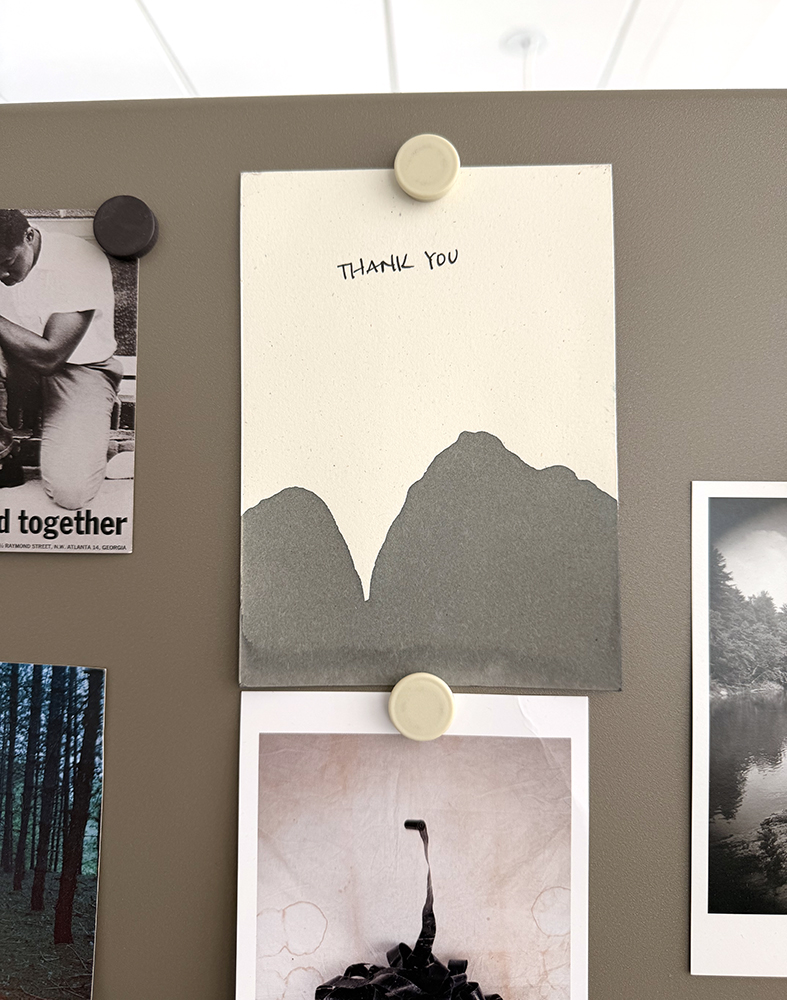
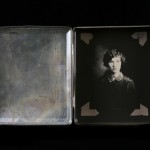
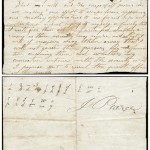
© Gregory J. Harris. Thank you card from Meghann Riepenhoff, 2025
How best to say thank-you for your time? A hand-written note, an email?
Notes and emails are both fine. Especially if we met a portfolio review, it’s a good idea to include some kind of reminder about your work and what we talked about since I end up looking at so many portfolios over the course of those events.
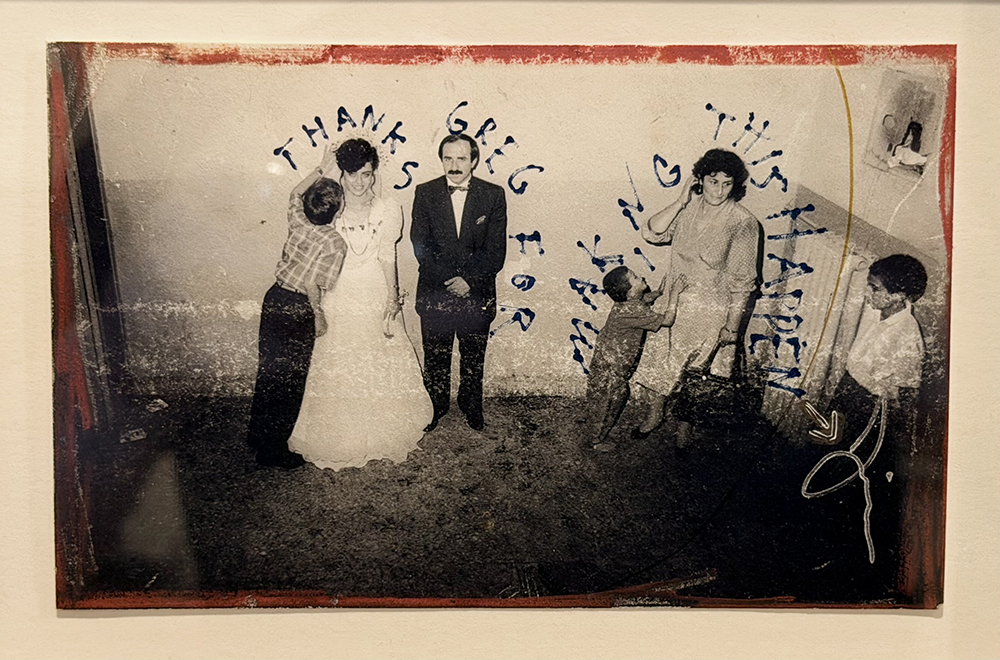
© Gregory J. Harris. Personalized thank you from photographer Jim Goldberg after being commissioned to be a part of the Picturing the South: 25 Years exhibition at the High Museum of Art.
Is it okay to maintain a dialogue past the initial meeting? Such as adding the person to your newsletter list? Or sending email updates? Should an artist ask at the initial meeting if these things are okay to do?
Yes, it’s definitely ok to maintain a dialogue. Newsletters are great as is the occasional individual email update. I appreciate being asked first but it’s not critical. As with everything else in this dynamic, it’s important to be respectful of the curator’s time. Engaging with artists is a hugely important and rewarding part of what we do, but it’s one of many things on our plate. As with any relationship, being too demanding or needy doesn’t go over well.
What should a photographer/artist expect during the meeting? Do they need a goal/end result or will this come over time as the relationship is established?
It’s best to think about that initial meeting as the beginning of a conversation. If it goes well and there’s mutual interest between the photographer and curator, that conversation could extend over a long time and develop into a working relationship and ideally a friendship. Getting feedback on your work, getting to know the curator, and letting the curator get to know you is a reasonable goal.
Is there a process that the photographer/artist would need to keep in mind if meeting with you on-site at the museum: i.e. security, size restrictions on portfolio, parking, etc.?
Yes, there are lots of logistical things that need to be kept in mind. Because the museum displays and cares for artwork, our security team is very strict about things coming in and out of the building. I have to get an authorization signed by our registrars ahead of time for a portfolio to enter and leave the building, so I need to know ahead of time what you’re bringing. Modestly sized prints (20×24 or smaller) are best because you’ll need to carry them and we don’t always have enough space in the museum to view large prints. The museum is located in the middle of the city, so parking can often be challenging. Expect to pay if you park in a garage.
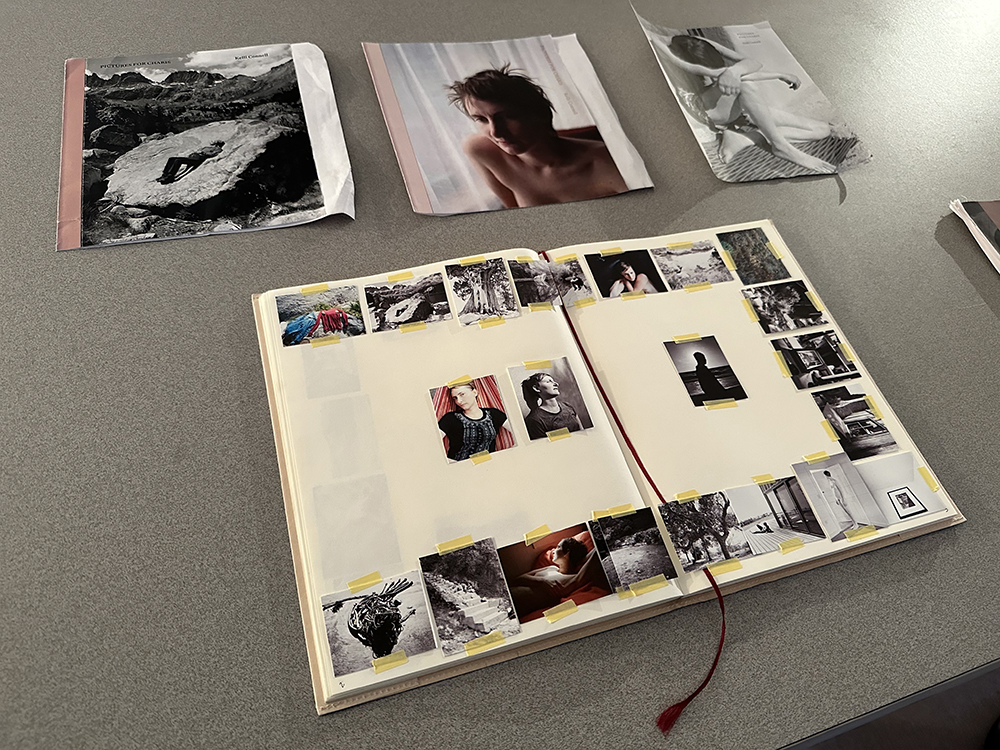
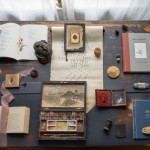
© Gregory J. Harris. Studio Visit with Kelli Connell, 2023
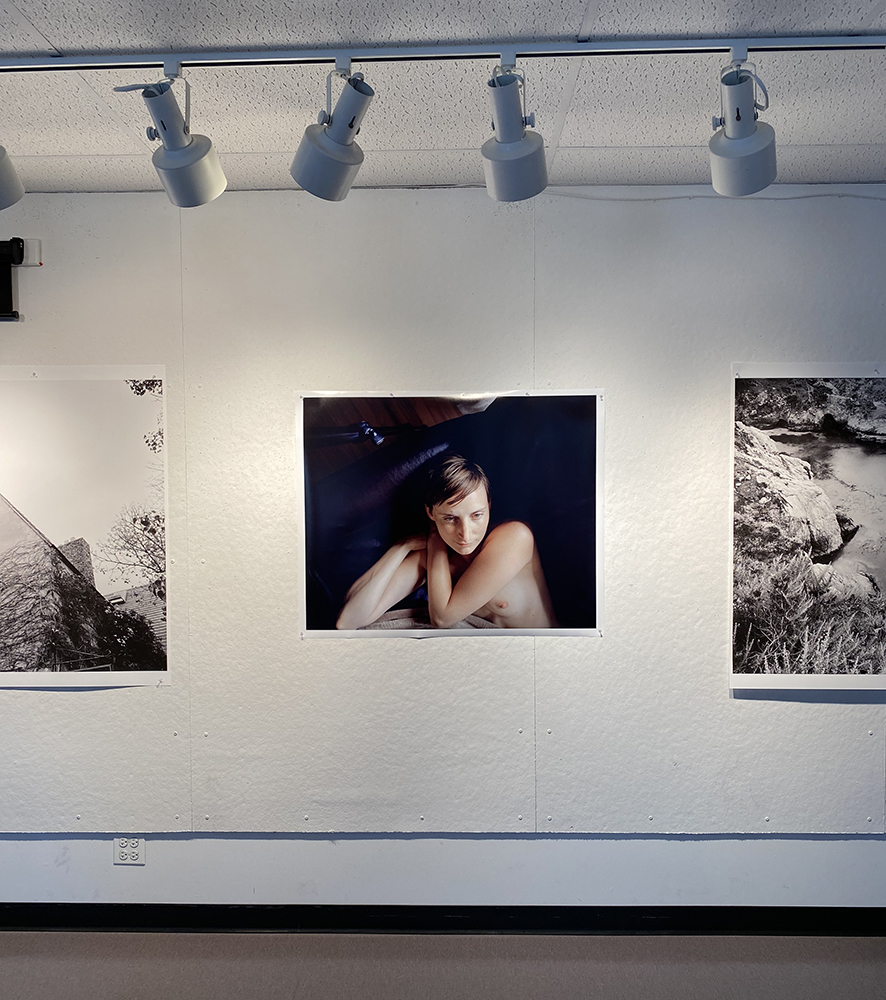
© Gregory J. Harris. Studio Visit with Kelli Connell, 2023
Do you ever do studio visits? And if so, how does that get arranged?
I do studio visits fairly often as time allows. When I’m in Atlanta, it’s about half and half between an artist inviting me to their studio and me asking if I can come by for a visit. When I’m traveling, I’m generally the one who reaches out to schedule the visit. I travel quite a bit and I like to meet artists and see their work in person when I can.
Since Atlanta is a big travel hub, artists passing through will often get in touch to ask to meet while they’re in town. I don’t know if it counts as a studio visit, but I’ve met many photographers this way. We talk, look at prints or books, and it also gives me an opportunity to show them around the museum. This is how I met Rose Marie Cromwell. She was on her way to an event in Athens, GA and reached out to me. We looked at her book over coffee and I was really taken by her work. A few months later, I reviewed her work at Filter in Chicago. She showed me different work and we had another great conversation. We stayed in touch over the years and became friends. We’ve worked together on a few shows now and her work is in the High’s collection.
“Working with Greg was a truly collaborative experience that began with in-depth conversations about my practice, focusing on how to push the boundaries of documentary photography in more sculptural and spatial ways. He encouraged me to experiment with installation and to create sculptural elements alongside the photographs. We both believe that materials can carry narrative weight, and that the way a work is presented plays a crucial role in how its story is told. That shared understanding opened up new possibilities for exploring narrative through form and space.”
– Rose Marie Cromwell
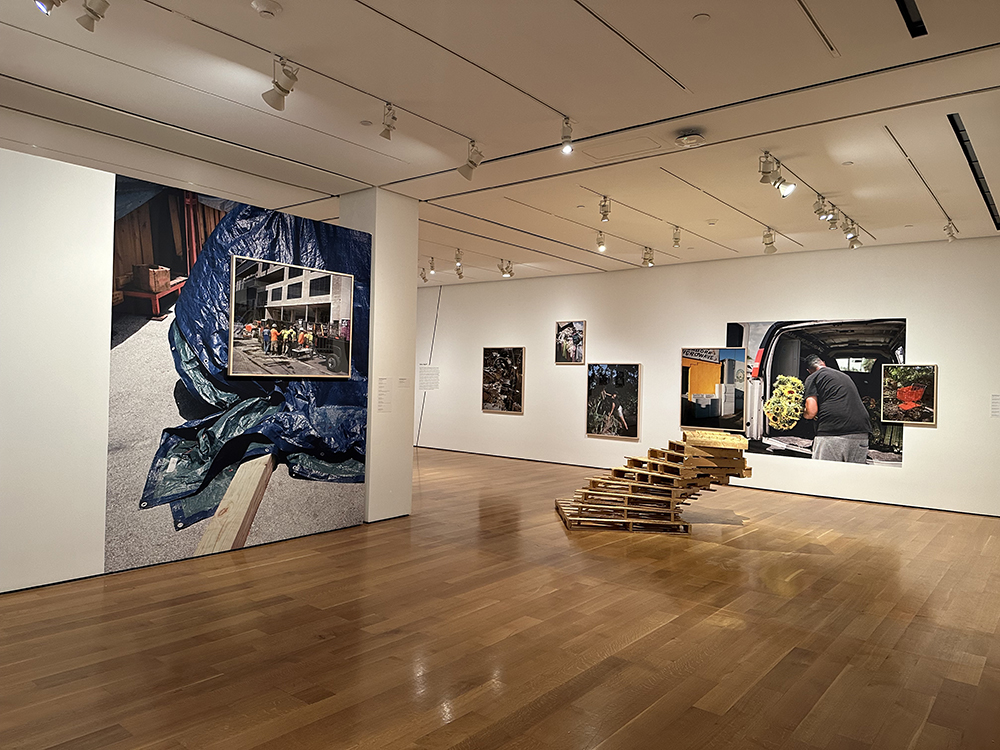
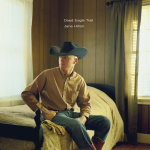
© Rose Marie Cromwell. Truth Told Slant at the High Museum of Art, Atlanta, GA, 2024
I imagine that some sort of symbiotic relationship with an artist would be the most fulfilling from your end, what can artists/photographers do to add or be a vital part of the relationship?
The relationship between artists and curators is definitely symbiotic. I can’t do my work if there aren’t photographers out there making pictures. That simple fact aside, I learn so much from the photographers I work with or that I’m friends with. They know other photographers and introduce me to new work. Photographers have a deep knowledge and understanding of the medium and give great advice about where the medium is going and opinions about what’s important or who is breaking new ground. I love talking with photographers about their process because it helps me understand the medium so much better. It’s like any relationship or friendship—there’s a give and take, you provide support and advice for each other. When I’m stuck on something or trying to come up with new ideas, I tend to reach out to my photographer friends for their perspective.
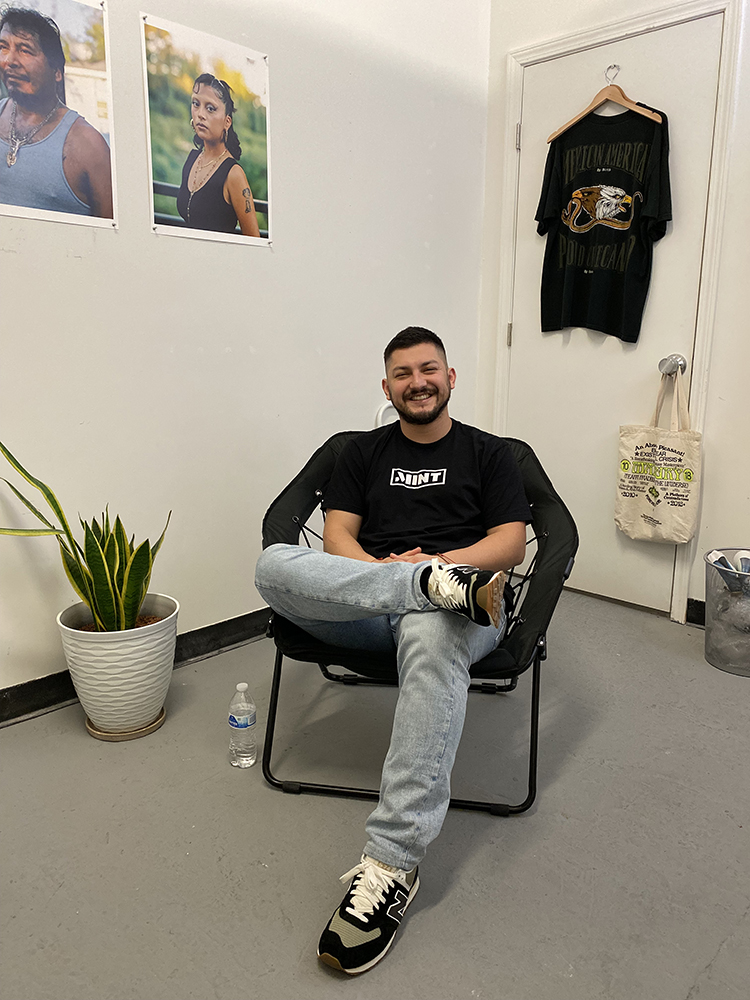
© Gregory J. Harris. Studio Visit with José Ibarra Rizo, 2022
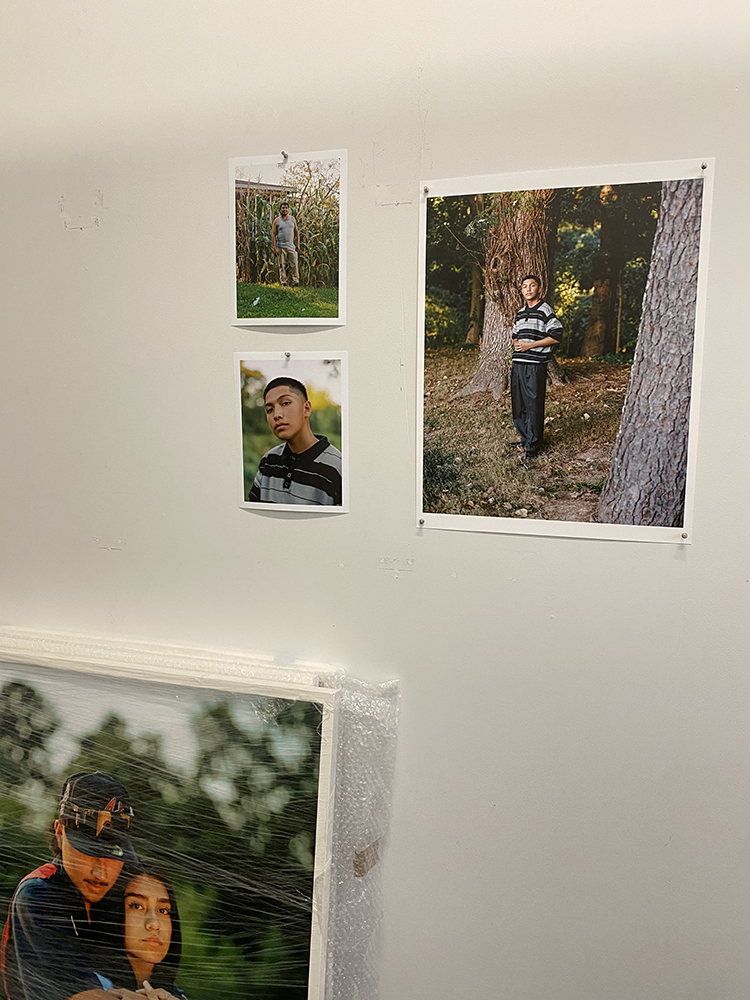
© Gregory J. Harris. Studio Visit with José Ibarra Rizo, 2022
Do you ever do mentorships? Outside curation? Or other avenues to long-term relationships with artists/photographers?
I wouldn’t say I do mentorships in a formal way, but there are certainly photographers who I’m in touch with regularly and they ask my advice. The art world can be a confusing and overwhelming place. I like to help people navigate it when I can. My friend José Ibarra Rizo calls me “Coach Greg.” We talk every once in a while about exhibition opportunities that come his way or how to lay out a show or how to deal with a collector. We kick ideas around and I try to give him my perspective. He’s a very talented photographer and someone I believe in, so I want to do what I can to help him succeed.
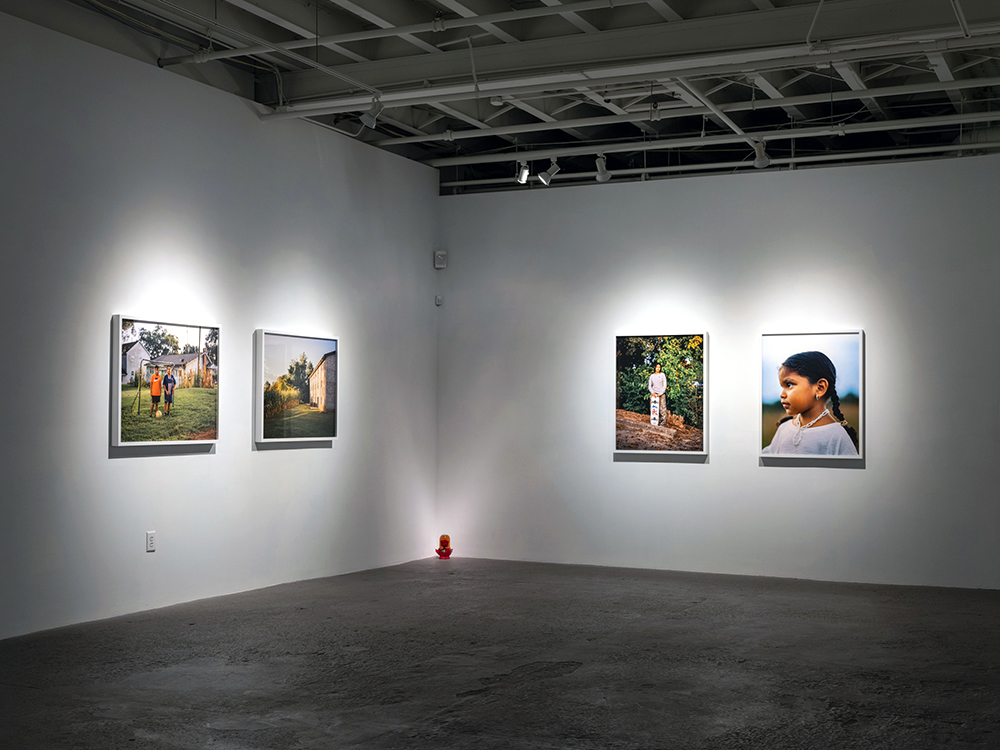
© José Ibarra Rizo. Depth Within a Gaze as part of the Working Artist Project Fellowship for the Museum of Contemporary Art of Georgia, Atlanta, GA, 2024. José worked with Greg Harris to layout the entire exhibition.
“I’ve had the pleasure of knowing Greg since 2022. I invited him out for coffee, and to my surprise, he took me up on it. I knew he had seen my first solo exhibition, and I was curious to hear his thoughts—he was generous enough to share thoughtful feedback.
Since then, we’ve built both a friendship and a professional relationship. As someone who doesn’t come from a traditional photography background and is mostly self-taught, having access to people who are willing to offer guidance has made all the difference.
In the years we’ve known each other, Greg has become a mentor—someone who’s helped me think through exhibition layouts, understand my place within contemporary photography, and someone I trust for honest feedback on my work.” – José Ibarra Rizo
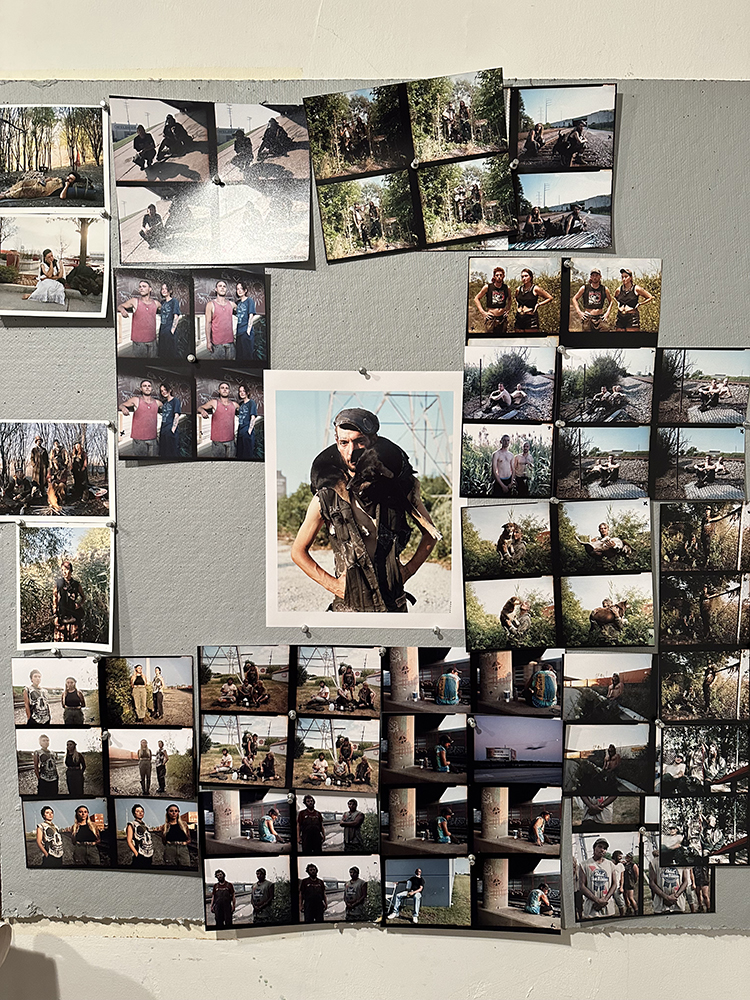
© Gregory J. Harris. Studio Visit with Paul D’Amato, 2011
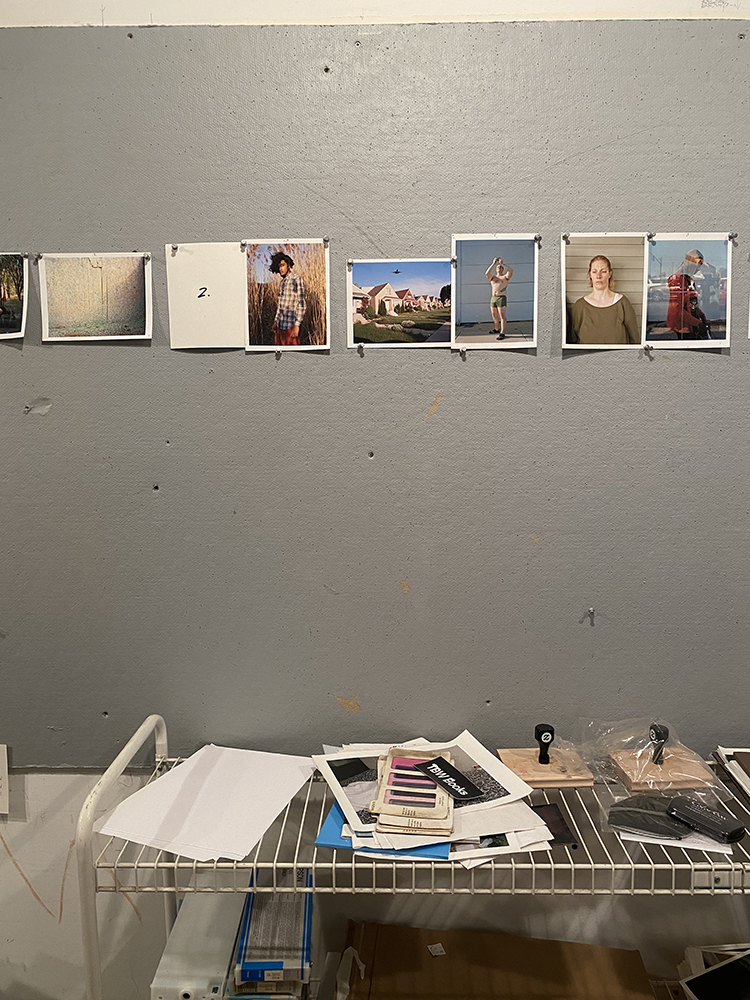
© Gregory J. Harris. Studio Visit with Paul D’Amato, 2011
I don’t have a whole lot of spare time, so I don’t do much outside curation. I love helping photographers work on edits and layouts for shows they have coming up at other institutions. Making the pictures and figuring out how to exhibit them are not always overlapping skills. I curated a show of Paul D’Amato’s work about twelve years ago when I worked at DePaul University. Last year, Paul had a show at the Chicago Cultural Center and he asked me to give him feedback on the layout and presentation. I was delighted to give some suggestions and I think it helped him sort out some of his installation challenges.
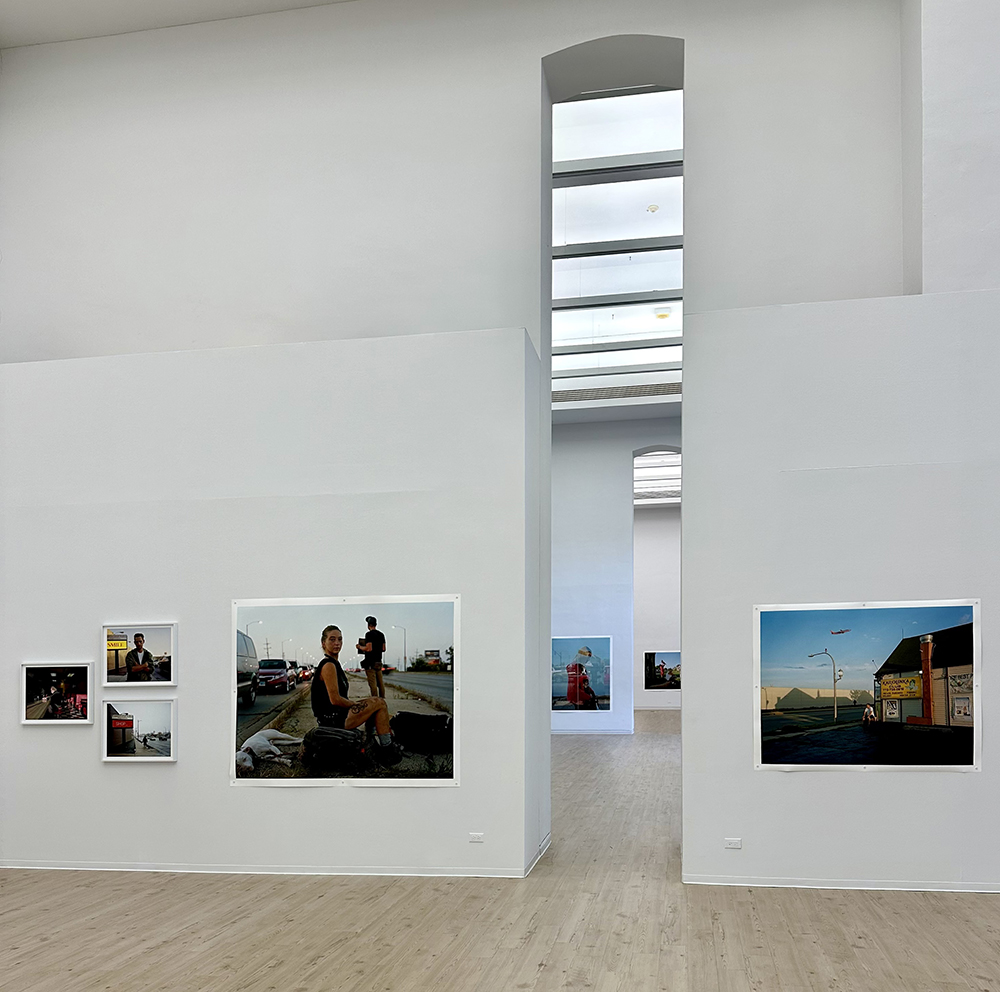
© Paul D’Amato. Paul D’Amato’s Midway, Chicago Cultural Center, Chicago, IL, 2024
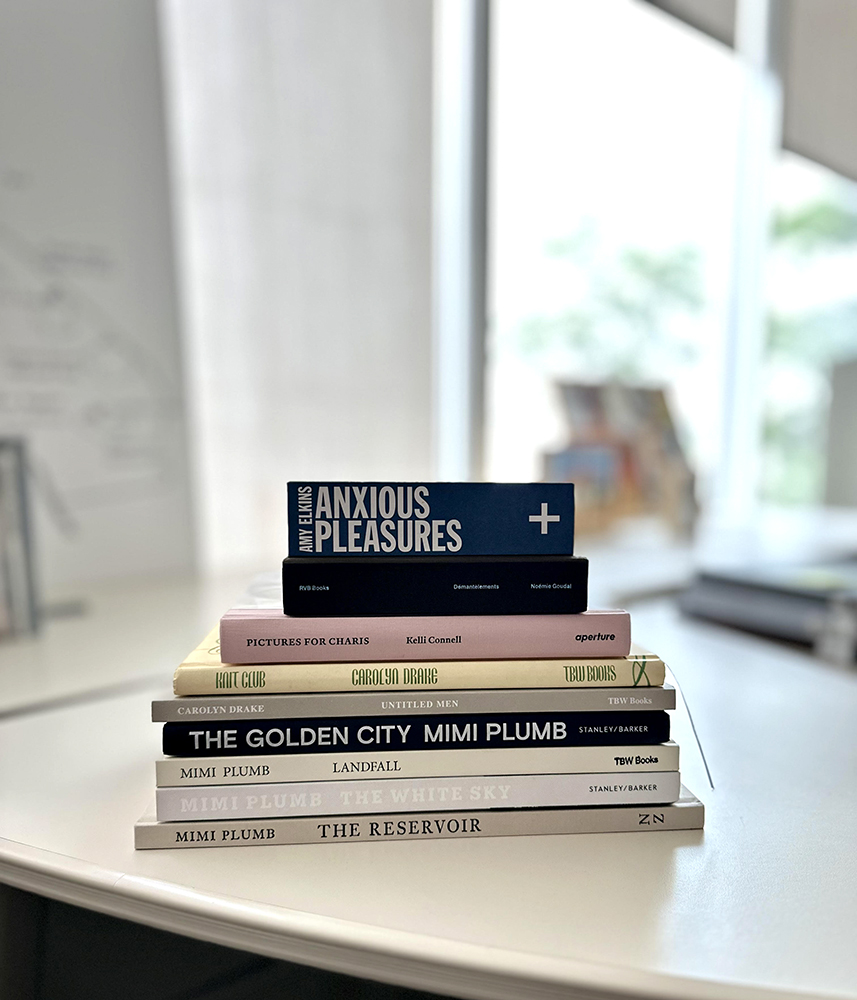
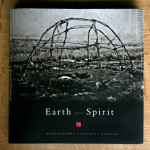
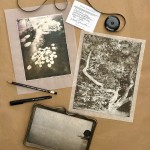
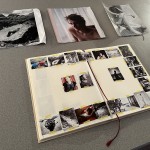
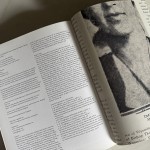
© Gregory J. Harris. Artist books from previous exhibitions, 2025
I also write the occasional essay for photobooks when time allows. I enjoy doing it, but writing can be time consuming. I wish I could say yes to more of the invitations I get to write for a photographer. It’s so meaningful to be asked and I love diving into the photographs.
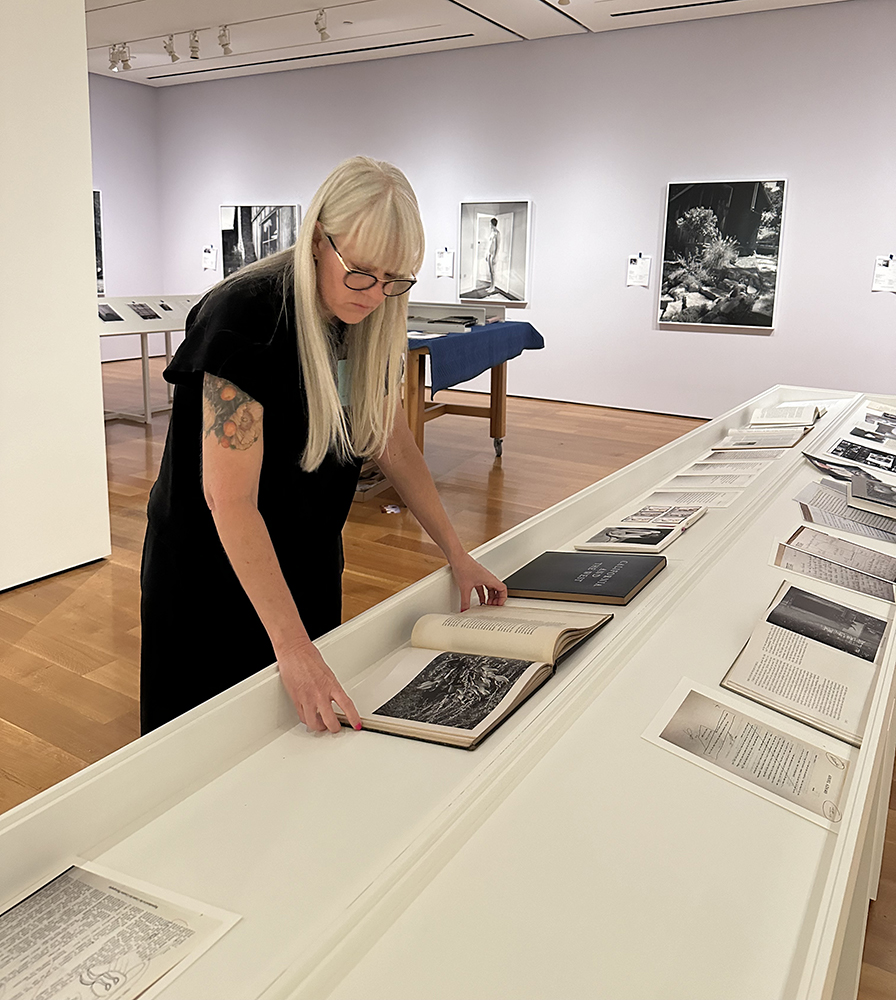
© Kelli Connell. Connell during installation of Kelli Connell: Pictures for Charis, High Museum of Art, Atlanta, GA, 2024
When I lived in Chicago, Kelli Connell would regularly invite a group of photobook lovers over to her studio to look at books, drink beer (never near the books!), and talk about photography. I met many people that way and it’s how I got to know Kelli. A decade later, we worked together on her exhibition Pictures for Charis (Aperture, 2024).
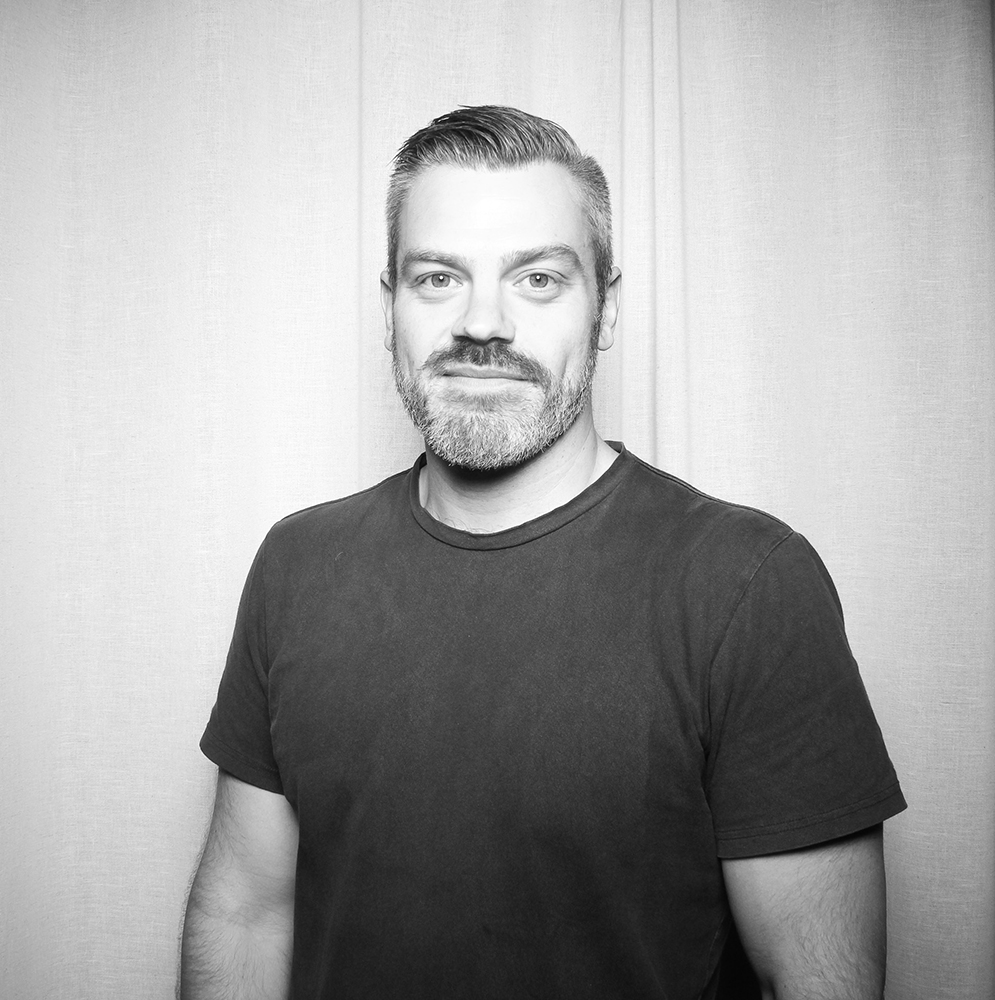
© Gregory J. Harris. Photo by Rachel Smith
Gregory J. Harris is the High Museum of Art’s Donald and Marilyn Keough Family Curator of Photography. He is a specialist in contemporary photography with a particular interest in documentary practice.
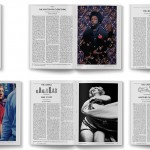
Since joining the High Museum in 2016, Harris has curated over a dozen exhibitions that consider an array of topics including social justice, the intersections of photography and self-taught art, and distinct history of photography in the South. Most notably, he curated a major survey of Southern photography, A Long Arc: Photography and the American South since 1845 (2023), which toured nationally and was accompanied by a catalogue published by Aperture. Harris’s other exhibition projects include Kelli Connell: Pictures for Charis (2024), Truth Told Slant: Contemporary Photography (2024), Evelyn Hofer: Eyes on the City (2023), Picturing the South: 25 Years (2021), Way Out There: The Art of Southern Backroads (2019), Look Again: 45 Years of Collecting Photography (2018), Mark Steinmetz: Terminus (2018), and Amy Elkins: Black is the Day, Black is the Night (2017). His forthcoming projects include solo exhibitions of the work of Ralph Eugene Meatyard, Mimi Plumb, and Richard Misrach.
Jeanine Michna-Bales
After a successful 20-year career as a creative in advertising, Jeanine Michna-Bales transitioned to become a full-time artist. A visual storyteller working primarily in photography, Michna-Bales (American, b. 1971) explores the profound impact of cornerstone relationships on contemporary society—the connections between individuals, communities, and the land we inhabit. Her work sits at the crossroads of curiosity and knowledge, blending documentary and fine art, past and present, and disciplines like anthropology, sociology, environmentalism, and activism.
Michna-Bales’ artistic practice is rooted in thorough, often primary-source research, which allows her to explore multiple perspectives, grasp the complexities of cause and effect, and understand the socio-political context surrounding the subjects she examines.
Posts on Lenscratch may not be reproduced without the permission of the Lenscratch staff and the photographer.
Recommended
-

Cozette Russell in Conversation With Douglas BreaultMay 14th, 2026
-

BEYOND THE PHOTOGRAPH: Q&A WITH COMMERCIAL PHOTOGRAPHER ANDY MAHRMarch 22nd, 2026
-
Beyond the Photograph: Editioning Photographic WorkJanuary 24th, 2026
-
BEYOND THE PHOTOGRAPH: Q&A WITH CURATOR GREGORY J. HARRISOctober 24th, 2025
-
BEYOND THE PHOTOGRAPH: Q&A WITH PHOTO EDITOR JESSIE WENDER, THE NEW YORK TIMESAugust 22nd, 2025